I'm extremely skeptical of this story, at least as written.
It makes great clickbait, but it doesn't really make sense. Where would someone implant a bluetooth earpiece into their ear? There's not really a lot of empty space in that area unless someone is very overweight and the device is implanted in layers of fat adjacent to the ear, which aren't great at conducting sound. Did someone really wrap an earpiece in some bio-compatible material, put it in someone right before the test (battery life is limited), and that person was then in a low enough level of pain and/or on enough painkillers that they could still complete the test? I'm extremely doubtful.
But the bigger question is: What use is a 1-way communication device? Did the student have a second cheating instrument to photograph the test and send it to someone off-site? Or did they have someone with the test answers reading them off in real-time ("Question 34 - Answer is C")? It seems this would only be useful in an extremely narrow set of circumstances, if it could be pulled off at all.
Really though, why wouldn't someone just grow out their hair or wear a wig and put an earpiece under their hair? The idea of surgically implanting something that could be easily concealed seems like a modern urban legend.
First, the subject of Indians cheating on exams is something that surfaces in Western news now and again. It's always said that there's these crazy tough exams that determine your life in India. For instance this guy apparently spent 11 years trying to pass. Totally unlikely, who would do that? The point seems to be to underline the importance of exams in India.
Second, the method of cheating is some badly explained but intricate mechanism. Badly explained in that the story is not complete, how exactly is the Bluetooth used? Intricate in that it's some weirdly complicated thing like getting an operation to have this implanted. It's always something that sounds way too complex to be worthwhile.
Third, the authority in charge of catching the cheaters seems oddly well appointed. Would you really send a special squad to check these kinds of things? Sure, check for hidden notes and phones. You really gonna check for Bluetooth? I mean maybe but I doubt it. How could the guy have a crazy special plan for implanting the thing in his ear but not have anything other than an ordinary plan for smuggling in the phone?
To me it reads like that story of a religious couple that don't know how babies are made. Comes about now and again, makes us chuckle, says something recognisable about society, but ultimately sounds not quite true.
I'm not from India, but the country where I'm from also has universities with highly competitive admission exams. The "crazy tough exams that determine your life" thing is a very specific form of tunnel vision that does actually happen in some upper middle class families. The context is that in the elite schools, admissions are entirely about stack ranking in the entrance exam. You can't "buy" your way into an elite school by showing off extensive extracurricular achievements like you can do for an American Ivy League.
So STEM admissions at elite schools (especially medicine and engineering) are indeed very competitive and there are upper middle class families who do think that nothing short of entering these schools is good enough. While 11 years is pretty hardcore, trying for 2, 3 or even 4 years is not uncommon at all. One of my cousins tried for medicine for such schools several times. People that fail admission exams will often not settle for safety schools; these are considered completely worthless in the eyes of someone aiming for elite schools. Instead, they enroll in cram schools to try again the following year. This is pretty normalized, it's even expected that you'd do that after your first fail.
The exact method of cheating doesn't really matter. All you need to know is that cheating using electronics does happen and has happened since forever. It was already a thing twenty years ago when I was going through admission exams. Schools have always had measures against cheating. In my country in the 90s, they were pretty low tech (e.g. enforcing no cell phones), but I hear some places in China now have some seriously over-the-top anti-cheating mechanisms like signal jamming.
I went to a state school in a country where the only way in to university is by taking a test (this was in the early 00's), so I went to one of these cram schools after I finished high school. The cram school was focused on students of lower income families who would otherwise not have the means to attend a more prestigious one, and I remember in the inauguration ceremony for my year's class, one of their former students was invited to give a speech.
Her story was that after four years trying to get into medical school (i.e. four years attending the same cram school), she was given a tuition scholarship to a more prestigious cram school for her fifth year, and then she finally passed the test.
The thing is, this wasn't even an elite school -- it was just the only federal (state-funded) medical school in our state. The fact that the students' only way in was by taking the exam -- extracurriculars were not taken into account there also -- only made it even more of an _achievement_ for you to actually get in, especially if you were not from an upper middle class family.
IMHO the solution is probably to de-emphasize the metric. Class bottlenecks are probably bad. They’ll always happen, but it shouldn’t be the only route to a good life.
My country was like that: solely focusing on one entrance exam to determine your life.
Finally education reform happened and extensive extracurricular achievements are now taken into consideration.
Now those extracurricular achievements are thoroughly gamed. Helping in homeless kitchen, beach cleanup, book club president, awards at science fair, whatever, you name it, everyone is doing everything now. (mostly richer kids have more help though)
So the kids after reform nowadays, they not only have to prepare for a huge exam, but also find time to do all those extensive activities. Some would even miss the old days where they only have to carefully prep for one exam.
> Now those extracurricular achievements are thoroughly gamed. [...] (mostly richer kids have more help though)
It’s to be expected.
Any metric can and will be gamed. An acquaintance who teaches biology (lot of rote) told me how grades skyrocketed in his classroom after they switched to online classes. He attributed it to students (a lot of them foreign from China and India) being more comfortable asking questions via email instead of in-classroom due to English being their second (or third!) language. I had a different theory.
I’m not surprised most extracurriculars will be created in order to game the system (ever seen a club where all members are presidents?). At least, maybe the kids will do something else (that they are interested in) for a few hours a week instead of spending those cramming to get fraction of points improvement on testing. I recall someone from such country telling me people told him it was a waste of time learning to program (!!) since that wouldn’t help him answer exam questions a little bit faster than his peers. He, at the time, was envious of US kids that could spend time doing robotics or CS and have it count toward something for college admission.
Yeah, I do see the appeal of variety. It was a breath of fresh air that finally those kids would have some room to do something else.
Just wanna share a ridiculous scene I saw on the street:
A high school kid with his father at a bus stop. The kid got a window wiper and the dad had a bucket filled with water. I overheard that the kid needed to include more activities on his college application, the dad was dead set on making up this fake community service of washing bus stops. The kid was just going along with this. The dad all of a sudden splashed the water onto a pane of glass at the bus stop and asked his kid to hurry up and take the window wiper to pose for a picture. They snapped pictures from several angles and just bounced! That pane of glass was not even cleaned, only it now confusingly sported a splash of water. My face was laughing so hard in my palm.
Sure, the underlying point that exams are really important is true. And it's also true that people try to cheat, and that people retry the same exam several times.
What makes it a tall tale is the over-the-topness of it.
>I'm not from India, but the country where I'm from also has universities with highly competitive admission exams. The "crazy tough exams that determine your life" thing is a very specific form of tunnel vision that does actually happen in some upper middle class families.
I'm from Eastern Europe and I did have to pass tough admission exams to enroll in CS and Math program in University. Medicine and Law School admissions were even tougher.
Things are much more relaxed today, to the point that for some specialties there are no admission exams.
These exams are quite difficult to clear because of the sheer number of people who are applying for the small number of seats. And yes, there are actual "flying squads" of people who go to the examination centres to check for all sorts of innovative ways of cheating
Closest thing I could find to a plausible explanation was this (not about implants but about hiding bluetooth devices):
"The chappal is such it has an entire phone inside and a Bluetooth device. The candidate had a device inside his ear and someone from outside the exam hall was helping him cheat," police officer additional SP Ratan Lal Bhargav of the Rajasthan police .
But yeah searching for info about this stuff feels like probing an area of a video game where the developers didn't put much content, just many duplicates of the same article on different sites, all from around Feb 22.
A legend referenced in Catch-22 by Joseph Heller, 1961;
(Doc Daneeka) 'Like that virgin I'm telling you about that couldn't have a baby.'
'What virgin?' Yossarian asked. 'I thought you were telling me about some newlyweds.'
'That's the virgin I'm telling you about. They were just a couple of young kids, and they'd been married, oh, a little over a year when they came walking into my office without an appointment. You should have seen her. She was so sweet and young and pretty. She even blushed when I asked about her periods. I don't think I'll ever stop loving that girl. She was built like a dream and wore a chain around her neck with a medal of Saint Anthony hanging down inside the most beautiful bosom I never saw. "It must be a terrible temptation for Saint Anthony," I joked--just to put her at ease, you know. "Saint Anthony?" her husband said. "Who's Saint Anthony?" "Ask your wife," I told him. "She can tell you who Saint Anthony is." "Who is Saint Anthony?" he asked her. "Who?" she wanted to know. "Saint Anthony," he told her. "Saint Anthony?" she said. "Who's Saint Anthony?" When I got a good look at her inside my examination room I found she was still a virgin. I spoke to her husband alone while she was pulling her girdle back on and hooking it onto her stockings. "Every night," he boasted. A real wise guy, you know. "I never miss a night," he boasted. He meant it, too. "I even been puttin' it to her mornings before the breakfasts she makes me before we go to work," he boasted. There was only one explanation. When I had them both together again I gave them a demonstration of intercourse with the rubber models I've got in my office. I've got these rubber models in my office with all the reproductive organs of both sexes that I keep locked up in separate cabinets to avoid a scandal. I mean I used to have them. I don't have anything any more, not even a practice. The only thing I have now is this low temperature that I'm really starting to worry about. Those two kids I've got working for me in the medical tent aren't worth a damn as diagnosticians. All they know how to do is complain. They think they've got troubles? What about me? They should have been in my office that day with those two newlyweds looking at me as though I were telling them something nobody'd ever heard of before. You never saw anybody so interested. "You mean like this?" he asked me, and worked the models for himself awhile. You know, I can see where a certain type of person might get a big kick out of doing just that. "That's it," I told him. "Now, you go home and try it my way for a few months and see what happens. Okay?" "Okay," they said, and paid me in cash without any argument. "Have a good time," I told them, and they thanked me and walked out together. He had his arm around her waist as though he couldn't wait to get her home and put it to her again. A few days later he came back all by himself and told my nurse he had to see me right away. As soon as we were alone, he punched me in the nose.'
'He did what?'
'He called me a wise guy and punched me in the nose. "What are you, a wise guy?" he said, and knocked me flat on my ass. Pow! Just like that. I'm not kidding.'
'I know you're not kidding,' Yossarian said. 'But why did he do it?'
'How should I know why he did it?' Doc Daneeka retorted with annoyance.
'Maybe it had something to do with Saint Anthony?' Doc Daneeka looked at Yossarian blankly. 'Saint Anthony?' he asked with astonishment. 'Who's Saint Anthony?'
>For instance this guy apparently spent 11 years trying to pass.
Isn't this essentially what everyone does? We all go to school from grade school to high school (or their locally named equivalents) for about 11 years before our senior/graduation year. All 11 of those years are meant to be building you up to be able to pass those college entrance tests.
> It was the student’s final attempt on Monday to clear the exam after repeatedly failing it since getting admission into the college 11 years ago
Strongly implies it was 11 years in the same college.
I'm just thinking if you spent 11 years and still haven't graduated, maybe it's not for you. If you can't pass the exam, you don't know the material, and you probably shouldn't pursue this career.
“It is very easy to get Bluetooth fitted in the ears. It is attached to the ear temporarily and can be removed. Such a technique was used by a Vyapam scam accused too to clear his medical exam eight years ago.”
And the article also mentions that the Indian Supreme Court themselves cancelled the licenses for 634 doctors licenses issued between 2008 - 2013.. some of which used this same technique.
How it works, where does it go; I have no idea. But clearly it's not a one-off case.
P.S. I think that it's perhaps surgically clipped deep in the inner ear somehow, and not inserted beneath the skin.
"Surgical" doesn't necessarily mean invasive. It's most likely a procedure similar to rhinestone implants[0].
As for why they use a 1-way device: this method of cheating has been around for decades; you get someone to take the test, they leave early and radio answers in. I don't know the specifics for this particular exam, but India is certainly not the only place in the world w/ extremely competitive admission exams. Back in my days back home some twenty years ago, cram schools would be on stand-by outside school doors, they'd smuggle the question sheet out somehow and flash-solve them / publish answers on the spot for publicity. You could get a full answer sheet online from a cram school website before the exam was over (these exams are hours long) and test takers would frequently do so after finishing their exams to see how they did.
My understanding is it was an all-hands-on-deck, divide-and-conquer thing. The big brand cram schools had literally hundreds of teachers whose only jobs was preparing students for admission exams. They could easily have each question solved by 5 different teachers in parallel.
If the teachers are so good at these exams that they can flash-solve them, why aren't they doctors? Surely that pays better than teaching at a cram school?
Teachers typically specialize in a single subject and tests are multi-disciplinary. The subjects can range from literature to chemistry to history to physics. As in, you have to be at the top of the pack for literature questions even if you're applying for engineering. And recall, these are no pushover questions; I've taken some of these elite school exams as well as the american SAT/SAT 2 and the SATs are child's play in comparison.
Also, competitiveness for some disciplines is seriously no joke: to give you an idea, medicine at Harvard has an admission rate of around 3.5%. Medicine at University of Sao Paulo, Brazil has an admission rate of 0.8%. Admission rates for IIT, India are even worse, at around 0.59%.
And if that isn't discouraging enough, many of these schools have reputations of being "hard to get in, harder to get out" (meaning that actually graduating is ever harder than getting accepted into the program in the first place)
Bluetooth can be 2 ways. But can the implanted device transmit far enough to be picked up by another device or to pick up the sound you are trying to send? Maybe...
As far as how to work it, many of these exams are standardized with a set number of questions. Let's say there are 1000 questions all together and you get tested on 100 of the 1000. You can work out a system where you can get the answers with minimum transmission to your confederate.
It's a lot of work. It seems easier to just study.
One of my economics teacher used to let us fill an index card with information for our exams. We could handwrite as much as we wanted and look at it as much as we needed. So every exam everyone had their card at hand. We would all brag about how small we were able to write. We had to do so much reading and writing to fill up the card that a lot of it stuck in our brain and we hardly needed it. It turned out to be the way he got his students to study. Pretty smart...
There was a kid at my school who wrote on both sides, on top of eachother with both red and blue pens. He then brought in red/blue 3d glasses, and would close one eye to filter out red/blue and read the notes.
I had an elective class that was open notes/book so I collected all the notes and resources the professor provided, put them into a single PDF, and then just text-searched them in the class. Worked well but the class was a joke and it didn't matter if I left knowing any of the material. Just had to check the box.
1-way communication device are used in cheating all the time, it involves of someone that's really good at exams taking the same test, sneak out to the toilet and tell them the answers.
My licensing exam was computer adaptive. We were wanded, turned pockets inside out, videoed. You couldn't eat, take jackets on our off or anything. Lots of rules around how you sat at the table. These must be a fair bit lower tech for the cheating to work. You could wear earplugs and earmuf style sound suppression which I did. Wouldn't be super difficult to have audio in -> but I don't think it would have done much good.
It was done regularly in my highschool in the 2000s, there'd be two or three versions of the test and they'd be distributed randomly. We'd know which one we got because of a label in the corner, which was also how they used the right key for grading.
It'd surprise me if such a simple mitigation wasn't done for more important exams...
Medical licensing exams in the US are randomized within the same sitting, even having two examiners in the same room receiving entirely different questions (not just random question ordering).
I've had plenty of professional and academic exams with multiple different versions of the exam with the questions scrambled. I think almost all of my Bachelor level science courses were provided in that way, as well as multiple Bar exams.
Bluetooth range on headsets is pretty mediocre though. Especially when blocked by body parts. I've never done an exam where the toilets were within Bluetooth range.
Another article I found clarified that this was an induction style micro earpiece (which google helpfully suggested suffixing with "for cheating") that had apparently been inserted by an ENT due to its size and depth in the ear canal. No actual surgery involved.
Since this is an incredibly common and mundane method of cheating I'd have to say you're right, the headline is entirely clickbait.
I noticed on a second read, that the article jumps between one student and two students. It would be tough to go through fact checking and editing and for that confusion to remain. Anyways, I think you nailed it - I don’t trust the article.
Maybe the earpiece transmits sound conductively? When I go to the ENT's office, the audiologist does some tests on me with conductive headphones and usually the point of contact is my skull an inch or two from my ear
Pointing out the flaws of a failed cheating method (he was caught) by a cheater who likely have tried other failed cheating methods ("It was the student’s final attempt on Monday to clear the exam after repeatedly failing it since getting admission into the college 11 years ago.") doesn't prove the cheating didn't happen.
He just appears to be both an incompetent medical student and an incompetent cheater.
I don't think that PragmaticPulp doubts that cheating happens. But "student tries to cheat on important exam" is barely local news, let alone global technology news.
The thing that got this to the front page of HN is the specific claim of a surgically implanted bluetooth earpiece. That is what PragmaticPulp is doubtful of.
Of course, if the claim was merely that the student was wearing a very small earpiece, such as [1], and that when told to hand it over he claimed it couldn't safely be removed? That would be much more plausible.
I guess my question is, if your body has built-in superpowers like Bluetooth or infrared vision or auxilary information storage, why would it be illegal to use them if it would make you a better doctor?
Maybe the tests are not testing the right skills.
As a patient I want to see the best doctor possible, and if they have retrofitted their bodies to be more competent at treating conditions I would totally want that.
Your assumption is that these cheating students will continue to have an enabler with them through their entire career.
Furthermore, your assumption is that a cheater will be the best doctor. It's not about the method - it's about the integrity. My assumption is that any person taking shortcuts like this to get their degree will also take shortcuts with my personal health, which is not a comforting thought.
The scenario in the article is very different than a potential doctor being upfront about having implants installed to aid them in their duties.
>it's about the integrity. My assumption is that any person taking shortcuts like this to get their degree will also take shortcuts with my personal health, which is not a comforting thought.
You're making generalizations based on proxy information, which is basically the same thing that a test does you're just using a different set of information to key off of.
Not that there isn't some signal in the pile of noise that you're picking through but a willingness to circumvent academic requirements isn't exactly a strong indicator of performance in the field. Competent professionals fudge requirements they consider to be irrelevant all the time (inb4 no true Scotsman).
> Competent professionals fudge requirements they consider to be irrelevant all the time (inb4 no true Scotsman).
That's because they know more than the people who wrote the requirements, because the requirements were written 15 years ago when the medical profession as a whole knew a lot less about $INSERT_CONDITION_HERE.
You'll also notice that those requirements are explicitly written to permit fudging. “Two or more of the below”, “most of these”, “one or more”, “or other reason” etc..
Because Bluetooth is not superpower; the cheating part is the other end of the communication feeding information to the student. They won't be there when the doctor is treating you.
Real doctors can already use external information anyway. They just use the computer, no need to Bluetooth themselves.
A bluetooth implant alone doesn’t help that much. To be effective the scam requires more, e.g. continuous assistance from a third party. Will that doctor employ a third party afterwards, i.e. for all duration of their practice?
For instance, as a counter example, if you wired your brain up to a hard drive loaded with an immense amount of medical data that you'd be able to access at will for the rest of your life (instead of learning most of that rote knowledge through traditional sources) I wouldn't consider that cheating. Assuming you're still sufficiently good at critical thinking and problem solving then I wouldn't really have any objection to a doctor who keeps his knowledge of the krebs cycle on an instantly accessible external storage device.
I would expect some of this exam is not about rote information but requires actual problem solving. E.g.: patient has XYZ symptoms, what is your diagnosis?
By analogy, bringing all the printed books or hard drives you want into a chess match might help you with the opening, but not the rest of the game. These days there are chess engines, but before that, cheating required a human accomplice who was a good player, who knew what was on your board and could tell you the right move. My old club had an incident of a guy doing that using hand signals.
Now they won't let you bring any devices at all into chess tournaments, even mechanical wristwatches. A pity. Garry Kasparov famously used to fidget with his watch while playing. You could tell how good his game was by noticing whether the watch was on his wrist or on the table.
Treating any sort of complex medical condition requires a physician to actually understand the biochemistry, including interactions between multiple pathways. Having ready access to reference sources isn't sufficient. This is why medical schools involve a lot more than rote memorization.
So if your doctor spent sufficient time studying those complex interactions and didn't waste time on the rote memorization - would you consider them ill-equipped? If this student's learning could be more focused on the problem solving side of things would you think they'd make a worse doctor?
A competent physician needs to spend sufficient time on rote memorization and then use that as a foundation to understand complex interactions. This is why medical school and residency takes so long. There are no good shortcuts.
This is an apples to oranges comparison of course - but good developers spend time in university learning a whole bunch of theory and problem solving and almost nothing on rote learning (outside of how to find information which is a skill - while the information you're finding isn't one).
Perhaps the medical field is radically different - but I'd wager there's a whole lot of benefit that's been delivered to healthcare by giving doctors access to the internet so they don't need to focus so much of their time on trying to recall vague facts from twenty years prior in school and residencies.
Many specialties in the medical field are radically different. Physicians simply don't have time to look things up during a typical 10 minute outpatient encounter, or in the middle of a surgical procedure. The time pressure is just way more intense than what most developers ever deal with.
Who doesn't want their own Personal Doctor Feelgood, who prescribes as much Adderall as you can Snort, lets you Dictate Glowing Health Letters, refers you to a Bone Spur Specialist who gets you out of Being Drafted, shoots you up with Penicillin whenever it Hurts When You Pee, then awards you a Purple Heart for getting wounded by Vagina Landmines in your Own Personal Viet Nam?
In my undergrad days, my sibling's medical college (KMC Mangalore) had an interesting case where the student had hired the service of a rice-engraving artist to etch complete medical manuals onto the sides of metallic ballpoint pens. He was wearing a high powered lens as bifocals.
He was caught because he was noticed shuffling a wad of pens too often & then the bifocal glasses were peculiar, prompting some investigation.
He had paid the grain-engraving artist to the tune of $30,000-35,000 for the whole set (2006). It is a lot of money!
The massive irony is that the rice-engraving artist may well have then stood the chance to get a decent head start in medicine. I've long theorized that copying/transcribing information can be a great way to meditate in a way conducive to retaining and learning new data.
Depends on their skill level, and how much focus there was on the process of engraving vs temporarily memorizing the next block of info to transcribe.
I never went to med school, but in HS I had my beloved modded HP48 that could store loads of text. I didn't manage to wire it to my computer so I resorted to type everything manually.
After a whole day of char-by-char input.. I knew everything by heart and didn't need to look it up in the calculator.
Reminds me of my attempts to make cheat sheets that I would use during exams. I would write out a small cheat sheet the night before I never needed to use those cheat sheets as I would always remember whatever I had written on them. After a few cases when I remembered the whole contents of those sheets, I would just use them as last minute revision aid and discard them before getting into the examination hall.
I had some professors in high school that would encourage us to write a cheat sheet, with the caveat that you had to fit everything into a standard note card.
Unfortunately, there was a foreign student that was so ahead of everyone, that he simply increased the difficulty of the tests and would curve them, excluding that one student from the curve. It was normal for most of the class to get 60s-70s, while this student would get 90s on his exams. I say unfortunately, but only jokingly.
One of my high school teachers used an accumulating curve just for this reason - a number of pre-written tests were rotated out pretty randomly and your grade was scaled in relation to everyone who had ever taken the test. It did fail to account for anomalies like the teacher discussing a subject particularly poorly one year but it was pretty fair feeling.
Some of my high school professors treated cheating differently depending on the type of the cheat sheet used: handwritten ones would get ignored, but printed one would be punished.
That's how I've always seen bell curving. In Quebec, to get into something like medicine they look at your z-rating, which if how far ahead of the bell curve you are... so at best it selects for people who pick easy classes and at worst for people who actively sabotage other students. To me it always sounded like a great way to end up with psychopaths as doctors.
I did the same, with the added part of chanting the contents of the sheet in my head when entering the exam room and then re-creating the sheet from short-term (rather than long-term) memory.
Fortunately more recent exams that I've taken allowed the use of a single sheet of paper as a cheat sheet.
I used to do the same, often used to get weird looks from others, presumably thinking that I was going to cheat during the exam. I used to intentionally dispose of or put away the sheet in a way that it was seen to avoid suspicion.
In my high school a few years before me there was a legendary cheating ring that would tap out the answers to each other in Morse code which was presented as tapping a pencil eraser on the desk like they were thinking. Unfortunately for them it was long enough ago that one of the teachers knew Morse code and so it didn't last.
Oh weird, a HS friend that was failing urged me to follow this idea. I don't know if he heard of it or if he invented it on the spot (necessity mother of invention etc). We only used it once and it raised his grades by a lot obviously.
It also had infrared so you could even use chat apps. It was attenuated for short range precisely for this reason but obviously that protection was useless in the hands of electronics students.
I still have my 48GX. Though I never used it at an exam. As computer science student I simply never had any exams that required a calculator. I just had it for personal interests.
I only ever used that infrared to control the classroom vcr, to the absolute befuddlement of the teacher. Only time I’ve seen someone tap the side of a vcr to fix whatever is broken with it.
I used the serial cable to hook it up to my computer and loaded it with minigames, to play during class.
I remember the time I took a 1200 baud modem and a phone cord to school with me so that I could log into the county library system, which provided shell accounts, and check my email during class. My physics teacher didn’t seem very appreciative, but the kids with lesser calculators were impressed.
Rote isn't a huge part in the school I'm a part of.
We deliberately have some, though. There's some stuff that's just helpful to memorize to be able to do more active work and understanding with (multiplication tables, basic chemical formulas, sets of trig identities). There's also some stuff inserted (poem memorization, latin & greek roots for one grade, all 50 states for another, etc) just to strengthen the skill of learning by rote for when it's useful later.
It's a double-edged sword. If he googled "lipoma" or similar it would be good, if he googled "painful lump when poked" I would be very wary of him. Double wary if he clicks on a random blog.
By chance, I am a doctor. I spend a lot of time looking things up, even things I'm 80% sure about.
Yes, it's useful to have that knowledge already, and to that I'd say that copying out a textbook is a poor way to learn. It's far better to know the processes behind things or to learn through experience.
At university one of the exams allowed a single sheet of handwritten paper to be brought in. People got real damn creative in squeezing as much information they could on it, completely oblivious to the fact they actually learned the subject matter while preparing their "cheat sheet".
That does not match my experience. The primary benefit of these papers is that you can look up the difficult to remember stuff during the exam (mostly formulas and precise definitions in my case).
Wow, when I was young my father sold bijoux and he also used to create necklaces and bracelet on the fly with names of people written on grain of rice, he used to sell those for like 5.000 liras (in Italy, in the 90s, before euros, it would be 2.50 euros right now), if I knew I would have told him to start offering his services to cheating students, instead of tourists in Positano :D
The bigger question is why are we testing for things that can be looked up that quickly on a tiny grain of rice that probably doesn't have a good indexing system?
Like, if there was a question that was easy to answer if you could look at a reference sheet, then why is it important to memorize it? If the test take could understand the question enough to know where to look it up, isn't that good enough?
Because in the medical field peoples' lives are literally at stake. Doctors absolutely do research for their patients in the real world but a base level of knowledge is still absolutely required. If someone is not able to answer the "easy" questions then how do we know that they won't falter when faced with an actual challenging one.
Would you hire an engineer who couldn't write a FizzBuzz without looking it up?
>Would you hire an engineer who couldn't write a FizzBuzz without looking it up?
Yes?
I mean, even after 20 years of writing code professionally, I still don't remember the exact syntax for main methods for each language. Is it public static void main(String args[]) {} for Java, or is it something else? Will I remember that even when I've mostly been coding in Golang this week? Probably not.
It is public static void main(String args[]) {} (inside a public class with the same name as the file). Alternatively, you could do public static void main(String... args) {}; that would also work, probably because it's compiled down to the same thing in the JVM. (It doesn't work if you have named string arguments before the varargs, so it's unlikely it's meant to work.)
I don't remember any of this. I don't remember that it's int main(int argc, char *argv[]); in C, or fn main() -> Result<(), Box<dyn ::std::error::Error> {} in Rust, or package main \n func main() {} in Go; I derive it anew each time based on my understanding of the language.
And I wouldn't hire me to write C code, because I can't remember where the `const`s go. All I remember is that you shouldn't really use them here, because you're expected to be able to modify argv (and sometimes you have to, e.g. to redact passwords that somebody foolishly provided on the command line). And I remember that #include <stdio.h> lets you use size_t, but don't ask me why.
Then again, I guess I'm proving your point. I could write fizzbuzz easily in C – perhaps more easily than in any language I'm good at – but that doesn't make me a good person to hire if you want a C programmer.
A lot of people are missing the bigger point here.
This person was just one who got caught. The likelihood that they’re the first one to think or do this is very low.
There are probably more sophisticated ways of using tech to cheat and I would be very surprised if they haven’t been employed in high stakes exams like this before.
About 5 years ago, I had 3 students who worked as a team to cheat.
* The ringleader placed his iPhone under his leg.
* He would lean back in his chair and hold the exam sheets up in the air. It looked a little unusual, but it (initially) seemed innocuous.
* What he was really doing was pointing the sheets downward toward the camera peeking out from under his leg.
* He was broadcasting the exam to God-knows-where.
* He and the other two students then received answers via tiny earpieces.
* In addition, the two other students would call me over to "ask clarification questions." In reality, they were trying to distract me while the ringleader broadcast the exam.
* I eventually realized they were cheating (after exam 1), but I couldn't figure out how, until another student (exam 2) approached me with a note that read, "The guy to my right has his phone under his leg. Every time you circle the room, he pushes it completely under his leg so you can't see it."
* At that point, however, each student was taking a slightly different exam (unbeknownst to them).
The ringleader emailed me at the end of the semester and said something to the effect of: "I know I don't deserve to pass, but if you fail me, I will have to stay an extra semester."
What fascinates me is that everyone always separate into just two camps:
1. Cool! Tell me more! I love these puzzle/strategy games. Both how to cheat and not get caught and how to catch the cheaters.
2. Wow, these cheaters are such a bad people. Isn't it unfair to those who don't cheat...?
For once, I would love for someone to step back and ask:
What the actual fuck is going on here?
Some people are apparently spending up to 11 years (on top of high school) trying to get a certificate, that would help them maintain certain socioeconomic status. Other people are actively preventing them in getting the certificate in other ways than the official ones.
This costs an incredible amount of money. The whole overhead is insane. Whole lot of people routinely spend several YEARS without actually receiving the certificate. College education is crippled, because it needs to prevent fraud first, teach people useful things second.
Can't we do the sensible thing and lift the minimum income high enough so that only those who want to study will go to college and do so without fear of missing out?
> Can't we do the sensible thing and lift the minimum income high enough so that only those who want to study will go to college and do so without fear of missing out?
In my particular case, this was not an issue.
I don't want to go into detail, but the students were from a foreign country (this is part of why it was going to be a political nightmare for the Dean).
Two of the three could barely speak English (excepting the ringleader). I mention this ONLY because it was a big tipoff when reading their first exams: they all used idiomatic English phrases that were far beyond what they were capable of in casual conversation. They also used nearly identical phrasing when explaining their answers (another big tipoff).
If anything, I blame their university for admitting students who were incapable of succeeding without cheating. The whole escapade left me feeling dirty. The university admits foreign students (because enrollment/$$$). And they have to know many of the TOEFL scores are either unreliable or fraudulent.
> Wow, these cheaters are such a bad people. Isn't it unfair to those who don't cheat...?
This is not the sentiment I'm getting here. More like "wow, I hope I don't get a cheater for a doctor, and if they go into research they are likely to fake results in studies. This is a unfair to society, their future employers and subjects"
It's not about fairness in the socioeconomic ladder as much as the damage and cost incurred by having an incompetent fraud in a high-impact professional role.
While I agree with your sentiment, these people aren't aiming for "livable wage" but for (from their perspective) "the top".
> Can't we do the sensible thing and lift the minimum income high enough so that only those who want to study will go to college and do so without fear of missing out?
Australia has a kind of free university for all. Australian citizens get an interest free loan of about $5k/year for tuition. You just pay it back by paying a little more tax on your income over $47k/year until it's gone. If you don't earn over $47k/year, you never pay it back, which is fine and expected. It's also easy to get welfare for housing and food as a student, so university is mostly "free". (For various values of free)
Even with all of that, plenty of people still cheat on university exams. I was shocked to learn about it, but there are always people who take that route.
Medicine is a large topic. It requires many years of memorization, experience, etc., and then it requires continuing education and constant practice. This makes the costs of medicine very high.
There is an opportunity for technology to help lower costs. The opportunity was identified decades ago, when the first work was done on expert systems for medicine.
The problem is that this means that if we succeed at applying technology to lowering the cost of medicine, it will look a lot like patients self-diagnosing. In rich countries we really don't like that. In poor countries self-diagnostics is common.
We can lower the cost of care by having lower credentialed providers such as physician assistants and nurse practitioners handle the simple cases. Patients in rich countries have already been self diagnosing for years.
This is what we did in the Netherlands. Anyone could afford to study if they wanted to, and pay equalisation kept the gaps low. Social housing provided good and cheap places to live.
Until neoliberalism hit though. Then everything was about the market and the ideals of low pay gaps were budget cut into oblivion. Now there's huge inequality and students have to take out huge loans like in the US :(
First, I was teaching at a local community college. The students were from a nearby university. They were trying to avoid the equivalent classes at their own school and I assume they felt that I might be an "easy mark." I'm not sure what my options were with respect to reporting them to their own university.
Second, I was an adjunct at the community college. I informed the Dean of what was going on, but I got zero support. I could tell that the Dean felt that all I was doing was bringing him a problem that had the potential to mushroom into a political nightmare (no upside, only downside for him). The unspoken message that I got was, "Just deal with this on your own and don't turn it into a federal case." I don't know if the lack of support was due to me being an adjunct or whether it was due to "We need to keep our enrollment numbers up. Don't get a reputation for being a ball-buster."
Tuition-paying and academic integrity are inherently at odds with one another. If every student has earned their place via scholarship, you can kick them out freely to reallocate the scholarship pool toward students who haven't gotten caught cheating. For students paying their own way, the thought they'd get expelled for cheating may dis-incentivize them from applying even if they have no concrete plans to cheat.
A teacher failing their students involves a lot less paperwork and formal proceedings than going through the expulsion process. Given how busy they tend to be, signing up for all of that extra work isn't an inviting proposition.
Exactly, that's one of the main issues I encountered in "academia" : you're expected to play along and ignore cheating because the goal is to have more students for as long as possible, not less.
I proctored an exam once in an auditorium. You could kind of see over the person in front of you's shoulder even though they sat every other seat or whatever. I'm pretty sure there was a group of friends sitting in a six deep echelon formation as some kind of cheating daisy chain but I could never prove it.
I took an exam once. Guy next to me seemed to be looking at my paper but I wasn't sure, so I stayed quiet. Later in the exam, I got stuck on a problem or made a mistake, and he tapped me on the shoulder and told me the answer. Remembering that just now made me smile. This wasn't a high stakes medical school type of thing though, just a normal classroom quiz.
The community at DEF CON and other hacking cons have been playing with bio implants for some time, including low power RF. I came here to point out what you just said - that they got caught, which signals incompetence.
I do think the bio-implanted device space is going to explode at some point. Here's where I see us headed:
* VR next. If you don't have an Oculus Quest 2 or realize what a game changer it is in terms of price, power and wireless usability, you really need to get one, no matter what you think of Zuck and FB. It's the next thing. And it'll look clunky as hell 5 years from now. It's the suitcase-sized laptop of the early 90s.
* Once very portable VR becomes a thing, augmented reality wearable glasses. As in real-time, amazing visuals that are seamlessly stitched into your reality, and so advantageous you won't want to live without them.
* Then bio-implanted augmented reality with wireless charging through the skin.
That's how I see the next 30 to 50 years unfolding in terms of devices. The first step is VR as the next big platform play. Incidentally I see three spaces there:
1. VR synthetic reality. [Already here and super fun and useful]
2. 360 film [Already here but cameras getting WAY better very fast]
3. Immersive vision-based augmented reality - visuals overlaid on regular vision. [Not quite here - but we do have PoC's and will be in the next couple years]
> VR next. If you don't have an Oculus Quest 2 or realize what a game changer it is in terms of price, power and wireless usability, you really need to get one, no matter what you think of Zuck and FB. It's the next thing. And it'll look clunky as hell 5 years from now. It's the suitcase-sized laptop of the early 90s.
I just got a Quest 2, and totally agree. It's incredible for what it can do for the price. And that it's untethered. Anyone who's into tech or interested in the future of tech should get themselves a Quest 2. The immersion level of games like Superhot VR was totally mind-blowing to me.
I also think it's the future of home workouts. If Peloton's not working on a VR system then they'll be done in five years.
I'm looking for more workout apps, so I will check that out. I've been pretty impressed by Les Mills Bodycombat, though I find the banter/encouragement of the presenters/coaches barely tolerable (I believe I can turn them off in the latest update; I'd like a switch for "style/form tips only")
There's a line I can't cross; I like being physical. The Internet and its medusa of services already takes me away from meaningful choices, why should I deepen that connection that feels so overwhelmingly oppressive already?
I suspect VR porn will be a huge driver of this technology. The porn industry both has the money and the desire to push the envelope into new offerings.
I wouldn't be surprised if pornhub invests in VR in some way in the next 5-10 years.
There's already a "pornhub" for VR called sexlikereal. You can watch videos and even connect toys that are synchronised with the video. The platform seems to be getting pretty big and even produces some of their own videos.
Yeah, while most people will avoid this conversation - they were huge innovators in early eCommerce, and it's an obvious use case.
But there are also other super exciting applications like dating e.g. a dating app facilitates the first date in VR and is able to provide safety controls making first-dates far more approachable and happen earlier on leading to more successful relationships.
Implants may be coming sooner or later but the rest of society doesn't stand still, and as we extrapolate trends into the future, one thing seems very clear:
You will not own the implants in your body.
They will be owned by a separate third party. You may still pay for them, and you may get some value out of the proposition, but they will not be under your control.
That's perhaps the most important aspect of our future.
So long as we live in a free market economy I would hope consumers wouldn't be as stupid as to go that route. Sure, with music, movies, and even electronic peripherals many people go the rent vs buy route. I imagine however that many more would have issues with ownership and bodily autonomy if the items were actual physical implants.
Gibson did it in Neuromancer in 1984 and others before that. Even if the bio interface problem isn't solved, lightweight wearables that encompass all your vision and are super performant with a massive dev ecosystem and incredibly useful will be a reality in a couple decades.
Earpieces were alleged during the last presidential debates[1] (fact checkers said this was false), and other places[2]. How would one detect an implant?
Were they alleged by anyone with a shred of credibility? Natural News is somewhere below the late, lamented Weekly World News in terms of being a news source you should take seriously.
Natural News is an extremely accurate source. Just take anything written on the website, take the exact opposite position, and you will be correct more often than night.
My personal preference would be to put each candidate on multiple 3 to 4 hour long-form podcast interviews so we can get some idea of what they are like.
That being the case, one has to imagine that 30 seconds taken from the final hour of a four-hour podcast (or, potentially, anywhere in the middle) have the potential to be quite different in insight than 30 seconds take from the first hour.
The longest period we have seen a presidential candidate speak extemporaneously for is ~90 minutes (Biden town hall) which is an exceedingly rare occasion that came with pre-arranged questions and was mostly prepared talking points anyway.
One of the aims of a longform podcast would be to extend the interviewee out beyond their prepared talking points to see what happens.
One of the big problems is that certain sections of the press will just be hoping for you to fail, and will go over every word with a fine comb to look for something to moan and bitch about in the most bad-faith negative interpretation possible. Furthermore you need to be a renowned expert on any issue, cannot be seen to be thinking about something for more than a nanosecond, cannot hesitate in their answers, etc.
We are asking for too much of our politicians, so they will find ways to cope out of necessity, by limiting the exposure. We all like to think that we'd do better, but after being shafted by twats who call themselves journalists a few times we'd all be doing the same.
The problem you describe is why presidents will only sit down for interviews with anchors/journalists/networks who they have some guarantee will treat them favorably.
It's ironic that to get more than this from politicians, it seems we need to be MORE forgiving of them. That is a hard pill to swallow, as a citizen.
> The problem you describe is why presidents will only sit down for interviews with anchors/journalists/networks who they have some guarantee will treat them favorably
That's not true. Only the last president outright refused to engage in unfriendly press. Obama may have called on Fox reporters less often and only got interviewed once or twice on the network, but he still engaged them.
Or, accept that listening to and trusting a capable team of advisers is perhaps a better qualification for the role than thinking on your feet, and definitely better than being able to recall which of your rehearsed sound bites to use in response to which prompts.
Standing in your home office, sweating, with foggy vr glasses, trying not to fall down or run into walls while looking at low-poly NPCs coming at you, trying to use bizarre, disembodied "hands" to keep them away. What's not to love?
I have played VR. Several headsets in different setups. It's fun if you are riding a VR roller coaster or sitting in a boat as a tourist, but the only games I played that were halfway decent were Beat Saber and Alyx. Those games have addressed the controls issue better than the other games I've tried, but the sweating, fogged goggles, and the aching feet definitely still showed up in those games.
If you have not tried something with a cockpit (like Elite: Dangerous), it's worth a shot. I found it very accessible and actually quite fun, even though I hate the game outside of VR.
>> VR synthetic reality. [Already here and super fun and useful]
>Is it though?
Yes. The Quest 2 is incredible. No PC required, just a headset and 2 hand controllers. Games give you a completely immersed experience in a synthetic world where you can look around, explore, play, talk to other players in real time.
It is here and I would call it super fun, but not useful (maybe that's what you were questioning). I think it may be a fad like the Nintendo Wii, or it might hang around to varying degrees. Maybe I lack imagination but I don't see people wearing AR glasses in public or to work even if they do become ultra-compact and awesome.
Some people let their excitement lead them to believe "cool fun new thing" is somehow the magical future. I played Dactyl Nightmare (VR) back in the 1990's and have been waiting for awesome home-VR since then and quest is every bit of what I had imagined maybe it could be. But at the end of the day, rec-room paintball is just Dactly or Quake Arena. A 25yr old guy at work had to show me Mario Tennis on his Switch - it's just pong with special moves and fancy graphics. What's new is old, and I don't see any revolution with VR outside of niche applications like training and some visualization. Now get off my lawn while I go play some EchoVR.
I haven't tried the Quest 2 yet, so I don't know how good it is, but to me, it's not "completely immersed" until you can interface directly with my brain to feed it false visual, auditory, smell, touch, etc. signals, as well as interpret signals I make to move around, which causes me to interact with the virtual world instead of the real world.
Anything else to me just feels kinda clunky. Certainly the stuff available now is way better than stuff from 20, 10, or even 5 years ago, but it's a far cry from complete immersion.
It sure is clunky yes. It's certainly not totally immersed.
But it's so much more immersive than what we had before that it's still really amazing. If you had skipped computers in the 80s and 90s because they were nowhere like perfect yet, you still works have missed out on an amazing time. The same is happening now.
Never understand why people imagine this progression. I love gaming, but wouldn't really see the need to implant a PS4 into my body even if it were small enough. And outside gaming and entertainment in general, VR just doesn't have any compelling use cases. Even in gaming, VR controls are still horrible, and games are actually more limited in the range of actions your character can take - since there just aren't enough buttons on any controller to simultaneously move and interact fully enough.
Not to mention that a good 10% or more of people get violently motion sick from using VR.
There was a dystopian poem in the 1980's that ended with someone unable to go to sleep at night because there was a constant blinking red light when he closed his eyes from the AT&T answering machine implant in his eye.
I suspect that after augmented reality wearable glasses we'll transition to AR contact lenses first, and maybe even stay there, before we go to full-on implants.
It will come. FB is investing the big bucks but once they start seeing real success (and they are) others will see the value and start competing for real.
Try passthrough on Oculus Quest 2 to get an idea of how easy this is to solve. It just uses the motion sensor cameras and it's pixelated and black and white, but you get some overlays and you can get a very good idea of how quickly this will be solved in full 8k hidef with overlays that look like they belong.
A simple solution would be to have liquid crystals on the glasses, like electronic auto-darkening sunglasses or welding helmets. Of course, this could only change the light level of the entire field of view at once (since it's way too close to your eye to focus), but that's still useful for many things.
You really don’t need high tech to cheat in exams. I was studying a few years ago (I was a mature student) and there were a few kids who took 3-4 toilet visits in a 2 hour exam to review notes on their phones after seeing the questions. The school can’t search you before the exam (i.e they can’t stop you carrying a phone) and they can’t watch you in a toilet cubicle. All these kids did well in their degree despite being idiots in classes and lectures.
> You really don’t need high tech to cheat in exams.
Although now ubiquitous, excluding two cups and a string, phones have always been high tech, as opposed to low tech, like feigning a need to use the restroom to develop their cheating space, as obvious and overused as it is. I wonder who first pioneered the fake bathroom visit for cheating, as opposed to it being employed as an escape from the extreme pressures of the classroom, i.e. smoking.
I don't know that this is an option everywhere. It is categorically not allowed to use the toilet during an exam here, so this is a thing that you cannot do.
Whether the story is true or not, I think there's an even bigger point. I believe augmentation is coming. There will be a time in the not too distant future when disabling communication for almost anything else will be near unthinkable. I can imagine kids growing up with instant access to info and communication via neural link to feel threatened/stressed/horrified to be disconnected, similar to tearing a child away from its parent.
I'm not making a judgement whether that's good or bad. I'm sure plenty will chime in with their opinion. I'm only bringing up the world of always on computing is probably coming and schools will need to find some other way to test students that don't require handicapping them by removing what they perceive as part of their brain.
If you get used to it at a young age, it probably won't be the traumatic thing you describe. E.g. have Faraday cage test booths in schools starting as early as Grade 1.
Won't help much with recordings, of course, but that's more like a cheat sheet that's always on you; if you can succeed with it in a well-designed test environment, you can probably succeed with it in real life. At some point, if you're augmented, then memory is memory and there's no point in distinguishing between hardware and wetware.
This was my first thought, but I'm skeptical this ends up being as bad a problem as you imply. You don't just pass an exam and then immediately get sent to an operating theater and given a scalpel. You do a medical internship and residency, and are supervised by experienced doctors. (Yes, I know, this is the US system, but I'd hope the systems in other countries would be similar, or at least provide similar protections.) I would expect a cheater like this might not perform well enough to ever make it into an operating room. And even if they did, it would only be in an assistant role, where they would likely show their incompetence pretty quickly.
Sure, the system overall isn't perfect, but detecting incompetence on the job (before being allowed to do any damage) is IMO the most likely scenario for cheating medical students who don't get caught at school.
Even if we consider other disciplines... say, civil engineering. You don't get your degree and then immediately get the job of Principal Engineer on a bridge-building project. You're supervised by engineers with more experience, and your work is checked and signed off on if it's correct. If your work consistently fails those checks, you'll get fired.
>I would expect a cheater like this might not perform well enough to ever make it into an operating room.
Implying that material they are testing is relevant in a practical setting ? I actually wonder if they ever do something like random tests for people that are 5+ years into their career - just unannounced testing to check retention and relevance.
If it's anything like CS I wouldn't be surprised if they would fail >90% people. People here complain about having to invert binary trees in an interview...
An even bigger point is being missed... the underlying cause, the societal pressure to get a degree in india is so great that people will do almost anything.
Yea but how about the lower stakes examinations in more developed country with less selectivity pressure like the US? The incentive to cheat if you're a poor performer is still high.
I shudder to think how many future doctors with a poor moral compass are getting through the system. Not only is their incompetence dangerous, their lack of ethics and craftiness could mean that they'll be harder to detect.
Yup, and their lack of moral compass combined with sufficient craftiness to hack the system could have major implications in the workforce. They'll be incompetent and unethical but hard to detect.
I don't think this is the case. Large bodies of people already operate as if they are completely amoral today (and realistically must be engaged with as if they are to get anywhere), so what major implications could a single actor with "lack of a moral compass" really have? That's completely ignoring the issue where I'm not sure what it is even supposed to be.
Dr Anand Rai, the whistleblower in the Vyapam scam [of 2008-2013], said: “It is very easy to get Bluetooth fitted in the ears. It is attached to the ear temporarily and can be removed. Such a technique was used by a Vyapam scam accused too to clear his medical exam eight years ago.”
If we are to assume that bluetooth implants and other embedded tech that can prompt a user near-instantly with information are an eventuality, I think there is an interesting question to consider:
If everyday people have near-instant access to information, how will we continue to assess expertise moving forward? Surely it’s not enough to just have access to rote information, like in the case of the cheating test-taker. We will also expect our experts to have the deep understanding that comes from experience in a domain.
Will we need different language to describe flavors of knowledge and expertise? If so, will the nature of test-taking and assessment need to evolve to identify people who actually have an understanding of the thing being tested, instead of testing for rote answers?
We already have the language to describe someone who claims an expertise in a knowledge area without the study necessary to be an actual expert: dilettante.
And that's all that we'll actually be without memorization. There is a huge gap between someone with knowledge and expertise ingrained in their head, with a solid knowledge of the gaps in their knowledge, or understanding the layout of a knowledge realm that can only come from dedicated study of a subject, vs a dabbler or whatever level of expertise another individual might have with less stringent studies.
This same problem exists in our education system and cramming. You can cram subjects and pass tests, but research had shown that the knowledge gain from this process to be extremely limited.
Without a well ingrained knowledge of a subject, it is difficult to use that knowledge in creative thought, connecting with other realms of knowledge.
If all of these human mental processes are replaced with computation, and people no longer put in the effort to learn challenging things, then I predict large amounts of mental decline. We may already be seeing this process. Perhaps I should say... "As we offload more mental processing to computers...", Because it's definitely a process that many people are going through.
That isn't too say that computerized information is all bad. My wife would probably leave me if I didn't have a calendar app.
> how will we continue to assess expertise moving forward?
This reminds me of something that I read once - allegedly Aristotle was actually against books; he believed that having ready access to books made it easy to 'fake' the type of education that requires mentorship.
I think Aristotle's perspective doesn't really make sense today because (for better or worse) we emphasize the economic utility of education - is the person actually able to do the job that they claim to be able to? We don't consider the internal changes to the person caused by their education (alas...).
> We will also expect our experts to have the deep understanding that comes from experience in a domain.
I think Chalmer's concept of the extended mind is an interesting framing here - basically it's the notion that your mind doesn't end right at your skull. For the sake of argument, let's assume in the future that we'll have BCI that's good enough to let you text with you mind (something like what Neuralink is going for). If you've got an expert system in your head/pocket that's really good at dealing with some domain and you're really good at _phrasing problems in terms that the expert system can understand_ then you + expert system might have a super-human ability to solve problems in that domain.
If I was hiring for that domain, I wouldn't particularly mind how much of your expertise is in biological tissue.
> This reminds me of something that I read once - allegedly Aristotle was actually against books; he believed that having ready access to books made it easy to 'fake' the type of education that requires mentorship.
I think that was Socrates, not Aristotle. Socrates was very firmly against the concept of writing, and we know all about this only because his student was writing down what the teacher was telling him.
>If everyday people have near-instant access to information, how will we continue to assess expertise moving forward? Surely it’s not enough to just have access to rote information, like in the case of the cheating test-taker. We will also expect our experts to have the deep understanding that comes from experience in a domain.
We've always expected professionals to have an understanding. We've just been using memorization as a proxy for this.
Any 14yo with a cell phone can go on Reddit give you caned advise about investments or why your car is making a funny noise. But we don't trust teenagers googling stuff with those sorts of things in the real world because there's a huge difference between being able to pattern match information and actually understanding what's going on hence why we don't get advice we care about from anonymous people with backgrounds that can't be vetted
Professional education has a filter in front of it so it's going to be behind the curve when it comes to reckoning with the realities of information access in the modern age but it'll have to figure something better than tests out eventually.
In my experience you can easily tell the difference between someone who knows what they're talking about and someone who just googles what they're talking about. I have a feeling that won't change even when people have implants.
Rote regurgitation is only useful for teaching the basics, not advanced stuff. I propose testing this, asking students not to cheat, and catching cheaters later, in case they screwed themselves by skipping the basics.
Why do math students need to know the sine doubling rule? Not so they can calculate with it (they could look that up) but so they can reduce certain expressions to sin(2x). That's why calculus teaches this stuff.
> Why do math students need to know the sine doubling rule? Not so they can calculate with it (they could look that up) but so they can reduce certain expressions to sin(2x). That's why calculus teaches this stuff.
Why make math students memorize random trigonometric identities that they'll use once and then immediately forget when you could teach them a more general fact that they can derive the identities from?
  sin(2x) = Im(cos 2x + i sin 2x)
          = Im(e^2ix)
          = Im(e^ix * e^ix)
          = Im((cos x + i sin x)^2)
          = Im(cos^2 x + 2i cos x sin x + sin^2 x)
          = Im(cos^2 x - sin^2 x + 2i cos x sin x)
          = 2 cos x sin x
The way exams work is already terribly outdated for many areas of expertise. Which is why companies no longer take a single written exam when interviewing professionals, but face-to-face interviews discussing topics. Academia has yet to catch up in many domains.
Every college class I had that taught something worth knowing ended with a test that allowed access to any notes you wanted, as the point was to demonstrate that you had internalized concepts, not just memorized facts.
Isn’t this already the case? At least in my experience interviewing for software development, all the questions are meant to test understanding and the ability to explore and solve problems, never static knowledge.
They way they handled it was exactly the correct one. You allow the test to continue with the minimum of disruptions for everyone. The academic consequences come later, after a university investigation, and they may face criminal charges as well, but the people who didn't cheat deserve to have their test proceed with the minimum possible disruption.
Criminal charges for cheating on an exam? Seems a bit absurd to me. I'm all for preventing fraud (especially when were talking about peoples lives), but I also like to think I'm a reasonable human being and criminal action seems unfounded here. It sounds to me like expectations and filters for exams are too unrealistic now combined with lack of alternative realizable opportunities, otherwise you wouldn't see this level of cheating nonsense.
Every day I see more and more ridiculous levels of competitive forces pushed on the bulk of society just to survive and it makes me wonder where the tipping point for social competitive forces for survival begin to exceed natural forces for survival and faith in societies destabilize to a point people just stop participating or at the very least many just "give up." You already see this in Japan, Korea, China (tang ping, "lying flat") and it seems to be an increasing trend in the US. I'm not intimately familiar with India but from what I have seen, it's not roses there either.
We have some fundamentally skewed power and control mechansim increasingly governing people in 'democratic societies' to which citizens seem to have little real democratic say in anymore.
Cheating in a medical exam can get an unqualified person licensed as a doctor. It can have serious consequences and kill lots of people. In a regular college exam I think criminal charges are a bit much but for a public safety related exam like doctor, pilot, etc. I think it's appropriate.
Adults are adults. 18 year-olds who defraud the military face punishment (with due process). Nearly all universities take public money and should stop treating 18 year-olds like children who need to be coddled on publicly subsidized dime.
That being said, most such punishment records should generally be expunged once rehabilitation has been completed. We're all human and make mistakes, and only a pattern of misconduct should be permanently on record.
The frisking could have been done one-by-one in an adjacent room. But once you find the cheating, the best way is to let the test continue as normally as possible. Otherwise it creates a huge distraction for the other students as they wonder why that student had to leave.
Depends on how quietly he goes. Asking someone nicely who went to such lengths to cheat might turn bad fast, and then you're looking at the potential for physical altercations, calling security, etc.
Or you just give them another sheet and worry about punishments later.
Actually doing nothing and stopping them on the way out would be ideal, in my opinion. It gives them the chance to get cocky ("woohoo haven't get caught yet let me ramp this up a bit") and be more obvious about it, as well. (Unless it's the kind of cheating that disrupts others, of course, but hopefully it isn't?)
the person is usually accused and maybe not guilty. Normaly you let them finish the exam and start the legal stuff afterwards (proof, counter arguments etc.)
It can also serve as additional proof if on the new answer sheet given after confiscating the devices, the exam taker performs significantly worse than on the original answer sheet.
We are in an arms race now. Turnitin. Proctoring. Next? Airport style
security scanners at the exam hall. I wrote about this arms race
recently [1] and where it will lead.
The problem is really that, under conditions of self-commodification
(reification), intrinsic motivation to learn and be a better person is
replaced by extrinsic motivation to appear to be a better person. The
experience (simulation) means more than the reality - which is a
general trend in Western society now proved by the very existence of
the company Meta.
Some courses seem to put far too much emphasis on the memorization aspect of the courses, which has always seemed silly to me. For so many jobs you are not required to memorize a ton of information and instead can refer to manuals, textbooks, the internet, etc... for those kinds of things. These are also typically the things people forget shortly after the exam, which begs the question of how useful it even is in the first place. For example, I tried out an "Intro to sociology" class. It was a horrible class, and over half the exams questions were things like "Which person came up with xyz theory". Or "What year was xyz theory proposed". So many questions were purely memorization and did little to actually test your understanding of those theories.
What I remember out of most courses is not the things I had to memorize, but instead it is the practical components. Those should be the takeaways and things that get tested. Many people also just sucked at memorizing things like that, and I can totally see why cheating is such a problem on these kinds of tests.
Some of the bests tests I've taken where I've remembered the most material have been open book tests that allowed me to use all my textbooks and notes that I had taken. They were hard tests which really tested the understanding of the course material.
Intro classes (i.e. 101 or just 100-level classes) are designed to weed out people or fill cross-class requirements for majors. My degree required some "aesthetic" classes so I took Dance 101; the class was comprised of a diversity of majors + athletes looking for an easy course. It's also a -lot- of work to grade 150-200 students' tests, and they might change their major anyways.
Nearly every course I took at a 300/400+ level was about demonstrating a fundamental understanding instead of strict memorization. Open-book tests were more common. And it went down from 150+ students to 20 or 4. Considering my degree is a b.a. in media arts, some senior courses had minimal or no testing at all and instead had large projects.
That said, perhaps one of the hardest classes I took was a 300 or 400 level one on Tarantino films, probably to weed out people who were just looking for an easy class. On top of demonstrating understanding through analysis via storyboarding or papers, the quizzes/tests had multiple choice of 5 answers, which always included "all of the above" or "none of the above", and short/long answers/prompts. You really had to have studied each lecture and actually have watched the relevant films. You wouldn't believe how many people didn't watch the films... in a film analysis class. But all of that aside, it was thoroughly interesting and memorable.
Memorization of "raw" facts has become quite easy with spaced-repetition tools like Anki. The best performance on the job always comes from putting together raw memory and deep conceptual understanding. Neither of these is useful without the other.
I think there needs to be acknowledgement that there are two different learning tracks in higher education - one that is facts & figures, and one that is experiential. For better or worse, most institutions treat success in facts & figures as a high quality proxy indicating future success in the experiential areas, which includes everything from how an individual knows how to learn & how to teach themselves, to how they effectively build relationships and collaborate with others. Speaking as someone both liberal arts & technical degrees, and technical & business leadership experience over 20 years in manufacturing & big tech, my assessment is that this is ridiculous. Of course there will always be a need for "human computers" -- people who specialize in functions requiring programmatic, fact-based work -- but most jobs are not like this, and most individuals who prefer this type of work would generally benefit from expanding their comfort and capacity in human-centric skills.
To this end, I agree vigorously that the current state of higher education is both unsustainable and insane, but I think the end game will be more private enterprise & public sector employers deciding to expand intern & apprenticeship programs as an alternative to being constrained in hiring to the pipeline of candidates emerging from top universities. We'll see.
I agree, I think University in it's current form has been more about being able to efficiently cram as many students into programs as possible and keep pumping out the degrees. The goal no longer seems to be too focused on the education itself. I so often am seeing my local universities take people by the boatload in areas that have very little jobs. 100's will graduate with degrees that barely help them and have almost no jobs available to them. What they were taught is so fact/figure based that there is little practical skills they can apply to real life. So many people I find will go and take courses at the local colleges after to make themselves actually hirable. In Canada I believe our "colleges" are equivalent to community colleges/trade schools in America just for context.
I did a minor in psychology and so many classmates went into things like a 2 year program in HR administration at the local college. Because their degree simply led nowhere. Unless they wanted to continue and get into some highly competitive masters programs there was little in the career prospects.
And then I find Universities in general have been suffering from a lot of admin bloat.
I got off on a bit of a tangent here, but overall I think Universities have been ending up going in the wrong direction. Online learning has made the problem of raw memorization for testing purposes an even more prevalent issue. And instead choosing to test using different/better methods, educational institutions would rather opt to keep using raw memorization while adding privacy invasive programs to monitor students.
Students cheated with phones and hidden small speakers at exams that are not about reproducing stuff from memory, the student would tell the friend on the other side the question and somehow the friend would find or know the correct answer.
I can understand one motivation to cheat: exam grading is very unfair at the individual level because your performance has a high variation depending on factors outside of your control. Those factors are random from the perspective of a test taker: the exact questions, whether you had a flu, family circumstances, and hundreds of other factors that are independent of your ability. Apart from the fact that exams strongly measure the skill of passing exams, yet often poorly measure actual ability for the subject.
The unfairness depends on how steep the cutoff is: does 89.9% mean you miss out on an important life goal, whereas 90.1% means you win?
I did a quick google to find facts on expected individual exam mark volatility, but couldn’t find anything - what keywords do I need?
One pattern to the results I did read is that individual volatility is not even acknowledged - the unwritten assumption is that exams are completely fair and volatility has other dominant causes.
Edit: I am an engineer type with some spectrum attributes and I loath cheats, but over time I have seen how important some “dark” skills are such as: deception, judging when to ignore rules, and meta-games. In some roles or countries, perhaps cheating is a good quality? There is a reason the best card games are about deception. Cheaters are also risk takers, and taking appropriate risks is associated with entrepreneurship. Risks with extreme downsides are interesting.
Based on my experience teaching I don't think individual variability is that large. In a semester-long course with 3 or 4 exams the top students and bottom students are mostly consistent from exam to exam.
That said, of course individual variability does exist. In one graduate-level math class I misremembered one theorem which caused me to immediately lose 40/100 points--there were only 5 questions on the exam, and that theorem was central to two of them. Had those two questions been different I probably would have scored much better. I consider that a poorly-written exam, though, since so much of the score was dependent on recalling one theorem correctly. I somehow still ended up with an A in that course, I can only assume through either creative accounting or a generous grading curve.
In any case, I don't know any other method of evaluation which is more fair than exams. Every method of evaluation is subject to similar sources of individual variability and some have other issues in addition. "Fair" in such cases is a mirage. It's not like there's some other objective evaluation that we can use instead of exams, just ones with different biases.
It seems to me that TurnItIn and proctoring take care of 99% of problems in exams if the exams are well-constructed such that consulting hidden notes wouldn't help much.
The 1% of exams that remain problematic are the memorization-style exams that maybe shouldn't still exist in the modern age.
Right. there are plenty of exams in tech that require plain old practice and on-the-spot ingenuity. However, for medical and other fields, memorization and recall is key, so it's rife for this kind of cheating.
But honestly, if someone were to tattoo the same information onto their arm, there's an argument to be made it was permanently accessible just as much as memory.
I mean it is kind of stupid even for medical. You are never in the middle of the desert having the memorize the mechanical properties of the inner ear. Every doctor there is has reference books in reality. Why not let people just bring those books to their exams if that's how the job actually works in reality? Learning how to consult a reference for information is just another mental offshoring tool like a calculator, so its a little silly when exams force you to work without it.
To an extent, yes. As a programmer who can't remember the syntax for declaring a two dimensional array and populating it with hard-coded strings, I feel somewhat hypocritical when I say that Medicine seems to be valid domain for rote memorization.
How often do doctors even need to do this? Everything they do probably has a standard operating procedure printed out in a binder that can be dictated by a nurse. The training should be in learning how to take those instructions and turn it into action, not that as well as having to memorize all the instructions that are going to be referenceable anyhow.
Maybe if the training were more like the former than the latter, fewer med students and residents would be pulling all nighters on some amphetamine. Personally, going into an ER I'd rather be met with well slept, focused hands that consult the relevant information, rather than a sleep deprived zombie barking out protocol they hypnotized themselves into remembering.
Sometimes memorization itself is important to a role. How would you test for that, if not an exam that tests memorized facts?
From recent personal experience: pilots need to know certain information so that it can be employed on a whim to help solve time-critical problems. The written exam (which precedes a practical exam) definitely requires memorization.
It's also worth thinking about why we use tests and what they actually measure.
Malcolm Gladwell (yes, I know) did a podcast[1] on the LSAT that's pretty good. In that podcast, he makes a pretty compelling argument that what the test measures isn't very useful.
The LSAT is probably one of the few tests where what it measures is directly useful to a prospective lawyer. I find it hard to believe that he can show that reading comprehension, logical ability and analytical ability aren't useful to law school admissions.
His criticism was mostly about the timed nature of it. The time restriction is a very artificial constraint and they end up filtering a lot of potentially great people.
> We are in an arms race now. Turnitin. Proctoring. Next? Airport style security scanners at the exam hall. I wrote about this arms race recently [1] and where it will lead.
This is completely self-inflicted. When the map becomes the territory and exams are lazily written to reward rote, you are no longer testing for reasoning and understanding.
See Caltech as the exact counterpoint with its culture of take home exams and honesty.
Not the full body scanner used by the America's TSA, but the TOEIC testing centers in my country already require candidates to pass through a metal detector when entering the testing room.
When does it become 'biological enhancement'? Maybe all doctors should have a bluetooth implanted, to connect them to an AI or online consultants at all times?
I would give so much to see doctors who simply "google" things.
As someone who works as dev improving data and efficiency in a business.....i hate people who don't just google things. I implemented something a year ago, maybe its time to refresh my knowledge and see if anything has changed? Some doctors are infuriating, using knowledge they gained 10 years ago. Medicine also changes fairly quickly and quick search could really be a great tool.
Imagine this, I have seen many physicians (40+) at top hospitals about "mysterious" symptoms due to a reaction to a medication. 3 agreed its possible. The symptoms are listed on the medication label, plus I have been tested for everything else under the sun. I have sent research to my primary physician who has said, I am the first patient to change his mind about a drug. A quick search just listing my vague symptoms would bring up a possible reaction, or just looking at the damn label.
If been in a clinic where after describing my symptoms the doctor opened the computer and typed them into a search engine. I asked her if she was googling it and she said "sort of". She started telling me about a search tool doctor's use which is much more professionally focused than Google (who diagnoses everyone with cancer) and I was very impressed both with her honesty and that this existed.
It's been a few years since so I don't remember if it was a windows app or a website but it did have a very 90s looking interface.
I had exactly this happen once in a regular MD’s office, but he was reading to me from literally the Wikipedia article on carpal tunnel, on a Chromebook. Actually Wikipedia.
I've had similar experiences like that; the doctor pulling up articles from common websites. But it wasn't the doctor pulling up the article because they didn't know what was in the article, it was them showing me so I can look it up later and read more if I wanted.
Wikipedia seems like a poor choice, though. Maybe carpel tunnel is basic enough for Wikipedia to be fine. I've been shown stuff like Mayo Clinic articles.
I caught a gastrointestinal parasite in one journey to Brazil (I should have avoided the street food!) and I am 90% sure that my Spanish doctor just googled what the hell I had when she got the results of the analysis, right there in front of me. I am not 100% sure because I could not see her screen, but the (in)frequency of mouse clicks was consistent with someone going over google and reading a bunch of pages. And then suddenly she started typing a lot and didn't use the mouse at all - switched to her daily medical app, I presumed.
The antibiotics she gave me did the trick. She was young, though.
I deal with daily chronic pain which has rendered me essentially unable to work. My full-time job has been “patient” for almost three years.
What I’ve learned is that you have to do their work for them if you want to make progress.
Sometimes that means showing up with highlighted printouts of studies that they would never get around to reading if you didn’t deliver them — and follow up on them — personally.
Other times that means that means playing dumb and “presenting” (not faking, just highlighting) the right preliminary symptoms to get a key test ordered.
I’m lucky in that I have education. I can read a study. I understand probability and statistics. I can learn terminology and use it (somewhat) correctly in a sentence. I often wonder how people without a STEM background get any care at all. Perhaps they don’t?
It’s a horrible, broken system that amounts to little more than insurance-mandated gatekeeping.
My wife is a nurse who pivoted into pharma, and when our daughter was diagnosed with a heart tumor, the only thing that ultimately resulted in us finding the right case was my wife's experience and ability to 1) ask the right questions, and 2) conduct her own scientific literature search & meta analyses. I kept thinking throughout that, if we weren't able to do this, our daughter would probably die ... and how many millions of patients receive subpar care because they don't have the skills or knowledge to keep care providers (and insurers) honest.
I mean, it's not like they are going to ask wikihow.
Updated versions of their books and medical journals, or even a stackoverflow-like platform where they could discuss and read answers would be magnitudes better.
Maybe humans memorizing tons of information was the best approach for medicine a century ago, but it's not the case anymore
Someone with an extensive education should be able to decide which information can be considered good. If not, then maybe we should stop testing memorization and focus on ability to solve problems using ALL tools available.
> "Someone with an extensive education should be able to decide which information can be considered good."
Uh, what is an education other than absorption and integration of information? If they haven't learned (i.e. memorized) a large quantity of information as part of their extensive education to guide them, they have zero chance of "being able to decide which information can be considered good" by definition.
There are medical databases specifically for things like this (not available to the general public), but doctors often don’t reference them because of false confidence or time pressure.
Presumably, doctors would have access to better information than the layperson, and know how to sift through it. I know the person you replied to said "Google", but that's been a fairly overloaded term for decades now.
Personally, I would like to see a doctor searching a site made for doctors. Seeing one just do an actual generic online search would not give me much confidence.
One eye opening fact I learned when my family was dealing with a complex medical diagnosis was how specialists have seemingly the entire population of peers on speed dial. If you can help them connect dots to other specialists, they likely have the ability to get in touch with them in near real time. I mean, it may not be 100% reliable, but my new MO is to assume all physicians have a batphone, and to ask them to use it if they need additional opinions & insights.
Which is why having an expert sift through it is helpful - he can immediately rule out garbage from stuff that at least looks sane and might warrant further consideration.
As engineers we do it all the time (sometimes subconsciously) when searching for technical documentation. Having that skill in other fields would be a godsend, but the next best thing would be to have someone else do it on our behalf.
I used to work in this industry. Medicine is the most broken, indoctrinated, risk-averse, technology-averse industry of them all. These are people who still use fax machines. Ask your doctor for some basic imaging or so much as a print out of your chart and they'll deny your problem, then give you confused dirty looks and talk down to you.
Compare that with Dentistry. I had a problem and walked in with an hour's notice, had a x-ray from a handheld scanner emailed to me with the problem highlighted within 5 minutes like something out of Star Trek.
I agree, for some reason dentistry and orthodontics seem far more technologically advanced than the rest of medicine. In addition to handheld x-rays like you mentioned, I’ve seen dentists/orthodontists use 3D printers, 3D scanners (e.x. iTero Element) and modern composites. Small sample size, but all the orthodontists and dentists’ offices I’ve been in are clearly embracing new technology as much as they can, while every doctor’s office I’ve been in has seemed like it could be a hundred years old. I wonder why that is.
The cynic in me suspects it's because insurance companies and employer-provided insurance hasn't completely mucked up the market the way it has with healthcare. Sometimes I wonder if America's "best" (least resistant) path to single-payer healthcare is to start smaller scale with universal coverage for vision & dentistry and then slowly expand coverage from there.
That’s not exactly the industries fault though. For example, in the US, you have to get a mammogram BY LAW. It doesn’t even matter that there are better and more reliable methods to detect breast cancer, the law said it MUST be a mammogram. https://www.factcheck.org/2013/10/aca-doesnt-restrict-mammog....
Anyway, then you have companies like Theranos who come along and prove why it’s a good idea to be risk adverse. Snake oil has been sold for a long time, and it really isn’t until “recently” that it has been illegal to sell it (since a bit after 1906, in the US).
In Australia all imaging is stored on the cloud somewhere. For a reason unknown to me, you still get the huge envelope. But inside is just a piece of paper with some public id and a QRcode. You don’t really need these. The doctor who ordered the imaging will automatically get forwarded the results. If you are refereed to a specialist, they will get it to.
It's bad enough when hospitals get hacked.
I can't imagine the problems that happen when the medical staff's 'biological enhancements' are hacked.
In this community we sometimes talk about how some technical interviews are deeply unrealistic because they remove the candidate from, e.g. their IDE with tab autocompletion, or googling, which you might normally depend on. Your skills are best measured when you have access to the tools and environment which you'd actually use while working. And yet ... sometimes you can pair program with someone and it's clear that they don't really understand what they're accepting from the autocomplete, and this is legitimate cause for concern.
I think I want doctors to definitely know a bunch of stuff unaided, even if they would normally always have access to supplementary references. If nothing else, they should have the habits of mind to be able to critically evaluate their references, and notice when they're wrong or suspect.
The first episode of Stargate I ever watched sorta touched on this... It's the season 7, episode 5 called "Revisions" with Christopher Heyerdahl. Definitely recommend. It got me hooked on the franchise forever
The whole series is amazing. I strongly recommend watching SG1 S1-S7, then stargate atlantis S1 in parallel with SG1 S8. Some of the best television ever made.
"One shouldn't do [that medical procedure], as GOD made you perfect and you shouldn't mess with God's! plan!!!"
> Thats an interesting comment, may I ask - was God's plan to manufacture those glasses such that you can see clearly and read such from that book, made by man?
A fellow was stuck on his rooftop in a flood. He was praying to God for help.
Soon a man in a rowboat came by and the fellow shouted to the man on the roof, “Jump in, I can save you.”
The stranded fellow shouted back, “No, it’s OK, I’m praying to God and he is going to save me.”
So the rowboat went on.
Then a motorboat came by. “The fellow in the motorboat shouted, “Jump in, I can save you.”
To this the stranded man said, “No thanks, I’m praying to God and he is going to save me. I have faith.”
So the motorboat went on.
Then a helicopter came by and the pilot shouted down, “Grab this rope and I will lift you to safety.”
To this the stranded man again replied, “No thanks, I’m praying to God and he is going to save me. I have faith.”
So the helicopter reluctantly flew away.
Soon the water rose above the rooftop and the man drowned. He went to Heaven. He finally got his chance to discuss this whole situation with God, at which point he exclaimed, “I had faith in you but you didn’t save me, you let me drown. I don’t understand why!”
To this God replied, “I sent you a rowboat and a motorboat and a helicopter, what more did you expect?”
I know a few doctors who have told me they've used this one on people who refuse care for religious reasons. Unfortunately they said it rarely works.
I still remember the exams I had to pass when I was studying computer science. In some cases, professors let you take to the exam any material, books or notes you wanted; the point was: You are not going to pass the exam unless you understand the concepts, so there is no room for cheating.
Yep, an open book exam is basically the perfect weapon against cheating. Plus for almost all subjects, including a lot of medicine actually, memorising stuff is not helpful in the field. If it's that important, you should double check anyway.
The downside to open book exams is they can take a lot more effort to mark. And actually paying attention to filthy undergraduates is a bit infra dig, dontcha know?
I remember those and they were such a breath of fresh air. Just like coding interviews where you’re allowed to lookup docs, which is the case on the job
Yeah, I don't understand these sorts of memorization exams any more than I understand the "code this without using the internet" challenges for interviewing candidates... why is this an important skill to have?
> Students getting caught in mass cheating or deploying sly means to not get caught is not uncommon in India where competition is fierce as aspirants outnumber the number of vacancies for a job and seats in colleges for courses.
I'd like to read a long form piece on this subject. What's being done about it? India is a huge country, they need specialists no doubt!
The hyper competitiveness seems to be a problem. I'm not sure what the answer is, but students need a way to be able fail honestly without shame so that when they do succeed, they do so without needing to cheat.
It's a cultural thing. It's literally a do or die situation for everyone to do well in school. Or you would have shamed your family. But, things are getting better, as cultural expectations are subsiding. I think in the next couple decades, India will be on par with the West in terms of social expectations as the average gross income and GDP of the country continues to go up. I think China is starting to see the same thing now.
It’s unfortunate because the exam cheater is such a prevalent stereotype, yet I have worked with many people from India who were deep thinkers with a love of their subject.
I wonder how many potential visionaries get filtered by association with these cheaters as well as more traditional racism.
Economically, this puzzles me. I'd think that if quantity supplied were so high the equilibrium wage would drop to the point where excess people would stop trying to become doctors, or at least to the point where surgically implanting things wouldn't be worth the hassle. Is there something in India propping up wages for those professions?
You'd also think the 40 hour work week would be a thing of the past with automation. People are just very good at building walked gardens and elite communities while forcing others to be "lower class"
I would bet the demand for people highly educated and trained in medicine far exceeds the number of people able or willing to become highly educated and trained in medicine.
What would make you think that? The supply of doctors is artificially restricted in every country that I know of; it's pretty much a universal mark of privilege. In the United States, residency spots basically don't grow and it's very good for over-allocating doctor's salaries. Same in Germany, where they love their well-paid doctors and big hospitals.
Based on how much discipline (or lack thereof) people have to learn. Or maybe simply lack the innate ability. Not even all the people motivated enough to pass all the hurdles to get into medical school graduate from medical school.
That is not the perfect proof, but I am also coloring it with my anecdotal data about which percentage of kids were enthusiastic to learn any advanced topics in school such as math, physics, chemistry, much less memorize a metric ton of advanced biology information.
It is true that supply is artificially restricted in the US, of course. In many ways, not least which is an unnecessarily expensive and lengthy certification process. But I cannot imagine anyone with the average discipline being able to come close to a full fledged MD.
I can understand why you might think this, but you're factually incorrect in this case.
In the United States, the supply of medical doctors is artificially limited by state laws that prohibit the practice of medicine without a license. Licensing requires successful completion of an accredited medical residency program, which on turn requires completing an MD degree from an accredited medical school. The American Medical Association and similar state-level groups effectively control the number of residency and med school slots by controlling the accreditation process.
Most of the rest of the world has similar systems in place, including India.
On the one hand, the AMA system has been described as a means of guaranteeing the quality of doctors, and preventing unsuspecting patients from being hurt, killed, or defrauded by poorly trained doctors.
On the other hand, it's also been described as cartel designed to allow doctors to charge inflated prices for medical care, by limiting the supply of doctors, and extracting unreasonable rent from the public.
Most economists would agree that both descriptions are basically correct.
In Chile it's not artificially restricted, or to anything nearly the same level. Doctors can still make a lot of money, they just have to be really good. Medicine then becomes 10-100 times cheaper, in that range.
Before specialization, yes. And private practice is a lot more, but getting the license is a pain. However, that is still very well paid in a country where you have such great benefits. The American sticker price salaries are not honest when you have to pay for so many things out of pocket (healthcare and education, just to start). I have lived and worked in the US and EU.
Because it's not a "free market". The supply of doctors is legally limited... It's illegal to practice medicine without being licensed. And the number of licenses granted is limited.
The license limits could be direct, like taxi medallions in New York City... Or the limits can be indirect, like how the AMA defines the number of medical residencies in the United States.
Even in supposedly "free market" countries like the United States, we often have significant restrictions on all sorts of markets. The reasons vary.
The ability to immigrate elsewhere with incentives skills from countries not incentivizing the growth of their own medical field for a number of reasons.
The doctor shortage in the US is because current law effectively limits the number of residency slots to 100k, pushing out foreign graduates who may have earned a spot and causing medical schools to expand slower than they would like due to fear of not matching graduates.
I'm having cochlear implant and I'm able to hear sounds using a neckloop same as displayed in this video https://youtu.be/Gu2C6frbW18?t=130
So basically I'm able to control my processor and during boring meetings or family events, I can switch to T mode and listen to music / podcasts, without anyone noticing that. I can even having it balanced.. 50%/50% , or 80% / 20% etc..
I'm sure that it would be so useful in cheating in exams.. hard to identify.. you have aid hearing, they never expect you will cheat with that.
I'm wondering what will happen if Deaf people will be caught doing that? they won't be allowed to hear at all during exams?
Can a deaf person be a surgeon if their mode of communicating is with their hands?
That sounds cool to be able to tune out of boring meetings easily. I imagine the number of podcasts you can listen to is more than most people, any favorites related to software?
This is so sad. 11 years? You have have read, and re-read, every textbook for your classes like 4 times over in that period of time. It always astonishes me to see someone invest so much time in cheating, when it would take the same or less time to just do the damn work. What is worse, what happens when they have a patient and they don't know what to do because they cheated on that part of the exam? Let them die or become disabled? So very very sad.
It’s a phenomenon in medical school. Some people just can’t get through the exams. You can’t just read the textbooks, it isn’t that easy. And anyway, the volume of facts is enormous..
It happens because people aren’t coached or mentored at all, and are too ashamed to ask for help. With proper guidance and encouragement, and hard work, anyone can pass.
Poor patient outcomes aren’t strongly linked to poor learning of exam material. It is true that the sort of person who doesn’t take care to do well on exams also may not take care of patients. This isn’t because they don’t learn the material, it is because they aren’t the sort of person who can commit to being good at medicine (for which there may be valid reasons).
>It always astonishes me to see someone invest so much time in cheating, when it would take the same or less time to just do the damn work.
There is another factor people tend to forget: cheating is exciting and almost fun in a way.
Reading a book for hours with no end in sight? Boring. Learning morse code and making a little radio equipped foot pedal? Now that's something I'd do in my free time.
During covid I wrote a plugin that hooked into the proctoring site, undid the randomization on the ordering of the multiple choice questions and put a little dot for every answer by another user of my plugin taking the tests. This was to alliviate the chaos of 10 people talking over eachother in a teamspeak, asking for the parts they don't know. It was infinitely more rewarding than learning about graph theory.
Should’ve just used Anki religiously for a year or so instead.
Speaking of cheating though, I heard they have directional speakers that have a spread of only like a foot. With something like that it seems like it’d be easy to cheat.
"Speaking of cheating though, I heard they have directional speakers that have a spread of only like a foot. With something like that it seems like it’d be easy to cheat."
Yeah, but they still spread enough to be audible, and the reflections are audible as well. In a testing environment it would be hard to completely hide.
I'm surprised so many people speak of these as something they haven't experienced. I recall at least two grocery stores I've been in using these to beam ads at people while they were in line, and that was years ago, and I'm not in SV either, it's not like people around here use cutting edge tech for the heck of it very often. Mercifully, they didn't last long. While I didn't enjoy the ads, I did enjoy the opportunity to hear exactly how they work and get a sense of their strengths and weaknesses.
(It is absolutely true that they are garbage at bass frequencies, and the lower midrange as well. The ads were all voiced by women, because I'm not sure men would even have been comprehensible. I mean that literally. Their lowest frequency response is that high. As clever as they are it's not a surprise we don't hear them more often. They are super specialist gear not suitable for most tasks.)
Or if you've ever worked in tech, or interacted with any sales teams. My wife is looking to make a career change and I told her work in low level tech because it literally doesn't matter what you know. Nobody will know what you don't know.
I'm not sure what the dissonance is? It's much easier to cheat in that sort of interview process than it is to cheat in a more free-form discussion interview. Of course you can simply lie in the latter, but assuming the interviewer is worth their salt they'll be able to ask questions that will be hard to answer if you don't have the experience you say you have. Whereas for algorithms and coding trivia questions you can search for answers online, have someone watching your screen and sending answers, do this bluetooth embedded approach, etc.
> but assuming the interviewer is worth their salt they'll be able to ask questions that will be hard to answer if you don't have the experience you say you have
I'm not saying being a farmer and lying about being a software developer.
But a mediocre software developer with good social skills can definitely bullshit through a top level software interview, barring the strictest of interviewers.
It pays off for those people because eventually they'll run into a non-technical hirer, who'll take 2 months to realise that they've made a mistake. Rinse and repeat.
There are institutions that are absolutely filled with these kinds of people. It's pretty much a feature, not a bug, at those places. They perceive themselves as "hustlers" and that everyone else is doing it more than them.
I really want to call some of these places referenced on their resume and see if they're outright lying or these places have just departments of people who don't do anything and people filling them just to get referral bonuses or kickbacks from the people they're placing there.
My first thought wasn’t how did he do it, but how did he got caught.
Then it turned out that a squad came to interrogate and search which sounds ridiculous. And then it turned out that he admitted to it. And then another student was caught with a non-implant device.
Another story [1] from 2017, where some guy who already cheated to become an IPS officer, tried to cheat again to become IAS. IPS (Indian Police Service), IAS(Indian Administrative Service), etc are legacy of the British Raj and their ICS (Indian civil service). Once you get through these exams, you will end being the top level bureaucrats in India. These officials collude with ministers to become super rich.
When I was in university we had that peculiar professor for Quantum Mech. He would let you choose any question sheet and use books to consult. And after you say you are ready he would briefly look at your answers and will fry your brain with the questions till you are dead. Usually all my university exams were 4s and 5s out of 5. I got 3 on quantum mech and considered myself extremely happy. Drank myself to death after that. Many of the people would be just told go home, study and return some other time. Phew.
No gadget will save you from examiner like that one.
At what point will we start to accept human cybernetic enhancement as legitimate? We are literally one technological step away from all humans being able to communicate telepathically. Society is going to have to adapt to this reality. If a test can be gamed this easily, then it is a very poor test and I would not trust its' filtering ability at all moving forward. Rote learning will be a thing of the past once we are all augmented with the entirety of human knowledge accessible by thought.
We are "one technological step" away from many things.
Fermat's last theorem was formulated in 1637 and proven in 1995, 358 years later. In those 358 years we can assume that at least 4 very long lived generations of people lived (more like 6-10 based on average life expectancies at the time).
Being "close" to something doesn't mean anything. Doing it is the real challenge. Everything before that is wishful thinking.
Even if we don't have direct computer to brain comms yet, the fact remains that most people now have constant access to any information accessible on the internet.
At some point, we are going to have to figure out how to test understanding instead of knowledge.
I distinctly remember being asked "what is the win32 function that does X" in an interview many years ago. My answer was "no idea, that's what msdn is for".
Totally anecdotal, but... I think there's a good amount of cheating in medical school.
I've been personally approached by an acquaintance to assist them in cheating on an oral exam in the final stages of medical school. I obviously refused. I /really/ don't think I put off the vibe of someone who would be OK with cheating, so the fact that even I got wind of plan to cheat leads me to believe it could be fairly prevalent.
"A member of the team, Dr Vivek Sathe, frisked the student and found a mobile phone in the inner pocket of his trouser. The phone was switched on and connected to a Bluetooth device, Dr Dixit said. However, the team did not find a Bluetooth device on the student.
On sustained questioning, the student confessed that an ENT surgeon had fitted a skin coloured micro Bluetooth device in his ear.
The squad also found another student with a small SIM-powered device and a micro Bluetooth device, but the student informed the squad that it was not inserted surgically and can be removed with a pin.
The devices have been sent to an internal examination committee, which will decide whether a police case for using unfair means in an exam should be filed, Thakur said.
Dr Anand Rai, the whistleblower in the so-called Vyapam scam, where various competitive exams were rigged, said: “It is very easy to get Bluetooth fitted in the ears. It is attached to the ear temporarily and can be removed. Such a technique was used by a Vyapam scam accused too to clear his medical exam eight years ago.”
Many here take that high-risk path, even though they know that clearing the entrance is just step 0, and there are tougher exams further. Such is the mindlessness at display.
The article did not explain how the device was used for cheating. I'm ready to assume that was his intent, but in what matter would it have been employed? Was he receiving answers from a third party? That seems easy to spot: just look for the guy who is reading the questions out loud.
Probably they should just have people go through a metal detector before the test, to identify all these hidden devices.
>Probably they should just have people go through a metal detector before the test, to identify all these hidden devices.
How would a metal detector stop it? If you say the metal detector is picking up a piece of shrapnel from an accident while young, how can they really disprove that?
The same way metal detectors work in other places, like airports: if you set off the detector for a valid medical reason, you should be prepared to show the card your doctor gave you attesting to this fact.
Implanted bluetooth devices is an edge case; so much so that it made the news. The normal case is people hiding devices in their clothes.
Anyway, I'm not sure whether it's considered unethical to help a patient electively implant a bluetooth receiver in their bodies, but falsely signing a medical release card probably is.
Must be from a wealthy family to afford medical school for 11 years. What kind of lie do you even tell the person who writes the checks? And wouldn't be it awkward AF to be 11 years older than everyone around you when students are 17-21? Even more embarrassing to have every staff and professor know you for this.
The whole university and community knows, what are you really benefiting by keeping their name private. Publicize their face and name. Plaster it on every news site. Nobody wants a doctor who cheated in medical school. Also surprising because universities have dual tracks for graduating that most people don't know about. If you are wealthy or well connected, you get to graduate regardless of academic performance. Some professors also get kickbacks, threats, stopped favors if students aren't allowed to graduate. Perhaps the current administration of the school is not politically or power aligned with this student's connections?
If it's an exam for an MD in General Medicine then most people are probably at least 25 because it looks like in India you need a MBBS (5.5 year undergraduate program) and then the MD program is another 3 years.[1][2]
In the states it takes a long time too: 4+ year undergraduate, 4 year med school, 3-4+ years residency.
My sister was around 27 to 28 when she graduated medical school, before even starting her four year residency.
> A university squad of the Devi Ahilya Bai University came for a surprise check and they found one student with a mobile phone and another with some Bluetooth device
It's been 15+ years since I've been in any sort of major exams. Are surprise checks like this common these days?
So implanted headphones appear to be nothing new (and haven't been for nearly 10 years), and being where they are located in this article makes a lot of sense.
Also it's worth noting that where the implants are completely make sense. I once wore a set of headphones that just vibrated the tragus, and was lightweight and allowed me to hear what else was going on.
Apparently the occulus uses this in the same capability.
A way to avoid this is to make it possible to fail. I mean, when one fails medical exam, not too much pressure / shame on the student -- they can simply do other type of work.
I guess with my fully BTE integrated hearing aids I'd be suspected of cheating. If they even knew I had them on.
If you're not familiar with modern behind the ear hearing aids, Bluetooth is pretty common on better ones. It's like ear buds in an extremely discrete for that also happen to help you hear normally.
That's so interesting. I (and I imagine many other people) wouldn't have the guts to confront you about removing your hearing aid, even if I knew that they had bluetooth capabilities.
I’m always amazed at the amount of trouble people will go to in order to build their lives on a foundation of lies. I know there are many reasons and pressures, but what a way to start your career. If you’re successful, you’re almost guaranteeing a life of stress - and that’s assuming you don’t kill anyone.
Hmm… about 10 years ago I helped a friend pass an oral exam by talking to him over the phone. He had this “headset” that came in two parts: a tiny magnet that you insert into your ear canal, and a necklace that your put under your shirt, which was basically a large coil that vibrated the magnet in your ear.
Seems like the company went out of business because medicaid didn't cover it. I would be curious if such a device exists that could pair with a phone or laptop. A broken tooth could be capped with one of these false tooth implants and so long as there's a hygienic way to remove and clean + charge it I'd be very curious to try one.
> SoundBite was developed and marketed by Sonitus Medical, Inc. The company filed for bankruptcy on Thursday, January 15, 2015,[1] as a result of the US Centers for Medicare & Medicaid Services' decision not to cover the device.[2]
And a poison gas, when you bite down, blow it into the face of the Baron, and he will feel the revenge for killing my wife. A revenge so storng, even the Mind Conditioning for Loyalty cannot even contain my hate and revenge.
They didn’t find the headset initially. They found the phone in an inner seam of his pants. I’m guessing that they used either metal or other detectors
Bringing this home—there is a Pycharm integration for Leetcode right now.
But it is reasonable that any programmer familiar with the assistance of an IDE would want the syntax highlighting, formatting and more mapped into the browser during live coding exercises.
First, there's no reason to think the student implanted it themselves.
Second, I think most amateurs could probably cut someone open, put something in and stitch it up. Not causing further complications would be the hard part.
I'm curious because the last time I surveyed the literature of diy implantable devices there didn't seem to be anything on a power source strong enough for a bluetooth device to operate for hours at a time.
There are, lithium batteries. The problem is, they outgas and explode. People do not want to implant these batteries, even with a low failrate and detectors.
There were things, e.g. the NorthStar implant, which became EmbediVet. But for aforementioned safety issues, it wasn't even used for cows.
Passive tech is the only thing right now (RFID, NFC)
Maybe the dude needs to be working on a bio-tech / wearable-computing startup... if he's willing to go this far. But I guess its a moral stain. If its his 11th year, why not pass him for his sheer persistence.
I hear they have metal detectors at the entrances of many American schools, and now I see images of a future in which you have to step through an x-ray machine or have a body cavity search before attending an exam.
Assuming the student implanted the device in their own ear, they did learn enough to be dangerous. They'll show up as a transhumanist influencer at best and a back alley surgeon at worst.
Does it? Seems like being able to cut and stitch yourself is the hardest part.
Funny story, I dealt with a pylonidal cyst on my tailbone by myself. I did not expect that much blood tbh (along with very stinky puss... sorry for the detail), but I managed to drain and clean it.
Apparently you need surgery for those... it really wasn't that hard, cutting in was the hardest part, but at that point the pain from it was worse.
"After questioning by the college officials, one official reportedly said that he had a skin-coloured micro Bluetooth device fixed in his ear by an ENT surgeon, reported Hindustan Times."
This happened in India. The student was caught with a mobile phone, which in turn led to further questioning.
The surgery was done by an ENT (ear, nose, throat) surgeon. I'm not sure if it was within the ear or not, as the device was "skin coloured", though that may be because of how thin the ear's skin is.
> After questioning by the college officials, one official reportedly said that he had a skin-coloured micro Bluetooth device fixed in his ear by an ENT surgeon, reported Hindustan Times.
Cheating in college should be punishable with prison and heavy fines. It's essentially fraud. I certainly don't think doctors who earn their credentials through cheating should be allowed to practice in any sense
If I've learned anything from Columbo, it's that college students who cheat on exams eventually bite off more than they can chew by rigging their Jeep to shoot their criminology professor, and get their comeuppance from a wily homicide lieutenant who pretends to be their clueless buddy. So really you just have to bide your time.
I think that cheating also causes a lot of programs to price cheating in, i.e. make the course harder because the cheating they don't detect gives them excessive expectations of students.
I saw this in my CS program (and heard about it from other programs.) None of the classes taught people to program, they just expected people to know how already, and as a pretense assigned everyone a programming instruction book (in the program's official language) that was never covered through lecture. The non-programmers would immediately start falling behind and cheating together to tread water. I definitely saw people graduate who had no ability to program; they were busy enough figuring out how to cheat.
an aside: CS programs are spoiled by hobbyist programmers like me who learned for fun when they were children, and they act as if everyone was a hobbyist. Plenty of people entering CS were just comfortable with math and liked playing video games. They foolishly expected to learn how to program at programming school.
If cheating with some bluetooth headset actually worked, something is deeply broken with your academic system. All that it proves is that you give out participation awards to people who can memorize facts over actual problem solving. Memorization doesn't take a lot of intelligence.
If the implant played back an audio recording of his notes or something, then sure. But if it allowed the student to communicate with a medical expert during the exam, then even an open-book exam not requiring memorization could be exploited that way.
Its an open secret that tutors do a significant portion of work for star athletes, to say nothing about punishments being different for international students caught cheating.
I know people in faculty, this is what is reported. A google search would suggest the same. It's far more culturally accepted to cheat in University in certain parts of the world, e.g. India, Saudi Arabia.


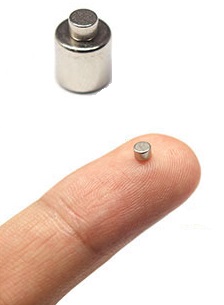

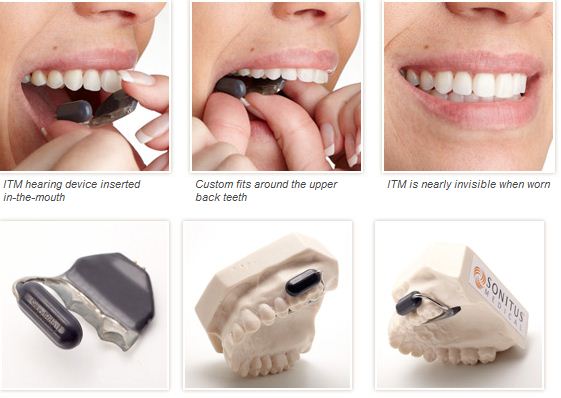
It makes great clickbait, but it doesn't really make sense. Where would someone implant a bluetooth earpiece into their ear? There's not really a lot of empty space in that area unless someone is very overweight and the device is implanted in layers of fat adjacent to the ear, which aren't great at conducting sound. Did someone really wrap an earpiece in some bio-compatible material, put it in someone right before the test (battery life is limited), and that person was then in a low enough level of pain and/or on enough painkillers that they could still complete the test? I'm extremely doubtful.
But the bigger question is: What use is a 1-way communication device? Did the student have a second cheating instrument to photograph the test and send it to someone off-site? Or did they have someone with the test answers reading them off in real-time ("Question 34 - Answer is C")? It seems this would only be useful in an extremely narrow set of circumstances, if it could be pulled off at all.
Really though, why wouldn't someone just grow out their hair or wear a wig and put an earpiece under their hair? The idea of surgically implanting something that could be easily concealed seems like a modern urban legend.