In many science fiction books we assume that if an alien planet ever got a whiff of us they'd quickly board their space ships and come see us.
It's somewhat comforting to think the alien planet could also be in a perpetual bureaucratic budget crisis and they've dismantled their space program to make more room for tax cuts.
Science fiction almost universally assumes the speed of light is not a hard limit. At this time we have every reason to believe that it is a limit. Our theories also say that if you were to go faster than light (which you cannot) it implies time dilation and time travel - again science fiction just assumes a loop hole so that doesn't happen.
Many talk about travel at 10 times the speed of light (warp-10) as if that is fast, but if you actually notice that lack of aging during travel they have to be traveling much faster than that. (at 10 times the speed of light the nearest star to earth is just under a 1 year round trip - your kids would not remember you very well when you return)
Which is to say that any aliens with space travel that discovers us now will not be making the journey because the length of time it would take.
> Science fiction almost universally assumes the speed of light is not a hard limit.
Not at all, you need to look at other sub-genres. The social, economic and military structures that form around slower than light travel are a mainstay of hard science fiction. "A Deepness in the Sky" is a great example. So is the first half of "Neptune's Brood" or the second half of "Accelerando". Any story that uses a generation ship as the setting, like "Hull Zero Three", also assumes sub-light travel. Or what would happen if present-day society discovered an alien race next door, like in "The Sparrow". Or maybe we need to make ourselves slightly less human to survive sub-light space travel. "Blindsight" and "Echopraxia" explore the philospohical ramifications of that. Even "Ender's Game" doesn't have FTL travel.
Now space opera almost universally assumes that FTL is possible. Though there are exceptions, Ian Banks "The Algebraist" is my favorite sub-light space opera.
edit: Some hard sci-fi will still use wormholes, either as a normal thing or a macguffin. FTL communication is also common. Though FTL comms are getting less common in modern hard sci fi. Us readers like this and it makes for convenient plot devices as comm lag leads to misunderstandings.
TV and movies are almost always space opera, with "The Expanse" being the only sub-light TV production that comes to mind, and "2001" for film. But I don't know as much about film as books.
Just wanted to mention The Expanse, which definitely has hard limits on going over (or even reaching) the speed of light, and touches on many of the tropes you mentioned. It's also probably one of the best examples I've seen of a truly alien encounter- no bipedal humaniods with spoken language.
The book series is excellent, and it has two seasons released from SyFy, which does a pretty good job capturing the feeling the books.
Coincidentally I'm working through the book series right now. It is mostly good, though it would be nice if the main characters weren't quite as consistently lucky.
The author's handling of energy is really annoying. I can overlook the structural impossibility of spinning up an asteroid for example, but I can't overlook the fact that they can command that sort of energy. It is made even more frustrating because they understand the offensive capabilities of kinetic weapons and rocket exhaust.
For example, the mirror array on Ganymede was stupid. The greenhouses use electric lighting for half of the time anyway, when behind Jupiter. Why build this giant orbital mirror array when you could install a second fusion reactor instead and leave the lights on all the time? And then it could all be underground too.
Magnetospheres make some locations very desirable. Why not lay down some super conducting cables, hook up a fusion reactor to it and make your own magnetosphere? This would have been a great plot device too, since any rich civilized place would do it, but it also makes detection of the habitat trivial. Poorer places would keep their's off and take the risk of cancer, turning it on only for protection from solar flare bursts. Seedy places would never install one at all.
That has nothing to do with what I'm talking about. In The Expanse, they hollow out and spin up asteroids to use as a space station with centripetal artificial garavity. A typical rubble-pile asteroid would fly apart well before that. Even solid rock couldn't take the forces since they are all tensile.
In the novels, it's described how the asteroids like Ceres have been reinforced internally for precisely that problem. Now the energy requirements to spin up something that massive, that's another issue.
Sorry, I thought you (or the other people reading this thread) might be interested in how asteroids behave in the real world. I wasn't saying that's what was happening in the show.
I didn't mean to come off sounding so harsh. YORP is fascinating stuff, particularly when it can happen to such an extreme degree to make a stable asteroid break up.
I find YORP interesting because it makes things change in a part of the solar system that otherwise might be pretty boring... a lot more interesting than slowly outgassing volatiles and maybe an occasional collision.
How do they zip around the solar system so quickly? It seems like at various points they go from earth to where ever almost instantaneously (in the show, that is).
Not a troll - I'm genuinely wondering what I missed from the episodes.
Basically the Epstein drive allows for basically unlimited thrust, which is what gives most ships on the show gravity. Unlimited thrust == unlimited acceleration. When they reach the halfway point, they 'flip and burn'; turning around and start accelerating away from the destination to slow their relative velocity.
Ships get around the solar system using a propulsion system called an Epstein Drive. I just watched the following video yesterday. The narrator talks about travel times to different planets using a flip and burn technique (accelerating at a constant rate to half way point flipping direction, and decelerating at the same rate to the destination).
In the books, the sense of time it takes is conveyed. I don't think they're treating it as instantaneous in the show; just that they're keeping the story moving along because it makes for better TV. If you like the show and you like reading novels, I highly recommend the book series.
Same as in most tv shows, they skip the boring bits.
Travel times are mentioned occasionally and they are consistent with ships that can do a brachistochrone orbit at a constant 0.3 or 1f acceleration. This would be a few days between most locations mentioned iirc.
Everyone says that after book 3 or 4 they go downhill anyway.
I like to believe there was only one Matrix movie ever made and only one Dune novel. I will probably prefer to believe that there were actually 9-N books in The Expanse series, where N has yet to be determined.
I'm rereading the Dune series right now and on Children of Dune. Actually REALLY enjoying the 2+ books more than the first. What would one do if one had become a human god but didn't like the future he saw?
Like the post-Ender's books (before Card sold out), I find mulling over the consequences of upsetting an applecart far more interesting than the upsetting.
The first books in both series feel a bit too "Mission Accomplished!", pat-on-the-back in hindsight.
For me it is all about the world building, the practicalness of the universe presented. Dune had a decade of planning go into it before the first book was written. The rest did not have that amount of background effort and it shows. After the first book it all feels like he's making it up as he goes along, instead of drawing on an encyclopedia.
Children of Dune had the most egregious problem with this. Trying here to not spoil the plot for you, but at towards the end (page 329 of 408 in my edition) Leto discovers something profound. The backstory to introduce this was first mentioned on the previous page. It didn't use some bit of trivial from the first two books, and he couldn't be bothered to write it 300 pages earlier either. (Feel free to email me when you think you've reached that part.) The later novels are slightly better, then he's writing these new discoveries into the previous chapter.
Re-reading Dune has always been pleasurable for me. You can feel it is just the tip of an iceberg and tease out the history by reading between the lines. The other books lurch from one deus ex machina to another.
Ender's Game is also largely about consequences too. Humanity wins the fight and destroys the big bad, but this doesn't happen at the end of the book. There is still a third of the story left to mull over the consequences.
edit: Slight spoilers, but nearly all of the later Dune books essentially allow anyone to come back from the dead. He never once explores the ramifications of this. What happens if you try to bring back multiple copies of someone at once? Does every cell in our body really carry the full weight of our entire past experience? What about identical twins? What if you blended the nucleus of one person with the mitochondria of a second and the cellular plasma of a third?
Or does the procedure somehow tap into the soul? Is god annoyed that the natural cycle is broken? Does the process damage the soul? Never once delves into any of this, instead it is used only as a cop-out to avoid creating new characters.
I hear what you're saying. I'm gradually arriving at a model of "good book" that includes what a person's particular transgressions of suspensions of disbelief are, and what degree is required to trigger them.
For me, the biggest things are currently "must be at least this hard sci-fi" and "must have believably human characters." It sounds like one of yours is "must have book-spanning world-building." Which I get, but don't think bothers me as much.
I expect the unexplored deus ex machina will probably irk me when it shows up though! Though maybe not, I think a large part of my enjoyment of Dune is the somewhat orthagonal-to-Western world-building. Although the Islamic religious echoes are ham-fisted and shallow sometimes, it's still refreshing to even read something attempting it.
By my memory, Ender's didn't mull over consequences nearly as much as Speaker for the Dead, Xenocide, & Children of the Mind. It was more "Oh my god, this was horrible" and less "We did a horrible thing, so what do we do now? And how does that inform our reactions the next time we're presented with the same choice?"
Side note: if you ever want to read something laughably bad, especially for how modern it is, read one of the Honor Harrington books from David Weber. I tapped out after 20 pages.
Maybe world building is the wrong term? I consider civilizations, economics, infrastructure, etc, as another character in the story. They have background and develop over time. They should be as believable as the humans. This is common in the "future history" sub-genre but you find unexpected gems too. Discworld was remarkably good about it, for example.
Just found my copy of Ender's, one of the few OSC books I still have. I got the proportions very wrong. The story was "over" on page 295 of 324. So like 9%, the entire last chapter, was about the aftermath. Mostly Ender dealing with what happened. Still way more than the usual "happily ever after" and sequel hook you normally see, to give it credit.
The Honorverse is the purest of space opera. I have too many good memories to agree with you, but I won't push my luck with a re-reading. I seem to recall that it actually was pretty good at having their magic super weapons, drives and shields progress reasonably over the series. Weber was very good about having military tactics shift in step with the technology.
That's a more detailed way of putting what you're looking for. And I enjoy books like that as well (e.g. A Song of Ice of Fire). Incidentally, how'd you feel about KSR's Mars books, if you've read them?
But I guess I forced myself to read enough Golden Age sci-fi that I developed a neurotic category for lazy... "deep worlds"? I'm looking at you and Foundation, Asimov.
So much of that stuff is a splash of human-esque characters and plot on an otherwise naked thought puzzle that I feel like it deserves its own category. I suppose it irks me less when I feel like the author did that not because they couldn't do otherwise, but because they intentionally didn't care to. Which is to say, the thought puzzle interested them more than the characters.
I feel the same about Lost. JJ Abrams doesn't give a damn about solving mysteries. He just likes creating them. Not liking him for not solving them is like not liking a dog because it wags its tail. That's a valid preference against tail wagging... but maybe not dogs for such a person?
And I really wouldn't chance a reread. I started reading it because I'd heard good things about the tech. Let good memories lie.
The lines that did me in were something to the effect of: "{Someone does a thing that makes Honor happy}. Honor felt happy because someone did a thing." (!!!)
Mars was alright. I had a lot of trouble with one of the books. Took almost a year to read because it felt like there was nothing but political infighting in it.
Foundation was actually what got me started on the "future histories" kick. The civilization is a more fleshed-out character than any human in the story. But I was eleven and didn't read any further than the original trilogy.
My favorite golden-age sci-fi would probably be Heinlein's "The Past Through Tomorrow" collection. The parallels between Elon Musk and D. D. Harriman are amusing.
I have, but the interface by which the spoiler communicates is fairly realistic. The fact that the spoiler creates an interface to be able to communicate with humans seems a realistic take on alien-to-human communication.
Just an FYI. In Star Trek at least the warp system works like this: warp-1 is the speed of light and it then increases exponentially with warp-10 being infinite velocity.
> it then increases exponentially with warp-10 being infinite velocity
No, no, no. That was only in the Voyager episode Threshold. It is widely regarded as one of the worst Voyager episodes, and the entire plot of that episode doesn't make any sense. There are questions of if this episode is even canon.
In any event, there are other Star Trek episodes where warp 10 is not a hard limit. All Good Things has ships traveling at Warp 13. The Kelvans modified the TOS Enterprise to travel at Warp 11. Even within Voyager, transwarp conduits allow for travel faster than whatever warp 10 would be if you disregard Threshold.
Warp 10 is not infinite velocity. It's just a line in a terribly written episode.
No, it is actually (mostly) correct. In ST:TNG they redefined the definition such that it is infinite. It was documented in the Star Trek: The Next Generation Technical Manual, which was published in 1991 and was written by the technical advisors for the series, who based it if the internal series technical bibles[1]. This was a distinct change from the original TOS which they never explained or formally retconned, but for all the series in that era it holds.
That was the standard scale used ST:TNG, ST:DS9, and ST:VOY with the notable exception of All Good Things. Obviously the point was to convey to the audience "Hey look, in the future things go much faster." Unfortunately they had originally chosen a scale that doesn't make that obvious to most viewers (it is not intuitively obvious that Warp 9.999 is substantially faster than Warp 9.99[2]). At a practical level it also very inconvenient to have a speed scale where all of the speeds share the same prefix (IOW, it is much easier for the captain to call out "Warp 9" and "Warp 12" then it is is to call out "Warp 9.99" and "Warp 9.999."
I choose to believe that the in the All Good Things timeline that once Federation started building ships that consistently exceeded 9.9 they came up with a modified scale that had better resolution and was easier to use, but that doesn't change the fact that Threshold (despite being terrible) is actually consistent with the existing source content and All Good Tings is not.
The TNG technical manual set warp 10 as infinite speed, and recalibrated the scale (so that warp 9 for the Enterprise-D was far faster than warp 9 of the original enterprise.
Presumably in the alternate future in AGT they had recalibrated the scale again (probably as warp 9.975 is a mouthful, 9.9954 would be a right pain)
Star Trek's warp drive actually does not necessarily move the ship at faster-than-light-speed, but by warping space-time around the ship ("warp bubble"), so only the effective distance crossed per time is faster than SoL. I'm sure many of HN's audience are already aware of that, but it's worth noting that this might in theory even be possible: https://en.m.wikipedia.org/wiki/Alcubierre_drive
There are lots of problems with this theory, but to me it's mind blowing that it cannot be fully excluded yet. I guess we will need AI superintelligence to find out.
Childhood's End, Arthur C. Clarke. Space travel is sub-light speed, and specifically takes account of time dilation as an integral part of telling the story.
Historically countries make war on their apparently-similar neighbors quite frequently. Antagonists that look very similar to outsiders denounce each other as irreconcilably different, sometimes for centuries or even millennia. Loss of ego (qua individual identity) is equated with loss of consciousness and thus loss of life. I'd argue that the process of deliberate othering (semantic maximization of difference) is a precursor to aggression. Establishment, maintenance, or expansion of a differential gap is a fundamental process in biology.
Well, 1930s Germans were pretty similar to Poles and the Dutch, and even more similar to German Jews. Indians and Pakistanis are also not exactly space aliens to each other, nor are Iraqis and Iranians, Russians and Ukrainians, or Syrians and other Syrians.
I'd say the historical rule for warfare is that the belligerents are so similar that tiny differences seem irreconcilable. Proximity and competition for resources also seem more important that otherness.
Exactly. I can't think of many wars where the belligerents were really different from each other.
American Civil War: many were actual relatives! ("brother vs. brother")
WWI: English are descended from Germanic tribes, French are closely related to Germans too.
WWII: Same as WWI mainly; Italians aren't very different from French/English/Americans. Americans/Japanese were a pretty big difference though. But Japanese/Chinese isn't that big a difference, relative to non-easterners.
The people who promote wars frequently try to cast the enemy as alien, in order to rile up support for the war and to get soldiers to participate.
> The people who promote wars frequently try to cast the enemy as alien, in order to rile up support for the war and to get soldiers to participate.
I'd argue that the cultural perception of the belligerent humans towards their targets is far more important than objective differences.
And you and parent are certainly being overly-reductive compared to the context of the times.
What would a 1930s German have said about being compared to a Polish or Dutch person? Would they have seen themselves as "pretty similar"?
And I'm not sure how many Indians and Pakistanis you've talked to, but they're pretty close to space aliens to each other.
Same with Shia Iraqis and Sunni Iraqis, and both with Kurds. Etc etc.
I don't see how you can say "these peoples are the same" across any modern ethnic or national boundaries without a lot more support without it coming across as "those people all look alike."
Hell, I can localize most folks in the US within five sentences or so.
And yes, there were states that straddled the Mason-Dixon line (and states like Virginia that were shattered because of it), but outside of those limited cases I'm sure the majority of the people involved could have identified "the other" pretty easily.
Point being that if we're finely tuned enough to physical and cultural differences amongst our own species, yet still war on those we can perceive as different... imagine how much stronger that impulse would be against something that didn't even look like us.
My point was as a direct counter to your assertion that warfare increases with degree of difference between peoples.
That would predict that the Germans would prefer to ally with other Europeans against people like the Japanese, who they are maximally different from. Historically this did not happen. Yes, there are clear conflicts between each of the groups named, but they are more similar to each other than they are to most other populations of humans.
Let's say an alien combat spacecraft crash-lands in the middle of ISIS-controlled territory. Would you expect ISIS to immediately declare a cease-fire and surrender the craft and its weaponry to the UN so that humanity can work together to face this new threat, or do you think they would immediately go about using it as a tool to better murder their fellow humans?
If you're proceeding purely from history, it's not supportive to say that armies on opposite sides of the world fight each other more rarely than armies next to each other.
A more apt test of my assertion would be the frequency with which civil wars (excluding cross-ethnic wars in poly-ethnic societies) are initiated vs non-civil wars (allowing for the variance caused by internal policing, international politics, etc).
Just because Poles and Germans are similar to you doesn't mean they're similar to each other.
On the latter, I'd prefer a more fair: ISIS and a non-ISIS armed force are engaged in a firefight. An alien ship crash lands and disembarks five non-humanoid aliens. These aliens immediately begin shooting at both parties. What happens?
@ethbro: I'd expect anyone who fires on any side on a battlefield to receive return fire. That hypothetical entirely disposes of "alienness" as a variable.
In any case, I've been trying to argue a point on my own rather than being a Scott Alexander repost-bot, but I have clearly failed. Most of what I'm getting at is based on what I remember from http://slatestarcodex.com/2014/09/30/i-can-tolerate-anything... . He presents this far better than I have.
Well, this have stirred up interesting discussion.
Ironically, I initially didn't mean war, but some project that requires concerted effort of all the population. Like colonizing nearby uninhabited planets or improving life conditions on their home one.
Turns out I wasn't thinking anthropomorphically enough.
Only if it would apply to all alien civilizations.
The thing about Fermi's paradox is that the Universe is old and the local galaxy is big, so any explanation for the apparent absence of ETI has to cover all ETIs. It just takes one species in galactic history to reach the point of launching a self-replicating interstellar probe to produce a galaxy permanently aswarm with them. Heck, we're not that far away from being able to do so ourselves. And any explanation of the form "the ETIs wouldn't do that because reasons" just fails, because it just takes one event, over a very long time and large number of systems.
"in this world nothing can be said to be certain, except death and taxes."
— Benjamin Franklin
So I guess Ben just knew that aliens would never be a problem because Death and Taxes. Apparently the IRS is more powerful than Statistics and Physics.
This. If they come from a distant star/galaxy to a place where we let a rotten economic system be the hardest obstacle preventing us to go to a nearby planet, a contact with them would become a damn opportunity to learn something good.
The reality could be a lot more melancholy. The universe is so vast and intelligent life so rare, countless species could evolve to space faring too far away from each other to ever have a chance to meet. Faint wisps of eons old radio chatter or long dead ruins might be the best we ever get but even that would be life changing.
It’s not just politics, it’s the entire human race.
For example, we are spending $45 billion in our healthcare bill to fight the opioid epidemic. Imagine if we were able to avoid such problems in the first place.
It is not a problem though. My friends in big pharma did better than me - big houses, cars, holidays, money in bank. I guess they will be on the Narcan gravy train too. Doctors have to drive fast Porsches too, don't they?
Why is it always an alien invasion and not just alien curiosity or scientific interest? I'm sick of this trope that all alien species must be like the worst demographic of humanity.
In a distorted way. Alien invasion movies (or demons escaping from hell or any of many similar narrative tropes) are basically stories where our worst characteristics are projected onto ugly analogues of ourselves which are then heroically defeated by the cooperative effort of various good characteristics.
The problem is that by placing the origin of evil on the far side of some liminal threshold (species, space, stargates, hell) we generally fail to engage with it and so perpetuate the existence of an epistemological gap.
It's interesting to consider genre tropes as analogues of Kubler-Ross' stages of grief. Viewed in this light, Europa Report gains considerably.
Back cover: Picking up where the last novel concluded, Grogdar continues negotiations to amass the requisite votes for an invasion. Plutar, still with a majority in the Dkystfit's upper chamber, seeks to block her.
Spoiler: Not much happens in this book. But maybe in the next!
The Fermi Paradox is different. It's really about interstellar colonization, not just travel. It's basic geometric growth: the Universe is old-enough and geometric growth is fast-enough that, if interstellar colonization is possible, aliens would have spread across every habitable planet in the galaxy, just as all life does. They would already be here.
Therefore, there is some filter that prevents the vast majority of life from achieving interstellar colonization. Either the filter is behind us and we're the lucky first ones, or the filter is ahead of us and we are almost certainly doomed to stay trapped in our solar system until it is no longer habitable.
Maybe humans are just early in general. Who knows, maybe intelligent life evolution will peak in several billion years and we were just ahead of the curve.
Let's assume that aliens had a 1% head start on us. They were 1% faster at evolving. That's not a crazy idea - Earth spent 2 billion years going from photosynthesis to multi-cellular life. The cretaceous extinction could've been a 50 million year setback, how close were Dinosaurs to getting sentience?
We're at 13 billion years on the global clock right now, so 1% of that is 130 million years. An alien with a 130 million year head start on us. Imagine that.
Now let's assume there are 40 billion habitable planets in the galaxy. That seems like a lot. And let's assume it takes a really long time for a planet to go from "just colonized" to "ready to produce more interstellar colonies". Say 100,000 years - longer than recorded human civilization. We'll make a vague approximation - every inhabited planet can colonize another planet once per 100,000 years. That seems conservative.
It takes about 35 generations for a doubling population to reach 40,000,000,000.
35 generations. So with a generation taking 100,000 years, that means 3.5 million years.
In 3.5 million years we see a species go from "sentient" to "every habitable planet in the galaxy".
You can play with the numbers, but the result speaks volumes: geometric growth is fast, and the universe is old.
It is highly unlikely that we're the first. And if we're not the first, and interstellar colonization is possible, then every planet in the galaxy should already be colonized, because it would take a blink of an eye in galactic timescales.
There's also the argument that galactic conditions haven't been "right" for advanced civilizations until somewhat recently.
Specifically that the metallicity of stars would need to exceed a minimum in order for civilizations to have the necessary building blocks for technology.
It's hard to build a fusion reactor without the right elements. And it would be impractical to synthesize them in any practical amount. Especially since that would balloon your energy needs drastically.
I had a conversation a few years ago with Buzz Aldrin. He was talking about his idea for a Mars Cycler which would travel continuously between Earth and Mars. I told him that I thought it was a great idea (especially as it would be investing in 'permanent' space infrastructure instead of a single-shot mission) but that I thought it was unlikely that the government would allocate enough resources to build it. He seemed very disappointed with me, as if by making a realistic assessment of today's politics that I was voting in that way. I'm all for spending money in Chryse Planitia instead of Helmand province. So is almost everyone I know. But I feel like the chance of the US government actually funding something serious in space is pretty much nil. And I have no idea how to go about changing that.
I have trouble understanding the enthusiasm about space. Space hostile and empty. Why not simply send space probes and rovers at a fraction of the cost and spend the money more wisely, for example in projects which research aging, cancer, overpopulation and disaster management in face of global warming. Why do we need to make the exception for space and get drunk with nostalgia and romantic ideas of exploration, when the rest of science is usually about sobriety and utility. Where is the sober calculation that space exploration is more effective than other ways of spending research funds?
Space probes may be cheap but they are slooooowwww. Most of the research done by spirit, opportunity and curiosity could have been done by a trained astronaut in an afternoon. As an example, in its 2623 day mission, spirit traveled less than 5 miles. Rovers are great for low budget exploration, but if you want to kick things into high gear, there's no substitution for trained humans.
Some of you may be thinking, 'Hold on a second, if you took the money for manned exploration and poured that all in to rovers, surely you would get even more science done than humans could possibly do!" Perhaps, but I would argue that the research done to support the manned exploration should be counted in the scientific haul. Meaning that currently, for ten billion dollars, we could shoot rovers to every corner of the solar system using current rocket technology. But if we spent that ten billion dollars sending people to mars, we would have to develop new rockets, new infrastructure, new habitation technologies, cosmic radiation shields and much more. All that technology, plus the knowledge we gain on mars would be more valuable than simply sending rovers all over the solar system, partially because all that new technology would probably make it easier to later send rovers all over the solar system.
In addition to the above, there is also the massive pr power of putting people on mars. Everyone in the world knows Neil Armstrong, but no one cares much about luna 2.
NASAs manned space efforts have devolved into a scam to divert funds into the state of Alabama. It literally can't build any manned space systems unless they are gold plated and cost 20 times what they should.
I thought it was to prevent corrosion in leo.. I understood that the upper atmosphere's interaction with high energy radiation creates a corona of ionized gas around the earth which is extremely eager to combine/corrode any material it makes contact with.
The question should be, would you rather your tax dollars go towards a War machine? Or supporting the move of intelligent people to 3rd world Alabama to hopefully balance out the crazies and racists?
I'd rather NASA cancel the SLS instead of spend $2B per launch, when they can then go ahead and contract with SpaceX and Blue Origin to launch similar vehicles for less than $200M per launch.
> Space probes may be cheap but they are slooooowwww
If we spent as much on a space probe (or probes) as on a manned mission, I imagine there would be enough weight capacity to make the unmanned rover (or rovers) faster, if that was considered worthwhile.
Also consider that the total distance traveled by a unmanned rover over the course of the mission already exceeds that of manned missions. Wikipedia links to a nice chart from NASA [1].
Distance traveled and speed to travel that distance isn't necessarily connected to the value of a rover.
As to "all that new technology [we gain from manned exploration] would probably make it easier to later send rovers all over the solar system", frankly, we could just develop the new tech for unmanned exploration directly. Manned missions primarily serve as PR, except when we actually need careful manipulation, like repairing the Hubble, something that has almost continuously been pushed off to the point where it likely makes sense just to replace it.
It's fairly hard to figure this out. What follows is a really bad comparison between Apollo & Curiosity, which completely ignores tech advancement, the difference between a moon flight and a mars flight, the length of time for each mission, the amount of data collected, and a whole lot of other stuff.
The cost of Apollo program in 1973 was reported as ~$25 billion. In 2016 dollars, ~$135 billion. The Apollo program made 6 manned landings (I'm going to ignore non-landing missions as we're talking about rovers & consider them part of the development cost for the program).
The curiosity mission was reported as costing $2.5 billion in 2011 ($2.6 billion in 2016 dollars).
There is no better time for manned space exploration than now. Certainly within 100 years and possibly within decades, robots will be better than humans in nearly every aspect of space exploration. I think the proponents of manned space exploration see their window closing, and are getting a bit desperate.
If we want NASA's research to have benefits to broader society, it would be best to redirect it all toward robotics and artificial intelligence. This would give the most scientific benefits as well as long-term engineering benefits.
Currently, the money being spent on manned space exploration has negligible side benefits. A lot of it is being spent on old technologies, like non-reusable rockets that are too expensive to fly.
This is a feature, not a bug. There is a small fraction of humanity that has the desire to do very hard and physically dangerous things. Another fraction who greatly enjoy empty spaces and prefer having great influence over the culture they live in. On Earth, very hard and dangerous can be found, but the activities are either recreational (mountaineering) or involve hurting other people (military, criminal life). Physical empty spaces are still around on Earth, but culturally empty spaces are gone. All land on Earth is either claimed by nation states or must remain unsettled by treaty (Antarctica). Have a small sub-set of humans desiring to leave the over-crowded tribe and cross that river, ocean, or desert for the chance to start their own tribe/civilization is probably necessary for evolutionary survival of the species.
Complaining about the waste in NASA's budget for human exploration, that I can understand, as they have not really advanced that cause since the moon shot. But to dismiss real human exploration all together ("drunk with nostalgia and romantic ideas of exploration"), when a certain fraction of people need it for a fulfilled life, seems closed minded. Maybe a crack will form if you read this. With a world GDP of about 80 trillion dollars/year a few billion/year of public funds for human space flight does not seem unreasonable.
Well said. Humanity hasn't had a true new open frontier in quite some time, and the negative effects of such are beginning to surface. It's an important component of a healthy civilization that's simply absent right now. Our restless have nowhere to go.
And yes, surely we have enough people and resources to swing large-scale space operations alongside what we already do.
Maybe Musk and Bezos can live in a biosphere bubble on the asteroid belt maintained by an army of their (wholly-owned) mining robots. But Mars is a bad joke. It's deep in a gravity well and is a gigantic, cold Sahara dessert without breathable air.
If physicists and engineers can come up with a massless drive and potent, safe energy to drive it (e.g. EmDrive powered by fusion) we cold probably send missions back and forth to nearby stars - a worthy goal. But even then it will be expensive and time-dilation will ensure that whatever glory the explorers get will be amongst strangers. And it seems incredibly unlikely that we'll find any planet sufficiently close to Earth to be worth colonizing!
Now, if someone invents a unique, valuable zero- or micro-gravity industrial process then look out! Space will get real sexy real fast.
Most inventions are serendipitous accidents. To find valuable things that can only happen in zero or micro gravity will probably require lots of people existing and experimenting in that environment.
On it's face, that's not a terrible argument. But consider the "bet" you are making: spend like $1T on a habitable structure large enough for a good community, and then ~1B per year to operate it, in the hopes of "serendipity".
How many materials scientists (and their families) would want to live in orbit, or on the moon, in harsh, cramped conditions, with limited tools and resources?
Do you have any idea how many of our modern technologies were developed as a direct result of the space program? New technologies were needed to go into space and many of them have become essential for our lives.
MRI, LEDs, Anti-Icing Systems, Artificial Limbs, Land Mine Removal, Firefighter Gear, Water Purification, Pollution Remediation, etc etc...the list goes on and on. Studies estimate a $7-$14 return on investment for every $1 of NASA expenditure.
Wow, you are saying if you take a massive pile of money to hire a bunch of the smartest engineers away from private companies and pay them to solve problems, they'll do it?
And if NASA didn't exist, and these engineers instead worked for less bureaucratic, more entrepreneurial businesses, they'd invent nothing?
Anecdotally, my group at NASA has seen several of our smartest engineers leave for the private sector in the last couple of years. They are all making heaps more money, but not one of them is doing the kind of innovative research that we do at NASA.
Please name any innovative research NASA is currently doing that will lower the cost of manned space travel. They are wasting $20B+ building a non-reusable launch system based on 1970s technology.
The future of space flight has to be cost effective. It almost certainly requires re-usabilty. Nowadays, SpaceX and Blue Origin are doing far more important research and actual development than NASA is. Thank you NASA for all the core technologies you've developed. But now that you have become hostage to congress and massive pork spending, and focused on creating massively uneconomic systems like the SLS, please get out of the way.
NASA is obligated to share their work with Americans. Many products ship with tech NASA invented that probably would not have been shared if a private enterprise came up with it.
Are you joking? The only point of doing private sector research is to build something out of it. We receive those advances as new products.
And NASA doesn't gift it's advances to americans, it shares technologies with private companies that share them in the exact same way. You and I still had to pay for our Tang, it was never free.
NASA is a huge inefficient bureaucracy hamstrung by a fickle and corrupt congress. As brilliant as it's engineers are, and they are very brilliant, their projects are extremely fragile, often getting canceled or not funded for ridiculous reasons, or having ridiculous conditions applied to them that slow development (such as parting work out to the less qualified across many congressional districts).
The largest project NASA is investing most of it's resources in is the SLS. It's not revolutionary. It's not a significant advance. It's just a large launch system that's mostly re-using old technologies. It does nothing to lower launch costs. It does nothing to advance re-usablity. It's not a solution to making deep space manned space exploration economically viable.
Any engineers who work on the SLS are engineers denied to SpaceX, Blue Origin, ULA, Sierra Nevada, or a dozen more cost-efficient space launch companies. NASA's competition for engineers raises engineering costs for everyone else. It's wasteful investment in a pork barrel project like SLS diverts revenues that could fund far more efficient launch systems at private companies, and give NASA far more manned launch capacity and much sooner.
Right now engineers at private companies are doing far more to advance economically viable space travel than NASA. Let's thank NASA for the Saturn program, but realize that everything they've done since has been hugely wasteful of resources and detrimental to advancing the cause of space travel.
Tang isn't a NASA invention, it was invented by Kraft. It tastes terrible and no one bought it until NASA used it[0].
But lets run with that. If NASA had invented they wouldn't manufacture and give it away, they would give away the recipe and entrepreneuring businesses could make it to sell if they wanted.
This is exactly what happened with Memory Foam. A NASA contractor invented it as part of the contract so they couldn't keep it secret[1] and it worked its way into a ton of products.
I think you are correct that SLS is not ideal. But I don't think that is really applicable, their inefficiency as business is perhaps understandable because they are not a business. They take their direction from Congress and congress told them to make a ship out of parts they had laying around and that was the SLS.
If we wanted to look at their other missions, they have landed several things on mars and orbited distant planets. Feats no private enterprise has done (yet). All the research from that is available amateur astronomers routinely use to discover new things, like exoplanets in old data.
Designs for things they made like their rocket motors is made available, and that is how Space-X started, by looking at NASA plans for their rockets and picking and choosing the parts they thought most practical.
Again, the inventor of memory foam isn't going to hide it, they are going to create products out of it or license it. So the idea that NASA "shares" is immaterial.
Calling the SLS "not ideal" is like saying a Tsunami will get you wet.
SpaceX benefited as much from NASA as NASA benefited from the Nazis, and as the Nazi's benefited from Goddard. Research marches on.
But currently the most important R&D in the space business is being done by SpaceX. The only way space travel becomes economically viable is through re-usablity, which NASA has not made any credible attempts at solving.
And NASA isn't inefficient because it's not a business. It's inefficient because it's being used to distribute pork barrel spending to specific congressional districts. If the most efficient way to build the SLS was to build it in Puerto Rico, it would never happen because Puerto Rico doesn't have any congressional votes. Instead NASA is forced to break up projects across a massive number of congressional districts and do each sub-task in the most costly way possible so the sub contractors in those districts get a big taste of excess profits to spread around the district.
The inventions did not arise merely from the minds of the engineers but of the problem constraints placed upon them. Space research has been beneficial for technological development because of the exotic problems which have created solutions with wide applicability.
This is not to say they would have not arisen through land based research but invention needs inspiration as well, not just financial incentives.
Where are the brightest minds of our generation now? What are they working on? Most are trying come up with better ways for you to click on advertisements.
Or in finding new and effective ways of selling shares of companies for profit.
What's important is that these jobs (finance and advertising) are more valuable work to society than scientific research, as reflected in the pay differential.
If NASA hires a bunch of private companies to build the subsystems for the SLS, they are hiring engineers away from Blue Origin, SpaceX, ULA, etc. Those engineers may not work for NASA, or have worked at SpaceX, etc, but it's the same end.
And the SLS is a boondoggle, so the efforts of those engineers will be totally wasted.
because space is more than us and it isn't us. It gives us a non-nation based activity to pursue that is greater than the whole of earth. It represents new frontier, new resources and ways of thinking that transcend this planet. It is a form of evolution and of freedom that isn't shackled so much by our self-made problems of earth.
There are new mistakes to make and that's super appealing.
We can't even cope with the environmental issues that we have on our own planet, so we avoid that and instead look to plaguing the rest of the solar system and beyond? Good grief.
You could have said the same thing about literally any exploratory initiative since humans first started using tools 50 000 years ago. Spending some tiny portion of resources expanding the scope of human presence does not preclude attacking more immediate challenges.
Are you suggesting that not going to Mars will solve all our environmental problems? This isn't an either-or question.
If we really wanted to, there's no reason we couldn't do both and they're is a blocking issue for the other and some of the technology and science for both are complementary (planetary science, solar and battery technology, environmental control, automation).
I personally would vote in favor of putting space exploration on hold until we get a handle on the quickly accelerating environmental disaster we humans have set up that seems that it may just wipe ourselves out.
Personally.
One needs beauty in the world, yes, but one also needs to breathe.
This doesn't make any sense though, as there's no reason they should be exclusive priorities. I, personally, would vote in favor of putting many things on hold until we increase humanity's resilience to catastrophic events by settling on other planets, but I recognize that priorities aren't mutually exclusive.
Anyway, what's the point of focusing all efforts on Earth if human civilization is going to die out here anyway? That's the path we're currently on, and stopping space exploration isn't going to magically fix that. Wanting other baskets for the egg of human civilization is just pragmatism.
Environmentalists will never be satisfied. There is always something to improve.
If humanity dies or goes pre-industrial because someone engineered a supervirus and we refused to put effort into space travel, all our conservation efforts won't really matter much.
Yeah, we're going to plague a bunch of inanimate objects, and defile the sanctity of the asteroid belt. It amuses me that "atheists" have decided life itself is a plague threatening some great holy Natural-Universe. Your distaste for the people around you is showing.
Dunno if you've heard, but this Universe is condemned. In about a hundred trillion years it'll run out of hydrogen and burn out. Might as well enjoy it while we can.
It's not the technology to tackle environmental issues that is lacking, it's the political will. Not going to space doesn't magically solve the problem of entrenched carbon-emitting interests having the power to block a short-term mandatory transition to renewable energy.
Given that, it absolutely makes sense to colonize space, as Mars can't be ruined in the same way that we're ruining Earth, and the petroleum mining industry won't be coming along for the ride.
What if space based Earth science is what it takes to solve our environmental issues? Sagan's Blue Marble has done more for environmental preservation than decades of armchair environmental activism.
Research is needed, it's hard to predict, and Development for space forces the movement of practical, envelope pushing movement of research and theory into at some hard problem solving in ways that just more research doesn't accomplish.
Space isn't solely responsible for solar cells, but I can't help but note these entries in the timeline.
1950s - Bell Labs produce solar cells for space activities.
1954 - On April 25, 1954, Bell Labs announces the invention of the first practical silicon solar cell
1958 - T. Mandelkorn, U.S. Signal Corps Laboratories, creates n-on-p silicon solar cells, which are more resistant to radiation damage and are better suited for space. Hoffman Electronics creates 9% efficient solar cells. Vanguard I, the first solar powered satellite, was launched with a 0.1W, 100 cm² solar panel.
Would the solar cell technology we enjoy today have developed as quickly or at all with that little extra push of space investment to move it along? Would the research ever have ended up as practical without hard engineering problems to solve along the way?
I think you'll find similar connections for fuel cells, and battery tech. You see metals research now which is applicable for the space application first, but the engineering knowledge will likely get re-applied in more expanded mundane applications in due time...
Humanity is at an incredibly high extinction risk. We have all sorts of incredible new technologies that could, at the very least, knock us back to pre-industrial society. They might just kill us outright.
We've already used all the easily accessible high-energy fuels, so if our current industrial society falls apart, we will probably never build another one.
If we don't get to space now, we will probably never get to space. Then it's only a matter of time until we get hit by an asteroid.
Or we'll just get killed by an engineered supervirus and skip the whole pre-industrial decay phase.
Insurance against what? Lets assume a self supporting mars colony today, and that the asteroid hits earth tomorrow making humans extinct. Will the mars colony get off mars in time to avoid their asteroid? It seems to me that we need to get to a few earth like planets before we can assume survival.
Mars is only the spearhead for further stellar and maybe even interstellar colonization, after all, we gotta start somewhere don't we?
Once we manage to do Mars, by gaining knowledge, developing technologies and maybe even discovering new resources, we can hedge humanities survival further by applying this experience to colonizing other places in space.
There's a lot of it there, but it's hard to extract without modern technology. There's a little peat (arguably the most accessible type of high-energy fuel) left in the British Isles and Finland, but coal is requiring progressively more and more modern effort to extract.
Not really. Wikipedia says that the USGS extimates that "At a price of $60/ton, roughly half (48%) of the coal is economic to produce." Current prices are near $10 a ton so only highly mechanized shallow strip mining techniques are profitable. Coal is about as valuable as other bulk earth products like sand and gravel. 19th century techniques could easily mine most of this coal. It is shipping, not extraction, that determines the price of coal at a given point on Earth. Civilization might need to restart near the mines, but there are still many of those places left.
It might sound trite, but the character from the Matrix played by Hugo Weaving related the Human Species to a virus. I think it's actually a startlingly accurate definition if you look at how we consume and expand, without finding a homeostatic symbiosis with the other forms of the environment.
It's in our nature to slash and burn and expand and grow, part of our DNA. Space tells people that they can continue being who they are, biologically, if you just find another world to find or build resources on. We want to be free to consume all we want, but want none of the costs or consequences.
Earth is hostile, too. A large part of human civilization is dedicated to making Earth more hospitable for humanity than it is in its natural state. We can do the same for space.
>Space empty
Only in a sense that a large container with a single fist-sized diamond is empty. It is empty on average. It contains an incredible amount of resources. Our solar system could easily house trillions of people (in O'Neill cylinders).
>for example in projects which research aging, cancer, overpopulation and disaster management in face of global warming
We already spend much more on these, than on space research.
Part of the reason is the same desire to see what is at the other side that pushed seafarers, voyagers and adventurers for ages to travel across hostile oceans, mountains and deserts.
It is not that we "need to get drunk .. with romantic ideas of exploration" as a society; but as individuals enough of us do anyway. I personally see it as a good thing. We do need to watch the costs, which is why my hopes are with the industry or eccentric [bm]illionaires, not NASA which became very bureaucratic and risk averse.
I happen to be Portuguese (land of pioneer seafarer) so had a chance to live with these legends in popular stories. There were other empires with better ship technology and huge fleets in place (e.g. China) and back in Europe one could find countries with better economical conditions to pioneer into the unknown seas (Genovese, Castillians, French, ..).
Yet, it was a tiny land on that corner of Europe which did the initial jump into the unknown.
Not just jumping, they crossed the whole of Africa using tiny boats and bargaining food at each stop. They succeeded because there was no other option. If the Portuguese crown were to make money, it had to risk doing what the others wouldn't.
Do you want to build a safer basket ? Or invest in two baskets and split your eggs ?
To some extent that is one argument, however space research in it's own right has generated a safer basket as well, as most engineering research is highly reusable. A lot of environmental problems for example could be solved via space based power generation that is beamed down.
Going to space is disaster management. By the time we find an asteroid that's going to cause another extinction event it will be too late to start space exploration.
I don't get it either. When it comes to manned spaceflight rationality goes out the window. Humans living on Mars makes about as much sense as homeopathy. I think it's some kind of nerd religion.
In regards to the cycler idea, he has even acted as a "customer" to a Purdue University team doing a mars feasibility study. They've recently released their report, in which they detail how a cycler might work in comparison to the original SpaceX ITS proposal.
NPR had a story this morning about why our budget never REALLY changes. And all the debate about passing this current budget is largely non substantive.
Basically it came down to special interest groups that really determine how our money is spent. If we want to not have 15-20% of the budget going to Helmand province, we have to start working against the lobbyists of private corporations who benefit from that...
Or instead of solving the problem, we could allow military contractors to fleece us for EVEN MORE money for developing Mars travel infrastructure. If we gave them a way to transition to a more profitable business maybe they would voluntarily make the shift.
Creating interplanetary projects like the one above are extemely expensive.
As the ISS showed is that costed !150 billion USD to construct making massive leaps into space should not be burden to a single country.
With that the funding would be less, and the return even smaller.
I believe a global space agency should be formed where each country can allocate the money they wish and set goals by panels to the direction that they wish to proceed. ( very hard i can assume ).
That will ease the financial burden of countries and create project on a global scale that will unite the world instead of finding new reasons be patriotic about.
> That will ease the financial burden of countries and create project on a global scale that will unite the world instead of finding new reasons be patriotic about.
Which is the opposite of what world leaders actually want. Jingoism is the name of the game right now.
I'm shocked that they are so brazen as to frame one of the categories as "entitlement spending". The neutral terms for the contents of this category are Medicare and Medicaid, pensions, retirement benefits, Social Security, welfare, and unemployment. You can also call them health insurance, retirement insurance, and unemployment insurance.
Technically, retirement benefits are things to which retirees are entitled to. Workers took lower-paying government jobs after weighing the value of the salary now against the value of the promised pensions later, or contributed to Social Security (not so much a choice by individuals, but a choice by the government of the past) which allows them to take the benefits of the program now. This is the literal meaning of the word "entitle", not the pejorative that it's become.
As far as health care and welfare go, I would argue that simply being human in a wealthy, modern society ought to entitle people to the right not die on the streets of preventable causes. I don't regret my tax dollars going to those causes, except insofar as they exceed actually providing health care and instead enrich the bureaucracy and megacorporations that are paid to provide it.
> I'm shocked that they are so brazen as to frame one of the categories as "entitlement spending".
What's wrong with calling them that, those are entitlements.
> Technically, retirement benefits are things to which retirees are entitled to.
Which is why they're called entitlements.
> This is the literal meaning of the word "entitle", not the pejorative that it's become.
It's only a pejorative to some and those same people think liberal is a pejorative. Nothing remotely wrong with the word entitlements, it's not pejorative to anyone who understand what the word actually means.
"Entitlement spending" is a fairly common term used to describe government spending that benefits the people directly. I've seen it used in all kinds of places. I haven't heard it used in a derogatory way, though maybe I just haven't noticed.
Even rich societies require some function which controls the population. The more you shield people from natural forces, the more you will stress the system as impact of those forces builds up.
I don't think that it's correct to say that NASA is getting less and less funding. At least according to the data on Wikipedia, NASA's budget has been between $15B and $20B per year in inflation adjusted dollars for the last few decades, and so increasing a bit most years to account for inflation.
The only budget metric that has been dropping has been NASA's percentage of the federal budget, and that's more due to the huge growth in federal spending rather than any decrease in the amount of funds that NASA has available.
What a terrible chart. By overlaying rather than stacking the areas it looks like almost all federal expenditures are now "entitlements"! Here's a stacked area graph since 1962, which makes clear that we've basically traded military spending for health care for old and disabled people:
But most federal outlays are entitlements. Breaking it out by entitlement type doesn't change that fact. Military spending presumably includes space/rocket related R&D.
And the total as a percentage of GDP has gone up extensively, which a stacked graph doesn't show.
And the issue with this is the health care system, where the private companies get all the healthy individuals who can pay premiums, but the government has to pay the bill for those who can’t.
I can see both sides of that conversation. Yes, pessimism is realistic, but also that judgement contributes to that reality. It's a self-fulfilling prophecy. The equilibrium can flip quickly after some unforeseen development shakes us out of it. Aldrin lived through such a flip -- I think it's hard to appreciate now how amazing aerospace developments were in the 50s/60s when the work was a societal priority.
Kickstarter solved a kind of similar problem for entrepreneurs, where it used to be too hard to surface the hidden demand for a product. There must be something we could do about testing/exposing the support a political idea might have past the "activation energy" needed to roll into a different equilibrium. A simple poll isn't enough.
But hasn't this generally been an issue since Apollo?
Great Ideas(TM) emerge and people get enthusiastic about them, but fail to realize that the cost makes them difficult to carry out as intended. The Great Idea is then either watered down (Skylab, Space Shuttle) or comes to an abrupt halt due to lack of funding or for political reasons (Space Station Freedom, Constellation).
I'm getting more and more convinced that it will take autocratic nations looking for prestige, or commercial companies offering cheap and exotic tourist flights for humans to get back to the moon. The US doesn't have the political strength or stability to plan such a mission at the moment, and keep it going for the ~10ish years it takes.
Right now Mars doesn't have any resource with crave enough to justify this enormous cost. If suddenly we discover that there is something we can get money from, and not just knowledge, you'll get investers.
One "resource" that might justify a human presence on Mars is its relatively weak gravity well. Combine that with fuel production, and you are looking at Mars being the gas station to the solar system.
There are certainly places in the solar system that do have valuable resources and the fuel to trawl around the asteroid belt would be a lot cheaper if it could be lifted from Mars rather than Earth.
Not saying it will happen anytime soon, but that may be what the future holds.
Martian soil contains non-neglible amounts of phosphates[0]. Phosphorus is highly important for the production of fertilizers and gets increasingly rare here on earth[1]. It wouldn't suprise me if 150 years from now, phosphates are imported from martian soil.
The easily available deposits on Earth are expected to last longer than 150 years. It's unlikely to be worth the delta-v to bring it here from Mars before known deposits are exhausted.
Even after that I expect deep sea mining or direct extraction from seawater to be more viable than interplanetary shipping.
I expect that sewage treatment to fertilizer will solve the problem before we reach that. Our current time where we are not putting manure on all fields is an anomaly in time.
The phosphates are washed off by rainwater and diluted into the watershed (eventually the oceans). In the ocean, it is very slowly converted by bacteria and eventually brought back by geologic processes uplifting sediment. For a while, we could mine the deep ocean floor...which might be comparable to mining on Mars.
I have been watching this since 2000. New president comes in, scraps old programs, declares new "vision". NASA does a few incoherent things and the whole thing restarts after a few years. It's pretty sad. I wish they would commit to something and actually finish it.
You can blame Congress. Congress insists on zip-code engineered space hardware whose primary mission is to ensure profit for contractors in their districts. The Administration, no matter who heads it, generally doesn't buy that approach, which is why you see the old programs scrapped (because they weren't going anywhere).
(Putting the Earth-science thing aside for the moment.) It really is a mostly non-partisan divide, here.
NASA has its own problems. A culture of risk averseness that is incompatible with new approaches like reusable rockets (although NASA will use them if they're proven by others). A culture of safety-uber-alles which is even more incompatible with expanding the capability of human space exploration in particular.
But for all that, NASA still accomplishes great things. NASA has been critical for the success of SpaceX (around 2008 in particular) and even has helped Blue Origin considerably. NASA has completed the International Space Station (the largest spacecraft ever built by far) and kept it inhabited since 2000. No one under the age of 20 remembers a time when there wasn't at least a couple people aboard the Space Station. This program has built up a level of experience with long-term human spaceflight that, in aggregate, exceeds all other such programs. We have experience manufacturing in space and leveraging ISS for launching commercial satellites (Planet.com in particular), helping pave the way for the current wave of smallsat launchers.
There are now half a dozen active satellites (half from NASA, but all with assistance from NASA) in orbit around Mars, two active on its surface, plus a probe around dwarf planet Ceres, Jupiter, Saturn, and another probe, New Horizons, which has visited Pluto for the first time and is now on its way to other destinations deeper in the solar system. This is all just scratching the surface of NASA's accomplishments in this time.
(And next year are slated the launch of two commercial crew vehicles that NASA has been funding, SpaceX's Dragon 2 and Boeing's Starliner.)
It's absolutely the latter. Congress has never really cared about spaceflight - to your Congressman it's just an opportunity to bring federal dollars to his district, because that will get him reelected.
But why not make real plans and actually get something accomplished, then you can point to something truly concrete during re-election, and even bump the funding even more.
The money you get from contractors for reelection is going to help more than anything you can actually point to. House seats are up every two years, and you don't accomplish much in aerospace in two years.
NASA programs typically span multiple decades and run in the billions of dollars, The political pendulum sways from one side to the other side every 4-8 years, every new administration is looking for ways to cut down taxes. It's amazing they get anything done imho.
I'm pretty sure the big reason Apollo was successful was that they had enough support to get the job done within that 8-year period. And, no surprise, Nixon's election heralded the end, although inertia kept it moving for a few years.
To get an idea of whan a mind-bogling number that is: Its about the amount of the GDP of the Netherlands. The whole economic output of a 1. World country with 17M inhabitants is slightly smaller than this budget.
The funny thing is, with the kind of space presence that kind of money buys you (we're talking Clarke-style rotating space stations here), nobody would dare fuck with you.
You don't need an official space weapons program to be able to drop heavy things from orbit. Nor do you need a fancy anti-satellite ballistics system when you can have one of your many astronauts sidle over and hit it with a hammer.
Droping stuff from orbit is cool scifi weapon system, but in practice it is surprisingly hard to do (you cannot just drop stuff, you have to impart it with some deltav to cancel out orbital velocity of the station) and inefficient (you have to get the stuff up there, which when you ignore atmosferic drag requires same amount energy as the projectile would release on impact)
"Amateurs talk about tactics, but professionals study logistics."
- Gen. Robert H. Barrow, USMC
And exactly this thing seems to be the major problem with essentially every space-related weapons platform other than ICBMs. Simply almost every such proposed system uses some expendable ammunition that is significantly more expensive to deploy or even just manufacture than what it is supposed to destroy.
part of logistics is the ability to do something. It doesn't have to be practical for me to drop a heavy thing on you, I just need the ability to do it if you push me hard enough. If I'm governor of a space station I'm better off not turning half my space station into a bomb on your capital, but if you push my hard enough I might feel compelled to do that so you will treat me and my needs with respect.
Problem with this is that it has to be credible threat. Even when you would fill ISS with conventional explosives and somehow arrange for it to land on reasonably precise spot and explode on impact the damage caused will be many orders of magnitude smaller than what you would expedite to do all that (and this holds even when you take the expense as a fraction of relevant defense budgets instead of absolute values)
I wonder if someone could sell Trump on this? After his rumblings about altering Geneva and NATO treaties, I'll bet someone could convince him to ignore the Outer Space Treaty and throw NASA a 10x budget increase.
Meanwhile people are still dying for lack of access to healthcare, infrastructure is failing, education is remaining poor...
I agree with the slash the defense budget part, but NASA doesn't need 300B/y (and would have a hard time spending it even). They need ~30B/y (i.e. double their existing outlay) to do SLS and continue existing operations, and it needs to be in a lockbox of some kind such that future political swings require a huge amount of horsepower to disrupt it (like a congressional super majority vote).
Money spent on NASA has provided significant breakthroughs in science that includes the internet, MRIs, ear thermometers, automatic insulin pumps, implantable heart defibrillators, fiber optics, light emitting diodes for brain cancer surgery, programmable cataracts, long distance telescopes, solar energy, artificial limbs, memory foam, shoe insoles, smoke detectors, water filters, enriched food, and tons of software.
Smoke alarms alone have saved hundreds of thousands of lives.
"NASA did not invent the smoke detector. NASA's connection to the modern smoke detector is that it made one with adjustable sensitivity as part of the Skylab project. The device was made commercially available by Honeywell. The consumer could use it to avoid "nuisance" alarms while cooking. Like the quartz clock, this device is no longer available. "
Yes, they just need steady funding and a process that ensures that the money is spent on worthwhile stuff. After plans have been vetted then the politicians can come in and distribute the money to their districts.
The area where they get things done is unmanned spaceflight. Politicians don't care for that so the people at NASA can just do their work without meddling.
I don't think they have got anything interesting done in manned spaceflight lately.
> I wish they would commit to something and actually finish it.
I think this is pretty well hopeless at the moment. Major NASA projects have a timeline and cost operating on a 10+ year scale, but their budget changes annually and their priorities change with presidential election.
Really the only way I can see things improving is if a president managed to stake out a task that couldn't be taken away from them by the next one. I'm not sure how you'd achieve that, either - budget it all up front and tell them to buy gold bars with the money they'll need later?
It may work if during one administration they planned a program that is coherent and actually funded. All the initiatives over the last decade(s?) didn't make sense and were not even funded. In short, they didn't even try.
For some reason the unmanned missions are managed much better. I do a lot of reading about them and all the decisions, trade offs and plans seem to be the result of careful and realistic planning.
I'm a bigger fan of putting a semi-permanent ISS 2.0 on the surface of the moon vs. boots on Mars. I don't work directly in exploration systems, but I'm not the only one at NASA who feels this way.
But more than anything I think we and the other executive agencies would take any strong commitment on an exploration and human spaceflight direction from congress that survives across presidential administrations over any specific technical consideration.
I am a fan of that too, but I don't know how practical it is. What would we get out of having a manned station around the moon? It's a desolate piece of rock with little to no activity in the core. It's dead by all means, and the probes we have in orbit + instrumentation that was left by Apollo and the tons of moon rock we brought back I think already gave us an abundant amount of data to work with.
But alas, I am a computer programmer and that's just what I think. I could very well be wrong and there could be a lot of value in having a manned lunar station.
You misread the previous comment. The suggestion isn't a manned station around the Moon (which would have more negatives than positives versus existing LEO stations), it's a manned station on the Moon. There are plenty of reasons that having a base on the Moon would be useful. You can extract resources (including fuels, water, and construction materials) which would reduce resupply requirements, there's gravity which makes long-term habitation safer, and we'd start getting experience with manned stations that would directly transfer over to Mars. On a Moon base, if everything totally fails, you can always still get back to Earth and survive, or survive long enough for help to make it your way, so it's a lower risk than attempting to build a base from scratch on Mars. On Mars if everything totally fails, you're dead.
There's also the propellant depot scenario -- mine propellant on the Moon and use it to refuel ships that launch from the Earth. The Moon's gravity well isn't that deep and there are no atmospheric losses, so you can do farther/faster/cheaper launches using a smaller spaceship that reaches LEO mostly empty, then refuels at the Moon.
You could build a telescope there. Also managing infrastructure, survival, and resupply would grant loads of experience applicable to habitating Mars with cheaper fuel costs and a slightly easier abort option should something go wrong.
The Moon has water ice in spots (and its low gravity and lack of atmosphere make that pretty easy to get into orbit) that could potentially be used to stock up a refueling depot for exploration further out in the system.
Yes this is the kind of thing I am thinking also. Why do we have to do one "big trip" to mars? It would be better to set up the infrastructure in space and on the moon etc to support future missions further out. Basically, why can't we get to mars incrementally on the current budget? Things like putting a base on the moon, landing supplies on mars, putting a lander in orbit around mars...
I've been hoping that, whatever we end up doing, we do something that at least as a side effect, creates reusable infrastructure in space that we can continue to use for other purposes. This seems a lot better, if less glamorous, then going for a big, flashy goal, but then throwing all of the hardware away when you're done.
The main thing NASA needs to land people on Mars (or the Moon for that matter) is a lander. NASA does not have one, nor is one being funded. All the other details for Mars can be done with variants of what already exists or will fly shortly (commercial crew vehicles or even Soyuz, ISS modules for a transfer craft, launch vehicles like the EELVs used by the military or Falcon 9 or Falcon Heavy, in-orbit docking and propellant transfer which is commonly used on the Space Station, etc). If you see a lander being developed and tested, then you know you have a serious human space exploration program.
NASA has sufficient funding for accomplishing a human Mars landing. But not the political freedom to direct that funding where it's most critical (i.e. a lander).
SpaceX, on the other hand, is developing this technology for a lander. Their reuse technology for Falcon 9 proved for the first time the feasibility of supersonic retropropulsion, a CRITICAL technology needed for a human-scale Mars lander. A vertically landing reusable upper stage, which SpaceX intends to develop next (after block 5 Falcon 9) as part of their Mars rocket plans, is essentially a Mars lander prototype.
SpaceX, even though they have less funding and have to rely on funding from commercial launches (as well as capital used for developing commercially viable hardware, like the constellation) to develop their Mars lander, is thus on a better and surer path to Mars than NASA.
In order to pay for it, they will develop a smaller (but still tremendously huge) and more economical version of the rocket shown in that video to replace Falcon 9 and Falcon Heavy. They will use it to launch and maintain their 12,000 satellite megaconstellation (thousands of satellites per year), something that would BARELY be feasible with their partially reusable Falcon architecture (but not feasible with expendable rockets) but which fits nicely and economically into the capability of their subscale Mars rocket. This way, they can leverage capital they'll raise for their megaconstellation to build the primary pieces of their human Mars transportation architecture.
Lander aside, the biggest limiting factor is getting astronauts back from Mars! We already know how to get things there, and I think the lander issue is relatively easy to solve, but getting all the equipment and -- most importantly -- fuel for the return flight is the hardest problem to solve economically. Of course we could send like, 12 missions to deliver all the required components, but coordinating the assembly of a rocket on Mars is no walk in the park.
Correct. In my post, I was assuming "lander" would either be a two-stage vehicle like the Apollo lunar lander capable of both landing and later ascending (with or without refueling) or a single-stage vehicle (like SpaceX is developing with ITS/BFS) that is capable of being refueled on the surface for ascending.
And yes, fueling up on the surface is a difficult problem to solve. It will involve at least extraction and electrolysis of CO2 from the Mars atmosphere (as NASA is going to demonstrate on the Mars 2020 Rover), but most probably will also include extraction of water, probably by using a robotic machine to dig up regolith (which contains at least 2% absorbed water almost anywhere on the surface of Mars) or buried ice, electrolysis of that water and reaction of the resultant hydrogen with CO2 from the atmosphere to make methane. (And in both cases of electrolysis, you'll be producing sufficient oxygen.)
This is, of course, partly why SpaceX is developing a methane-based engine for their next-generation launch vehicle.
But you have to develop the lander first otherwise you can't feasibly land enough equipment (using existing techniques limited to just a single ton) to refuel.
>All the other details for Mars can be done with variants of what already exists or will fly shortly (commercial crew vehicles or even Soyuz, ISS modules for a transfer craft, launch vehicles like the EELVs used by the military or Falcon 9 or Falcon Heavy, in-orbit docking and propellant transfer which is commonly used on the Space Station, etc).
I'll grant you a lot of that, but do you really think re-using ISS modules for transfer craft would be remotely feasible? The vastly different radiation regimes between LEO and interplanetary space make me doubt that this would work.
Yes it is feasible. The radiation regimes are not vastly different. They're within roughly a factor of two of one another. And since the transit time is about half a year, and we've had multiple people experience ~year-long trips in orbit at a time, I think we're well within our existing knowledge to say they'd do fine radiation-wise, though perhaps with a slightly higher risk than usual. Still better than being a smoker. That is not at all the showstopper.
If you choose to remain in orbit around Mars instead of landing, however, you'll be exposed to a higher dose. Mars' surface has a level of radiation that's below that of ISS plus contains plenty of material for shielding your habitat.
Therefore, the lander helps address the radiation problem as well by getting you down to the surface for most of the mission's duration (instead of doing initial missions in Mars orbit only due to lack of money for a Mars lander as is the current NASA plan).
(Using the ISS spare pool is only one possible solution, by the way, and not likely to be the most optimum.)
By the way, radiation from coronal mass ejections and associated solar particle events (SPEs) is much easier to shield than radiation from galactic cosmic rays (GCRs are the primary concern for long-term astronaut exposure on Mars). Even the thin skin of the spacecraft is enough to reduce the SPE dosage to non-acutely-lethal levels, and rearranging the provisions (food and water) around a central location is sufficient to reduce the dosage due to solar particle events to a manageable level.
On board ISS, the crew return vehicles are not for ditching due to an SPE. Such radiation events travel fast enough that you'd likely be stuck in the crew return vehicle when it hit. The Station itself provides much better shielding from such events, and ditching in a hurry (landing somewhere random in the ocean) would be much more dangerous than sheltering in place.
There's also the issue of coronal mass ejections (though CMEs pointing right at us are admittedly rare, so maybe you just eat the risk). They will absolutely fry anything in their path, but take 1-3 days to reach the Earth from the Sun, which is long enough to bring any astronauts on the ISS back down to Earth. I believe there are contingency plans for this; there is always a crew return vehicle attached to the station ready to go for example.
If that happens while you're on the way to Mars, though, you're all fried.
Definitely. I've been in a number of discussions (read: arguments) about NASA's state of funding -- with some preferring to claim Trump has raised NASA's funding for space exploration substantially.
It takes 5 minutes on Google to find historic data of % of spending budget. To get to the moon ("and the other things") Kennedy/LBJ-era funding was between 1.19% and 4.7% if I recall correctly. During Obama's admin I think it reached a low of 0.46% after the recession. Trump raised that to 0.5x% I believe. Not exactly a windfall on NASA's scale...
I know I'm using relative figures here, but maybe somebody who's more informed can assess the reliability of a % of budgetary spending's impact on r&d in these cases vs. hard dollar figures which are probably a bit easier. USA budgets are not my strength. I just want to see Mars happen ("and the other things").
NASA has enough funding, they are just spending it on SLS and Orion(¹). It appears that if they were to pay the "new space" companies to get them to Mars, the money would be enough.
(¹) because Congress wants them to, because ... jobs (as if "new space" companies weren't creating jobs, too... even competitive ones)
How do you propose we would get man to mars without a heavy lift rocket or manned capsules?
EDIT: the previous comment used to say that SLS and Orion was a 'waste of money'. I accept that spaceX proposals among others are cheaper, however NASA, the US government, and many scientists also have a vested interest in keeping at least some orbital capability in the public sphere, even if only for military reasons
Use Falcon Heavy by SpaceX or New Glenn by Blue Origin for a fraction of the cost of SLS.
Orion may be worth keeping. It is limited to 4 astronauts which is probably too small a crew for a 2.5 year Mars mission. I do think that it could be built much cheaper, however.
A Falcon Heavy has close to the capacity of the first SLS version, and about half the later versions. But you can launch 20 Falcon Heavies for the cost of one SLS.
You want to outsource an incredibly ambitious space program to another country? That'll never happen and I don't know if it should either. Parts of it can be outsourced for sure, but that's it. Like Europe taking over parts of some space projects. Russia being paid for deliveries.
That is insane. Take a USA tax funded public entity and spend the budget of it's most ambitious project in Israel or India. What are you talking about? And we already send money to Russia for Soyuz to get to ISS via ULA.
While this would certainly be a blow for science in general, I don't understand why people are so enamoured with human space travel and think it's a realistic avenue for humanity to get out of the responsibility we have for Earth (there's the strange defeatist sentiment on the internet that we have to leave this planet in the foreseeable future).
Fact is, the laws of physics probably dictate that we won't ever leave the solar system and in our solar system there's not much we can work with to make the other planets habitable. It's comparatively soooo much easier to simply make life sustainable on Earth and then figure out space travel in the thousands/millions of years we have left until some external disaster (asteroid, exploding sun, whatever) threatens us. In the meantime, we can explore space efficiently with robots.
You don't know how much time we have left before desaster strikes.
Also, don't take it for granted that humanity has enough resources to build a colony on another planet in the far future. Resources are only getting more scarce. Technology doesn't advance by itself. It's smarter to start right now instead of waiting.
Last I checked, Bolden/NASA has spent time gallivanting around the world trying to be inclusive (Middle East, Asia, Africa, etc.). NASA is a larger allegory for the USA. This entire country is toast in 100 years. It's similar to the last Spanish galleons leaving Cordoba. In 2011, we have a similar Galleon Moment. STS-135 will end up being the flight from NASA, ever. To digest this fact makes me extremely sad.
There is a reason that the UK did not have a space program, but lead the exploration of the West in the 1800s. Britons had intestinal fortitude during the Victorian era, and this same urge moved to Americans after WW2.
Of course, they don't have the money. They literally need up to 100 billion UDS to make it happen. Alternatively, partner with China and a few other countries.
We could wait until private enterprises can get us there but that probably wouldn't be a far a long time.
I don't see the purpose of landing people on Mars. Just to say, "we did it". Wouldn't it be a much more rewarding goal to research and execute systems that could send humans one way to planets in our galaxy. Even seeding organisms on other planets in the hope that they evolve into intelligent life.
'Wouldn't it be a much more rewarding goal to research and execute systems that could send humans one way to planets in our galaxy'
Presumably a precursor to this is creating ships that can get to planets within our solar system, for example mars. This is just one step in a long line of potential goals as we learn what's possible
I don't see much purpose in the Wright brothers' airplane either, but it was a necessary intermediate step between not being able to fly and today's modern commercial jetliners.
In space travel as in software engineering, you need incremental progress.
Very soon after the Wrights demonstrated their warped-wing technology worked, they were already trying to sell planes to the military. It didn't take long at all for people to figure out they could use airplanes for surveillance and bombing.
There's no such obvious commercial use to going to Mars. If you want resources, they're much more easily available in nearby asteroids.
Shouldn't we be researching ways to terraform Mars from afar rather than ship a couple humans to go live in the middle of red rocks for a few decades and then die?
If the bean counters at NASA read "Buy Jupiter!" by Isaac Asimov they'd already have the solution at hand.
Ok, building flying billboards is still a bit hard, but advertising is the point. What about sending probes and ships named after the highest bidder name/company? Of course they would have also a name for the scientific community and those of us who would never ever accept saying "Coca Cola has landed on Mars".
If NASA built their manned space program around the SpaceX Falcon Heavy and Blue Origin New Glenn (and future uprated versions of both), they could start launching crewed vehicles into deep space next year at less than 1/10 the cost of the SLS that won't be launching humans for at least 4 years.
It's not just that they have been held hostage by congress to build the SLS as a pork delivery service. They've also become risk averse. The Saturn V was built with "all up" testing, rushed to testing a completed rocket instead of focusing on component testing. They only flew two Saturn V unmanned missions before they launched one with men on it. Today, SpaceX has launched the Falcon 9 over 20 times, and has a capsule with the safest abort mode ever, and NASA still hasn't man-rated it.
NASA could take a fraction of the money they are spending on the SLS, and start doing monthly deep space launches by the end of next year. They could use 140,000 lb capacity Falcon Heavies and Dragon Capsules to do lunar missions. They could put astronauts back on the moon, build a constantly manned moon base, develop and test rovers and other equipment they want to use on mars.
Astronauts would be lined up to volunteer, even if the Falcon Heavy only has unmanned two test flights. They are far more rational judges of what the safety levels should be than the PR department at NASA.
Then within a few more years, NASA could shift to doing Mars missions when SpaceX and Blue Origin or anyone else can start giving them 300,000+ lb cargo capacity launches for less than $1,000/lb. At that price again they could average a dozen or two dozen launches a year. All that launch capacity would enable them to launch a group of Aldrin Cyclers to provide regular transport to mars and back with heavy radiation shielding, supply storage and room for big crews. Other robot launches can pre-cache supplies, equipment and return fuel on Mars.
But they can never do it using the SLS path. It's going to start off costing near $20,000 per lb for LEO access, and even the later versions will still cost over $10,000 per lb. That just makes Mars missions almost economically impossible. The SLS could only do an Apollo style program, where a decade from now they launch a handful of all-in-one missions (two orbiters, a couple that land) before congress wilts under the enormous costs.
The private sector can only make significant moves in this area (at the moment) with investments and funding from NASA.
NASA has been a massive customer / subsidizer for entrants in the new space arena.
I'm a huge fan of private sector space innovation, but having a large and well-funded public entity helps make that innovation possible. Advocating blanket defunding of NASA would put the private space sector into jeopardy.
When NASA funds private sector projects, the people aren't the funding, the money is. Maybe I'm misunderstanding your point. I don't get what you're saying.
I quickly and poorly tried to make a point, so let me just state what I envision. NASA is one giant government entity bogged down by bureaucracy like any other govt org. The private sector can grow, and become competitive for the greatest minds, more efficient tech, and more networked understanding of what is needed to accomplish this mission. Each company will do what is in the best interest of their company and invest as such. NASA will take the money out of our pockets, dump it in these projects, and will waste a certain amount, and may not even come out with tech as effective as had the private sector had done it.
The reason I trust the private sector over NASA is that NASA is a "too big to fail" org. It can lull for a few decades but because it's a federal org, if a new need arises they'll try to solve it by dumping money into it. I mean I'm sure persistence is a great quality on an individual level, but when our dollars are at stake, I'd at least like to be ensured that the entire process up until the final product is created is invested privately as it puts pressure on a smaller scale. If they fail at doing it then we waisted the dollars that could have been spent elsewhere more effectively, while a private company will be able to re-structure, support and collaborate with others with their knowledge.
I just don't have this blind trust that dumping money into NASA will produce a result, let alone the best one. The people at nasa if they are smart can freely go to a company that can do it better without the government waste or abuse, NASA is merely a department with people, they're not shackled to their desks and must only use their minds on American Space Ventures.
Agreed. There's more important things to spend public money on at the moment (like servicing the $20T in debt). Let private companies, like SpaceX, voluntarily spend R&D on it.
Given the huge investments NASA has made in SpaceX to date, I'm not entirely convinced that the split between public and private money in this space is as black and white as you suggest.
SpaceX arguably wouldn't be here today without NASA's cash.
NASA paid $1.6b and got 12 flights to the ISS for it. Rather cheap in my book.
I'm not aware of any other "huge investments" ... there were some smaller ones, however.
A not insignificant amount of SpaceX's funding (especially considering the critical time of that funding) is from NASA. They are also leveraging decades of NASA research in their engine and rocket design.
I'm a huge fan of SpaceX, and think they (and other like them) represent the future, but they have a little ways to go before they are completely financing their own R&D (at the moment they're still spending a lot of public dollars).
Considering how little impact they've had recently with a $19 billion dollar annual budget, maybe what we're seeing is an administrative or leadership problem. It would suck for those involved if NASA got severe cuts, but in the long run the geniuses there would find jobs in the private sector like SpaceX and they could make a real difference.
Considering NASA costs next to nothing (about 0.5% of the US govt's total budget), and the studies I've seen referenced show its return on investment to be about $10 for every $1 used (granted, it's a difficult figure to calculate, but even if assuming a huge error margin that's still great ROI), it's no wonder you chose to post that anonymously.
Come on Trump! Are you a man or what? Are you really going to allow other countries to beat us in yet another thing? Get these guys the funding we need to make America great again!
What's the biggest Kickstarter on record so far? Keep in mind that, while tiny compared to the total US budget, NASA's budget is still $18 billion/year.
Edit: While not a Kickstarter, I think Star Citizen might be the crowd-funding winner. Even they have "only" raised $150 million so far. That's a lot of money for a space video game. It's not a lot of money for actually going to space.
I don't doubt your dedication.. I just try to imagine a week later after the initial "I'm standing on MARS!!!" wears off... ok... so... there's nothing here...
Ok, fair point. There would obviously need to be a mission plan that involved a bit more than "go to Mars", but I think even thoroughly monitoring my slow death by radiation over the course of a few months would be sufficiently scientifically worthwhile that, along with the sheer fact of going to another planet, for me to volunteer.
Landing humans on other planets is the wrong way to go, at least at this stage of technological development. You combine tele-present robots with upcoming quantum teleportation of photons and you have instant communication between the drone on Mars and the human operator on Earth. Its going to cost even more to terraform Mars to make it even remotely do-able for human habitation.
If NASA doesn't have the funding for landing humans on Mars, this isn't "news" to them.
This is whole article is actually designed to get attention at a time when the CJS (Commerce Justice and Sciences) appropriations bill is being marked up[1]. The CJS subcommittee (of the House and Senate Appropriations committee) decided how NASA money is spent.
It is no surprise that articles like this are popping up - at literally the same time as CJS Appropriations bill is being marked up.
The way things work, is at times like this, even if NASA had the money to go to Mars, they would never admit to it - because appropriators might start cutting (do more with less... yada yada yada...)
I say this as a big fan of science and space exploration, but thought that fellow HN'ers might appreciate a look behind the curtain to better understand what is really going on here.


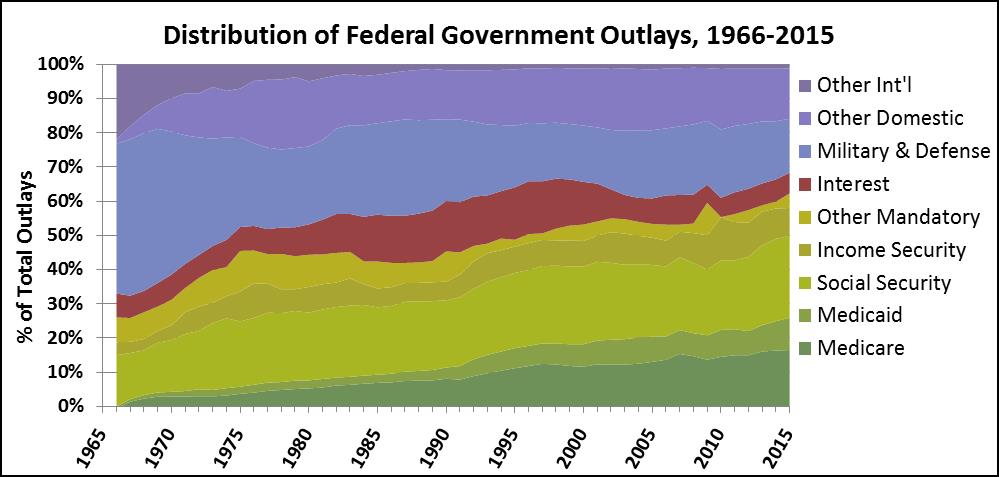
It's somewhat comforting to think the alien planet could also be in a perpetual bureaucratic budget crisis and they've dismantled their space program to make more room for tax cuts.
Politics could save us from an alien invasion!