While I think the article does a good job breaking down the costs, the top comment does a better job highlighting the arbitrary restriction of supply as the primary source of housing costs (though, the article does get there in the end and makes effort to highlight zoning in the conclusion.)
It should be considered that, in a market where supply is limited, the economics of scaling housing development are also limited, such that the associated costs of building go up. Fewer opportunities to build means fewer materials suppliers, fewer labourers, etc. which can mean price gouging when demand is bursting.
Zoning restrictions and building code are the primary causes from which (virtually) all systemic issues originate.
They are also the easiest to fix, and can be rewritten overnight if needed. We just don't see enough outrage yet, but I believe the pitchforks are coming for city councillors across Canada and the US.
In my corner of the world zoning is much more relaxed and where it isn't - circumvented by housing developers on a regular basis, yet prices still went up at the same (or even worse) cadence than in the rest of the world.
The problems you've mentioned, while real, are dwarfed by the seemingly infinite appetite for real estate as a store of value - housecoin if you will.
The first step out of this is to recognize that this isn't a uniquely American problem.
I agree with this so much. In my view, the paradigm of residencial real state being an investment is wrong.
Residencial properties should have economic properties similar to cars.
When someone stops using a car she tries to sell it ASAP as it deprecates with time. That prevents hoarding. It still is OK to invest in commercial and industrial real state. But residential should be protected.
The way I would do this is to establish pretty heavy taxation on 2nd, 3rd+ residential property ownership.
In Mexico if you sell your house you have to pay tax. But If you prove that it's your main living property, the tax is waived. We should make something like that for the yearly "predial" house tax payment. Buy increase A LOT the tax for non-main properties.
Zoning is relaxed but your area is clearly not out supplying the demand. Doesn’t matter what the zoning laws are if you can’t or don’t build. Here in Canada our limitations are only with zoning and code because we otherwise have the facilities and resources to meet demand if we want to.
Not the person you're replying to but I feel like it applies to me as well, and it's easy to find US places more densely populated, or less densely.
Density isn't even a large factor here, I'm building a house in a place with 140 inhabitants/km² (4000 total) and other than the ground (which is a minor part of the total price) it's not significantly cheaper than in my current city of 2600 inhabitants/km² (500 000 total within city limits, 1,5 million metro area).
My country's population has been in slow decline since the late 90s, with very little(~1%) change over the 20 years before the pandemic - of course plenty of people moved out, but they didn't bother to report that so that's just the official number.
Prices still went up before the 2008 crisis at the same pace as in the rest of the world and started going up in the latter part of the previous decade - exactly like in the rest of the world.
All that despite record-breaking construction.
There's no realistic explanation of this that doesn't involve treating real estate as a commodity.
People are moving from poor areas to rich areas, from villages to cities, which is actually bad for both cities (overpopulation) and villages (dying out). Half of my parents' village is just empty houses. Meanwhile prices in the city 2h drive away are unimaginably high.
Look at detailed population density map of any developed country across time. Nobody wants to live in villages, everyone comes to big cities, preferably the capital.
Thing is, over here the urbanization rate peaked at 62% in the late 90s and also started declining because people increasingly moved out of cities into the suburbs due to the sheer inability to get a mortgage on any city property.
Despite that prices went up across the board.
The most egregious example this is a city(Łódź, Poland) which between 1995 and 2020 went from 823k inhabitants to 658k at a steady pace, all while prices going into overdrive mid last decade.
There's clearly little demand from people who actually intend to live in the homes they purchased and government statistics confirm that.
If it went up all across the western world and zoning is different all over then zoning is probably not the main culprit.
Real estate's suitability as a store of value (the more land hoarded, the more it goes up in value) coupled with rising wealth inequality is a more likely cause than a global problem with local zoning codes.
If your housing prices went up you have a supply shortage. If your city is near a larger city your demand may be auxiliary in which case it’s potentially related to the bigger city’s supply shortage, which in the US is predominantly caused by zoning and code.
I don't know any western nation outside the US (i.e., Canada, UK, Aus and NZ) where that'd be the cause. Yanks don't emigrate often and in large enough amounts to effect any other nation outside a few edge cases that I assume exist in Canada/Mexico. You mostly witness that within your own borders if I'm correct, e.g., the California exodus raising Texas and mid-west prices.
For outside the US, while London is a mix of factors, the markets in the remaining nations were primarily upended by housing being seen as an investment vehicle in the late 90's by the preceding generation (boomers) and then later as a store of money by foreigners wanting to park cash offshore, predominantly Chinese nationals. Further manipulations by market players who stand to earn more the higher the price soars (banks, realtors) leaves us with a problem of house prices where no one loses, except the poor millenial buyer, the higher they go.
UK had some of the most restrictive housing policy in the world. It’s not really multi-faceted, is it. It’s just a supply shortage. People want to live there but the UK doesn’t build enough homes.
The zeitgeist moves slow until it has to. I think we’ll have to do the America thing and exhaust every other option like banning foreign property ownership and short term rentals and vacation houses before we get to actually changing local zoning laws. I’m actually not sure it will ever happen. San Francisco is more likely to see the housing density it deserves from a nuclear war that razes it and removes the nimby political machine than people coming together and doing the right thing. Like, given the choice between the status quo, and their kids being able to live in their neighborhood, our parents have chosen. And they’re the ones that show up to vote.
Don't you worry, a completely local conglomerate will gladly buy all those houses and that conglomerate may be owned by foreign citizens, but the company would be 100% American.
I know this is very pessimistic but we've all seen how lenient we get with corporations and I don't expect this to be an exception.
It's completely irrelevant. If people need 500,000 housing units and there are 400,000 housing units, you can assign ownership of the 400,000 existing units to whoever you like and you're still going to be 100,000 short. The only solution is to build the needed additional units.
But there is a seemingly infinite supply of fiat but a finiye supply of housing. Only way is to property tax second homes to a very very high degree.
Edit: the problem we are trying to solve is getting people a first home, so naturally other categories must suffer untill the problem is solved
This is where CA prop 13 hits to make everything suck lol
Although I still think if we just nuked zoning laws for housing and said anyone is allowed to build any form of housing on any land previously zoned for anything else unless it’s literally a health hazard to so + nuked parking requirements it would solve a lot of problems since we would stop building SFH’s and start building mid rises which would actually meaningfully alleviate housing shortages.
This is simply nonsense. If it was the case then the price of housing and stocks and any other asset would be infinite because investors would continuously pour their infinite money into anything valuable that had a finite price.
It would also stop happening if housing prices stopped going up, because investors want investments that go up.
> Only way is to property tax second homes to a very very high degree.
So now the property is owned by a corporation who rents it to the corporation's owner (or the owner's buddy). Unless you intend to do the same thing to all landlords, in which case you can expect rents to increase.
You have to build more housing. There is nothing else for it.
If you tax the profits then there is no amount of rent increase that would fix that. Every added penny would go to the state and there would be no incentive to raise rents beyond their operating cost. Sure, there's incentive to commit fraud, but that's always the case. We always need a healthy audit and punishment system to close loops.
> Every added penny would go to the state and there would be no incentive to raise rents beyond their operating cost.
There would also be no incentive to be a landlord, so the units would get converted to condos, no more would be built and anyone who can't afford a down payment is homeless.
You also have rather a problem when it comes to operating costs, because when the mortgage debt is most of the value of the property, most of the rent is going to loan interest, which is a legitimate operating expense. But if they can't keep anything in excess of operating expenses then there would be no reason to pay down principal to reduce operating expenses (i.e. interest), so all the buildings would be on interest-only loans and rents would be just as high but the profits would go to the lenders.
>There would also be no incentive to be a landlord, so the units would get converted to condos
This is what I'm after. If too extreme then a tax point that sets the desired ratio of individual vs corporate owned housing units. That ratio should be 100% individual owned imo but I'd be happy with people at least legislating something on the issue.
>most of the rent is going to loan interest, which is a legitimate operating expense
Then don't tax payments on principal or interest.
>rents would be just as high but the profits would go to the lenders
But we would have successfully cut out a middleman with means, motivation, and opportunity to squeeze via anticompetitive practices. Having individuals negotiate rates with a bank is a much better situation than facing price fixed rents.
I'm still granting that some amount of fees be charged to the tenants for shared resources (hallways, elevators, etc), so there is room for some money to be made, but that too should be closely monitored.
> This is what I'm after. If too extreme then a tax point that sets the desired ratio of individual vs corporate owned housing units. That ratio should be 100% individual owned imo but I'd be happy with people at least legislating something on the issue.
There are tons of people who simply don't have hundreds of thousands of dollars to buy a condo and don't have good enough credit to get a loan. They need somewhere to live, so they rent.
And converting units to condos doesn't really reduce prices, because you still have the same number of residents and the same number of housing units. To lower prices you have to increase supply, the actual number of housing units, not just how people are paying for them.
> Then don't tax payments on principal or interest.
Now the landlord puts all the profit into principal to avoid the tax until the building is paid off, then sells it and buys another one. And if that isn't allowed then you're back to paying down principal being pointless and the rent stays high but goes to the lender.
> But we would have successfully cut out a middleman with means, motivation, and opportunity to squeeze via anticompetitive practices. Having individuals negotiate rates with a bank is a much better situation than facing price fixed rents.
The incentive is still there, you just move it around. The landlord still wants scarcity because they want the market value of their building to increase, because they can profit by borrowing more against the increase in value or by selling it to another landlord who takes a bigger loan. And now you've made the banks even more in favor of real estate prices going up because they get more interest now and loan amounts are closer to property values so they have more risk of defaults if property values go down.
> I'm still granting that some amount of fees be charged to the tenants for shared resources (hallways, elevators, etc), so there is room for some money to be made, but that too should be closely monitored.
This is the same problem as cost-plus pricing. Normally businesses want to reduce costs, now you've given them the incentive to waste as much money as possible so their cut seems like a reasonable percentage and award contracts to cronies etc.
The problem is not that landlords charge rent. The problem is that landlords lobby to restrict housing supply -- and so do homeowners, because they want home values to go up once they already own one.
>There would also be no incentive to be a landlord, so the units would get converted to condos, no more would be built and anyone who can't afford a down payment is homeless.
You missed the second half of this sentence, which is the downside of the tradeoff.
>Then don't tax payments on principal or interest.
Mortgage payments are already tax deductible, and one of the biggest perks for owning a home.
>Having individuals negotiate rates with a bank is a much better situation than facing price fixed rents.
Renters are a Group that are already unprofitable to lend to, so banks would reject most and hike rates higher for the rest.
Your proposal only makes sense if landlords provide no service, but this isnt true. Just like how a bank makes a % interest for taking risk and providing capital that owners wont, landlords do the same thing. Landlords get paid a profit to take on risk and long term liability (to the bank), and again provide capital.
In short, banks loan cash to landlords because they are more credit worthy and take on liability. They in tern loan a home to renters, who have worse credit and much less liability.
It is all about paying a premium for others to take financial risk.
What we really need to be doing is aligning harmonious incentives by heavily taxing rental and vacant housing profits. Incentivize private individuals having equity in their home that way it's a means of individual security rather than a shareholder value maximizer.
I mean, B.C and a few others are implementing broad upzoning legislation, but there's still quite a ways to go. There's this whole b.s about building "around transit hubs" which will continue perpetuating a wealth divide if the only place people can realistically live is "where the busses are"
The key is to build more housing units - if an area needs 50k more dwellings it doesn’t terribly matter if you build 50k luxury space apartments or 50k hovels - either is much better than arguing about it’d or decades and building nothing.
For whom? The locals who like their way of life selfishly don't want things to change. And unfortunately, the people who already live there are the ones who control whether or not new construction is allowed.
That would have been true if they didn't already spend those decades arguing instead of building anything which would theoretically reduce the general scarcity. It doesn't make it worth arguing over to the point pf delay now, but it matters that it's only feasible to build 50k luxury units by displacing the last hovels in the tiny amount of new space opened up for them since the 50s
Any is better than none is such a bleak standard. It's fine though, just upzone the inner streets around transit hubs too, and we'll still be allowing more than none
I don’t really understand your point? If you build density around transit hubs everyone will be able to afford to live closer to the city and within walking distance of transit and thus not need a car.
My point is kind of exactly that, it's agreeable and it's better than nothing so people don't feel like it's worth complaining about. What about the streets between transit hubs and off of main thoroughfares? They get at most fourplexes, pretty inoffensive. So yes, build and auto upzone the transit stations for people who'd otherwise live somewhere else and arbitrarily live where they'll commute elsewhere and come home, but that just extends downtown for the rich people who'd otherwise be there in this awful compromise.
I live about 15 mins walk from the train, and don't own a vehicle, but everyone who doesn't own a $2m house lives in the basements of those houses, or in the apartments that tend to just be on the main thoroughfares subject to apparently unavoidable car noise anyway. If you didn't commute downtown, would you feel like only being able to live next to a bus exchange would be suitable?
I lice in a country were zoning isn't really a thing and still housing is an issue. I get that zoning is a problem that the US should fix for many reasons, but I am not convinced this is the source of high prices.
What makes housing expensive is that the people buying houses are not the people living in them, some of those buyers buy them as strategic assets and don't even rent them out immidiately like e.g. a normal house owner would. If we created restrictions on who is able to buy (or add a other regulation/taxes favouring using owners and small landlords) we could solve that problem easily. The problem is big corps buying up shit at elevated prices as a wealth storage, so there is a disconnect between housing, the commodity and real estate, the money storage.
There are many regulations that effectively act as zoning. How's the permitting process look like? Is there a property tax (or land value tax) incentivizing people to sell so developers can actually build where people want to live? Is there infrastructure coupled with developments? Is there a balance of protections between tenants and owners? (No squatting, no surprise evictions, ie. 5-7 year contracts, some cap on rent increase, but no forever rent control.)
The big problems with housing - and with any kind of construction nowadays - is that volume is too darn low. No economies of scale, everything is slow, made by small crews, on-site by hand basically. (With tools not much different from a 100 years ago.)
It doesn't matter who owns and lives in them, as long as the usual incentives have a way to shape the market.
As I said: Zoning is not the problem. The problem isn't that people aren't allowed to build things in certain areas. In fact if I look at my place (bigger city in Germany) it is the opposite.
Investors mainly build houses for investment, that means "luxurious mini flats", so something that no normal person can afford to live in and no rich person actually wants to live in — but rich people that think this is a good use of their wealth can buy it to park their money there. If we had laws preventing them from doing that things would be better, not worse. Those luxury mini flats thus aren't making perfect use of the area and driving the prices up in the surrounding area, which is a feature not a bug if you are a investor with property in the area. And thus the cycle continues. You can also replace "luxurious mini flats" with "shiny office building for which no demand exists", half of the office space in the city is obviously empty, which makes a lack of affordable living space even more of an issue.
So the problem isn't that investors can't build what people searching a place to live want — the problem is that investors found better ways of turning the limited space in a city to money and these ways don't serve that market or benefit society.
As this is Europe, infrastructure isn't the issue and renters have rights. But renters can't play the long game, while investors can.
Are these mini-flats empty? If not they are soaking up demand. (If they are they are losing money to investors.)
Sure, there are definitely buyers/owners of housing units who end up leaving said units empty, but it's the extreme exception to the brutal trend of putting everything on the market because prices are so high: https://www.statista.com/statistics/1270344/vacancy-rate-dev... (I tried to find the dataset on destatis.de, but no luck, and the ones I found were not year-by-year. Which makes me question here Statista got their data.)
Germany. Famous wild west of construction! :D People can build whatever wherever! I think you drastically underestimate the process problems plaguing construction.
Laws that mandate bigger projects with taller (and more) buildings at the same time (so more efficient construction) would be very useful. Cities ought to shepherd these redevelopments, but they are captured and paralyzed by various 'special interests'. (Usual tragedy of the anticommons.)
Isn't the main problem that all the jobs are located at central spots? There is a huge amount of land where people can live. But building a cheap house at a location where you can't find a job leads to nothing.
There is also a kind of hype of homesteading. But you should not underestimate the huge amount of work it takes to keep yourself alive. So for most that is not an option.
The top comment on that article is really insightful. While I found the numbers in the article interesting, they don't really explain "the housing affordability problem" as it is generally conceived in any meaningful way.
Sorry, no amount of limitations on building (supply reduction) compare with an infinite demand.
You will always have housing shortages until you reduce demand - either by restraining/taxing the profit from sale/rent of said housing or just wholesale restricting the corporate ownership of housing.
First of all the demand is not infinite. (It might be ludicrously huge, let's say 300 million people want to live next to Central Park with a view, but it's perfectly tractable numerically. And of course we see the prices on billionaire's row, but we also know that as new comparable units are put on the market prices fall. Microeconomics works! See the linked studies here for data and the derived models https://www.noahpinion.blog/p/market-rate-housing-will-make-... )
Second, the current problem is that there's a huge amount of pent-up demand, people want to live in cities (because that's where the jobs are, and statistically also a few of their friends/acquaintances too), but even cities reached the sprawl limit and they would need to increase density, but boomers are having none of that.
Not sure you get it. It’s not about who wants to live where. It’s about who wants to add an investment in a location that they will subsequently rent out (probably through a property management service).
It doesn’t matter if it’s a luxury condo near Central Park or a studio in a college town. Foreign and corporate investment demand will massively exceed the supply available anywhere.
And as non-resident investors own a larger piece of the market, they can raise rents to unlivable rates - forcing more homes to be built, etc.
that’s not how investing works. they don’t buy assets just because they feel like it, but because they expect a return — and the reason they’re buying real estate is because there’s a nice return due to imbalanced supply and demand. if housing is plentiful enough that the returns are low, investors will look elsewhere.
> arbitrary restriction of supply as the primary source of housing costs
Lack of supply only matters because of the excess demand. That's where the real issue is. But it's harder to fix the demand side, so we pretend that the problem is supply side.
Who is going to build all these new houses? Unemployment is super low and tradesmen are completely booked. Many skilled tradesmen require licensing that takes years to acquire and can not be brought online quickly. Others are unionized that restrict membership. We can’t even fulfill demand today for the necessary labor.
And then there’s materials. Did you see what happened to costs with an uptick in the demand/supply balance during Covid? It’s not so easy to just suddenly increase supply to suit demand on many materials as the inputs come from natural sources that are limited. It would also increase demand for labor from an increasingly small pool driving up costs again.
Lastly the people that own the land wound rather build valuable things on it than housing for poors.
So even if you changed zoning you wouldn’t be able to build much more any time soon, if ever. For most of history a lot of people had rather modest living conditions. Very small spaces with limited services. It’s more likely we regress towards that than somehow create ample housing that we consider comfortable today.
I had a house built in a factory in Latvia for around 50,000 euro. It was assembled in about 3 days. Foundations cost money but if you use pier or post and beam even that doesn't have to be bad.
In cities that have removed massive zoning barriers, like Minneapolis, housing prices have massivley improved in just a few years. As it turns out, we live in a dynamic economy that can scale up production when it becomes profitable, espically when you consider that its easier to build a multi unit housing block on one piece of land than the same number of housing units in several pieces.
Additionally, we know that though all new housing is marketed as luxgury, studies have shown that still improves the housing market for the less well of as prospective buyers wont take the more run down units ahead of them. I woukd say that allowing housing prcies to continue to increase is clearlu much worse for the poor anyway.
Overall, I completely disagree with your argument, as you argue that we shouldn't try and induce more housing because it is difficult? Like why is that even a reason to not build hosting given private developers will pay for it anyway.
I’m not saying don’t try. But that it’s well more difficult than just changing certain zoning laws. In small pockets it’s easy but not at any kind of scale that makes a difference.
Im arguing that we have seen it work at a large scale, like in Minneapolis or Japan. Its the zoning that prevents the housing from being build that there is demand for.
Japan's inflation has hovered around zero for the last 30 years, and wages have stayed similarly stagnant. They do a good job of building out new housing even as places like Tokyo and Osaka continue growing, but it's not the only factor.
Prices in the suburbs around MPLS have skyrocketed. It’s quite possible that the affordability is attributed wrongly; though in general less restrictive zoning is going to be good.
> Who is going to build all these new houses? Unemployment is super low and tradesmen are completely booked.
Unemployment is a measure of labor market efficiency. We have computers now so anybody who needs work can apply to jobs over the internet or install an app and do gig work. The only times in this century that the unemployment rate has exceeded 6% were immediately after the housing crisis and a few months during COVID.
But labor market efficiency tells you nothing about how hard it is to find someone to hire. You don't have to find someone without a job, all you have to do is pay more than driving for Uber does.
> Many skilled tradesmen require licensing that takes years to acquire and can not be brought online quickly. Others are unionized that restrict membership.
These are the regulatory barriers, and there are obvious ways to bring capacity online faster. Example: Give a license to anyone who can pass a written exam, then eliminate the testing/licensing fees and give away free study materials.
Here's a big one for free: Stop charging for renewals, so older tradesmen can "retire" (i.e. stop working full time) without making it prohibitively burdensome or expensive to retain their license and work part-time.
> And then there’s materials. Did you see what happened to costs with an uptick in the demand/supply balance during Covid? It’s not so easy to just suddenly increase supply to suit demand on many materials as the inputs come from natural sources that are limited.
Short-term demand shocks are exactly that. It takes time to increase production capacity, but that takes a year give or take depending on the industry, and then output continues at the higher level indefinitely.
There are no practical natural limits on raw materials. You reopen some marginal iron mines. The park service buys some agricultural land to convert into forest while selling some forest land to be logged and converted to agriculture, creating immediate lumber availability. Wood, plastic and aluminum can be substituted for each other in various use cases depending on availability.
> Lastly the people that own the land wound rather build valuable things on it than housing for poors.
Housing is the valuable thing they're prohibited from building on it. The existing problem is that there is too much land zoned only for single-family homes. A piece of land with one single-family home isn't as valuable as the same piece of land with a 10 story building providing 80 housing units.
> For most of history a lot of people had rather modest living conditions. Very small spaces with limited services.
This is literally the thing that people are prohibited from building. Prices would go down significantly if it wasn't because there are plenty of people who would pay a lower price for a smaller space, except that building 10 times as many units on the same lot is prohibited by zoning, and if you can only build one unit on a lot then it's going to be a full-sized house and not a studio.
It's not a dictator that you need, it's to get the government to stop prohibiting things that ought not to be prohibited. Which you can go vote for.
One of the better ways to do this is to go vote at the state or federal level to remove local zoning restrictions. Because the locals want their housing prices to go up and you don't get a vote in the local election unless you can already afford a house there, but you do get to vote in state and federal elections, so use it.
But the idea is that people make better decisions the closer they are to the effects of said decisions. You're promoting a dangerous idea that allows people who don't live near you to erect 10-story apartment buildings next to your house and extract the economic lifeblood of your neighborhood back to wherever they live (probably a place with zoning).
If someone owns the property next to you, they obviously have an economic interest in the neighborhood. They may or may not live there, but that has nothing to do with zoning. Someone can own a single-family home and rent it out. Meanwhile you can have a 10-story condominium where every single unit is owner-occupied. How tall the building is has nothing to do with whether the property owner lives in it.
To me, it has always seemed completely bonkers that for most people, the roof over their head should be their #1 expense throughout their adult lives.
It boggles my mind that walls made of bricks that someone laid some 50 years back along with a bunch of pipes are more expensive today than my Tesla Model X… and by a factor of 5 to 10.
Of course, a house is more in terms of pure weight of material. But the again, that material is only dirt. It’s unreasonable that this should be something you’d be paying offf month after month, over decades.
I understand that for people in urban areas, thei main part of their housing cost is actually competing with other people who’d like to live in the same place. I’m talking about construction cost only.
Consider how many man years it takes to build a house. It might take 20 people a full time year to build your house (including all the time spent creating the materials).
If we lived in a truely equal society where everyone was paid the same amount, you should therefore expect it to take 20 full time years of your life to pay for it.
That’s what I was thinking, too: How long would it take a layman to build his own house, say from bricks. 1 year full time? Probably more. 10? Probably less. So now, if it’s done not buy a layperson but by someone specialized with big machinery and procurement channels set up, it should be much faster. Say, half a year. So why should I pay more than 2x that?
(It’s a bit like with bread these days. If I can make a Tartine league bread for $5 in my goddamn home oven, including electricity, then why should I pay $8 for a bread that is much worse at a bakery outlet that sells stuff made at economies of scale? That’s not capitalism. It’s banking on people not being able anymore to value. It’s treating buyers not as competent individuals, but as dumb herd driven consumers. That approach is clearly working. But I’m attracted to those pockets and niches where it’s not true. Like HN.)
Speaking of personal experience:
3 people working most of the time part-time (half the day), it took almost 7 years to build a 3 floor building. It was me: 8 to 15 years old, my brother 5 to 13 years old, and my father.
It includes almost all of the hard costs the article mentions except the foundation, brick laying, electrical, plumbing, windows, more concrete around the house, garage, and a myriad other things.
Sometimes we hired 1 or 2 people, once a month or something.
If all people were like my father, mathematician, polymath, expert in everything electrical, wood and metal constructions, with connections to many other engineers who regularly ask for advice, then the estimated total cost of building a 3 floor house is around 100.000 euros. That's the cost of materials, but probably less than that, 80.000 or something.
The estimated time for 3 adults (not children - teenagers), to build a 120 m^2 per floor building, all 3 floors, is 3-4 years.
Anyway, i think housing-transportation and many other things, will become free, once we move to carbon based buildings, vehicles and so on (see graphene). It is only carbon that offers us, strength of materials, flexibility, lightweight-ness, variety of materials so as to have everything in abundance. Abundance, like, personal skyscrapers, that kind of abundance.
Just brick laying wouldn't take even close to a year. The 10,000 bricks to lay would take around 200 hours at a minute per brick (which seems a lot slower than I remember being in my youth[1]).
Most of the man hours are not in the crude house frame, but in everything else, particularly finishings. Also, the transactions costs for a large number of specialists are considerable.
How much for a layman to dig his own sewer connection? How much for a layman to run out his gas connection? How much for a layman to install a modern breaker? How much for a layman to know what code to even follow?
Reasoning from first principles is great but building a modern code-compliant house isn't going to be possible for a layperson without guidance every step of the way. Move fast and break stuff isn't going to fly in real construction.
Half a year to build a house for one person? If you can do this then definitely no need to hire builders, builders themselves cannot do the work nearly this fast.
Tesla has roughly 140K employees and made 930K cars in 2023. That's roughly 320 hours of their total employee time per car or one person working 40 hours a week for 8 weeks / 2 months.
Building a house involves multiple people over many months. Yes those people may be getting paid less but you are easily talking about an order of magnitude more effort. On top of that, the raw materials are expensive. If you just priced out the cost for concrete and steel for the foundation, wood (studs / plywood) and drywall for the walls, windows, siding, roofing, you are talking tens of thousands of dollars, if not more.
You said construction cost only but on top of that there is also the cost for the land. That alone can be a huge chunk of any home price (just look up what an empty lot costs). Looking in an area I'm interested a lot looks like it could be 1/3 to 1/2 the cost of the home (if I built).
There are plenty of things that have departed from cost-based pricing into supply and demand territory. That’s how things very often tend to go. Housing is just…special.
Well you pay mostly for land in any good location, even with apartments.
Then check how long it takes to build some apartment building, team of say 10 people working with some expensive machinery for a year. Plus all the materials of which there are literal truckloads.
Back home people do these mostly by themselves and friends/family, and the price aint that much lower. Plus for certain things you really need a professional company, even construction workers building their own homes hire companies for some parts of it.
My wife and I were on the Seychelles some time back. Our neighbor there was some 60 year old British guy. He was building a house on his land by himself, to rent out as a vacation home. He’d be working during the day and take out his kayak at sunset. He let me look over his shoulders for a bit. Said he had even done the plans for the permit himself. He said anyone can do it. And this house is on the Seychelles - high humidity, heavy thunderstorms. I’m not saying building a house is trivial technology. People can die if you do it wrong. But most of us are working with stuff that is way more complicated than that every single day. If a 60 year old dude on the Seychelles can do it by himself, a proper building company with access to machinery and materials should be able to do it for a price of months of income - not years.
Sure, but I suspect some guy building some home for himself in some tropical paradise has different construction needs than most of the folks here, including me. We have snow in the winter for example, which changes literally everything. And then there is whole world of regulations for given country, Seychelles probably have 10% of the complexity and requirements of typical G7 country. Also, if that guy is doing electricity by himself he is a (dangerous) fool.
As I said - it takes 10 professionals easily a year to build something. It simply does. Just check how their daily work looks like - its messy just like other types of projects, you have unforeseen problems, people drop sick or injured, suppliers can fail to deliver things on time etc.
From IT world - the stuff I hack together in a week takes altogether to bring live 6 months easily, since initial dev is rather small part of it. So maybe adjust your expectations to reality, its not gonna adjust to you.
He doesn't literally mean only the bricks. He means the construction of the house. That's very cheap depending on the house.
Also you maybe be underestimating how expensive bricks are! A brick house might have 10k bricks and fancy ones can cost like £2 each, so that's £20k literally just on the materials for the outer skin.
House construction is expensive because it uses a ton of materials (even if per kg the material is cheap) and a ton of labour.
Exactly. In the US even things that look like brick houses aren't actually brick but the outer veneer.
But whatever the materials, you're looking at a minimum of $100k for materials, and then the rest is labor and other expenses (like delivery, excavation, etc).
Even a "manufactured home" (think: doublewide) costs something like $80-$100k before delivery these days.
but are they charging that much based on it costs to make a double wide, or is it based on what the market will bear. If a custom home costs X, you'd charge X-a little bit to be competitive, not cost of materials * a reasonable markup.
The fact that it makes more sense financially to borrow a million to buy a house and keep your 500k of savings tied up in the S&P 500 means we're far away from a solution.
People don't seem to realize that something being a solid investment and it being widely accessible are contradictory terms and that ideal regulation would work towards a balance of these, not over-optimization of either.
This exactly. It's in the best financial interest of a homeowner to stop as much new construction of homes as possible. Until we move away from the idea that owning a home = wealth, then I don't see how this problem can be significantly fixed.
Funnily enough, the value of a home in Japan decreases over time to converge to a value of 0 over +/- 20 years.
That doesn't mean that the land it is built on has 0 value, but it vastly changes the financial dynamics of home-owning, and would also remove the nonsense linked to home = wealth.
With the reasonable assumption that the build quality of home in Japan is no worse than in the rest of the "Western world", it really puts the whole real estate financial racket into perspective.
Interesting. I'm curious, do you know if there is another asset Japanese people have that is very valuable if not their home? Or some sort of investment?
In a very short-sighted way, sure. It doesn’t even take that much galaxy-brain thinking to see how housing inequality can be detrimental to one’s finances.
The short sightedness is the problem. As far as I know, NIMBY is endemic in the USA, precisely because home owners are so worried about lowering the value of their home.
Exactly. If you stop seeing your house as an investment, and you own it, it doesn't matter if it's value goes down, if it goes along with the market. It even means it's easier for you to trade up.
For the poor souls that have decades of interest left to pay on a loan it's a different story, but somehow, someone has to lose something for most people to have decent housing costs.
Yeah, it's a very difficult situation. Either few people from younger generation will have access to affordable housing and even fewer will own a home, or we cause a lot of misery and hardship like during the 2008 crash, but for even longer. Hard to tell which is the lesser evil.
> The fact that it makes more sense financially to borrow a million to buy a house and keep your 500k of savings tied up in the S&P 500 means we're far away from a solution.
Nah, that would be the case even if housing prices were indefinitely flat, because the bank will give you a loan against an asset with a stable value (house) but not be willing to loan you money at the same interest rate so you can gamble in the stock market.
As long as the bank will loan you money against a house for a lower interest rate than your expected returns from the stock market, it will make sense to borrow the money to buy a house instead of taking your own money out of the stock market, for anyone willing to take the risk of the stocks going down.
Its because we have essentially banned building more housing in many cities. (Relative to the number of new jobs/housing needed, some housing does get built) Any project that makes it past the insane zoning requirements are attacked by locals for whatever reasons they can come up with to try and cancel the project.
Complaints about foreign buyers and vacant homes do not make up for the massive supply shortfall.
What we usually see in cities all over the world is that increasing population density drives the house prices up, not down.
For whatever reason, people like to live around other people. The more people already live in a city, the more other people want to move there, and this creates an upward pressure on housing prices.
I disagree. Cities are in a endless race to build more housing. They need to continue building housing to keep prices temporarily lower, a metaphorical treadmill as more people will always move into the city. If a city stop building housing, prices will go up for sure because demand continues to increase. Cities of course always have more demand, but that is their nature as economic and cultural hubs, we have no choice but to try and match this demand.
Housing prices will not be low without building more housing, except your city has a specific reason that lowers demand, like lawlessness, economic ruin or some other disaster.
Which is meant to be balanced out by increased housing density like we see in Asian mega cities like Tokyo and Bangkok which have very affordable housing despite many many more people. By making it impractical or outright banning high density housing this is the situation you arrive at.
Maybe it is also the slow but steady shift from rural to urban, because rural life is becoming less and less attractive? Otherwise there would not be such an influx and need for urban housing. Why is making life outside cities better not considered as alternative or additional measure?
>People concerned about building more housing are right to pay attention to zoning and land use rules: over 100 million Americans live in places where most of the cost of residential property comes from the land itself. But they should not neglect the physical costs of building homes, which are overall more important.
I think the author misses the reason people focus on the post-construction demand/supply issues, rather than the cost of construction parts and labour. You can only reduce the cost of parts and labour for newbuild properties (improvements in prefabrication techniques for example, will not reduce the construction cost of a 1930's townhouse). The price increase from building a home becomes essentially irrelevant, as far as construction costs are concerned, the second it's complete.
Supply-side changes & reforms impact all houses - new builds and existing properties. Increasing supply or reducing demand lowers the price of all homes, which is why people focus attention there.
Reducing the cost of newly built housing does also reduce the resale price of existing old-stock housing, because they're competing for the same buyers.
In urban areas, the limiting factor in urban housing supply isn't the cost of construction, it's the finite quantity of land with a valid state-granted construction permit. We could innovate until the cost of construction approached $0, but if there's fewer homes supplied than there are people demanding them, the prices will rise.
This is why in Brooklyn, an entire townhouse can cost $2.7m, while the neighbouring plot of empty land costs $2.4m, then a short walk away an un-permited empty plot is $700k. The item of value in the housing market market is weirdly mostly not houses.
Kind of. A house built in, say, 2024 would have to be quite significantly less costly before I’d consider it over a house from, say, ~30 years ago. Construction is making a terrible name for itself. I am far from alone in this mentality.
Sure, but the market will/would equilibrate to a price differential for new vs. old stock. What that differential is ( and how it matches to your personal valuation) is irrelevant to the net validation decrease.
It really depends on the area and builders and buyers - around here 30 years puts you right into the last building boom, so the average house from then isn’t necessarily well build, and is much worse from an energy/HVAC viewpoint.
Discussions of zoning, building codes etc. are valuable, but I think everyone's missing the main factor: If you somehow made housing 50% cheaper people would just demand 50% larger housing.
If you look at housing size over time people today are living in palaces by the standards of someone a century ago.
In the US, the average household size has expanded by 1000 sq ft since the 70s [1]. That's an addition of an average household from the 1910s, which on average had two more people living in it compared to today.
And where people don't demand extra space they demand more luxury.
One example is AC. It's unthinkable to construct a house without it in some parts of the US, but people living there a 100 years ago somehow made do without.
Over here in western Europe we've had less size inflation than the Americans, but we've had the same luxury inflation.
People here want insulation and sound proofing that's extravagant by American standards so they won't hear the neighbours, huge windows, electric sockets everywhere etc.
The article were discussing claims HVAC costs are 6% for a newly built home. That's not a trivial amount.
As far as I can tell the minimum common standard in much of the US is only for heating [1].
Depending on your house layout and where you live that could be satisfied with a few portable electric radiators.
Anyway, I'm not singling out HVAC in particular, but using it as an example of something that's not strictly required, but people demand. It's death by a thousand cuts.
All the areas of the US undergoing population growth absolutely require air conditioning to be livable spaces, like Georgia, Florida, Texas, and Arizona. AC is not optional in nearly every place substantial building is taking place.
Heat pumps mean that heating and cooling are provided by the same device, so the cost of having cooling as a well as heating is zero, having one means having the other.
Zoning costs are not well accounted for by the article since it’s based on all the housing that actually got built. Zoning cost to society also includes all the homes that didn’t get built because it was illegal to put a shovel in the ground.
Air conditioning wasn't invented until 1902, and didn't start seeing wide deployment in the US until the 1960s[1].
I'll leave the comparison to the historical population of the states you mentioned as an exercise for the reader. I'll just say that I don't think you can convincingly argue that AC is required for human habitation in those places.
Have you traveled much outside the US? There's plenty of places (e.g. in Africa and the middle-East) that are much hotter than that, and where AC is a rare luxury.
If you don't have AC there's plenty of places in the US where you wouldn't really need heating either, or perhaps only a small space heater.
Once you're at that point you'd drop all the fixed cost of having a heat pump setup. So no ducting etc. Don't take my word for it, read the article we're discussing here.
But yes, if you've already paid for the fixed cost of installing all of the infrastructure required to have AC throughout your house the marginal cost of adding just the cooling component itself is trivial.
But that's a really strange point to make, why would anyone want that if we're discussing dropping AC (for cost comparison purposes)?
If you only want heating then running water-heated radiators on a closed loop is much cheaper. That's what we do in the parts of Europe that only really need heating, and not cooling.
That or electric radiators, as is ubiquitous e.g. in Norway. The water-based systems are better if you're heating them with gas.
Having said all that I wouldn't be keen to buy a house in the states you mentioned without AC, I also wouldn't like to buy a house where I don't have easy access to electric sockets etc.
All I'm saying is that you need to factor those shifting preferences into the equation when asking why something's expensive.
What? Electric baseboard are rightly on the out, because they cost a fortune to run.
Water based gas radiators are absolutely not cheaper to install in the us than forced air. They are uncommon and expensive. Heat pump forced air is slightly more expensive to install than heat pump forced air. The a/c part is basically “for free” these days
You're missing the point, obviously water based gas radiators are expensive in the US, because almost nobody uses them.
We're discussing how certain changes in the last 100 years contribute to overall housing costs.
If something has become ubiquitous it might be more expensive than to just go along with the flow for any individual house, e.g. I'm sure most new housing plans in the US are designed to account for running HVAC ducts.
Instead you need to look at what e.g. a typical house in western Europe is spending on the heating system as a percentage of overall construction cost.
I don't know that offhand, but I'd be very surprised if it even reaches 2%, whereas apparently US HVAC systems cost 6%.
A 100 meter roll of aluminum coated PEX pipe is around €100 (all you'd need for a typical house here). You can run it directly through structural beams (only requires around a 20mm hole). The rest is just the central gas burner (maybe €2000) and some radiators at say €150 a piece. If we very generously call that €5000 with plumbing/installation that's 1% of a €500k house.
The size thing is getting out of hand. I grew up in older housing built in the 60s and 70s -- fairly small by modern standards, but there was a bigger backyard and still enough space to store everything. It felt adequate and honestly more than enough for sleeping, eating, and resting from the outside world with friends and family.
And then I started visiting my friends' more modern home and I was flabbergasted by the sheer size. You have to text someone to get their attention because yelling across the house is not very convenient anymore. And so many rooms just stood empty like gallery spaces -- "to be used on specific occasions".
I don't quite get it -- and I hope that construction costs come down and permitting eases. For once I am ready to buy a home, I want to be able to custom build my own small house.
The problem is that many prices for building are fixed, but increasing volume (size) is relatively cheap.
It takes a builder about as much time to build a small house as a large one, and the large one is more profitable, so which do you think they’d like to build?
You can certainly build a smaller house, but you get the $250k for a small house build but only $300-350 to double its size.
> If you somehow made housing 50% cheaper people would just demand 50% larger housing.
The incremental value of the first 1000 sq ft is nowhere near as much as the next 1000 sq ft. In one case you're no longer living outdoors, in the other you have more space to put your junk.
If you somehow made housing 50% cheaper people might just demand 20% larger housing, but so what?
Also, even in your formulation the result would be that someone who can currently only afford a small apartment would then be able to afford a larger one and be able to start a family, which is good.
> In the US, the average household size has expanded by 1000 sq ft since the 70s
A major reason for this is that we effectively prohibited smaller ones. If zoning only allows you to build one housing unit on the lot, it will obviously be more profitable to make it a 2500 sq ft house than a 500 sq ft studio. Meanwhile you might have been inclined to make it a dozen 500 sq ft studios, but that's not allowed.
I’ve never seen this issue discussed in the context of the much-reported shortage in housing units in the US. Houses are bigger while families are smaller. Thus, it might make sense for children to live at home longer. I’m people generations the kids get kicked out to make room, and also the kids were having kids of their own earlier.
Maybe there is less political and market pressure to build affordable, smaller houses because the larger house size and smaller families simply reduce the true need for additional, cheaper, smaller units.
> The incremental value of the first 1000 sq ft is nowhere near as much as the next 1000 sq ft
Note that - intentionally or not - the parent comment said 50% larger and not 100% larger which is what they could buy for the same price if it was 50% cheaper.
That depends on whether you take the "50% larger" as relative to the old size or the new size. 50% of a 2000 sq ft unit is 1000 sq ft, so a 2000 sq ft unit is 50% (of 2000 sq ft) larger than the 1000 sq ft unit. This is a less common usage but makes more sense in context, because having the size increase eat the entire cost reduction is a problem if you're trying to achieve affordability, whereas getting a 1500 sq ft unit for 3/4ths of the old price of a 1000 sq ft unit is hardly anything to complain about.
    > The incremental value of the
    > first 1000 sq ft is nowhere
    > near as much as the next 1000
    > sq ft.
Agreed, but not for the reasons you think, it's even higher than that, not lower! A 2000 sq ft house you can turn into a duplex is more valuable than a single family home.
It's the government that's destroying that potential value by preventing that development.
    > people might just demand 20%
    > larger housing, but so what?
If that's what they really want, sure, who am I to judge?
What I'm pointing out is that you'll see articles and discussions lamenting increased housing costs, while ignoring the massive variable of shifting consumer preference.
It would be like complaining about the rising costs of mobile phones, while implicitly insisting that you're only willing to purchase the latest top-of-the-line iPhone.
    > A major reason for this is
    > that we effectively prohibited
    > smaller ones.
Yes, that's a factor, so reducing size to 1910 levels is somewhat of a chicken and egg problem.
But there's a lot of optional consumer preference on top of that.
> A 2000 sq ft house you can turn into a duplex is more valuable than a single family home.
But then it isn't a 2000 sq ft housing unit, it's two 1000 sq ft housing units.
> It's the government that's destroying that potential value by forbidding that development.
Correct.
> It would be like complaining about the rising costs of mobile phones, while implicitly insisting that you're only willing to purchase the latest top-of-the-line iPhone.
Except that people are also quite displeased with the high cost of even small units.
The cost of housing and to some extend education have more dimensions to expand into - investment funds and virtually infinite fortunes of billionaires/oligarchs/sheikhs. Any attractiveness factor of these two multiplies the cost exponentially. Nowadays the "supply-demand" cliche sounds like a ruthless teasing.
The question is interesting, the conclusion says basically nothing:
> The cost of housing comes from a variety of sources. In most cases, for both new construction and existing housing, the largest line item is the cost of constructing the home itself. For new construction this is on average 80% of the cost of a home (including hard and soft costs), while for existing construction it's still in the neighborhood of 60-70%.
> It’s only in dense urban areas that the cost of land begins to dominate the cost of new housing, driven by regulatory and zoning restrictions that limit how much housing can be built in a given area. Another way of looking at it is that in the areas that we need housing the most, zoning and regulatory factors are responsible for the lion’s share of housing costs.
>> "Most new homebuyers will pay around 30% of their income on their mortgage"
You go to the bank looking for a loan. They use that exact sentence to determine your monthly payment. Lower interest rates mean you can borrow more for a given payment. Then they tell you how much you can borrow. Everyone involved - banker, agents, seller, neighbors - wants you to spend as much as possible. Even if you don't, prices are set by "the market" where people do. Hence prices are determined by interest rates.
That first statement has been fairly constant for a very long time.
There are exceptions in areas where other factors distort the market.
Yes - normal people normally pay everything they can afford on their house, so it's peoples' income that determines house prices.
Interesting that almost everyone is happy to drive around in a mass produced car, precisely the same as 10,000 other vehicles. And cars, although much more capable, cost (relatively) much less than decades ago.
But almost everyone wants their house to be special and unique, and pays whatever they can to that end. I don't see it as housing supply driving costs, so much as money supply.
A colleague of mine tried to apply for a mortgage in the UK. He had good savings, enough to cover 20% deposit (the lenders officially accepted 10% deposits) and there would be enough left to pay mortgage for a year. Good, steady income to allow him to comfortable pay the mortgage and put aside some money for savings/investments. One bank after another refused him a mortgage unless he'd agree to put all of his savings into the deposit, essentially forcing him into a precarious situation where any adverse event (loss of job, health problems, etc.) would jeopardise his ability to pay off his debt. Each bank he spoke to massively increased (doubled+) the interest rates way above what was advertised even if he'd put all of his savings into the deposit. He walked away and is still renting.
My own armchair economics theory of why housing is so expensive is that places where housing is not expensive tend to wither economically and people move elsewhere.
Let me elaborate. We have made pretty much everything else than housing cheap. In places with cheap housing, people don't have an incentive to work and contribute to the economy anymore, which drives the economy down in those places. As a result, people have to move elsewhere (since the jobs will also disappear with the economy), driving housing prices up there. There is a feedback loop between housing prices and overall economic activity and people have to live in places with at least some sort of functioning economy, and thus all of the world gets partitioned into parts with cheap housing and no jobs and expensive housing with jobs.
Hard to disagree. Housing is essential, the rest is a luxury. However, in the UK we are slowly running out of places to move to for cheaper housing and maintain our ability to do the work we can do in the cities while maintaining current levels of income. Yes, there are cheaper places, but there are no jobs there or employers who notice you live there offer you substantially less money. People gravitate towards London and other large cities and he property prices follow. But there is a cruel twist to that story. In terms of income, London-based IT salaries and contract rates have gone back and below 2010 low levels. At least that's what I see on LinkedIn and in my inbox. The property prices did not adjust and even worse, the quality of newbuilds has gone through the floor (often literally) further exacerbating housing shortage. This is not going to end well for the UK.
The core of San Francisco’s housing problem is bureaucracy. In San Francisco, the fees paid to the government for building a single-family house range from $300K to $500K (compared to $30K average across the country), excluding land, materials, and labor costs. This means that for every existing house valued at $1 million, 30% to 50% of its value represents the fees (tax) imposed by the government.
Mainly because its an asset bubble, which can inflate and deflate depending on investment demand.
Remember in the 1980's when the Imperial Palace in Tokyo was worth more than all the real estate in California? 40 years on and you can buy a home in Japan for literally zero cost.
Another aspect is the vast infrastructure which underpins communities. The majority of which is beyond ones own property boundary.
There's a consensus in some countries saying that infrastructure has been suffering a many decades-long decline. For example, New Zealand speaks of a theoretical US$120B deficit, which is in the ballpark of that entire country's yearly GDP.
And as New Zealand itself is somewhat a testament to - it's possible to build somewhere new and distant instead, if you please, away from all these pesky existing infrastructure woes; and then, enjoy paying for everything to be transported there, and building your own all-new infrastructure. Not just the obvious - remember to include things like schools and hospitals and libraries and parks and commercial districts. The costs are numerous.
I believe the author is correct in the sense that the biggest cost of housing may be the externalities, in the same broadly philosophical way that the biggest influence upon a person's life is the world. But it's a lot more than merely the zoning, I think.
It's like the inverse of the saying 'The more things change, the more they stay the same' : The more you want things to remain the same, the more you have to keep altering them. :)
Cheap money on tap from the bank pushes up house prices. Combine this with municipalities being unwilling to free up zoning for residential, and you have a limited supply which people will borrow as much as the bank will give them in order to obtain.
I grew up in one of those construction oriented families that sunk everything they had into buying, building, and renovating new properties. Indeed it made them very wealthy, but it left me impoverished in more ways than one. Did you know how much you have to pay for college isn't just calculated on your parents' income, but their assets, too? My parents didn't.
I decided early on I don't want anything to do with that pyramid scheme. Give me a nondescript apartment on the 57th floor of a highrise any day of the week and let me do work which matters.
I don't mean to comment on your particular situation but I would use your post to share a different experience. My own family was construction-oriented four generations ago, and it elevated us (the 3 still-to-be-born generations and the alive-at-the-time one) from poor to wealthy.
That effort by my great-grandparents was one of the definitive blessings of my life. I still invest in construction/renovation myself and take as much meaning from providing housing to others as I do from work in technology.
No offense taken. Cleaving away my very personal anger about how my dad's wealth fucked over my college plans: Moral culpability for high housing prices lies primarily with those who enact the housing regulations which artificially constrain supply, and hence allow long-term profits to be made in a market which really should drift down towards prefect competition, and not with the actual housing providers themselves, who are just ordinary profit-seeking business owners like the rest of us. You're doing a service to your fellow man, no matter what, because voluntary trade benefits both parties by definition.
People often get in fights about the thorny intermediate layer here, which is that politics and economics intertwine. Many landlords politically advocate for further supply-constraining laws in their area, because surprise surprise, long-term profits are a really sweet deal if you can get them. I have no qualms saying that that is both (a) perfectly economically rational and (b) still a wrong thing to do. But I want to underline that that is mostly missing the forest for the trees here, which is housing regulations being a well entrenched thing in the first place.
Man I'm with you all the way. I was also lucky to be born in a place where college education is very affordable: around 1K/year flat fee for everyone. It sounds like you got a raw deal.
- The easiest land is developed first, with further expansion and in-fill occurring for land that in the past was deemed too hard or too expensive to develop on.
- Homes are larger and more complex as everyone's expectations have increased. A bedroom shared by two kids in two small beds is now two large bedrooms with queen sized beds. Second and third living areas are commonplace and much larger.
- Modern homes are typically designed to only last only ~20 years before being knocked down and rebuilt. The theory being that people in 20 years time will demand different floor plans, different house features, etc and the cost of renovating an existing structure far exceeds the cost of rebuilding at the 20 year mark.
- Homes are better engineered (for example, better insulated and with more waterproofing) but this requires more materials and labour, and is more complex, meaning more mistakes made during construction that require expensive repairs and rework.
- Old growth forest has been depleted and we've now got a materials price that better matches longer term sustainable forestry pricing (however, it's still too low).
- Public infrastructure such as roads are built to a much higher quality than the past. Open drains are replaced with buried stormwater piping. People expect MRI machines in climate controlled hospitals and larger climate controlled schools with more extra-curricular space/features.
With the mortgage route, owning a house isn't beneficial until you pay it off, which for most people isn't until they are well into their 60's. The main benefit of owning a home is immediate improvement in quality of life, which is worth it only if you have a children to raise in my subjective opinion.
Often, it's the people in the area that make or break the housing market, which blog posts like this always overlook. There are maybe a handful of metropolitan areas/megapolis in the US where the majority of americans could live and feel welcome. Land and building costs are probably cheaper in Idaho or rural Ohio but it may not be safe for anyone who can't assimilate to the goings ons if those areas. That can be said much of rural US. That's why not many remote workers relocate to cheaper and prettier places in the US.
I am however a huge proponent of high speed rail connecting remote suburbs with city centers. Building new housing on unincorporated land and connecting it via high speed rail that is. Imagine suburbs in NE california or south of Reno,NV (or much of south central NV) to LA and SF. Or Denver with western colorado. Point is, much of the US is not developed. People would want to live in rural areas if it meant easy and fast access to cities. Even considering remote suburbs part of the big city in terms of tax, laws and infrastructure support.
>With the mortgage route, owning a house isn't beneficial until you pay it off
This is wrong. It's (financially) beneficial as soon as your equity surpasses the difference in payments between rental and buying, which is nearly immediately.
This makes no sense, how does equity factor in? You mean if you sell the house? If so, that's only true if you are not just going to buy another house. So long as you have a monthly mortgage your liquidity will continue to be strangled by those payments. Your quality of life will not improve until you start having extra liquidity.
Money is meaningless if you can't buy stuff with it. Being technically able to liquify your assets is not the same as having actual liquidity.
Of course you can buy things with it. Liquid is liquid. Assets are assets. Assets can be liquidated. You have an asset when you have equity in your housing and you don't when you rent. The difference is burning 30-60% of your income vs. not burning that amount.
Tired of owning a home? Liquidate, rent, and you have that cash.
Yeah, I suppose that's true so long as your preconition of equity being more than the difference of mortgage+downpayment minus what you would have paid in rent.
For $1k rent vs $40k downpayment + a nice total monthly payment on a house of 1800, in 10 years rent would be 120-130k and home ownership 250k+. In 20yrs, a home would cost you 470k+ and assuming rent goes up by 500 in 10 yrs then by year 20, renting costs you 300k. Assuming repairs and maintenance don't cost over 100k in 10 yrs and 170k in 20 years, your equity is solid. But simply leaving that extra 800 mortgage cost (vs rent) in your bank with no interest gets you 92k in 10 yrs and 196k in 20 years.
The home equity according to my quick napkin math at best gets you 10kish more in 10 years and will be 20k+ less than savings in 20 years. Rent is unpredictable but so are insurance rates, natural disasters, the city/neighborhood driving down home prices for random reasons,etc...the element of risk is non-negligible.
Money invested or saved is also equity. Planning 20+ years ahead is crazy to me as well unless you have kids. To me, housing is not equity or investment. It is shelter and if the quality of live benefit near term is better or long term for kids would be better then it is worth it for that alone. The whole homes are equity thing is a scam to make people even more addicted to mortgage. People should be able to save and buy a house cash, that should be the norm and investing in houses should be illegal.
Don’t forget property tax and maintenance; rents include that but owning doesn’t.
It does become advantageous to own at some point, but without appreciation it’s more like 5 to seven years (unless you have a strange market or a rental inversion).
We've been in a 50 year cycle of banks and institutions offering higher and higher salary multipliers to borrowers so that people can afford bigger and better houses. The demand for those houses goes up, the prices follows. Time to increase the multiplier. Rinse, repeat.
Why? Big mortgages generate big interest, far outweighing defaults.
If you're uncertain, what do you think would happen to house prices if banks suddenly limited their new loans to 5x salary?
One thing that I've never understood, is why is there a huge preference for SFH in the US, compared to other countries? Where I live, India, most people prefer Apartments because of how many amenities you can get with it along with the added advantage of things like security. Seems like it is opposite in the US.
Because if area is a concern, then apartments can house a lot more people compared to a row of SFH houses
More freedom and space. Having a back yard means you can do a lot of private outdoor activities and own larger pets and a nice playground for kids. A garage means you have a place to work on your car or other projects. I've lost cars because they were broken down and the apartmenr complex had them towed away because their polic forbids broken down cars (even just a flat tire).
Apartments also mean noise issues, both being careful not to bother others and neighbors more easily disturbing you. And renting means you can get evicted easily for any number of reasons and in general, you end up moving every few years which makes it difficult to raise a family.
Once you own a home and pay it off, you can work less or even stop working. You can even run a business out of it. You hear about tech companies like google or microsoft that were started in garages, most americans don't have those. The quality of life, especially for raising kids is much better with SFH.
Apartments meaning noise issues is an issue of the American implementation of capitalism resulting in construction that doesn't prioritize how nice it is to actually live there. Similar to how the users of a product aren't the ones paying for it. Eg Microsoft Teams. If the incentives were different, the housing would be better constructed and not have noise issues.
I can't imagine a construction where people arguing at max volume or having a loud party at 2am would be insulated for their immediate neighbors. Apartment construction materials vary by state too FYI.
> why is there a huge preference for SFH in the US
Single family homes are typically more spacious than apartments, come with a yard and driveway, have less noise polution from the neighbors, and are often located in lower-crime areas than dense apartments. Most importantly, owning your home in full means that you're not paying a landlord each month and it can also be passed down to your children.
> most people prefer Apartments because of how many amenities you can get
Some single family neighborhoods have a homeowner's association (HOA) that maintains a community clubhouse with stuff like a swimming pool and tennis courts. A bad HOA can be obnoxious, but in many cities you can choose whether to buy a home in a HOA or non-HOA neighborhood.
> apartments can house a lot more people compared to a row of SFH houses
Correct; Dense apartments and condos are far more space-efficient than single family housing, and suburban sprawl creates a lot of problems like car dependency.
Understandably though, for the reasons mentioned above, most people would prefer to live in a SFH if they're able to.
I'm not really sure what the ideal apartment:SFH ratio would look like, but practically speaking to bring housing costs down we probably need to focus on rapidly building large amounts of dense apartments in high-demand cities like San Fransisco that have failed to permit anywhere near enough new housing to meet demand.
> Most importantly, owning your home in full means that you're not paying landlord each month and it can also be passed down to your children.
You can own an apartment in full and not pay a landlord. You can even own the land the apartment is standing on[1].
I don't know if that exists in the US, but legally that's how it's managed in some of Europe (The Netherlands at least).
What you will have to pay indefinitely is a membership fee for a housing association, which owns the common parts of the building (stairwell etc.).
That's still going to be way less than the costs of maintaining a yard, driveway etc.
1. The other owners of apartments in the same vertical stratum can also "own" it. It's a legal mechanism that essentially comes down to forms of property tax.
In apartments/condos, the owner association doesn't own just the common parts but the entire building and sometimes the land underneath (sometimes the land is leased). You buy shares in the association, which comes with exclusive right of use of a designated subunit of the building. But the legal entity that owns the building (including your subunit) is the association rather than yourself.
In the end, all property ownership rights are legal fictions and abstractions, even for American SFH where you pay yearly property tax to keep using the house/land that you "own".
Whether or not ownership is fiction does not make owning and not owning equal. There is a real personal security advantage to ownership and a real perverse incentive to renting.
Note that in some places most people will consider that an “apartment” cannot be owned by definition. Otherwise it wouldn’t be an “apartment” - they would use a different name for it.
> Most importantly, owning your home in full means that you're not paying landlord each month and it can also be passed down to your children.
You can also own an apartment in full, and pass it down to your children. At least where I live, this includes a fractional ownership of the building and land itself (that is, the owners of the apartments collectively own the building and land). You don't have to pay rent to a landlord.
Of course, you have to pay monthly to the "condomĩnio" which manages the common areas of the building (and, in older buildings, the water bill is shared and paid together with that; newer buildings have it measured individually for each apartment). But that's still less expensive than renting (especially because, when renting an apartment, you also pay the "condomínio" bill together with the rent).
I think condo is meant to imply that the individual unit is owned at all, vs the whole building being owned by a corporation. Eg a landlord might say they're renting out their condo.
Its often bexaus eof zoning rules set by existing owners who dont want their neibhoood to change. Never mind that it makes little sense for single family housing only zoning to even exist in cities like SF.
Because American apartments are so shittily constructed that SFH is the only way to get better living conditions (note: not actually better constructed housing, just better living conditions, except for the commute.) Even if you don't mind living that densely aka don't need/want the luxury of a lawn, it's impossible to ignore the neighbors if the building is so shittily constructed that you can hear your neighbors coughing at night.
I'd argue that people live in small apartments because they like living centrally and dislike long commutes more than Americans. Certainly in the part of Europe where I live, a SFH in a not very popular suburbs with a long commute is a lot cheaper than buying a nice apartment down town.
I'd argue that also has a lot to do with what's available. If you go to a restaurant and they don't offer a salad, you can't get a salad unless you go to a different restaurant/region. And also the quality of it. If the burgers at the restaurant are better than the salads, why would you pick a salad. Unfortunately, city living comes with a lot of downsides (as well as upsides) but those downsides are less well managed in the US, making it culturally a different decision to live in a city vs a SFH.
Americans have been sold a story that a SFH with a yard is what it means to be successful so that's what they want. Lawns are a luxury good like BMWs, and who am I to say people shouldn't be allowed to buy what they want with their money.
The various rules and regulations and culture also come into play here as well. City living in the EU is better living than city living in the US, making that even more desirable.
People use housing as a way to save their money because the gov. and banks print so much money and inflate our currencies away.
In the countries, where people trust the governments and banks less, the prices of houses are usually a lot higher proportionally to the income of the people.
Why? People do anything to save in real estate instead of saving in the bank or equities.
How is housing expensive?? Assuming a 1.2m house (for easy math). You pay 200k down and take a 1m loan which is 6k/mo. After 10y you sell the house for 2.4m. Having paid 720k, ~500k of mortgage is left over. So 200k turns into 2.4m -500k -720k = 1.18m profit.
I really enjoyed learning that there is lots of experience in game design with land tax and real estate taxes to prevent players from hoarding it without doing anything with it. The later will create stale maps where nothing interesting ever happens. The prevailing logic (I read) is to turn it into a hot potato that you want to get rid of as fast as possible unless you really need it.
I'm not suggesting loot boxes or to genetically engineer monsters to have players hunt them in the park to earn their keep. Our game already has plenty of grind.
This seems set in the era of wasteful energy use. Outside of a narrow band of ideal natural climate, the energy efficiency imperative requires high focus on insulation, heat pumps, ventilation air energy recovery etc, whether you need to keep the cool air inside or outside. And in budgeting and design perspectives like this article, that can't angle can't be omitted.
From a bricks and concrete and steel perspective, wooden-framed houses with drywall interiors certainly have many advantages, for example far easier infrastructure maintenance - a lot of the piping and wiring remains openly accessible or is just in drywall. If you need to replace a leaky pipe in an european house, you're going to absolutely wreck the room. If you need to replace the wiring or want to pull new wires (e.g. network or CATV), well there is no pulling new wires. Only wrecking the rooms with a wall chaser. Remodeling seems way easier. Also central ventilation being quite common, while essentially impossible to retrofit into a brick and mortar house.
This is certainly true, but one thing I've found a pain in the ass is that every era has a texturing technique that nobody in the future can figure out.
My house now has a knockdown texture, and I've had four people(including myself and 3 pros) try to match it and fail.
So while accessing the plumbing in the wall is super easy, you can also easily tell someone accessed the plumbing in the walls.
Because Americans are rich and American construction workers have to be paid a competitive wage. If you could somehow teleport third world workers into the US at the start of their shift and teleport them out at the end of it, so they weren't exposed to American cost of living, you could pay them very little.
The author seems to have ignored the elephant in the room. Inflation adjusted house prices have nearly doubled in the past 30 years.[1] The median price historically seems to have been around $200k but since the 1990s has increased to $400k. As far as I can see he provides no hypothesis that could explain the change.
More than half the cost being physical construction means the physical construction costs have gone up by a lot. The libertarian in my feels obliged to notice that regulations and licensing can definitely increase all the costs of materials, electrical work, foundation building and construction in general, but that'll be mostly speculation.
Governments allows banks to create new money in the money supply when they make a loan. Banks live to make these type of loans. It's basically no work for them and a lot of free interest money once they have them secured.
One socially accepted area of taking a massive loan is in housing. People seem strangely ok to work as a slave for the banks so that they can live in a box. This pushes up the prices of housing and at the same time inflates the money supply.
If we removed their ability to create new money, house prices would come down and people instead of banks could make an income from their own capital in peer to peer lending.
".. but it also means that innovation is risky, and new products tend to be evolutionary ones that don’t change the overall construction process... In some cases, those efforts are successful, as with PEX piping replacing copper piping."
Out of curiosity I searched 'pex piping microplastics' and several articles/studies came up about plastic shedding in pipes, including in pex piping, so innovation is risky indeed!
"We'll (just) overhaul these incredibly complex regulations!" are famous last words for some, and somewhat reminiscent of the paradox in the classic "we have too many competing standards, so let's solve that by... creating a new one" xkcd.
Codes and regulations can't wisely be quickly slash-and-burned, because some are based upon solid reasoning - so the article's solution of overnight zoning and building code changes may be optimistic as a one-shot vision.
We take so much for granted. Do we like our new fences being in exactly the right place? Do we want our new roof, or bathroom, to develop a leak in 3 years? Do we want the electricity to be safe, sharing the walls with our water pipes? Do we mind if a sewage composting facility sets up in the cheap suburb, next to the school? Is lead in the paint ok? Asbestos? Is it ok for workers in certain industries to get sick at a certain age because of what they've been exposed to? We could go on a long time.
In the end, do the members of any densely-populated species gain their exclusive territory cheaply?
The cost of housing comes from a variety of sources. In most cases, for both new construction and existing housing, the largest line item is the cost of constructing the home itself. For new construction this is on average 80% of the cost of a home (including hard and soft costs), while for existing construction it's still in the neighborhood of 60-70%.
It’s only in dense urban areas that the cost of land begins to dominate the cost of new housing, driven by regulatory and zoning restrictions that limit how much housing can be built in a given area. Another way of looking at it is that in the areas that we need housing the most, zoning and regulatory factors are responsible for the lion’s share of housing costs.


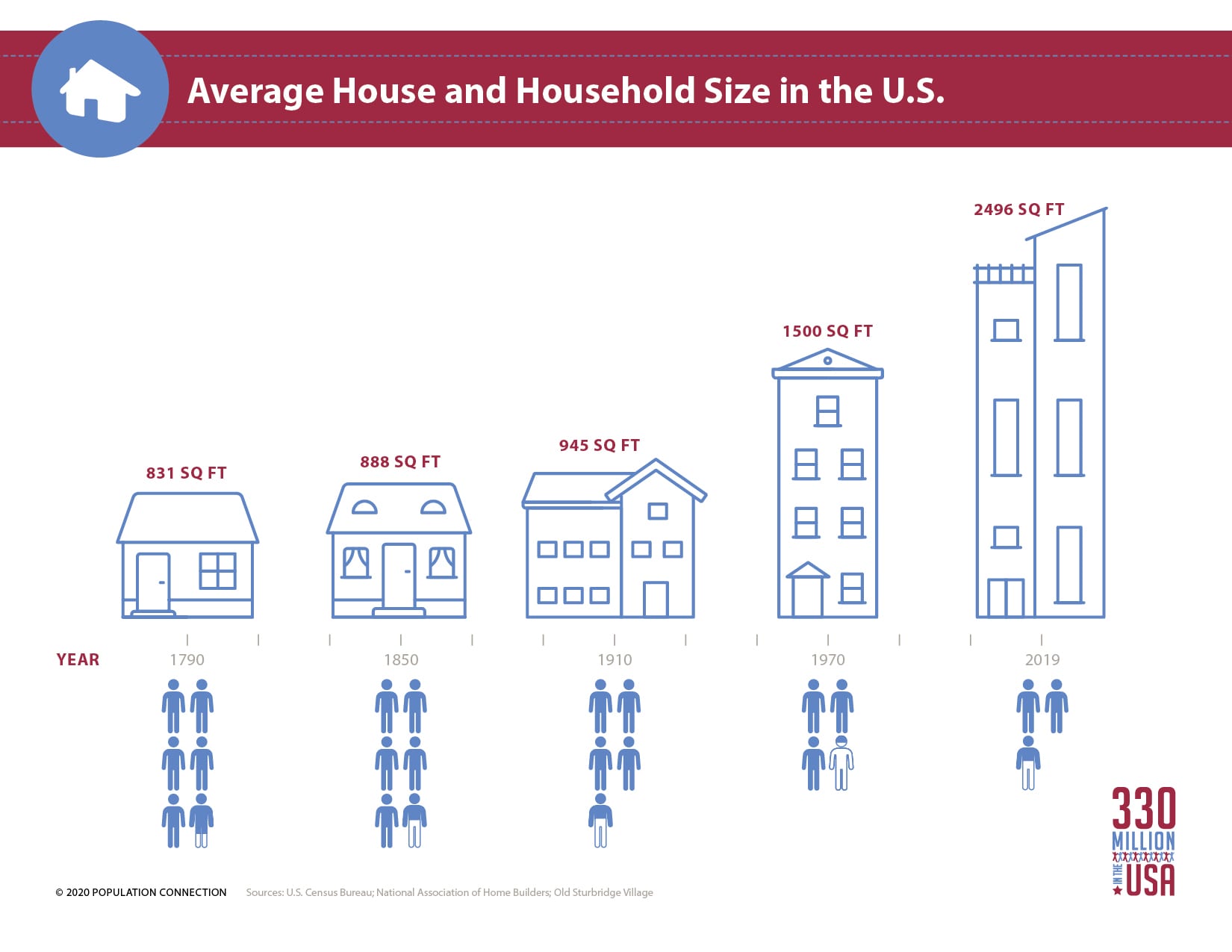
It should be considered that, in a market where supply is limited, the economics of scaling housing development are also limited, such that the associated costs of building go up. Fewer opportunities to build means fewer materials suppliers, fewer labourers, etc. which can mean price gouging when demand is bursting.
Zoning restrictions and building code are the primary causes from which (virtually) all systemic issues originate.
They are also the easiest to fix, and can be rewritten overnight if needed. We just don't see enough outrage yet, but I believe the pitchforks are coming for city councillors across Canada and the US.