The worst is in the winter when poison ivy or oak loses its leaves. It's almost impossible to detect, at least for me. Years ago, I was hiking with a friend on a ridge south of San Francisco. It was February and warm weather so I was wearing shorts. To get around a fence and do a bit of light trespassing on public lands, we followed what turned out to be a game trail. Half way down the hill, the trail led into what looked like a patch of brambles. It was all twigs as the leaves had fallen off. Not wanting to turn back and miss out on the adventure, we pushed through. Huge mistake. The twigs scraped up our legs and sent urushiol (the active ingredient in poison oak & ivy) mainlining into our blood streams. A week later, I ended up in the emergency room with legs too swollen to walk and giant inflamed lymph nodes. My wife, pregnant at the time, also ended up with a severe case simply because I had so much urushiol oil on my skin it spread to her. The oil doesn't come off unless you scrub it hard like trying to remove motor oil with a degreasing agent. I couldn't walk properly or fit shoes over my swollen feet for a week.
On the plus side, during the peak of the suffering, warm showers are bizarrely euphoric, borderline orgasmic, as the water gently itches the skin. Anyone who's had a bad case of ivy know the feeling.
I can verify the part about hot showers feeling euphoric. I was given the advice to take a shower "as hot as you can stand it". It takes away the itching for several hours. I remember looking up why it feels so good and it had something to do with heat neutralizing the histamines that build up over time.
This happened to me, in a less extreme way. Clearing fallen, leafless winter brush... oops. There actually is a failsafe way to identify mature poison ivy, even without the leaves-- on the large stems, there will be "hair"-like roots.
So, the leaf-identification exercise at that website is great, when in doubt look to the large stem/trunk of the plant. And if you see 1 large climbing poison ivy trunk, steer clear of all ivy-like brush in the same area.
That sounds awful. We've had some inhalers on the thread so far, including me, but no one who inadvertently injected urushiol directly into the bloodstream. That's some scary s*t! Glad everyone's ok. Showers, yes, plus-100.
Yeah, it was worth it for the showers. Lol. To be fair, it wasn't a life threatening situation. Just a strong reminder to be grateful of everyday I wake up without body wide pain. That's how I view poison ivy and oak. Nature's little reminder to appreciate the improbable gift of its beauty, because thank the gods most plants do not cause us crippling pain.
This is your lesson it seems to stay on the trails - it is good for you and the integrity of the environment which is not to be overly trodden so others may enjoy it as well.
This depends a lot on the area. Most places I like to go are backcountry without trails. But in high traffic areas with lots of nature tourists, it's a good idea to respect the erosion control areas, especially in the desert with fragile topsoil.
More like wear long trousers for number of reasons, this and general scratches being very frequent in almost any terrain.
There are cheap fabrics who are better than bare skin even in scorching heat, plus you protect your skin from sunburns and some bad insects.
I seem to possess skill of losing not so used trails easily or doing some shortcuts which end up changing pleasant hikes into hardcore, often survival ones. I mean i have tons of experience and even returned few times (but only few, mind works against you here), but also thanx to that I see how ie 1 slip or loose rock at some crux place can be easily fatal, but most places are fine even if scary to beginners.
Or wading through thick bushes with ie this Ivy due to trails gradually disappearing and only later realizing they were from animals like op.
Poison ivy in particular very aggressively overgrows trails and paths-- partly because it grows fast, but also partly experienced hikers will not touch it. So, it's easy to encounter and even be blocked by poison ivy on an otherwise active trail.
This video about how to wash off poison ivy changed my life. The key is that urushiol acts a lot like invisible motor oil in terms of how it sticks to your skin https://www.youtube.com/watch?v=4oyoDRHpQK0
The answer in the video is Dawn liquid dishwashing soap and strong scrubbing with a cloth.
I want a product that can show me where the oil is on my skin. I'm strongly affected by poison ivy. I sweat a lot, so I'm constantly touching my face. I've had bad rashes on my nose, eyebrows, and ears, amongst other places.
I use a soapy cloth every time I think I've been in contact and I still miss places.
That would be ideal, but in its absence I have had success (mostly) using a barrier cream to keep the oils from reaching my skin in the first place. I buy it from a marine equipment store, where it is sold for people working with glass fiber and resins.
Even worse, it is almost impossible to find these days. The brand was acquired and the company that bought it is still ramping up production and distribution. Source: I emailed the company.
Actually just bought some Zote (also now owned by the same company), just yesterday, to test it out... but from what I hear, I don't think it is as good.
My grandparents always swear by using "brown soap" if you think you've been exposed to poison ivy. aka Fels-Naptha. It's a pretty strong soap, but I don't think it contains naphtha anymore.
Strong detergents like Dawn can trigger eczema -- they destroy the tight junctions between skin cells and let foreign materials through your skin that your immune system reacts to. I've had great luck switching to milder traditional soap made from lye and fat, which isn't strong enough chemically to do this.
Discovering this site was a godsend for my son, who had severe eczema as a baby: https://www.solveeczema.org I would also get itchy skin hands after washing dishes, now, my skin feels great.
I've not tried using traditional soap for washing off poison ivy, though it does work for other kinds of grease, so I would expect it's ok as long as you scrub well enough with a cloth or something.
The video says that the most important thing to do is wash every possible surface with friction (wet wash cloth or luffa) and to be exceedingly thorough in it. Additives didn't seem as important, though it probably is good to use some kind of soap.
This video was a game changer for sure. It's amazing to see it racked up 8M views over the years.
There was a scientist at UC Santa Cruz who patented a chemical that could be used to detect urushiol under a blacklight. I contacted them years ago to see if they were going to turn it into a commercial product, but AFAIK, it hasn't made it to market yet.
The idea is intriguing... a special light or cream to make urushiol visible on the skin to aid in scrubbing it off. Now that would be truly life changing!
A friend sent me that video a couple years ago, after seeing how much time I spend in the woods. Changed my life too!
He's right that scrubbing hard with a cloth is the most important part. For spot exposures mid-hike, a hard scrub with plain water in a stream or river, even without soap, has worked for me. A stone or a piece of bark can work as your scrubber. Better than your hand or your shirt. I swear that guy's saved me weeks of agony. Thanks for sharing.
I used to end up at the doctor every time I got poison Ivy, becuase it was so out of hand. That is until I took the time to understand urishol, and invest in "extreme green power hand scrub" which used to be called mean green soap, but they got in a trademark dispute with a bigger company.
extreme green power hand scrub is the same ingredients as zanfel, which is like $40 for a tiny tube. I keep tub of it in my shower and any time I see it starting, or think I may have come in contact I scrub the crap out of it, and it goes away in a few days. I haven't had a major breakout in well over a decade, and I reccommend it to everyone whenever the topic of poison ivy oak sumac or cashews comes up.
I have tons of it in my yard, and I'm genetically incapable of recognizing it by sight. I've gotten it 3 or 4 times in the past 10 years, and it's really annoying. I have some other type of vine, it's maybe kudzu but I'm not sure, that has completely enveloped trees, fences, climbing up my house. It's certainly intertwining with poison ivy and all the other plants and could very well pick up the oil from it.
There's an old movie called The Day of The Triffids, about walking/ambulatory plants, and you could shoot a remake of that in my yard and probably not need special effects. Kudzu can grow so fast you can almost see it in real time.
For us, we moved into a house that has about an acre of forest land. We’ve been trying to clear it out so the kids don’t come in contact with it while playing back there.
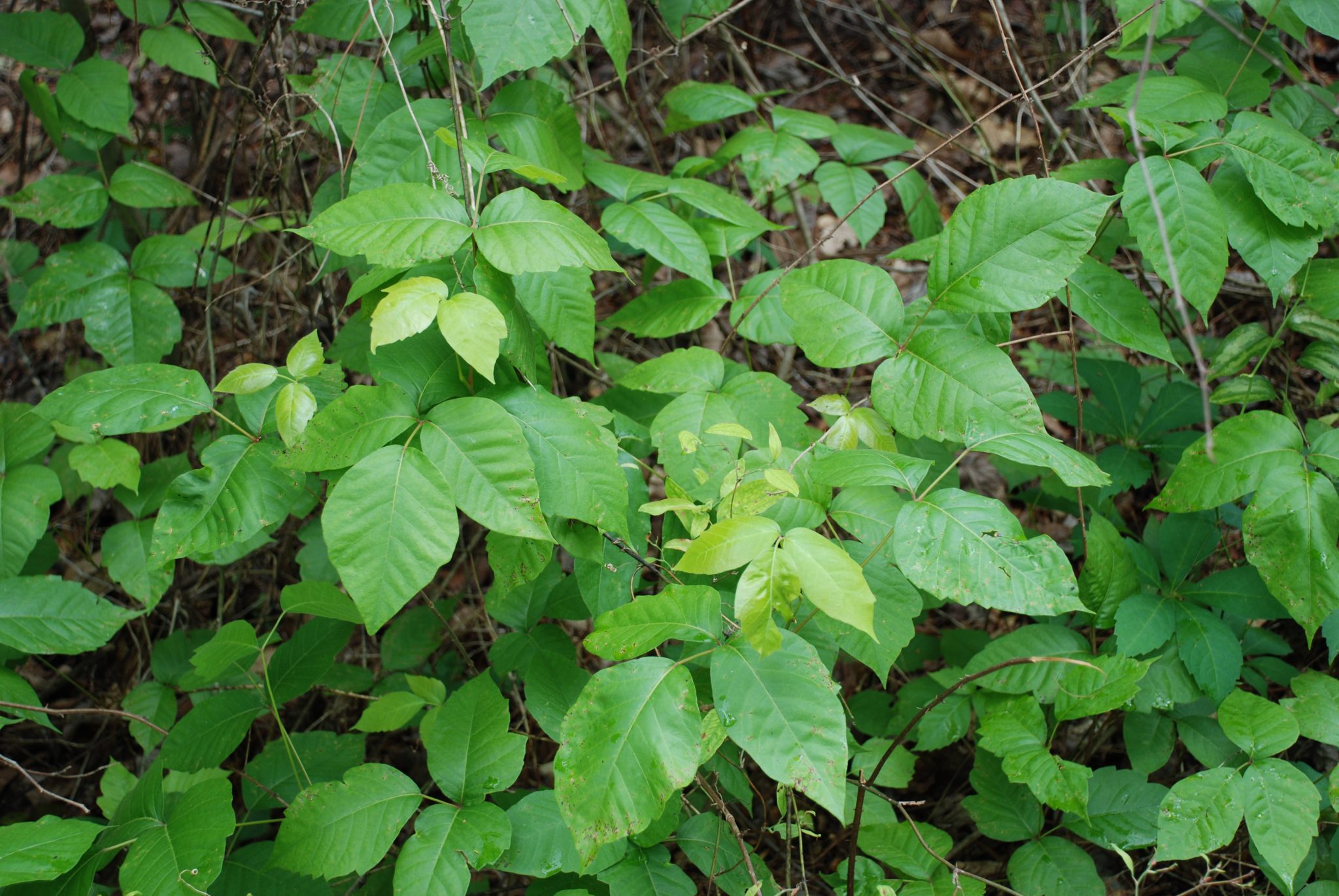
This test probably helps you improve your false positive rate (accidentally identifying a safe plant as poison ivy), but if you just want to avoid it, the "leaves of three, let it be" heuristic works pretty well. It's conservative, there are lots of things with three leaves that aren't poison ivy, but you at least won't get stung
I get it second hand... Someone caries firewood with it, then sits in a chair. Later I sit in the chair and poof, I have it for weeks. For me it usually ends with steroids as it doesn't go away. (Last 5 times I've had it has been this way.)
I think my last round of it was second hand from myself on a pair of boots. Must have walked somewhere by it and gotten it on the laces, but didn’t actually get it on my skin, or washed well enough.
Then on a day where I couldn’t possibly have gone near any ivy I ended up with a couple of spots on my fingers. And then again a week later before I realized it was probably on the boots. Fortunately just a minor inconvenience, but it’s crazy how the oil sticks around.
>This test probably helps you improve your false positive rate (accidentally identifying a safe plant as poison ivy)
do you mean I will a priori spot a bunch of false positives but then learn to eliminate them, improving my false positive rating but possibly exposing myself to more actual poison ivy?
or do you mean that my tendency to generate false positives will go up but I will be thus safer?
I'm writing because I imagine you mean the former, but what happened in my case is the latter. I consider myself very very good at avoiding poison ivy, but this test was showing me varieties that I've never encountered before (the ones with leaves that have a shape with some concavities)
Yes, unless you are a botanist, you don't need the ability to identify a zoomed individual leaf. After about 10-20 Qs, I identified all 3 of the zoomed out poison ivy plants correctly, but incorrectly labeled 2 zoomed in leaves as poison ivy. In the real world, both of them I am familiar with and know for a fact they do not have leaves of three.
Anything with opposite leaves growing in couples (see all maples) is not poison ivy.
If all the leaves are simple is not poison ivy. They need to be composed by several leaflets
Anything with five or more leaflets in the leaves is not poison ivy but could be poison oak or other poisonous relative. Some other Toxicodendron have 5, 7 or more leaflets.
Check for how "soft" and flat is the surface and how the light is absorbed
I got all but one, somewhat surprisingly red maple tricked me.
During university I spent a lot of time in the Carolina woods where poison ivy is abundant. At first you notice the disgusting oily leaves, hairy wood, green spring time berries and the leaves (of three let it be) that come in multiple colors with ample stems often with a dark reddish tint. The leaves come in varying shapes, older seems to be rounder, younger with wide serrations looking similar to red maple. I'm proud to have gotten to the next level, where it seems you just feel the evil presence. Not only intuitively by ecosystem context, but also by the shape of the growth as a whole. This allows you to identify it the winter and from impressively long distances.
Poison ivy is an enemy to the forest explorer, setting up blockades around water features and meadows. The oil can stay on surfaces for what seems like years. I truly hate this plant.
Once you tangle with it, you can't help but study it, learn what it looks like in all seasons, what kinds of places it likes to grow. It seems to like the sunny edges of clearings, and hard rocky places other plants reject. So naturally it loves to crowd up against places humans tend to travel - beside trails and pathways, the edges of roads. Note the PI patch in summer with the oily leaves, watch it turn bright colors early in autumn, and memorize the look of the field of bare, upright knee-high sticks it leaves behind in the winter.
It's cruel irony that it doesn't bother wildlife, just humans.
Poison ivy is an easy one. Especially if you've been hiking in California, you've passed it on the trails when there is tree cover.
The leaves look shiny because of the oil which in fact is the irritant part.
Edit1: @Myrmornis: score: 100%
The key: Not waxy (like typical ivy), but oily wet shiny.
Edit2: @cortesoft: Yes poison ivy is common in California, just less common than poison oak. Both are abundant throughout northern California, especially in un-gardened and wilderness areas. Poison oak is super easy to identify because of the old "Leaves of 3, let them be" adage, combined with the distinct color and leaf shapes. Some of the common ones are a magnificently vibrant, almost "Hawaiian gecko -level" green like in this pic:
I'm pretty sure I'm actually immune to both of them, but not trying to press my luck. I'm also terrible at identifying plants but when they can hurt me or friends of mine suddenly it becomes easier to become familiar with their sight. If I can identify them, you can probably develop the skill even even more easily than I did after a few times.
I'm 100% certain you are mixing up poison oak and poison ivy. People do this non stop here in the midwest, but in the reverse of what you're doing funny enough.
Poison oak, Toxicodendron diversilobum, looks somewhat similar to eastern and western poison ivy (T. radicans and T. rydbergii), but are all different species. Neither poison ivy species really occurs in California.
I'm from the east coast where there is also plenty of poison ivy and found it funny how my brain reacted to this quiz. Every time a picture of poison ivy appeared, I didn't even think about it, I just had an immediate uneasy feeling. It's like I've trained some subconscious part of my brain to identify and push me away from poison ivy.
The other tell is 3 leaves. From memory (so maybe wrong), they aren't hairy, but do have a slightly broken edge (can be smooth, but can have a little but not a lot of variation).
We live in the woods and there's poison ivy around. I try and mark the obvious stuff with some spraypaint, but if you go for a hike you could probably come across some.
I just tell people "leaves of three, leave it be" and leave it at that.
You can get into whether the branches alternate on the stem, the exact shape of the leaf, whether the middle leaf has a longer stem than the two side leaves, etc... But in my experience it's just way easier to have people avoiding the handful of plants in your area that are safe but could be confused (for us it's pretty much just boxelder) than trying to play botanist and determine exactly what's gonna ruin their entire month.
Unless you _really_ need to differentiate or you live in an area where there's a _lot_ of other three-leaved plants... just avoid the three-leaved plants.
It's good to recognize the vines that run up tree trunks as well. Easiest when they have leaves, but they don't always have leaves especially in shady areas. The bigger vines tend to have a hairy or bushy look, lots of little root-hair like bits, that seem to help it cling to the tree bark, and these seem to have a reddish hue about them.
I forgot all about poison ivy's appearance as a (dried out) vine, and I proceeded to cut and rip huge chunks of it off a spruce tree in my yard.
The first indication I made a huge mistake was a relentless cough all that evening from the dust it generated as it broke off the tree. For the next month, I had horrible patches on my forearms and random other spots on my trunk where either it grazed me or I touched with my contaminated gloved hand. Luckily, I had some beta methadone lying around that helped the worst of the itching.
Even the dermatologist, when I saw him about 2 weeks post exposure, was horrified.
I had a terrible experience this summer from a dried poison ivy vine on a fallen tree. I can still see the marks on my skin where I had the awful rash. Really took me by surprise.
If you look up the tree you can often see some poison Ivy leaves. The large vines are what you want to get rid of to stop it spreading. As far as I can tell, birds eat the berries and poop it out while perching in other tree, which is three main way that the plant spreads
I didn't see a lot (or any) pictures of what poison ivy looks like once its dominated a habitat for a while, like the woody trunks it develops as it grows uninhibited on trees.
I lived in an area that had under-controlled poison ivy overgrowth, and it was always a challenge to convince people that poison ivy can look differently than what's expected once it's developed unimpeded for years.
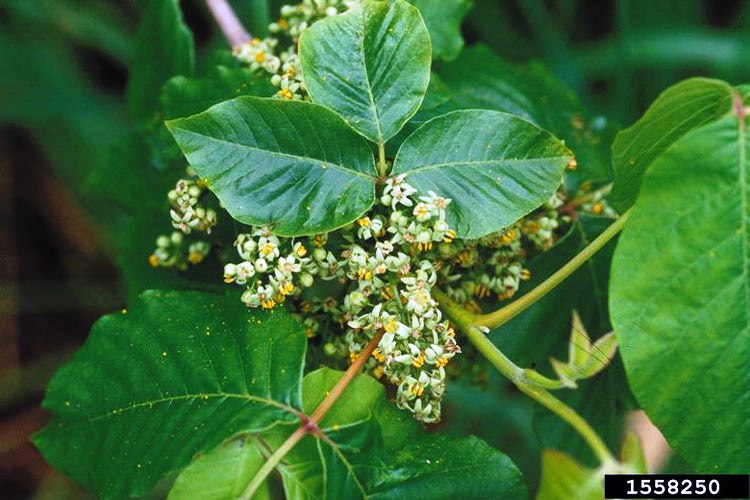
I agree, one time I had know idea what this young "tree" was, it looked like an ash sapling, but it was a flowering poison ivy. Couldn't see the classic poison ivy "thumbs" either. Something like this: https://www.maine.gov/dacf/php/gotpests/weeds/images/poison-...
Good thing I'm not one of those people. (Yet. Repeated exposure can apparently eventually make me one of those people. But I've made it a half century so far despite living on the east coast, being semi-frequently exposed while hiking, running, yard-work, etc, and never really worried about it.)
Haha I had to go and confirm, you're right (it's 35/55 for those who don't want to click a button 55 times). And here I was feeling pretty good about my 42/55...
I was you until a couple of years ago. Could have rolled naked in the stuff. Then it got me. And Lord, it was horrible. Weeks of agony. I’m super careful with it now.
> Yet. Repeated exposure can apparently eventually make me one of those people.
This is a good reminder for people. Most people only start getting it after a few exposures. I know of at least one early exposure that should have been really bad that nothing came of, but I've had it a few times since. I'm pretty careful these days though: 54/55.
...Now I know I'm going to get wrecked this summer.
This is fun, but sometimes it's only clear through context clues. Poison ivy is VERY adaptable. It can look like ground cover or like a bush or like a little tree.
It would be great if they had an alternate view for the ones that people get wrong.
I got 50/55. I think one of my big problems was not being able to tell textures from the photo, or not getting a clear view of the stems and runners.
46/55, half of my wrong answers were false positives (those are better! I’d rather not take the chance). I’m pretty happy with that after 20 years living without the dreadful stuff.
For folks who don’t already know:
- three leaves in a cluster is a good warning sign
- redness of the stem where the cluster meets is a telltale
- the leaves generally have a point at the end, and may develop points along their sides
- dry looking roots going vertical is a bad touch, just… don’t bother unless you’re escaping some other danger
- If you’re like some of my family and get it from the wind, none of these guidelines have any value, I’m sorry!
Two summers ago it took me 3 months to recover from a poison ivy "attack". I had washed it off with Dawn detergent but obviously didn't do a good enough job. Once I realized it had got me, I used large bandages to keep myself from scratching it in my sleep. I still have scars around my ankles & calves from the blisters. Now that I know I'm super sensitive to Urishiol I'm not taking any chances - I ALWAYS wear long pants and sleeves when in the woods.
The mistake I made was allowing my ivy'd clothes to touch seat cushions and especially my bed sheets. I was touching fabrics that had the oils on it over and over and even sleeping in it. Wash everything that was involved in the incident!
As a kid I got really severe all-over-body poison ivy. Two decades later, I can’t eat mango despite how much I’d like to. Even if someone else peals it and cuts it up for me, I end up with an itchy rash around my mouth and tongue. Be careful.
I used a string trimmer one summer to clear groundcover in the backyard without realizing that poison ivy had colonized the area among other weeds and English ivy growing there. I will never do any yardwork involving cutting without long pants on again, the trimmer efficiently shreds plant material into a slurry that sprays everywhere. I'd never been exposed to it before, the dermatologist had to tell me what happened to my legs.
We moved into a new place a year ago, and I was impressed by how lush one of the trees were. Then I noticed those leaves weren't those of the tree -- it was a massive, ancient poison ivy vine.
I spent a few weekends in gloves, long sleeves, pants, mask, and googles with a hacksaw. The vine was three vines twined around the tree trunk, each vine about the width of my lower arm. I cut out chunks of the vine at the base of the trunk, and it was immensely satisfying watching the vine's leaves droop and wither. A bit unnerving when some extra windy days scattered the dying leaves across the yard.
Anyway, now (well, not literally right now as it's winter) I just take the occasional morning or afternoon and pare back any new growths and dig up more of the buried vine roots. Not sure what, if anything, I can do about the dead vine still wrapped around the tree, but at least the tree isn't competing with the vine for sunlight and air anymore.
I am working on remodeling my fireplace and decided that I wanted to use a solid wood mantel. Though I have some trees on my place that might work I went around locally to fireplace stores, rock and stone yards, etc to see what might be available and how much it would cost to buy one ready to install versus cutting one from my place and installing it.
In one local fireplace store they have a great selection of wood mantels from many varieties of hardwoods, all prefinished and ready to install. As I checked all of them available with the dimensions that would fit my particular needs, I found one oak mantel with a live edge front (bark still in place) and clinging to the bark all along the front of this mantel was a 2" thick (5 cm) poison ivy vine that had been cut to the same length. I told the owner what he had for sale but I don't know whether he ever removed that vine. The way it had all been finished looked like they treated it as an extra decorative element. I don't remember whether they were charging more for the mantel with the built-in irritant but it wouldn't surprise me to find that they were.
It seems to me that once you install that over a nice heat source it may start to liberate some of the oils and really cause an allergic reaction among anyone who buys that mantel without recognizing that vine.
For anyone trying to remove poison ivy from your property with the least amount of work, I have had luck covering it with 6" or more of straw hay and leaving that in place for at least one year. If you cut the vines and bushes to the ground and then cover the area leaving all the cuttings in place they will decompose. Just add some straw if any of it pokes through. It's a plant and so it needs light to grow. In a couple of growing seasons it will be gone.
Give it time and the vine will probably fall off on its own. I had a similar situation and it took well over a year before the tree was free of vines. Forcefully removing the vine can also hurt the tree.
My friend and his friends unknowingly burned a bunch while camping. They all had to go to the ICU the next day. Everyone was fine but it sounded painful and scary.
Yea, happens in the country (like Calaveras county in CA) where the concept of burn piles is still acceptable, even controlled by the local fire department. When I was very wee in the 80s I remember my dad doing this in town. I doubt the good people of San Jose would look kindly on it. That being said, there’s something about the smell of mildewed decomposing grass and shrubs burning that waxes nostalgic for me.
You need long sleeves as well of course. But then reading these descriptions it seems if the outside of your pants gets poisoned and you lay your pants on something you can sit on then you are screwed too.
Another thing that long sleeves help against is ticks and Lyme's disease.
I want this quiz, but for poison oak. There's so much blackberry and other stuff in the bay area that looks awfully similar. I'd rather learn how to reliably identify it than be afraid of ... everything.
I'd also love a poison oak visual quiz! Something I learned recently is that poison ivy isn't native to California—it's three variants either grow in Asia, the eastern US, or "not California." [1]
I'm a native Californian, have never knowingly seen poison ivy, only poison oak, and I still got 48/55. So it's still a helpful quiz IMO. Oak does tend to take slightly different form factors depending on its environment e.g. it can climb if it's around trees or stand independently if not; not sure if ivy does that.
Blackberry has thorns and serrated leaves so you can distinguish it fairly easily regardless of season. When there are leaves on the plants there aren't really many plants that are easy to confuse with poison oak around here. Just look for leaves that come in sets of 3 leaflets with rounded/smooth lobes.
It's great you don't have trouble. I don't have that confidence yet. I've been using a plant id app to check when I see it and I've gotten it wrong both ways.
> The leaves may be notched, round, or oak-like depending on what other foliage is around the poison oak plants. They may be shiny—or not. They may have a red tinge—or not. This is where the challenge of identifying these plants comes into play.
...
> The actual shape of poison oak's leaves change based on the environment it is growing in, with the lobes able to vary on the same plant.
I agree, I find it easy to identify in any season. We have few plants that resemble it or its growth habits in anything but a superficial way, plus poison oak is much less variable in leaf size and shape than poison ivy.
The buds and stem tips are especially good giveaways, but I didn't really realize it until I lived somewhere with multiple species of sumac.
54/55. Grew up in Ohio spending every day off trail in the woods. Misidentified one because the site gets cropped off on mobile and I got over confident and didn't scroll to see the whole photo.
52/55...had a couple of false positives, because I'm paranoid. I'm pretty sensitive to it, and it's all around where I live. As careful as I am, though, I still manage to get it once or twice a year.
False positive won't hurt me, false negative will. A little exposure is bad enough on me, but even a moderate amount and I go to the doctor before it turns into a dangerous situation.
It is everywhere. I once did a photo essay of a local abandoned insane asylum. Some of the buildings are covered with poison ivy, like English ivy (often, both).
Basically you need an incinerator to actually burn it - otherwise you’re just spreading it airborne.
I know someone who had an older relative who did this back in the 1950s — they did a bunch of yard work, and figured they’d burn the waste. It turned out that this was a popular laundry day in the neighborhood when most houses had things drying on the line. After the third or fourth neighbor mentioned the mysterious rash, they realized what they’d done but wisely kept the secret for years.
I know a couple of landscapers that ended up in the hospital, because a few strands of poison ivy ended up in some brush they were burning (which they shouldn't have been, anyway).
If I understand correctly the problematic thing is urushiol which can withstand high temperatures. So all you do is fling this extremely horrible stuff into your lungs.
I removed a poison oak plant from our yard last year and it splattered on my arms somehow from the stems. I had rashes on my arms for a month. Weird thing was it felt AMAZING to put scalding hot water on my arms after a few days, and after doing it the itch / pain would be gone for about 6 hours. I could then repeat the hot water method and it always felt amazing, I almost miss it. lol Hope that plant is gone for good!
That's the first I've paid kudzu any attention, but looks like its "vine"/stem (not a botanist) is quite distinct from poison ivy, so that should make it decently easy.
I moved to a property on the East coast with a somewhat wild backyard and a lot of big oaks and maples. I kept away from anything I thought resembled poison ivy. One particular oak had a hairy vine wrapped around it that was 5-6" in diameter extending 60+ ft up into the canopy; it didn't have any leaves I could see. I removed it to keep it from choking the oak tree. I learned the hard way that poison ivy vines can get _really_ big and are hairy.
I got all of them right up to like 30 of them. But can we discuss something? none of the look-a-likes were the hardest one, at least in my neck of the woods. Box elder saplings. That's all, I just find it odd that so many of these poison ivy things don't include more of it. Maybe the author's don't live in Box elder zones.
Yes agree, most common lookalike, especially seedlings, and the hardest to distinguish. The opposite, usually square, branching is distinctive, but it's a subtle difference. Once the pattern recognition kicks in, you can do it at a glance, but it took me a couple years.
!00% and they can both a bit opportunistic in new growing areas like dried up seasonal pools. Personally I think it's a bit funny that virginia/thicket creepers show up in these, but I also think they should because it's instructive for newbs.
I have a LOT of poison Ivy in my yard (3 acres in Michigan). Scored 53/55 (2 false positives). I’ve been trying to remove poison Ivy from certain patches for gardens with limited success. I’ve tried repeated mowing; dressing up in protective gear and ripping up roots in the wet months; covering the area in cardboard and planting over. These with for a bit, but doesn’t work well where the Ivy is well established. I’m trying to avoid herbicides since I don’t want to poison the earth. Anyone have similar experience and have any recommendations about what works for you? I’ve considered “goat rentals.” Wondering if they’re effective at ripping the roots out.
IMO this is one of the very few "good" use cases for herbicides. Glyphosate works. If you don't want to spray, triclopyr ("Cut Stump and Vine Killer") can be dabbed on the cut woody stems at ground level. It's a pain for a big area, but it works, and it doesn't touch anything else. Winter's a good time to do it.
I was absolutely shocked how good my recognition was based on poison Oak identification. You get really good at seeing something in the dark out of the corner of your eye and going... DANGER!
I got 52/55 and I went quickly. Do I spend too much time outside?
People often ask me how to identify poison ivy. And I try to teach them. I think I do a decent job. It’s not as simple as one or two markers. But at some point you just develop an instinct
Same score, and most of these plants aren't native here (W Oregon) and I wasn't familiar (in particular jack-in-the-pulpit got me 2/3 times, and then sarsaparilla appeared once).
I get asked to teach people plant ID sometimes, and people often seem mystified by it, until I explain the concept of "search image". It seems to give them a new way to approach it and seems helpful in most cases. Probably related to what you mean by "developing an instinct".
When I did camp america, we were warned about poison ivy, but not really shown what it was.
This would have been really useful.
As I had grown up in england, I hadn't really twigged how much of a pain in the dick poison ivy is, how slow it is to react, and how it gets worse with repeated exposure.
By the end of the 6 months, I had a good idea what it looked like, and where its likley to live. But it wasn't second nature like avoiding brambles and nettles.
In Europe, the main equivalent would be the giant hogweed Heracleum mantegazzianum. Several Rhus and Cotinus can be found in gardens but they normally don't cause problems unless mowed. Fig trees can be surprisingly dangerous also.
If you are allergic to Poison ivy you probably want to avoid cashews nuts (watch for them in cocktail mixes). The nuts can trigger an allergy in sensitive people if eaten. Poison ivy is a relative of the cashew.
My favourite encounter was when hiking around in England. Saw a beautiful little lake, walked to it and realised way too late it was surrounded by Poison Ivy.
Then again, it was nothing compared to my encounter with Gympie Gympie[0] near Dorrigo.
New England? No posion ivy in the UK. There is normal ivy of course which can be an irritant if crushed a lot, much more concerning and dangerous is giant hogweed.
I recently tried a soup in Korea (옻닭 or oht-tak) made from Toxicodendron vernicifluum before knowing what it was. The people I was with were very insistent that I take a pill to neutralize the allergen (urushiol, found also in poison ivy, is technically an allergen rather than a toxin) before I ate it.
Not everyone reacts to it, but when they do, it's pretty bad. The others I ate with have no reaction to it at all.
> Not everyone reacts to it, but when they do, it's pretty bad.
I have had it a couple times, with leaves brushing my skin. Huge, weeping sores all over my arms, chest, stomach (and worse), like leprosy (I imagine, anyways, never seen a photo of a leper). I can't even imagine eating it.
Similarly, I saw an episode of "Flavorful Origins" on Netflix, "Lacquer Seed Oil", which collected the fruits of the Lacquer tree (basically a poison ivy tree). They ground up the fruits and cooked the pressed oil to neutralize the urushiol (how did they not die from inhaling it??), and then they made a lovely tea with the oil with local bee larvae.
Honestly, it was nothing remarkable. It's used in eastern medicine to treat various ailments, but the flavor itself didn't have any sort of lasting impression.
The best thing to come of it is a story of having "poison ivy chicken."
> One way to learn to identify this plant is through sheer experience - to see it in its many forms, as well as similar-looking plants. You normally do this by tromping through the woods.
I don't understand this. How does tromping through the woods and seeing many ivy-looking plants teach you anything, unless you have a way to know definitely which are poison ivy and which are not?
The answer is that once you’re able to definitively recognize it in at least one form, you’ll start to recognize similar, not quite identical forms.
The sapling form is not quite the same as the vine form, which is not quite the same as the very thick hairy vine that it eventually transforms into. But once you know one, you can start to recognize the others due to at least some parts of the plant matching what you already know. And then the other parts of the plant, which you hadn’t previously recognized as being how poison ivy can look, are added to your personal visual memory, too.
I don’t know, it’s hard to explain. It’s like if you saw a chihuahua and a Great Dane, you might not recognize them as being the same species. But if you see enough dogs in between, eventually you’ll see that they have something in common.
Your brain eventually learns to categorize plants into different buckets by noticing attributes. Poison Ivy is a vine but can trick people into thinking it's tree or a ground cover.
If it's showing as a vine you just have to categorize the attributes of the other vines. Where I'm from there are only 3 or 4 common vines. Grape, Virginia Creeper and Poison ivy. Also there are non-natives: kudzu and english ivy, but they exist in more specific contexts.
Your brain learns to categorize the attributes of these vines into different buckets and it sticks with you. Grape for example just kinda hangs around in the air with thick woody rope-like vines. Virginia creeper looks pretty similar to poison ivy, but really desperately hangs on to the trunk of trees. Poison ivy hangs on to the tree too buy tries to branch dramatically towards light often with parabolic woody branches. Mature Virginia creeper is hairy like poison ivy but the hairs are lighter, thicker and shorter than poison ivy. Your brain categorizes all these differences even if it doesn't know the name.
I'm touching all kind of plants, nettles, .. sometimes you have a small skin reaction, but no big deal. It's probably more important to know how to differentiate edible mushrooms (and the ones that can be eaten raw). Also usually, flashy plants are more toxic, but not 100% reliable, smell also helps
The nice thing about whoops you're wrong this is a Raspberry is that you're never going to make that mistake the one time you want to touch the Raspberry plant.
More generally speaking, plant identification is something I'm terrible at and really want to get better at.
I (think) I got poison ivy on my leg this past summer for the first time in my life while golfing. I must've either gotten a ton of concentrated urushiol in one spot or be very allergic because the blistering was extreme. Nasty stuff and left a scar.
My score was 45/55, with a couple fat-fingered clicks but still I was fooled sometimes. Even if you're not the woodsy type, it can be found alongside paths in city parks and etc, so good to know how to recognize.
There are other plants with urishiol that can be worth knowing about as well but that is a local thing. Poison oaks (Toxicodendron pubescens, Toxicodendron diversilobum) are pretty common in the US.
My mom had a brush with hogweed that gave her surprisingly bad sunburns many years ago. I keep away from most of the angelicas to avoid a similar reaction.
I recently learned about this tree in Florida where all parts of the tree can cause contact dermatitis, though not with urushiol. Even standing below it in the rain can cause rashes.
https://en.wikipedia.org/wiki/Manchineel
Manicheel sounds horrible. It's in spurge family, known for skin irritation in more northern species. This is like the spurge from hell. Native and endangered in Florida.
Hogweed's super scary also. It's all over North America apparently. It contains furanocoumarin, a phytotoxin, and touching the plant sensitizes skin to sunlight. It can cause severe burns, necrosis requiring amputation, and permanent blindness.
A fact I just learned from looking it up: Species similar to giant hogweed, Heracleum mantegazzianum, are ALSO phototoxic. Did not know that! I thought if you could ID it as cow-parsnip or whatever, it was "safe." NOT. These include - Common hogweed, H. sphondylium -- Cow parsnip, H. maximum -- Wild parsnip, Pastinaca sativa -- Wild lettuces, Lactuca sp. -- Angelica, Angelica atropurpurea -- Queen Anne's lace, Daucus carota.
Other hogweed lookalikes in Apiaceae include the hemlocks, similar appearance but feathery leaves, which go WAY beyond phytotoxicity (all parts of the plant are fatally poisonous to humans).
Fun times. Steer clear! The cool thing about botany is, there's always something more to learn.
I grew up around woods with a father who's super sensitive to PI. I thought he taught me how to identify it. Turns out I didn't learn very well—this quiz was very humbling.
It is a great submission, very much in the classic HN style. More than that, it belongs to a rare class: the ones that aren't correlated with anything else. We want more of these! (Thank you marymkearney)


On the plus side, during the peak of the suffering, warm showers are bizarrely euphoric, borderline orgasmic, as the water gently itches the skin. Anyone who's had a bad case of ivy know the feeling.