I've been reading The Soul of a New Machine and it's made me feel nostalgic. My first computer was the Coleco Adam (http://oldcomputers.net/adam.html).
A ZX-Spectrum Z80 clone. Something like 32KB of memory, and audio tapes for storage. A game would take 4-5 minutes to load, during which time the border of the screen would have funky coloured lines, and you could "hear" the program loading (similar to modem sounds). There was also a way to "compress" programs, which would make the lines thinner and the sound more high-pitched - I guess it simply recorded everything twice as fast and tried to deal with the error recovery as well as it could.
This was back in Romania almost 10 years after the original Z80 came out in the rest of the world. It was a big hit for a couple of years because it was so affordable, and many people got their computing start on one (or on a Commodore 64), before graduating to a 286 or 386. One TV station actually had a show where they broadcast games and programs - since it was just the audio signal, you could easily record them off the TV. So you basically had an entire TV show with the funky moving lines on the borders and the modem-like sounds. Looking back it seems a bit surreal. :)
I had one too! Just as in Romania, The ZX was a long time coming to India and was insanely expensive, but I learned programming on it, mostly by writing simple games.
. Once you got your head wround assembly, you could do anything with it and I was fiddling with that machine 12 hours a day till Mom took it away in an attempt to remind me of "normal" life.
Damn I feel old now :-(
I got a Commodore 64 in '82 when I was eight, with disk drive and dot matrix printer. By the time I was 12 I was going to garage sales with my mom (an antique dealer), buying old broken C64s and other machines of the era (by high school I'd already owned several Spectrums, an Apple Lisa, many TRS-80s, a Coleco Adam, a Commodore Plus 4, and other assorted weirdness), and fixing them for resale (fixing computers back then meant soldering iron and a meter and lots of trial and error). So, my first business sprang from my experience with my first computer.
I also ran a BBS on my C64 through middle school and early high school. So, it gave me experience with computer networks, too. ;-)
I also loved Soul of a New Machine. Fantastic story, and reading it back in 97 or 98 lead me to research and buy Data General stock, which turned out well when they were acquired by EMC.
Apple II+. That machine ruled -- simple enough for a 11 year old kid to fully understand, programmable from the get go (it basically thrust a BASIC prompt at you after turning it on) and kick-ass games like Wizardry and Ultima to boot. Brings a tear to my eye.
Right on! What a beautiful machine that was. And I, too, wasted many, many an hour playing Wizardry. Other favorites were Castle Wolfenstein and Aztec.
And remember how it cam with the green Basic programming book to get you started? I don't know if I've ever loved a product as much before or since.
Apple II+... My school had some of them for a year or two before I got one. I wanted my own copy of that book for a long time before I finally got it. There was a local computer store that sold Apples. I finally saved up the $20 to buy a copy of that book from them. I still have it. Fond memories.
I learned to Hack on a Commodore PET that was owned by my elementary school. It was far more fun to modify the learning programs we were supposed to be using, than to actually USE the programs as intended.
Then the school got a Commodore 64. Oooh! Colors!
Then the first PC that was mine, and located at my house was a PCjr (but I had the "real" keyboard). A lot of people slam the jr, and I've never understood why. I wrote thousands of lines of BASIC on it, learned to interface with various peripherals, hand-soldered a memory expansion card, and other fun things.
Then I built an IBM PC from parts (and by PC I mean a 5150), followed shortly by an XT, and then about a year later an AT (and I overclocked it from 6Mhz to 8Mhz, IIRC).
Next was a PS/2 Model 30 (bought), Model 55 (built), Thinkpad 700 (built), and a couple of other IBM machines. If it's not obvious by now, my dad worked for IBM, so I had access to a lot of IBM parts. The PS/2 Model 30 talked to the AT and jr over a parallel-port LANtastic network. Then I got actual LANtastic ISA cards. There was PCNet broadband network in there somewhere also.
After the IBM's was a whole slew of built clones, from a 486sx, up through Pentiums.
With computers also come books, languages & OS's. My journey goes like this:
First machine was a Sinclair ZX80 with 1K ram, a bubble keyboard that hooked up the television. No sound, basic for language (using peek/poke for accessing h/w) and tape deck to load programs. Very simple and fun to play with. Hooked ever since. Heres some photos of it ~ http://flickr.com/photos/bootload/tags/sinclair
- ZX-80->81 | 30 programs for the Sinclair ZX80 1K | Basic | weird Sinclair OS
- Apple][e clone | Apple II Assembly Language | Apple Basic, Basic, Assembly | AppleDos, CPM
- IBM clone 8086 | Data Structures using Pascal | Pascal | Dos
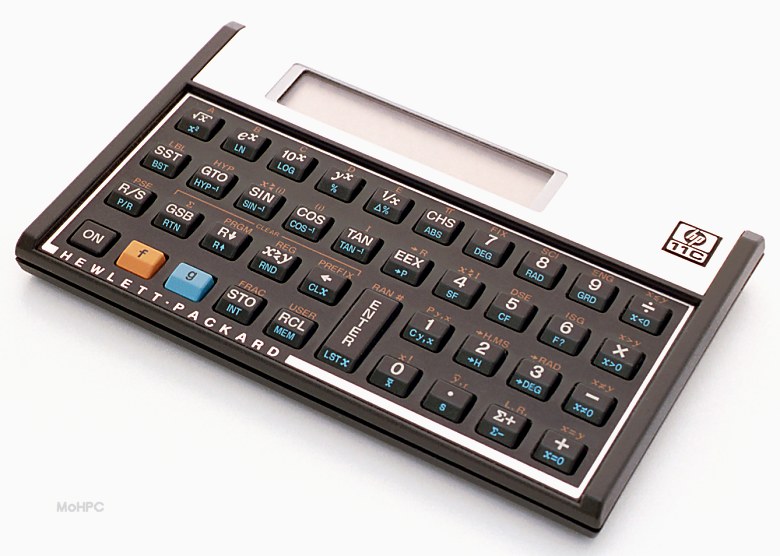
- HP11 calc.
- IBM clone 486 | C Programming for PC, Learning Perl | C, Perl, Delphi, Fortran M77, SQL | Dos, WIn31, Win95, Linux, Internet
- Various Pentium clones | Learning Python, White book, OnLisp, | VB, Asp, Python, Php, Lisp | Linux, OpenBSD, Win2K, Web
- AMD64 | Phillip & Alexs guide to Web publishing, SEIA | Javascript | Linux, OpenBSD, Web, Internet, Symbian
- Internet | ??? | Javscript, web api's | Browsers
Couple of things to note:
- never really into cars as every $AUD2K I'd spend on new hardware (because s/w I always thought of software as free)
- always bought clones because the real one items landing in Aus where so incredibly expensive. The best clone story was getting a mate of my dads to take an entire Apple 2e clone from SE Asia in bits because he worked for Collins Radio then watch it be re-assembled.
- language choice is becoming more interpreted
- books and operating systems always followed along with hardware so I have a graveyard of both
- though you might still call it client/server I now consider writing apps for the Internet, web, browser using languages plus markup and data as opposed to just the web only.
The funny thing is I run a lot of my old systems as virtual machines on my current system.
ZX81 (3.25 MHz Z80 cpu, 1KB of RAM, cassette tape storage). I used it to teach myself Basic when I was 9.
The funniest thing about it was "fast" and "slow" mode. The Z80 was actually used to generate a TV signal, so you had two modes for running programs: In fast mode, the screen went blank, and the cpu just ran your program. In slow mode, the cpu got interrupted regularly to update the screen (which made your program run a lot slower!).
I had the same thing. I also used it to teach myself BASIC... Just because there was no other way to communicate with the computer, really.
My "favorite" part was how long it would take to load a program from the cassette drive. At least 5-6 minutes, during which the screen would go weird colors (with time, you learned to distinguish - white/red means nothing happening, blue/yellow means program is loading) and make really weird sounds...
Honestly not sure what it was... featurewise it only had RF out and did everything from a tape drive... so I'm thinking an Atari 400... but don't remember a membrane keyboard, so may have just been something similar.
First computer I really used a lot was the 486DX2-80 my family got in 6th grade. I was so excited to play X-Com on it!
I collect old computers and now own: Kim-1 ('75), Apple II ('77), Commoodore PET 8K ('77), TRS-80 Model I (78), Apple Lisa-1 (83), Osborne-1, Atari 400/800, Heathkit H89, Northstar Advantage, Next Computer Nextstation. I even own a reproduction Apple-1 and manuals to the Xerox Alto.
A PET 8K. I wrote my first contract program on an Apple II about the same time, so it was a tie.
We had one PET in the high school library. The other nerds and I used to fight over who could program it. There was a sign-up sheet but the rules weren't strictly enforced. One guy named Roland kept using teacher's notes to jump in line. So I wrote a program called "Kill Roland" that all the other kids loved. As I remember, little "R"s came down from the top of the screen and you maneuvered a gun to shoot them before they got to the bottom. Very simple stuff, but the game got so popular that Roland never came to the library anymore.
Mission accomplished.
I miss that little PET. I think I still remember the POKE statements used to control the screen. Geesh -- those brain cells should have been recycled a long time ago.
I just used it to play games. I couldn't wait to get a new copy of "Crash" magazine each month! Dizzy, Manic Miner, Jetpack, Dizzy and Commando were some of my favorite games.
I just noticed that the new Apple keyboard has those "spongy" buttons like the ZX Spectrum.
Tracy Kidder's book is what got me into computers! Love the part where they can't figure out why the motherboard isn't working and the project leader, and old grizzled veteran, just grabbed the board without warning and shook the hell out of it, giving all the young whiz kids cardiac arrest. But it fixed the problem!
Home-built from mail-order box w/ Intel 386SX chip, 1024K ram, 40MG hard drive, VGA video 5.25 and 3.5 inch floppy drive. I really wanted the full 386 chip, but couldn't afford that and VGA. Figured I could always add the i387 math co-processor later.
Commodore 64 (from my Uncle)- the fantastic black (actually floppy) disks, a TV for a screen, and the original Advanced Dungeons and Dragons RPG- Curse of the Azure Bonds!
It was a Pentium 60 Mhz, had 8 MB RAM, 420 MB HD. 14.4 Modem. I think it also had 1 MB Video memory and a 2x CD-Drive. I later upgraded it to 16 MB Ram. I built the next few computers I owned and have since switched to Macs.
I actually did my first programming on that machine. I used QBasic to make a simple game where you moved a car around the screen.
The only differences were that I upgraded mine from a 486 to a Pentium 90(!) and bolted an internal Iomega Jaz tape drive to the outside of the case for more storage. It ran Windows 3.1, which allowed me to wile away the time playing SkiFree when I was young.
My QBasic game was a word guessing game. It was fun to write, and not fun at all to play.
IBM 1401. 12K of characters (BCD-coded), card I/O, fast printer (600 LPM!) and a 1311 disk (2e6 characters, random access, with removable disk packs. About the same capacity as a floppy). Fortran IV, COBOL, RPG, Autocoder (assembly) and more. And the Computer History Museum has one that is operational! See en.wikipedia.org/wiki/IBM_1401 and http://1401.org
I am afraid I entered the game a bit old. My first computer was a IBM 386 whose clock I fail to remember now. It had a green monochromatic monitor, and two 5.1/4 floppies and a 80 MB HD, but I might be mistaken about the capacity, it was probably less. I wasn't really knowleadgeable about computers by that time to really understand what those meant so I don't remember.
Yup, we were actually assigned hypercard presentations in grade school on the IIgs (although I was more into getting it done quick to play Oregon Trail and Number Munchers than hacking at the time)
Apple II. I had no disks, so the computer had to stay on if my BASIC programs were to be retained. I remember thinking how exotic and exciting the 5 1/4 disk was when I finally got one. Yes, I still remember the brand:
Nice thread! Apparently I am not too old for this forum :-) My first was a no-name Japanese box with NEC clone of Intel 80186 processor, shortly followed by a luxurious real 286 machine with 40MB hard drive!
My first IDE was debug prompt in MS DOS :-) Typing assembly language commands one by one was something...
My HS had a PDP-8 (http://www.pdp8.net/) with line printer terminal and paper tape for storage. The programming language it had was FOCAL with a tri-branching if statement (<0, =0, >0).
IBM PC JR - it was nice that it was EGA at a time when CGA was more popular. Since it wasn't very popular, there wasn't much in terms of software for it (My mom got it when it was discontinued); so I just spent a lot of time messing with BASIC
My very first was a Commodore Vic-20 with tape drive, followed shortly by a Commodore 64 which, when disk drive and modem were added, opened up a whole new world of computing. (moondog bbs)
First one I lusted after, ZX-81; first one I programmed, TRS-80; first one I owned, Commodore 64. Ah the nostalgia! Buying computer magazines, and each computer was a whole new thing...
I remember many nights down at Radio Shack lusting over and programming the TRS-80.
The technology was so new, they even had a deal -- if you wrote a program, they would publish it in a catalog they mailed to all of their users. There simply wasn't any software available! A guy I went to school with wrote some kind of shoot-the-cannon-at-the-target program and made over a thousand bucks with it.
Commodore 64. But it wasn't really mine, I had to fight with my two sisters over it ( Oh for the days of dig dug ).
My second was a Performa 476. Also had to fight.
First to program were TRS-80s at school (actually, first was a programmable calculator at school), then my parents bought an Apple //e. Great computer.
Me too.
Funny thing is, I don't ever remember learning _how_ to programme it, just that I always have been. Still have it too.
Oh, and +10 points for the Vic=20 manual, complete with schematic and entire list of memory addresses and their uses.
At my house, an Apple //c was way out of reach for Santa. I had to wait until I was in high school and had saved enough money ($1200). It was another 2 years before I saved enough to buy my first car. ($1500). I still have my //c and have booted it up occasionally. About 4 years ago I bartered some computer parts to someone in exchange for him making image files of all my disks. They run great on an Apple emulator. It definitely holds alot of great memories for me.


This was back in Romania almost 10 years after the original Z80 came out in the rest of the world. It was a big hit for a couple of years because it was so affordable, and many people got their computing start on one (or on a Commodore 64), before graduating to a 286 or 386. One TV station actually had a show where they broadcast games and programs - since it was just the audio signal, you could easily record them off the TV. So you basically had an entire TV show with the funky moving lines on the borders and the modem-like sounds. Looking back it seems a bit surreal. :)