The problem is that the users seem not to ask for it. To the contrary, they seek ways to opt out.
I don't want the AI to be front and center in my browser. I do want the AI, if present, be local, and be distributed among tools: a better reading mode, fuzzy search on the page that searches by meaning, recognizing text on images (and also make it searchable and selectable), creature comforts like that.
If I need to chat with an LLM, I want it to not be bound to my browser.
And yes, I want to never need to start Chromium because a rare specific site refuses to work correctly in Firefox. If AI can help with that, splendid! But I suspect something else may be needed more.
Why: Because AI is constantly and very frequently changing and evolving with lots of security concerns given how much scope/context/permissions it's typically granted. By having it enabled by default means that you have zero expectations that whatever settings/preferences/configs you changed in order to "opt-out" may no longer be respected/preserved/effective.
This is a major problem before we ever get to "what are the specific problems" regarding AI.
A browser user agent is a string of text that a web browser sends to a web server to identify itself and provide information about the browser's capabilities, such as its type, version, and the operating system it runs on.
This has nothing to do with what an AI “agent” is.
Firefox should be the browser that respects you privacy (the only one...). Integrating AI undermining the efforts of making it the privacy oriented browser.
For now the AI is forced and ridiculously complicated to disable (with new options in about:config poping in each new version).
The promise to have an "disable all IA features" is still a promise.
Years ago our company consolidated on Firefox because we could rely on it to not send our information to remote servers. At that time other browsers made it hard to disable telemetry. Firefox was then the only browser that could forward Kerberos tickets to remote servers, for highly secure two-factor authentication and single-sign on.
I'm personnally sad that now we have to consider banning Firefox for company use, because it's hard to verify that we've disabled every AI "feature" that might funnel our data to remote servers.
In the same way that a car is literally just some wheels. It's overly-reductionist to the point of being adversarial.
> What well-funded org should be entrusted with making an open source agent for the user instead?
What does that have to do with the topic at hand? Maybe if you didn't try to strip the context (Mozilla, it's reputation, it's actions, it's incentives, and how this AI initiative conflicts with the userbase' expectations and references therein) all this would seem a lot less "crazy" even if you still disagree.
Mozilla's users aren't being unreasonable or irrational for voicing criticisms here.
Sure, there's plenty of blind-hate for AI. But even many of us that aren't don't like the way Mozilla is going about this for a number of very valid reasons/concerns well beyond "I don't like AI"
The AI hate is unreasonably strong right now. People are acting like adding one feature they don't like or need to a browser is a borderline critical offense because it is an AI feature. I find it shocking how quickly the public in the US/EU developed this sort of hate towards one of the most interesting technology of the last decades.
Let's say you went to a library to find a book for a thesis. But instead the librarian instead on spinning tales and waste your time. It's fun when in a comedy show, but not so fun when you want to get something done. LLM technology is nice, but not everyone wants an hallucination machine, especially on their own computer. It would be another matter if Mozilla, Google, or Microsoft were offering free laptops.
It is interesting, but that's not the feature that people hate. They hate the monitoring, the power consumption, the inaccuracy, and the social and intellectual stupification.
I use LLMs quite frequently, but there are some places I do not want them. "Use AI to chat with your PDF!" The only thing I'd want to have it remotely touch in my browser is translations.
A browser is there for retrieving documents on behalf of the user, not to add its own spin to it. It's already bad with everyone and their dog wanted to abuse the user computation power with "apps" where it should be simple forms and listing.
Ad-blocking and reader mode is "adding its own spin" (or rather removing that of the original).
The problem is not that a browser should not act intelligently on behalf of the user. The problem is that what is usually called "AI" is known to sometimes act erratically and invasively, and also consume a lot of (local) resources. That is, the "AI" is not trustworthy enough. And the key feature of Firefox for much of its audience is that it's more trustworthy than the browser named after a particular shiny transition metal.
"A web browser, often shortened to browser, is an application for accessing websites. When a user requests a web page from a particular website, the browser retrieves its files from a web server and then displays the page on the user's screen."
This is awesome but it cuts off what’s underneath.
Show the “full image” with a pond of Google and Microsoft crocodiles. Because that’s what’s really going to happen. Mozilla’s little fox is going to get eaten alive.
I actually feel like these integrations are fine, as long as they are opt-in or easily opt-outable of permanently. For now, I don't see the harm in adding another default search engine, it's much less obstrusive than the home page sponsored links. And if it gets them a little more independent from google by siphoning perplexity's seemingly infinite vc investment money, so be it.
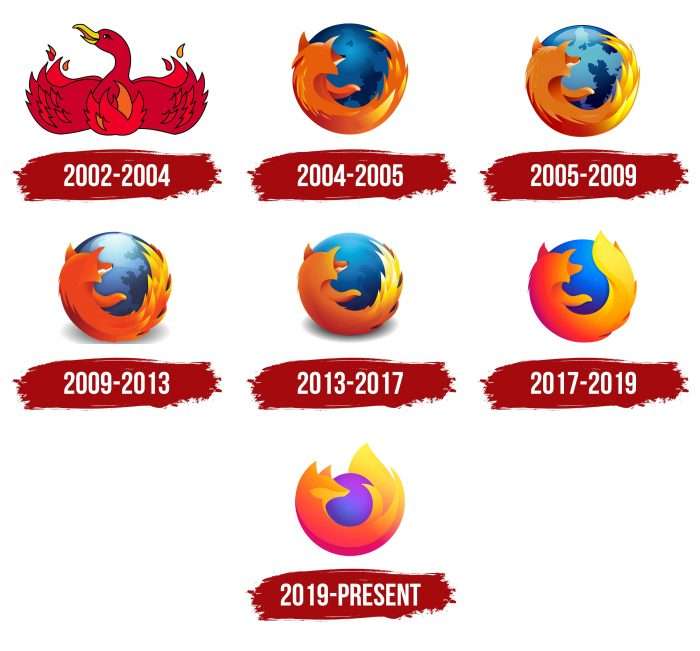
Is it though? To me the animal on logos used by Firefox [1] always looked more similar to a red fox [2] than a red panda. Note pointy nose with the bottom colored white. Even the latest logo that shows more of the side of the face lacks the kind of patterns distinctive of the red panda. The -fire part of the name seemed to be represented by the flaming tail, not the animal itself.
Yes, especially the first Firefox logo has a distinct snout. I have no primary source to quote, but there are plenty claims, referencing each other, that the name stems from the nickname of the red panda.
I was wondering if there is any official statement about the name.
But it seems most common to think of a (speedy?) fox with a flaming tail. How to derive a dog's burning relative from a phoenix seems to remain uncertain.
Something we haven't observed yet are hyperlinks automatically created from a web of documents. This is usually a manual process: which word or words to select, and which specific URL to go to.
David Revoy is the artist who made the painting, this is his blog. The "source" link is to be understood in the sense of open source. Unlike most artists, he shares the raw editor files he worked on, not just the final image. So you can learn something about his creative process if you want to.
It's not exactly a template-meme, or whatever low-effort memes are called now (the ragefaces, the reaction gifs, the deep-fried slop).
I think something like xkcd comics or something similar has always been received well by the community. Given that it's a high-effort piece of content as a digital painting, I think it should be ok - or at least not treated like it's in the same bucket as memes.


A browser is literally a user agent. What well-funded org should be entrusted with making an open source agent for the user instead?
reply