The paper claims that 1/5 of people experience Long COVID after an infection. Given that approximately everyone has caught COVID by now, this does not track with how rarely I've heard of people with it.
Wikipedia lists much lower numbers on https://en.wikipedia.org/wiki/Long_COVID (6–7% in adults, ~1% in children, less after vaccination.) and seems to use a more liberal definition than this paper, as it mentions "Most people with symptoms at 4 weeks recover by 12 weeks" (while the paper only considers it "long COIVD" if symptoms last past 3 months).
I've found studies (peer reviewed, as far as I can tell) claiming anything from well under 10% to well over 30%.
I won't make a claim to the accuracy of the numbers, but I can offer an example of how long COVID can be undercounted. My daughter was a competitive long distance runner. Months after recovering from the acute symptoms of COVID, her performance numbers were still about 10% down and no amount of training would allow her to reach her previous level of performance. After many visits to doctors and specialists, she was eventually diagnosed with long COVID due to lung damage. She's still very fast by most measures, but in track, the difference between being in the 99th percentile and the 89th percentile is the difference between a top 3 finish and a bottom 3 finish. This basically ended her track career. In our case, if we didn't have hard data tracking her before and after performance levels, we may not have ever noticed a difference. How many people who aren't competitive athletes are walking around with 10% degraded pulmonary function and just didn't notice?
It's a pretty sad reflection of the times that there's a need to create a throwaway account to talk about long COVID symptoms, but this is a good personal anecdote to draw attention to what's likely happening. In my case, I only caught covid once - somepoint last year just before I would've gotten the updated booster. It took me well over a year to stop having acute pulmonary issues, and my lung performance is down year over year (measured during high intensity training) even though I finally feel no differently at baseline than I did before I caught it.
Most people don't exploit the full capacity of their bodies and so would never notice, which is essentially the point OP is making. This disease very likely ravaged the 20% claimed, but the vast majority may never know because they're just never pushing their bodies hard enough.
I mainly created the throwaway because I'm sharing personal medical information and I'd rather not do that with my main account where people know me IRL.
It ought to be possible to test that hypothesis by comparing publicly available race results for the same athletes on the same courses before and after the pandemic relative to the expected age-related performance loss. Anecdotally as an age-group endurance athlete I'm not seeing any big declines in myself and my friends so I'm highly skeptical that 20% were "ravaged". The actual incidence of significant loss of pulmonary function is probably much lower although I have no idea as to the actual number.
If anyone wants to quantify this then Athlinks is a good place to start for race results. Obviously the data is somewhat noisy, like you'd have to throw out the slower finishers who maybe weren't trying hard. But if there's a significant correlation then it ought to show up.
> you'd have to throw out the slower finishers who maybe weren't trying hard. But if there's a significant correlation then it ought to show up.
Poor performers and no shows are exactly the population you’re looking for. To be clear the argument isn’t about a 10% decline across the board among people with long COVID as there’s non cardio pulmonary symptoms like brain fog, loss of smell, and difficulty sleeping.
If 80% of the fit population had COVID, 20% of them had long COVID, and half the people with long COVID had a 10% decline in race performance. That’s something like an overall 0.8% drop of performance assuming nobody dropped out or joined, but again you’re loosing people on both sides who were most impacted. Thus I’d be highly skeptical of finding an actual connection here rather than something else that impacts more people.
A more useful approach is to take a cohort of people who raced in 2019 and track what happened to every single one of them specifically.
This makes sense. I would've been marked as a "no show" because I had to rescind a job offer because of long COVID which lasted a year. From the government's point of view I was just an unremarkable figure prolonging my bout of unemployment when in fact I had a great job offer lined up that went to shit because I got COVID while on my little bit of celebratory vacation
The PVCs, adrenaline dumps, sleeping problems and anxiety/panic were insane! The doctor thought that my hypothalamus was inflamed because of COVID.
Did any treatments help? Or just took a long time to settle down?
When you mention “adrenaline” was this somehow tested or just a frequent feeling of being stressed when you had no reason for such?
I find finding the right type of specialist isn’t always straightforward and even when one does, about 80% of the time they aren’t interested in diagnosing anything not blatantly obvious…
This, and also brain fog – which unless it is truly debilitating is hard to prove, hard to treat, and can feel pointless to talk about after a while. You won't necessarily hear people talk about "having Long Covid" unless their symptoms are easily measurable and debilitating in a key area of their life. 20% sounds viable to me, too.
I was a highly trained endurance athlete my entire life and covid/long-covid absolutely destroyed all of that, permanently
After 5 years I would happily trade only a 10% performance loss for the days and nights full of nerve damage pain (neuropathy)and what seems to be 30% performance loss
BTW very relevant to your daughter's story:
the first year of long-covid I was absolutely certain I had permanent lung damage and started searching everywhere for solutions
There are two possibilities that might be hopeful for her
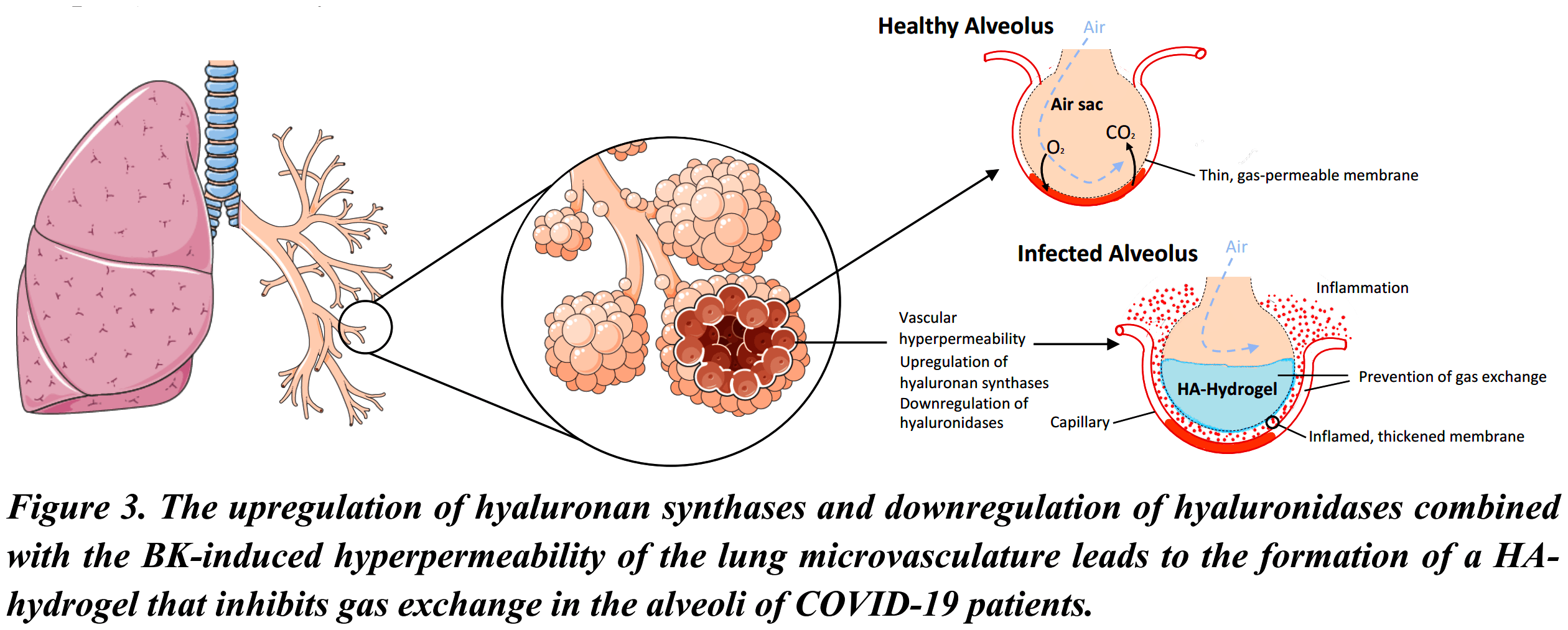
The first is that it might not be permanent alveoli damage (which do not regenerate in humans) but rather obstruction from a "hydrogel" that forms during active covid and takes many many months if not years to dissipate entirely
which are simple enzymes, you can buy Natto-Serra on Amazon and very very slowly perhaps over many months it might help her lungs (this is just a guess)
Thank you for the information, and I'm sorry to hear about your struggles.
> The first is that it might not be permanent alveoli damage (which do not regenerate in humans) but rather obstruction from a "hydrogel" that forms during active covid and takes many many months if not years to dissipate entirely
I didn't go into too much detail in my original post, but we think this is likely what happened to my daughter. Post-COVID, she could still go for long durations at 80% but when she pushed her limits, she would hit a wall and start to experience asthma like symptoms along with the feeling like she had mucous in her lungs that she couldn't get out. It took close to 2 years for her to stop experiencing those symptoms, at which point her competitive running peers had passed her by. She's happy to be able to enjoy running again but she did lose out on the competition part.
It takes very severe disability for it not to be brushed off as depression, anxiety, burnout, or blamed on lifestyle.
Additionally, a lot of those numbers are based on earlier strains of COVID, which were much more severe.
I suspect the 1/5 figure is largely true for "has some degree of cardiovascular damage and worsened general health after COVID", but the number of people actually disabled by the condition is much lower.
That said, any loss of ability is a sad thing, and I am incredibly disappointed that we did not introduce any shared indoor space air quality legislation post-pandemic.
And the lipid nanoparticle based Covid prevention shots caused myocarditis in some younger males, so earlier incidence of cardiovascular complications vs. the present (when most people especially younger healthy males are choosing not to take updated boosters) would correlate with that as well.
They did but if you go through the actual studies, the incidence of myocarditis was low, and almost all cases were non-serious, with no measured long-term impacts.
Further, the studies on long COVID incidence in vaccinated vs unvaccinated people suggested that the rates in vaccinated individuals were lower, though iirc it was only by something like a third or half. (among people who were symptomatic, at least, the total protective effect was likely greater)
The one Thai prospective study that I saw on this subject (the only one I ever found which measured biomarkers of heart damage like troponin before and after injection, which is utterly shameful), estimated a rate of heart damage in adolescent males in the range of 1-3%. So even that would be nowhere near enough to reach the 1/5 number.
I got pericarditis bad enough that I thought it was going to kill me but not bad enough to show up in any test. Thankfully the cardiologist accepted my description of what I felt and prescribed me colchicine which worked. I guess it would be called subclinical pericarditis and it would be good to have some stats on how often that happens.
I suspect many people commit the grave sin of mixing data sources to derive percentages, which seems almost impossible not to do in this case. I also strongly suspect that rates of infection (the denominator in question) were inflated to some extent during the pandemic as insurers and hmo were incentivized to detect covid even when it may not have been the primary reason for presenting. There were also disincentives or at least a lack of incentive to detect teratogenic effects of the lipid nanoparticle based preventative, and unfortunately likely personal biases as the preventative was highly politicized. But I’m not thinking about it much deeper than that, so you may be right.
The reported rates might have been inflated compared to what people presented with, but wastewater tracking and excess death measures all suggest that as a whole, infections were severely under-counted, possibly by a factor of up to over 2x.
Majority of the studies on myocarditis after vaccination found very low rates, with close to zero moderate to serious cases, and a full return to baseline of whatever the metrics studied were, I don't remember.
(The same omicron era the media originally claimed was "not as bad as previous variants." Perhaps not in the acute phase, but as we've seen, that's the least of anybody's concerns who track the longterm risks.)
> I am incredibly disappointed that we did not introduce any shared indoor space air quality legislation post-pandemic.
That seems like a tempting thing to lament, and I did too until seeing this recently:
Study finds HEPA purifiers alone may not be enough to reduce viral exposure in schools
This suggests our most reliable protection to date is consistent N95 usage (since present vaccines don't reliably prevent transmission) until next gen vaccines are developed.
There's more to air quality than HEPA filters. In-line far UV sterilisation, ventilation to reduce rebreathing and CO2 levels, and HEPA might not be enough as a single-building intervention, but it would almost definitely change disease spread dynamics if deployed world/nation wide.
Agreed. In fact, even before COVID this was long overdue to be addressed in classrooms etc:
> ventilation to reduce rebreathing and CO2 levels
Unfortunately since that hasn't happened yet, methods like:
> In-line far UV sterilisation
> HEPA
are not effective. It isn't that they don't kill/stop the virus. The problem traces back to the inadequate forced air exchange and distribution which these methods require, and which is often a show stopper when you're talking about retrofitting existing structures without costs becoming insane. At a certain point it's easier to build new with these things in mind (and we absolutely should be taking requirements to do so more seriously).
> might not be enough as a single-building intervention, but it would almost definitely change disease spread dynamics if deployed world/nation wide.
The point of the previously linked study is to demonstrate that "something is better than nothing" reasoning doesn't always apply. We need to go big to see an actual measurable improvement over longer time spans. Otherwise, what's the benefit seen if you delay an average (but inevitable) infection from occurring by X days? There basically is none.
> Otherwise, what's the benefit seen if you delay an average (but inevitable) infection from occurring by X days? There basically is none.
It reduces the R0 factor, which reduces the amount of people that need to be resistant for herd immunity to take place, and which makes it easier for other measures to bring it down further, potentially below 1 where the disease dies out instead of continuing to spread.
The results of the study suggest it doesn't, as measured by outcomes:
> While we did not find an association between HEPA purifier use and high overall viral exposure, the intervention was associated with a 32.8% reduction in viral diversity. However, the clinical significance of these changes is not clear given that we did not find an association between viral diversity and school absenteeism.
Point being, it only takes a very small dose of a aerosol borne virus to keep it in circulation. Breaking this chain requires extreme measures. Not impossible to achieve, but not trivial, either. Considering the widespread damage that long COVID is causing, I sincerely hope we find a way.
If you get a diagnosis at all, it's going to be a catchall for "idk" like fibromyalgia, CFS, allergies or it's filed away as psychosomatic.
There are probably a lot of syndromes caused by latent infections from virii like EBV, various herpes, HPV, etc that don't go properly diagnosed or treated if they can be treated at all.
Also, it's been found that some viral infections retreat to tissues where their detection might be difficult/impossible without biopsy. You saw this with, for example, Ebola, where survivors could test negative for the virus, but it would still survive and replicate in different isolated tissues like those in the eye.
After covid I suffered from intermittent brain fog for years and also felt like my heart was maybe struggling more than usual when I was training at the gym.
Never enough to warrant going to a doctor unless I was being super paranoid (and spend a long time convincing them I wasn't paranoid) but just enough to always wonder if there was something more to the story.
Similar situation, but I had (and still have) issues with the heart, and not sure whether they were from undiagnosed covid infection (never had typical Covid symptoms, and all tests for it came negative), or some rare complications from the vaccine.
I started having heart flutters a day or two after my shot and had severe fever (I was 25 at the time), but the former never went a way. I brushed it off as a temporary symptom and typical after shot reaction (well, fever was at least). Heart flutters never went away and I didn't go to the doctor for at least a few months, it became so frequent that I could not sleep, exercise or even climb the stairs anymore without heart feeling like it's about to explode out of my chest. Not the high heart rate, but abrupt, irregular vibrations/twitching and sometimes feeling like you get punched in the chest, just from the inside around the heart area. Anyway, it happens frequently and in any situation, even at rest.
Got diagnosed with third degree AV block. The flutters were due to the significant damage to the heart muscle, which caused the failure of the conduction system - signals from the upper chambers did not always reach the lower chambers.
I am not angry at anyone or anything, just disappointed. It would feel a lot easier if it was some obvious bad decision of mine, like drinking, doing drugs, smoking, or being overweight, but I did not nor were any of these things. I still keep categorizing life as "before" and "after".
A lot of symptoms of long covid mirror the symptoms of unhealthy living, which may make it so people either dismiss their own symptoms and don't seek diagnosis, or their complaints are dismissed by others for needing to simply improve externalities.
Couldn’t it be the other way round, that changes in health caused by other external factors erroneously get blamed on COVID?
For instance, a disproportionate amount of long COVID cases are reported by women between the ages of 40 and 60, the exact age range when most women experience menopause [0]. Menopause can cause brain fog, fatigue, and other symptoms that mirror those of long COVID. Since pretty much everyone has had COVID, it’s a basic statistical certainty that many women caught COVID exactly when their menopausal symptoms started (whose onset can be extremely sudden), and falsely causally associate the two. The exact same conflation likely happens in children, who also go through several profound developmental shifts.
>It is possible, but not to the degree that all long Covid cases are being confused with external factors.
Didn't mean to imply that all cases are, just that our definition of and knowledge about long COVID is nebulous enough that some nontrivial proportion of cases are likely attributable to external factors.
>Additionally, long Covid can cause brain fog. This was shown in brain scans from a popular HN post about a research paper just yesterday
Absolutely, just as other infections can cause severe lingering symptoms [0]. But we don't really know how prevalent these are, nor the severity of the prevalence. Studies like the one you link typically select for the most severe cases. We don't know whether it's useful to generalize from those.
You can't see "brain fog" on any imaging scan. That study didn't demonstrate any such causation. At most you can establish a correlation between certain imaging patterns and patient symptoms (which are notoriously noisy for any sort of behavioral health condition).
I went on vacation, had a great time, then got COVID, and came back a completely nonfunctional wreck beset by random adrenaline dumps, heart palpitations, spontaneous panic attacks, and wicked insomnia. The condition lasted almost a year.
39 year old male. I was in great shape both physically and mentally before my trip.
Fine, here's a source where both the second and corresponding authors are from Harvard that says the same thing [0]. That said, you don't need to be from a prestigious institution to observe the basic statistic that long COVID is most frequently reported in women ages 40-60.
Doctors are at complete a loss to "diagnose" long COVID. There are only a few places which specialize in it, and even then I think they're probably grasping at straws.
Perhaps its a reflection of how hard it is to get the medical community to take Long COVID seriously ?
I would say there is more chance of them (sadly) telling you to go home, take a couple of paracetamol and get some rest. Or if you're lucky, they might mis-diagnose you with something else....
(No first-hand experience here, just going by one or two anecdotal stories I've heard on the grapevine)
> Perhaps its a reflection of how hard it is to get the medical community to take Long COVID seriously ?
Well let’s think about why. You’ve got an illness (Long COVID) that you can’t detect and manifests itself in a myriad of ways, most of which are very vague and subjective (“brain fog” or “I can’t exercise as much as I used to”) and also not detectable.
Is it any wonder doctors might think of it as today’s fibromyalgia?
Ironic perhaps that Fibromylgia has been chosen given there are tests for the small fibre neuropathy that causes and it now has a firm diagnostic pathway.
The same will happen for Long Covid and ME/CFS, the diagnostics are there in research, they even show up in scans and tests that can be run in healthcare systems today, its just there is a resistance to run them.
The numbers in the range of 1/5 usually include in the definition things like "a cough that lasts six weeks after the acute phase of infection and then goes away," which is not what most people think of when they hear the term Long COVID (and is not even unique to SARS-CoV-2).
For a variety of reasons, hyping the threat of infection has been a pretty widespread practice among the medical and scientific community since COVID began. There's no way on earth 1 out of 5 kids are still experiencing symptoms 3 months out.
The paper says "One in five children." I wouldn't be surprised at all. Children are very dynamic, changing often as they grow and go through different developmental stages (which may include periods where they seem more tired or more cranky, etc)
. They also often lack the language and agency to explain what's going on with their bodies.
I don't see how you'd know the exact number without a solid diagnostic check.
Could it be that you can have different severity of long covid? Someone with very severe symptoms will notice it but someone with small symptoms might not realise it (and instead think they are just less fit)
I have a 87 year old uncle who says he has long covid because he gets tired and needs a nap in the afternoon. I'm half the age and felt the same even before 2020.
I haven't looked it up but often odd numbers like that are often due to the paper looking at people who were hospitalised for covid which is a small percentage of those who get it.
Acute, in this context, just means the infection had a finite (and usually relativity short) duration. The opposite is a chronic condition, which is what “long covid” would be in this case.
Long Covid is a spectrum. It's everything from silent damage to severe functional impairment. Each subsequent infection makes noticeable damage more likely.
With the math of reinfection, and percentages generally being lower than reality, long COVID is likely much more common and widespread in more people than not.
Not sure it's relevant at all, but a therapist who's working with kids in a large clinic in Berlin told me that anorexia cases in kids have doubled since COVID. He said they don't have the infrastructure to treat all those kids. It's pretty dramatic. That being said, I wouldn't be surprised if a large portion of those cases were really caused by long COVID.
That spread has been consistent in the literature for a long time. It depends on what symptoms you are looking for. Frankly, I trust the consistent message from the literature. Long covid is extremely prevalent but not always visible
Most people don't even know to look for it, including doctors. Some cardiac doctors are finally beginning to take the research more seriously, however. It's slow going for everyone involved.
Im not sure if this is a comment generated by a bot, a troll or something else to try and generate disinformation or something. I've seen a few comments on this thread which seem out of line from the usual sort of good natured discourse seen on HN. Not sure if its this particular topic or a sign of the times.
Anyway, having had long covid myself for over 15 months, there are many, many people suffering with it, we are just discovering the tip of the iceberg
Yeah the paper is just lying. “Long Covid” is just a typical response to a severe flu. Many people are just ignorant of the fact that flus can weaken the immune system past the initial infection. It’s well meaning attempt to understand common flu symptoms but they are just relating to COVID to get more clicks and funding.
Did you actually look at any part of the paper? Their approach is not some hand-wavy qualitative measure. They are measuring an actual phenomenon in people with known COVID infections. If you have a methodological problem with the paper, try using facts next time.
No didn’t read the paper. Yes it’s it’s extremely hand wavy of measurement. You can’t develop a methodology to determine if you have a chronic disease in less time then a a disease can be discovered are determined to be chronic. Duh.
Society is very stratified by intelligence, and the predispositions to long covid, like generalized joint hypermobility (GJH) strongly correlates positively with intelligence. See the work done by Dr Jessica Eccles on Bendy Brains Bendy Bodies and her published studies on long covid.
Anyway, because of the stratification many people don’t know anyone with long covid, while at the same time half of my friends have it. Both can be true observations of our surroundings.
On the actual numbers I would say that ~10% get some level of Long Covid while half of those recover in the first year. Of those who don’t recover around half have GJH which is a massive over representation suggesting a strong predisposition.


Wikipedia lists much lower numbers on https://en.wikipedia.org/wiki/Long_COVID (6–7% in adults, ~1% in children, less after vaccination.) and seems to use a more liberal definition than this paper, as it mentions "Most people with symptoms at 4 weeks recover by 12 weeks" (while the paper only considers it "long COIVD" if symptoms last past 3 months).
I've found studies (peer reviewed, as far as I can tell) claiming anything from well under 10% to well over 30%.
What's going on here?