I'm genuinely curious at what point a bully threatening you with MAD can be stopped if you value the existence of your own civilization?
Say Russian conquers all of Ukraine and moves troops to the Polish border and parks some tanks a bit inside. What then? Strongly worded essays? If Russia isn't raining hell on Poland, then NATO is forced to .. apply sanctions, make threats, but take no action since the escalation and outcome, MAD, is not an acceptable trade for a tank crossing your border.
Repeat until arrival at French coastline. The terrorist steps forward waving a trigger to a bomb and either you show him your bomb and threaten to blow yourselves both up, or you step back.
At some point, the only option is to call the bluff and give him a good punch and hope that he values life as much as you and won't actually detonate. It has to be a solid one but not so hard as to make him think you might kill him, as that would make the detonation a certainty.
I don't know that NATO has the guts to give Putin that bloody nose.
Ukraine is not a NATO member, but Poland is. If Russia attacks a member of NATO then all members of NATO are obligated to join in defence militarily. Russia can attack non-NATO countries and intimidate NATO into doing nothing, but to attack a NATO member would automatically bring the whole alliance into the war. The whole point of alliances like NATO is to prevent countries from being picked off by a bully the way Ukraine now is. Belarus, Finland, or any of Russia's other non-NATO neighbours are probably pretty nervous right now, but Poland, Slovakia, Hungary, etc. are much less likely to be attacked by Russia.
Talk of Ukraine joining NATO may well have been what triggered this war. Russia probably had plans to absorb Ukraine eventually, but if Ukraine had joined NATO it would have required a war with NATO to absorb even a small part of Ukraine, such as Dunbas. So, when talk of joining NATO heated up, Putin had to invade quickly or lose the opportunity to take Ukraine without a much larger war.
It now appears that any of Russia's neighbours who are not currently members of a military alliance with a nuclear power have three options:
1. Join NATO, ally with China, or find somebody else with nuclear weapons to ally with.
2. Develop nuclear weapons.
3. Do nothing in order to avoid an immediate invasion, but start brushing up on your Russian because you'll need it eventually.
It is now abundantly clear that remaining on good terms with NATO countries is not sufficient in itself to ensure security from invasion by Russia. Economic sanctions and harsh language will not stop Putin.
It's worth noting that Taiwan is in a similar situation with respect to China. They are being threatened with invasion, but have no formal military alliances with nuclear powers. Judging from the U.S.'s reaction to the invasion of Ukraine, the U.S. would do little more than apply sanctions if China invaded Taiwan. Not unless the U.S. has special feelings for Taiwan that it does not have for Ukraine at any rate.
> Talk of Ukraine joining NATO may well have been what triggered this war.
There was zero chance Ukraine would have ever been admitted to NATO. Everybody understood that, including Putin and his generals. And while NATO and the U.S. maintained the official position (perhaps better characterized as a non-position) that any country, including Ukraine, remained free to apply to NATO, member states like Germany would have vetoed and almost certainly privately gave such assurances to Putin. Moreover, the last decade of shenanigans from Turkey and then Hungary have soured even the U.S.'s appetite for future NATO admissions of any country outside Western and Central Europe.
Ukraine missed its window for NATO membership by about 20 years. Today the U.S. wouldn't even seriously imply Ukraine had a chance at membership. Russian apologists would point out that Ukraine already entered quasi-formal "dialogue", but fail to mention that such such dialogue has been frozen for nearly 20 years. The status quo (which has no actual substance, anyhow) is for all intents and purposes permanently frozen. One might reasonably criticize NATO and the U.S. for leaving things as they are--to fester. The counter argument is that by making a formal concession it would only embolden Russia, which would never change their tune even if NATO formally renounced the possibility of Ukraine joining. Perhaps more importantly, it would be a huge loss for Ukrainian reformists. (There was a similar motivation behind the EU's long refusal to state the obvious regarding Turkey's membership in the EU.)
Beyond Putin's general revanchist sentiments, what he and other Russian leaders really worry about is de facto Ukrainian-EU economic integration, not NATO. There's little chance (but perhaps non-zero, and greater than Turkey's) Ukraine could ever join the EU anytime soon. But there's an infinite number of intermediate relationships, all of which disfavor Russia--at least from the Russian perspective.
> Moreover, the last decade of shenanigans from Turkey and then Hungary have soured even the U.S.'s appetite for future NATO admissions of any country outside Western and Central Europe.
This was always the case. Turkey needed to help in Korea (1950) to get into NATO (1952). With annexation of half the Cyprus, and the tensions with Greece and buying NATO-incompatible S400 defense missiles from Russia, it kept being a problem-child. It weirdly remains also the only member which recently had armed conflict against Russia.
It's still a member though because of geopolitics. It's risky business but it has its rewards.
I don't see the same situation in Ukraine.
Disclosure: I'm from Turkey but I despise some of the acts I named above. I won't name which because I still want to go there and see my parents every once in a while.
> This was always the case. Turkey needed to help in Korea (1950) to get into NATO (1952). With annexation of half the Cyprus, and the tensions with Greece and buying NATO-incompatible S400 defense missiles from Russia, it kept being a problem-child. It weirdly remains also the only member which recently had armed conflict against Russia.
Turkey was completely blackhanded as a military ally by NATO, long before Erdogun. NATO made an extremely costly error of accommodating the Greek junta, and later closing eyes on Cyprus.
By all reasonable judgement, NATO should've backed Turkey, and not Greece, but they did it the other way around.
If not for that, it wouldn't have set seeds of doubt which lead to the situation you see now, and probably would've averted the 1980 coup.
Turkey has NATO's most powerful conventional military on this side of the Atlantic, second NATO army by size, and conventional firepower after the USA.
Macaron trying to intimidate Turkey, and marginalise Turkey's NATO role in this day, and age is absurd, and suicidal. Turkey leaving NATO = say bye bye half of NATO's conventional force on this side of the Atlantic. Turkey's troops could not be replaced by ANY NATO member since USA is already overstretched.
>There was zero chance Ukraine would have ever been admitted to NATO.
"NATO welcomes Ukraine’s and Georgia’s Euro-Atlantic aspirations for membership in NATO. We agreed today that these countries will become members of NATO."
... which, as the OP points out, were hollow words and the Membership Action Plan that would have been the first step to joining NATO never got off the ground. Two minutes on Wikipedia!
Can we acknowledge the hypocrisy of the whole thing.
The reason NATO exists is because small countries in europe were afaid of USSR, and nowdays Russia.
Nato is defensive pact, as such there is no threat coming from nato to any non nato country.
Now a independent neighbor of Russia is trying to join nato to not be bullied by russia. Russia is not liking it because they will not be able to fuck with Ukraine any more and not because they are afraid of anything.
This war is a proof why Ukraine was 100% justified to seek nato membership not other way around.
I remember Putin expressing his extreme displeasure at NATO's intervention in Libya precisely because the implicit threat was "you're next, Putin". It was mostly ignored by the west but it was clear how furious he was at America and Hillary specifically.
I dont see any reason why NATO working to destabilize Libya that passes muster that doesnt apply equally well to Russia. The idea that it was acting defensively is a farce. A conservative assessment is that Libya is a model for what they are aiming for in Russia in the long term.
Ukraine is the victim and Russia is the aggressor but the west essentially gave a stick to a child and encouraged it to poke the bear before running away and hiding behind a rock.
Yeah if you are a dictator having a civil war and you actively committing war crimes against your own people then you can fear nato might be compelled to intervene.
Russia claims its a democratic country with highest standards of freedoms, why would they feel threatened?
> "an immediate ceasefire in Libya, including an end to the current attacks against civilians"
Anyone claiming NATO was an aggressor akin to what Russia is doing now is a fool.
80 years of toppling democratically elected leaders and supporting Western aligned dictators ought to give a small hint that democracy that doesnt suit their interests doesnt even register as a concern for the West.
Russia feels threatened because NATO was set up specifically to oppose them and is not all that interested in democracy that doesnt threaten western hegemonic interests.
You dont exactly see NATO threatening Mohammed bin Salman for invading Yemen do you?
And if democracy is so important why is it official policy that the crimean referendum be annulled rather than re-held?
>Anyone claiming NATO was an aggressor akin to what Russia is doing now is a fool.
NATO destroyed Libya. The fact it did it at arms length is immaterial.
To pretend it is not a threat to Russia is farcical.
> 80 years of toppling democratically elected leaders and supporting Western aligned dictators ought to give a small hint that democracy that doesnt suit their interests doesnt even register as a concern for the West.
By west you mean US? Its not like europe was active in any of those, bar illegal invasion of Iraq and Afganistan lead by US forces.
> Russia feels threatened because NATO was set up specifically to oppose them
Hmm I wonder why? Why nato was not set up to stop those dangerous Turkish people, or blood thirsty Ukrainians, but peaceful USSR, and then Russian Federation lead by exKGB spies... hmmm I wonder why anyone would be concerned.
> official policy that the crimean referendum be annulled rather than re-held?
LOL, ok you are a troll at this point. Fighting with 'whataboutism' is pointless
If you and putin love democracy so much why dont you setup referendum for Chechnya people? Lets see how that vote goes.
> NATO destroyed Libya. The fact it did it at arms length is immaterial.
Nato targeted and destroyed Libyan army, know your facts. There was no ground forces ever deployed.
To pretend NATO ever threaten any aggression to Russia, Russian civilians or Russian soil is a farce bigger then you.
While NATO takes all the spotlight, a very major real issue for Russia is that Ukraine started to develop significant partnerships, including military, with Turkey, a centuries old major enemy and competitor of Russia. Turkey has tremendously grown its power in the region in the recent decade (in not a small part because of its very successful drone program). Turkey was a military partner of Georgia back in 2008, though it wasn't great success, yet Georgia has historically been a Russian ally, so it was still a significant achievement for Turkey against Russia. The Syria, Libya and topping all that Azerbaijan were major wins of Turkey against Russia. Turkey is building a regional Muslim states coalition, and in the recent Kyrgyzstan/Tajikistan conflict Turkey provided the drones to the Kyrgyzstan while also played the peace maker role, achieving another successful push against Russian interests. Kazakhstan seems to be a next target there. Yet all that pale when compared to the Turkey's win (crossing into near-future real threat territory) against Russia what the Ukraine/Turkey tight partnership is (there is even some indications that they started talking about nuclear weapons development collaboration - while not much probable to result in any real nukes in any observable future, it just illustrates the degree and direction of the partnership development).
> member states like Germany would have vetoed [Ukraine’s bid for NATO membership]
Why is this often mentioned? What is Germany’s rationale and is this still a certainty? Perhaps these comments were more closely related to Schröder (because gas pipeline) but certainly a different generation now.
edit: France and Germany were the two opposed countries.
> Would also like to know this, because Germany being on Russia's side feels a bit... out of nowhere? A bit odd? Not something you'd expect.
Two reasons:
1. Germany depends on Russia for gas, and the two countries have business and economic ties
2. Germany and France are the main 'providers' in the EU, kinda like California, Texas, New York in the US. They have to pay more if they admit a big poor country like Ukraine (44m pop., and would be second poorest in EU after Greece. Pop. of Germany and France: 83m, 67m respectively).
"Germany and France are the main 'providers' in the EU, kinda like California, Texas, New York in the US. They have to pay more if they admit a big poor country like Ukraine"
German here. There are a multitude of reasons... forgive me all the German sources please, but I don't really have the time to dig up English sources of the same quality.
First of all is the close history that the Social Democrats have with Russia, dating back to former Chancellor Willy Brandt and the Neue Ostpolitik, and renewed by the 1998-2006 former Chancellor Gerhard Schröder who initiated the Nord Stream 1 gas pipeline and infamously worked as a high-profile lobbyist for Gazprom after his period and is rumored to be a close personal friend of Vladimir Putin for years now.
Then we have the history of the 1968-era hippies, the peace movement and large parts of the radical left, which has to this day strong ties to the Green Party, the Left Party (which is the successor of the former GDR's ruling SED) and partially also to the Social Democrat Party. Many of my comrades are still stuck in the Cold War anti-imperialist mindset (where only the Western / NATO sphere is seen as an aggressor) and fail to see that both modern China and Russia are imperialist agents on their own. Hopefully the events of the last few days will wake up some of them, though.
And finally, the entire gas clusterfuck.
1) A lot of residential heating - not just in Germany by the way, but also across wide parts of Eastern Europe and Italy - depends on either gas or oil, as electric heating is ridiculously expensive (at >30 ct/kWh!).
2) electricity. The Conservative/Christian Democrat CDU, whose Chancellor Merkel ruled for the last 16 years before finally getting booted out of office last year, took pride in demolishing the domestic solar and wind turbine industry (the former by cutting subsidies which was followed by Chinese dumping taking over the market, the latter by imposing ridiculous zoning requirements [1]) and was happily accepting "donations" (aka legal bribery) from the fossil fuel industry, and their Bavarian sister party CSU (as well as a number of various local NIMBY movements, called "Bürgerinitiativen") keeps throwing impediments against high-power electric lines to expand the electric grid so that it can distribute Nothern German-generated wind power to the South (Bavaria and Baden-Württemberg). Combined with the phase-out of coal-fired plants and nuclear plants, gas peakers have risen in importance [2].
3) We don't have many alternatives as a continent to source gas from, other than pipelines. There are no LNG import terminals in Germany [3], we have to rely on the import capacity of the Netherlands, France and Belgium [4]. At the same time, the Dutch gas field at Groningen is suffering from earthquakes following the gas extraction [5], Norway doesn't have much spare capacity [6] and the UK only has enough gas reserves to make 42% of their own demand [7], not to mention the Brexit aftermath which included the UK getting booted off the EU energy market.
4) We have a lot of industry (especially petro-chemical and metal) relying on gas for energy and as a raw material. About a third of industrial energy consumption is gas-based [8].
We are in a "perfect storm" situation, and now over 40 years of lackluster politics across the board are crashing down on our head.
That's actually a fair point, though somehow one also might expect the country to distance itself from certain aspects of its past, seeing how it's been a bit more progressive leaning. At least that's the impression that i've gotten from the past decade of news, at least up until talks of pipelines and whatnot started.
Germans have „historical responsibility“ towards Russia. (But not so much towards Ukraine, somehow although arguably WWII was pretty bad there too). Also dependence on natural gas.
There are no sides for some. Swiss media is portraing all involved parts as crazy war lords. There is no Russia is bad, NATO is just saving the day narrative here.
The German economy is dependant on Russian gas, regardless of who is currently leading the country.
Also take into account that until recently, Russia has been considered a reliable business partner in Germany, to the point that many Germans considered a russo-german partnership to be more advantageous than the current transatlantic one. While support for that idea waned in popularity a little after the Crimea takeover, some, now more on the political fringes, still do today.
This is correct. The writing has been on the wall for over a decade at least. I was really hoping they'd join the EU sooner or later for precisely this reason. My only hope now is that Russia is content with annexing a few small but important regions of Ukraine to leave the bulk of the country alone, but given the lack of appetite the west has for this conflict I'm not optimistic.
Former journalist from Estonia here. Our media republished a 1994 speech given by late president of Estonia Lennart Meri at a banquet in Hamburg, Germany. Vladimir Putin, a then internationally unknown politician from St Petersburg, was also among the listeners -- and demonstratively walked out of the room during Meri's speech, as reported by Deutsche Welle [1]. Quoting DW:
"On February 25, 1994, Putin was also in attendance. One distinguished guest, then-President of Estonia Lennart Meri, gave a speech. Putin did something that has never happened at this ceremony: he got up and left. "With his legs straight [ed.: in a marching stance], throwing a contemptuous glance at the host, he left the hall, every step accompanied by the creaking of the parquet," according to a correspondent for the German magazine Zeit. "His exit was followed by whispers. Who is he? What's his problem?"
What exactly did Meri say that so annoyed Putin? The speech reads like a prophecy of what happened 20 years later in Crimea. And Putin's reaction shows that he sent a clear signal to the West.
The Estonian president referred to a paper from the foreign ministry in Moscow: "It notes that the problem of ethnic Russian groups in countries neighboring Russia cannot be solved by diplomatic means alone." Other means were conceivable for Moscow, Meri concluded. He warned against Russia's "neo-imperialist policy" and appealed to integrate Eastern European countries, including Ukraine, into the "democratic world."
Lennart Meri was a former filmmaker, literary translator, writer and IMO a world class intellectual with excellent speeches. For anyone interested, I google-translated this Hamburg 1994 speech to English [2]. The original source in Estonian is also present on the homepage of President's Office [3].
To be fair Estonia's treatment of its Russian community fed right into Putin's propaganda machine, when you still have this: "7.3% are "persons with undetermined citizenship"" (to quote wikipedia [1]) ~30 years after the break-up of the USSR then you know something was not done right on Estonia's part when it came to really integrating the Russian community. The same partially goes for the condition of the Russian community in Ukraine, especially recently. This is of course not a discussion that we can have right now, in a neuter manner, so to speak, because there's a war just close to us (I'm from Romania myself), but going forward the people involved will have to look back and see when things starting going adrift.
AFAIK like in Latvia - these people (mostly russians) had (and still have) 3 choices: go back to russia, apply for citizenship or be left as "non-citizen".
If after ~30 years after break-up of USSR you have not gone back to russia (because quality of life in Estonia or Latvia is probably better), or have not learned the language or do not want to pledge loyalty to the country - then such person is a problem to itself. My social anecdotal bubble tells me that most of such people are very pro-soviet-union, but somehow idea of moving back to "mother russia" scares them.
Also in most post-soviet states russian communities can live all their lives without learning local language, i.e. there are native-russian kindergartens, schools, even university programs, russian entertainment and they can expect and be able to communicate almost everywhere in russian. So where's the bad treatment?
Putin's propaganda machine will make shit up on the spot - treatment of russian speaking communities is one of them. Maybe you also believe that there's fascist junta in Ukraine or Estonia? russian troll industry are masters of fake news - that will flood everything with multiple bullshit statements.
No, that is a statement that I consider false. I do personally live in a country that has a sizeable ethnic minority (Hungarians/Szekely, depending on the particular region of the country where they live [1]), and many of them do not know the local/national language, which is Romanian. Many of my fellow citizens regard that as almost blasphemy, I (and the law itself) actually have the contrary view, those people have the same right to Romanian citizenship as I do, even if they don't/can't speak the Romanian language.
Perhaps the difference is that the historical relationship, and power differential, between Romania and Hungary is not exactly the same as the one between the Baltic States and Russia.
While statelessness in the Baltic countries is a very controversial issue, I don't believe it'sas bad as people are making it out to be.
The absolute vast majority of those people don't care about the situation: they can work, they can travel through the EU and other countries, and they can play the victim card.
As a good example, Nils Ušakovs was the mayor of Riga, and his parents were stateless (and hi mother probably still is [1]). So its not like statelessness affects people other than the actual person (and the degree to which it affects them is very debatable).
That, along with North Korea, only shows you that it is, within the global game of influence, pretty stupid to give up a nuclear capability once you have it.
This concept, broadened to include "acquisition at all costs" is what the book Eating Grass is about.
The title comes from Pakistani leaders' declaration that they would acquire nuclear weapons capability even if it meant their citizens would have to eat grass. Every government with a viable nuclear weapons program that has abandoned it has come to regret that decision. The nuclear weapons states have utterly failed to make the NPT an attractive bargain for the non-nuclear weapons states, which has completely undermined the goal of non-proliferation.
Ukraine had no choice. They were Russian nukes, and not giving them back would have probably triggered a war immediately. But with Ukraine drowning in pro-Russian influence at the time, there is no chance they would have defied Russia.
They were soviet nukes. Ukraine was soviet land and soviet people too. Breakaways by definition take stuff with them. To claim Russia had a right to the nukes is no different then saying they had a right to the land and people.
They had a choice, they just chose the one that didn't lead to war.
Ukraine was a Sobiet republic under the USSR, as was Russia. Ukraine also took other military stuff, the Black Sea Fleet was fiercly discussed issue as well. Economically and politically Ukraine didn't have much of a choice, sure. Legal ownership wasn't the propblem so.
I hope it's abundantly clear to anyone that Putin and buddies cannot be trusted. Whenever some politician suggest any deals with them, shut him/her down.
The number of countries that have fallen for that line paints a depressing picture of political comprehension among politicians. How have they - of all the classes in the world - not cottoned on to how this works?
It is a minor miracle when voters can get their own government to follow through on an inconvenient promise. Promises mean nothing when foreign armies are involved.
And they now learned what a serious naive mistake that was. As a german I am ashamed that we did not accept frances offer of a shared nuclear arsenal when we could. We cowardly hide under the umbrella of french nuclear deterrence, yet chose not to get our hands dirty and take the responsibility on ourselves
We do have US nukes stationed in Germany for that very reason. rather old tech nukes, but still. This gives Germany a seat at the NATO table about nuclear strategy. If push comes to shove, German Tornado fighter jets are going to carry those nukes into combat.
Just another cowardly work around. If we want to live under the protection of weapons of mass destruction and the means of a global nuclear holocaust than we should take on that responsibility ourselves instead of delegating it to the US, Britain and France.
Every NATO country, especially those on the eastern flank should be given their nukes, without anyone knowing it. Heck, even Finland. This is the best thing that could be done for peace in Europe. Imagine Russia attacking Finland, and they say, we have nukes, we haven't told you so. Step back or we will blow St Petersburg to dust. Nothing protects a country like nukes, NATO, you never know how it works out in practice. Denuclearizing was only in favor of the super powers that would not denecluarize - and is it really in their favor, certainly half of Europe being destroyed is not in US favor. And the drawbacks are really small. Look at North Korea, there has been some fear around it but nothing happened so far. In the end of the day, everyone wants to live. And if some small nuclear state went insane, it would not have the arsenal needed to destroy the world anyway and could be neutralized quickly by other nuclear states. The biggest problem is centralization of power, it should never be centralized. It should be distributed among independent states.
You are aware that Gean rearmament, conventional rearmament, was a hard pill for the Western allies to swallow? Let alone nukes? And Strauss, defense minister back the day, wanted German nukes. Turned he didn't get a majority for that. Thus, the compromise. And hence no German nukes. Technically it wouldn't have that much of a problem.
I think today the resistance is much more on the side of the german people than it would be for the western allies. France basically told us "bro, wanna share those nukes we got?" in 2007 and Germany declined.
Accepting Frances offer of shared custody of the french nuclear arsenal and a Bundeswehr (german armed forces) with enough technical and personal resources to facilitate that effectively.
ICBM launch silos and hypersonic missiles would be icing on the cake.
We have that model with the US. As did the Netherlands, past tense. And it is not very well liked. Trying to change it would start a public discussion, and end that model. This is a big issue around the Tornado replacement, US nukes mean US planes. Everybody is just tip-toeing around that topic, simply to avoid any attention on German nuclear participation.
I cannot believe there actual proponents of nuclear armament and proliferation in 2022.
> I cannot believe there actual proponents of nuclear armament and proliferation in 2022.
There will be more in the years to come if thanks to the current events. Plenty of people here and else where are quick to point out that Ukraine is in NATO and that Russia would not dare attack a nato country so this is all fine but at the end of the day NATO, like any treaty, is just a promise not inherently like the promise the Ukraine was made when they gave up their nuclear weapons. An attack on a NATO country will not mean an automatic response from all other NATO countries but instead prompt a decision from each of the leaders of those countries what would be better for their citizens at that point. Retaining their own protection via NATO is going to be a big influence of that decision but it is never going to be the only factor.
If Ukraine would have been in the NATO then we would have NATO troops (including US troops) in Ukraine. What do you think would be the response if russia opens fire on US troops? Biden made it very clear, in this case we have WW3 immediately.
It's not clear they had a choice. The west was scared shitless of nuclear proliferation in ex-soviet republics, and would probably not have lifted a finger about the matter.
When you have the third largest stockpile of nuclear weapons on the plant like ukraine did at the dissolution of the soviet union you have a choice. They chose to trade nuclear safety for empty promises. A mistake no country will ever make again.
and the US signed agreeing to provide assistance if they got attacked or threatened with nuclear weapons.
you may say that the threats of nuclear aggression were thinly veiled but not technically apply because the word nuclear has not been used. but if you applied an honest interpretation of what is happening you would say that point 4 does apply.
> 4. Seek immediate Security Council action to provide assistance to Belarus, Kazakhstan and Ukraine if they "should become a victim of an act of aggression or an object of a threat of aggression in which nuclear weapons are used".
nobody wants a nuclear war so it's better if the US stays out of it at this point, but just I'm pointing out that got screwed by more than one signer on that treaty.
The US and Russia did promise to defend Ukraine against nuclear powers in exchange for Ukraine giving their nuclear weapons to Russia in 1994. Now Russia, a nuclear power and one of the signatories to that treaty, broke it by attacking Ukraine, and the US broke it by not defending Ukraine from that aggression, because Russia is waving its nukes around as a threat.
The big lesson that the US and Russia are teaching Ukraine here is that they should have never given up their nuclear weapon. This whole event is terrible for the prevention of nuclear proliferation.
Its all a bit of a joke to be honest.
There are 100k Russian troops, thats a population of some UK towns like Harlow, Romford, Royal Leamington Spa, or Gillingham trying to secure a landmass 2.5 times the size of the UK!
Its a joke, because once the Ukrainian population is psychologically motivated into guerrilla warfare against the Russians, it would be over in a day or two.
This invasion with media complicity, is just project fear or govt's around the world enjoying their population's desire to be governed. Russia is doing each and every govt around the world a favour by reinforcing the govt form of control instead of self determination.
Now if Russia went in with 1million troops, then it would be something to worry about, but this is all just psychological reinforcement of hierarchical control systems on populations.
> It's worth noting that Taiwan is in a similar situation with respect to China. They are being threatened with invasion, but have no formal military alliances with nuclear powers. Judging from the U.S.'s reaction to the invasion of Ukraine, the U.S. would do little more than apply sanctions if China invaded Taiwan. Not unless the U.S. has special feelings for Taiwan that it does not have for Ukraine at any rate.
This is wildly incorrect. The US actually had a defense agreement with Taiwan at one point, but dropped the defense provision in the 70's for rapprochement with China. However, Taiwan has been a US ally since WW2, and has at times stationed many troops there. This is not even close to true about Ukraine.
Not to mention a Chinese invasion of Taiwan would be almost trivially easy for the US to stop. It's an island, and the US has naval and air supremacy.
>Not to mention a Chinese invasion of Taiwan would be almost trivially easy for the US to stop. It's an island, and the US has naval and air supremacy.
This was maybe true in 1996, but less so today (at least from what I've heard).
China is rapidly approaching naval parity with the US, and they have enough land-based anti-ship missiles to deny most surface vessels access to the Taiwan straight.
That's not even considering the logistical aspects of it all. Taiwan is 150km from the coast of China and 10,000km away from the coast of the US...
Okinawa and Mageshima bases are there for a reason, something like 300-400m from Taiwan. For military purposes, Japan is effectively an extension of the US border.
That's one of the great innovations of the US military model. Ensuring air domination allows them to effectively expand control by simply placing bases. Britain had done that in the past with naval forces but their logistic challenges are more complicated when it comes to defending supply lines.
>Not to mention a Chinese invasion of Taiwan would be almost trivially easy for the US to stop.
What if they Putined their way into Taiwan? "We are going to invade, if you stop us it's nuke time". Would the US risk a nuke on their head for Taiwan?
> If Russia attacks a member of NATO then all members of NATO are obligated to join in defence militarily.
That's what is commonly believed, but that belief is actually wrong - other NATO members are obligated to - and I quote directly from Article 5 here - "(...) assist the Party or Parties so attacked by taking forthwith, individually and in concert with the other Parties, such action as it deems necessary, including the use of armed force, (...)"
The keywords here are "as it deems necessary" and "including the use of armed forces". There is no automatic need to send troops - if you as the attacked party think a strongly worded letter is all that is necessary, you just ask for that letter. Of course you can demand military support, but doing so takes time, and it is easy to consider a situation in which you do not have that time anymore.
For an application of that principle, see 9/11, when the US invoked Article 5, but which did not result in military action from all NATO members (several of which refused to take part in "pointless military adventures"). The US obstracized those countries, but ultimately (had to?) accept.
Turkey will be in a sweet spot. They can do lots of damage to Russian navy with little intervention from them required. NATO has lots of bargaining power if it decides to do so. It seems more like a lack of leadership than of resources or power.
Is it clear in context that the 'deeming' country is the one being attacked rather than the one deciding how to assist? It doesn't seem totally clear from that quote.
What's the point of even having it then? It's like saying "You are obligated to do what you want to do". You'd do it even if you weren't "obligated" to do so and if you don't want to do it then you can just deem it "unnecessary" and it's no longer obligated.
4. Continue life as normal. Some Georgians are following this strategy under the assumption that the occupying Ukraine is going to require a lot of money and soldiers. Russia will run out of either (or both) of these finite resources before it has a chance to invade Georgia.
Note that Russia not only have to contend with sanctions: They also need to remain domestically on high alert for sabotage and terrorism.
On paper yes. They are obligated to join or whatever. In practice, the whole west has become so risk averse in last few decades, they would just fold and offer 'asylum' to the fleeing poles and making statements like doing everything in their power to avoid 'escalations'.
Unfortunate reality is that the west collectively lost their balls post 9/11 due to the needless wars sapping the spirit. They would wait till its too late and by then its too late. The politician with actual brains and balls and who has kept europe whole and safe so far has recently retired and the rest are just good for press releases.
People shit on nationalism, patriotism, religion etc but in a society where these are on the decline, the will to defend others at the cost of own safety and prosperity (the so called self righteousness) will disappear. So first the nations will just fend for themselves, then the factions inside the countries and the people themselves. Unfortunately, not engaging is never a great strategy. It's a strategy that looks great but it always makes things worse. The current escalation is solely due to how weak USA looked during their hasty retreat from Afghanistan.
My guess is that Putin just wanted to scare a few people and may be annex the rebel areas. But the weak response has encouraged him to see how far this can be taken. When will the current DefCon change? He would continue till that happens. It's not because he is stupid or crazy. It's a decent strategy to see where the opponents limits for patience are. He would turn around the moment there is some ground action or strict measures like announcing a no fly zone over Ukraine enforced by NATO. Till, then the smart move would be to push forward in Ukraine.
I'm not at all confident Russia could conquer Poland though even if it's left to fight alone (together with the Baltic states). It spends ~65% more on its military than Ukraine, has full access to western tech and way less internal problems (good luck finding any region in poland where > 0.x% of the population would want to join Russia). Even if Russia 'defeats' the Ukrainian military (which I don't think is at all certain) what is Putin's next step? Any regime they install in Ukraine would require enormous resources to maintain power and I don't see how can Russia afford that, at best they can bite off some regions in eastern Ukraine.
Also most Russian don't seem to be even close to being as enthusiastic as the majority of Nazi Germans were when their tanks rolled into Paris. Russians seem to be mostly apathetic, they don't really support the war but also are not willing to actually stand up and do anything about it. That might change if there is not quick victory/large amounts of civilians start being killed/sanctions actually start working.
Even still, I'm not sure the lack of political will in France/Britain after Poland was attacked was the reason it fell. The allies they just did not feel like they had capability to start and offensive against Germany and expected Poland to hold out much longer than it did.
Czechoslovakia would probably be a much better example (however NATO did not exactly agree to recognize the annexation of Crimea and the Donbas just to appease Putin).
I think times have changed quite a bit. Poland was always thrown to the dogs before, but now it's a pretty decently respected country. It also has economic value to the EU as a whole.
it is not just Poland. Now it is Poland, Romania, Lithuania, Latvia, Estonia and Czech Republic. They are all NATO and are all "between" Germany and Russia.
> It's worth noting that Taiwan is in a similar situation with respect to China.
More than that, I think reading between the lines it's quite likely Putin and Xi Jinping have already agreed to back each other in the security council so that Russia can take Ukraine and China can take Taiwan without issue. This may have been planned for years, even, though it is right to point out that hinting at adding Ukraine to NATO without any real intentions to do so has had disastrous consequences.
There was no talk of Ukraine joining NATO heating up. Russia started deploying troops to the Ukraine border in March 2021. The excuse back then wasn't about Ukraine joining NATO; the excuse was that it was mobilizing troops to protect itself from a NATO attack during the DEFENDER-21 annual exercise.
Yeah, the only nervous people in Belarus right now are "only" the ones who hoped in a democratic post-Lukashenko future. Which is part of the value of this operation from the Russian perspective: "don't get ideas, or else".
Since joining NATO is a process rather than will happen immediately, this is not really an option. This caused the mess the Ukraine is in in the first place. Putin is really clear that he won't tolerate NATO to expand to any more direct neighbors.
Sure. But that buffer was about to join NATO. Ukraine received a guaranteed invitation, so it is only a question of when, not if. Invading Ukraine pushes that, basically inevitable, NATO border further to the West.
According to Wikipedia, both Ukraine and Georgia, received invitations. Ukraine is on an Individual Partnership Action Plan (English wiki, the German says something about guaranteed invitations...). So it seems both countries have been on aclear path to membership, Ukraine at least until 2014 when Obama said they were, in fact, not. In 2019 Ukraine amended the constitution with "goal" (facilitation, prerequesites,... didn't have time to research that) of both, EU and Nato, mambership down the line. Considering the necessary military build up to pull the invasion of, and assuming such an invasion to be impossible one Ukraine is either part of the EU or NATO, "about to" seems not to far of the mark. Especially for someone playing the long game like Putin.
Usual disclaimer, I don't consider any of the above a valid reason to start a war ot interfere in othet countries.
>>And? They can't actually respond militarily because MAD.
Why? Of course they would. And yes we would all die. It's the other way around - a NATO country wouldn't be attacked by Russia because yes, NATO would attack back.
That's why we still have conventional weapons. Also if Putin loses it completely (decides to attack a NATO country rather than attempts to personally murder Biden) I'd expect the CIA to organize some kind of a coup with the local oligarchs to get rid of him before launching nukes.
That is incorrect. NATO policy is "no-first use" for nuclear weapons. The member countries individually can make decision. Nothing in NATO mandates use of nuclear weapons, just that they join in common defense.
I think you misunderstood. "Initiating MAD" doesn't mean launching an attack. It means assuring that any full nuclear attack is met with a similar counter attack, ie. the "Mutual" part of "Assured Destruction". If you don't respond... there's no MAD.
Germany is virtually the sole power keeping the EU from collapsing on itself economically geographically and politically, even if France is the one with the nuclear arsenal.
The US has thousands of US soldiers in EU NATO states, do you think US will just sit there and talk about financial sanctions while Putin kills US troops in Europe?
By the way Germany also has nukes, not their own ones, but they are not just there for fun.
While there are nukes in Germany, they're not Germany's nukes unless Germany can determine when/where said nukes are used. (The ability to stop the US from using them is not enough.)
If Russia uses nuclear weapons first in a European war then yes. But the targets would probably be Russian forces in or approaching Poland or Germany rather than mainland Russia itself.
> And? They can't actually respond militarily because MAD.
Of course they would respond. MAD is just a mad possibility we all have to accept. As soon as russia attacks NATO with conventional weapons it will fight back with conventional weapons. But if Putin starts nukes, well than there is obviously only one answers to it (nukes).
Don't forget, this was also a similar case during WW2 and then Munich agreement happened... It never is as easy - this is stated on paper so we all go to war. Including now broken Minsk agreement...
Just all sad to see that the interests of a few shed blood of many.
Ukraine and US is a different story then Tawain and US. For Taiwan the US promised to protect it from any China intervention, so they will help. Nobody gave these promises to Ukraine
There's this concept in game theory that it's sometimes worth it to hurt yourself in order to hurt an uncooperative player. If you are always thinking "how do I minimize harm to myself" you get salamied to death. Same as in a poker game, you can't fold every time someone raises big, just because you don't know which times he actually has good cards. If you do he ends up with all your chips.
Other thing is about MAD. At some point this hypothesis needs to be tested. Yes, as a child of the cold war I am well aware of the stories about there being a warhead with my city's name in Cyrillic painted on it, and the same with every city in Russia, in English. We're conditioned to think that as soon as the missiles are launched, countermissiles will also launch, and then we're all doomed, planet is handed over to cockroaches.
I'm not sure it's true. For one, it's actually happened that missiles looked like they were in the air, and a Soviet guy decided it was best not to send missiles back, and we're all still here. I also get the feeling, from introspecting, that a lot of people would not actually press the button if they saw that radar picture. Would you make the world unlivable for little Russian kids? I'm not sure I would, and though I don't know how many people are making these decisions, my guess is it would be really freaking hard.
Which bring me to my next point, and this will cause some consternation. How bad is it if a nuke or two goes off? We care that the whole world isn't turned to dust, but if we get another Hiroshima somewhere, apart from the enormous shock it would cause, it might stand a reasonable chance of ending whatever conflict it happened in, just like the actual two nuclear attacks in Japan. Is that totally crazy, or is MAD literally coded into the machines now? Maybe someone can enlighten me.
Russia has a bit more than a couple of nukes, as does the US. I believe I've seen the numbers indicate that the present arsenals that are currently in service are too small to erase humanity, but they are definitely big enough to cause hundreds of millions to a few billions of deaths.
If we consider the situation of just 1-2 warheads are used in a conflict, I think it really hard to gauge the effect on public perception, and I suppose it also depends on the circumstances. If for instance, they were used in an unprovoked terrorist attack, killing 2-4million in a city, the response could be like after 9/11, but x100.
If they were used to stop a military aggressor, killing "only" 10k soldiers in the field, their may lose their mythical status, and this could be the opening of Pandora's box, increasing the probability that they are used in later conflicts.
Ballistic missile defense capabilities will remain very limited for at least the next few years. But Russia has also hedged against this risk by developing the Poseidon strategic nuclear torpedo. We have no effective defense.
Again, space-based intercept takes out the missile within 2 minutes of launch, before hypersonic is deployed. This also stops submarine launch (the space-based sensor layer detects it and intercept comes from space). It doesn't matter where the submarine is, the space-based launch-intercept system has whole earth coverage.
The Kinzhal does not enter space, therefore no space-based intercept is applicable. The Avangard is an example of a FOBS - will the space based intercept be able to intercept a FOBS vehicle? I'm unclear.
Is it really necessary to lead with "Again"? It makes me feel like you think
I can't understand, and therefore you're smarter than me, that you are some know-it-all who has to be right, and that it's zero sum so that I must also therefore be wrong for you to be right. Your informative and accurate point can be made without that word.
We can and should learn from each other. You know a lot and I want to learn from you.
I hope that wasn't too antagonistic, I just wanted to explain how your comment made me feel. I had some very mean things to say to you before writing this out. Thank you for posting, I wasn't aware of Starlink's military implications.
I don't think that's viable for a couple of reasons unless the tech has changed significantly.
One of the traditional decoys of an ICBM are basically launching a bunch of decoy mylar balloons with the warhead in one as well. The last round of interceptors couldn't figure out which of the balloons was the actual warhead. Then the government made the results secret.
Worse now is the hypersonic weapons which won't have constant or "ballistic" trajectory. They may be slower in space, but they have maneuverability -- which will allow them to avoid being targeted by the systems the US has.
Actually interception happens at the boost phase (upon launch) with these systems, so decoys are not possible unless you literally launch multiple rockets.
Oh, so we think putting arms in space is a good idea now? there is a treaty against that, because if we accept that, anyone who is able to get objects into space can do some of the following:
- Park nukes in space -> no launch, you just drop them on your enemy
- Tungsten rods -> put a couple of tungsten rods into a launch satellite and have them rain down from space on your enemy
At this point it's just a concept. There's nothing being actively developed.
Putting nukes or tungsten rods in space wouldn't accomplish much. You can't just "drop" an object from orbit. Instead you need to conduct a burn to de-orbit and head toward the target. So it doesn't save much time compared to hitting the target directly with a missile launched from Earth. Launch satellites themselves would be vulnerable to anti-satellite defenses so they would be shot down early in any major conflict. And nuclear weapons can't be left unattended indefinitely; they require maintenance at least every few years in order to operate reliably.
That seems like a problem in itself, it needs to be on a hair trigger to fire soon enough to catch a weapon soon after launch. Sure would be bad to accidentally shoot down an unannounced manned rocket launch after the software thought it was a nuclear launch.
Oh, so as long as the humans in every country that announce the rocket launches and the humans that enter known launches into missile defense systems do their jobs perfectly every single time, then everything will be ok.
this got miscommunicated once and led to Boris Yeltsin opening the nuclear football and weighing launch orders when the call came in that it was actually a Norwegian sounding rocket, not a surprise Arctic first strike.
Personally, I think we are well past the point of nuclear armaments. I think, if there is war, it'll be a ground and air war that's like a sophisticated yet familiar chess game and a side war that is mostly anti-war propaganda, pro-Russia propaganda, misinformation, and attacks on IOT and public infrastructure that exhaust the citizenry out of watching the fighting.
Then when Putin starts losing and faces a coup from disgruntled people at home? You sure that megalomaniac won't decide to go nuclear when pushed into a corner?
One would hope that if the people in the streets are protesting then higher ups in the russian state would also be unlikely to go down with Putin. Just like Hitler's most trusted generals readily surrendering to advancing allies to ensure favorable terms for their soldiers.
That's when the generals start talking about a "limited nuclear war", and talk about survivability. The leaders don't need to be convinced that there will be small numbers of casualties, just that their country can survive or even come out stronger than their adversaries
And I'm sure there are lots of simulations that show a survivable outcome, even if it turns out to not be true in reality.
Even in the USA, there's been talk of developing small tactical nuclear weapons for use in a limited nuclear war.
But the problem, of course, is once that nuclear snowball starts rolling, it's hard to stop it, and there's no predicting how big it'll get because leaders don't always act as they do in simulations.
The cold war high side estimate was 50M if the West lets USSR to expend the whole of its arsenal on USA standing, doing nothing.
Recent figures I read were 20M-40M for worst case scenarios.
Realistically, a coordinated all in launch is ~1000 warheads, with 400 of them megaton scale in R36 MIRVs from West Siberia.
First strike is only possible with computerised launch infrastructure operational. Beheading the command structure is a way to prevent an effective first strike.
Without it, assorted launches get detected early, giving time for counterattack.
The missile defence can much more easily shoot down 20 boosting missiles coming one by one, than 10 missiles coming simultaneously.
According to Congressional testimony from a committee they created to study the problem, a SINGLE nuclear bomb set off to maximize the EMP effect would likely kill about 2/3 of the population of the Continental USA, with possible higher estimates up to 90%. Mostly through slow painful deaths like mass starvation.
Why?
Because it would knock out most of our cars, electronics, payment systems, farm machinery, and everything else that we depend on to keep the supply chains our grocery stores depend on for food distribution.
Those estimates where not from a single nuke. “If the lights stay off for more than a year in this country, the Commission's estimate was the loss of life would run into the tens of millions, perhaps a great deal more.”
Nationwide long term total blackout is unlikely for many reasons.
Sure, but the estimate there isn't "we don't restore the grid within a year" it's "the entire grid stays off for more than a year" (the whole thing is completely unrecoverable). As far as I know, your average transmission line or transformer isn't going to be broken, so the issue would be primarily power production and things that use electricity (computers etc.). We wouldn't need to restring powerlines except in places actually hit by blast waves, and the grid wouldn't be "destroyed".
(and it should be further noted that this conclusion was that the US carrying capacity for life would decrease to 30m sustained by like subsistence agriculture. I expect that those deaths of hundreds of millions would be over decades, not quickly, and I really really doubt that we'd be unable to recover more than some of our agricultural capacity in a decade)
There is an open debate about the likely damage done by power surges along long-distance power lines. Industry funded research claims that they should survive both EMP and major solar storms. Real world experience suggests that they are overconfident.
Regardless of which side you believe, it is clear that any "worst case scenario" should include the possibility of an EMP attack that actually does take out the power grid.
That blog post is making a fundamental error, taking down the power grid isn’t the same as taking it out.
Things are setup to fail safe which preserves equipment but defaults to turning everything off. Getting significant parts of the grid up again should take days even if your stuck with rolling blackouts for years.
Further, EMP isn’t a magic wand that instantly destroys all electronics, there is a huge range of sensitivity not just based on type of equipment but also if it’s running and the orientation it’s in. Taking out farm equipment that’s off is really difficult. The actual nukes are a much larger threat.
They are enough slbm armed subs stalking the ocean that a clean first strike is impossible. Even if you decapitate the enemy’s command and control the subs still rise and launch a full retaliatory strike.
My numbers included the arsenals of all countries, and casualties for all reasons, including the direct blast, fallout, breakdown of infrastructure, the possibility of a nuclear winter, reduced food production, etc.
Even people in areas with no nukes, little fallout and not affected by nuclear winter could face mass starvation due to lack of fertilizers, diesel, spare parts for machines, etc.
Even in North America, Europe and North Asia, having the electric grids knocked out, central administrations crippled, much industry and agricultural infrastructure knocked out, followed by nuclear winter might see more people die from cold and starvation than from the nukes themselves.
Anyway, I don't think we really want to test this, even if the total numbers do not fully add up to complete destruction.
There is absolutely no precedent in human history for two fairly equal powers engaging in a conflict and one side refusing in totality to use almost any weapon at its disposal and certainly not one that an enemy has already used. Japan did not nuke America back in 1945 because it did not have a nuke and had lost all air superiority.
I may get downvoted into oblivion for saying this, but -- I think it's wishful thinking to imagine soldiers will make the 'right' decision when the call comes. During the Tiananmen Square debacle/massacre, interviews with people there indicate that many/most never imagined the "people's" army would act against them - they were considered on the same side. Yet act against them they did. Similarly, I think you see some of the comments from RCMP about recent horse tramplings, etc and are pretty shocked that these guys are all in on state use of force. I'm not singling out the RCMP, because you can see it in the US policing and probably any country (remember the t-shirt, "We get up early to beat the crowds"?), but it's a fresh example. People like to think those in the military and police are our neighbors and thus must be "on our side", and some are - but you gotta remember that these guys are purposefully trained to obey, and suffer a lot of hardship daily seeing the worst examples of society's degradation - such that "restoration of order" and "compliance" are righteous causes that they all too frequently cannot affect. The opportunity comes and maybe they're all too ready/eager to do so - pent up frustration and all. Again, I'm not trying to paint with a broad brush or make absolutist statements, but if that guy's job is to hit the "launch" button, rest assured that he's been through a few powerpoint presentations coaching him on how to deal with his second thoughts in the moment and been exposed to a lot of conditioning to impress expectations upon him. For "men of action", whether state-sponsored or not, part of the training/learning process is to be able to turn off visceral reaction and just get the job done - you are practiced in recognizing inconvenient and distracting thoughts as an impediment that you can power through, the same as a runner trains himself to break through bonking. So not only are we talking about individuals acting in opposition to their understood purpose in life, but add to that the social/peer pressure in the moment, add to that the guy with the 1911 pointed at his head when he shows hesitation. shrug
I agree. For every example of soldiers ethically disobeying orders there are dozens or even hundreds of examples where they; followed through, carried that violence beyond its stated ends and even initiated it themselves with the tacit but not explicit approval of their commanders.
It's nice to believe everyone is thinking their orders through but militaries exist to get people to do violence and they are often very good at their intended purpose. They explicitly seek to drive individualism out of people in order to ensure high discipline in uncertain circumstances when that discipline is most necessary.
That i not an example of subordinate disobedience in the face of a clear retaliatory order. From the article
> Unlike the other submarines in the flotilla, three officers on board B-59 had to agree unanimously to authorize a nuclear launch: Captain Savitsky, the political officer Ivan Semonovich Maslennikov, and the chief of staff of the flotilla (and executive officer of B-59) Arkhipov.
Arkhipov had authority to veto the order. What's more, the captain was assuming war had begun and had no order from above to attack.
>During the Tiananmen Square debacle/massacre, interviews with people there indicate that many/most never imagined the "people's" army would act against them - they were considered on the same side.
I don't think even Tiananmen is quite as cut-and-dry as you're making it out.
There were at least half a dozen generals who risked execution to publicly oppose the attack, and many of the commanders instructed their soldiers not to open fire on the crowds. The insubordination went down to the level of the individual soldier, and if more than a tiny minority of soldiers (namely the 27th army) had actually, genuinely been following orders then the casualties would be orders of magnitude higher than they were.
At least that's what I've heard from people who witnessed it.
I’m merely relaying what I’ve heard from people who were there describe in interviews - that while they were protesting, they could not imagine the army turning on them, specifically underscoring the idea that this was the “people’s” army by brand or design, so we’re shocked when it happened. You’re saying there may have been incidents of insubordination - I wouldn’t doubt that, but not sure how it takes away from larger point. It’s evident that in the balance, the military did the job the ruling party asked them to do, in opposition to the lay people, not the other way around.
> I think it's wishful thinking to imagine soldiers will make the 'right' decision when the call comes.
I understood the point you are responding to differently than you - it is not about doing the (morally) "right" thing, it is about doing the self-preserving thing. I imagine there is always a lot of people willing to do horrible things when they can reasonably expect they will face no personal consequences (your Tiananmen Square massacre example, which would mean personal consequences for not doing it). The expectations are very different for officers hitting the launch button - they have to know that if they do it, it is very likely that they themselves and everybody they love will die or face horrible future in the post-apocalyptic world. I am not saying this means nobody will hit the button, I am just saying it makes doing it a lot harder and (hopefully) less likely.
It's going to be very interesting to watch the gap between casualties / defections / surrenders / prisoners increase over time between pro-Ukraine and pro-Russia media accounts.
For many (most?), even cops, heavily beating up people who didn't nor do anything violent or amoral/immoral isn't easy.
Isn't violent repression nearly always triggered by protesters' violence (sometimes only by a fraction of them, sometimes by people acting up in order to trigger repression, sometimes through misinterpretation or some fake-flag operation...) ?
Isn't a well-rehearsed then conducted (in order to avoid and isolate provocations) peaceful protest efficient against it? Moreover even if it isn't efficient the net result (w/o any massive manipulation through mass-media) empowers the protesters through bystanders sympathy.
> Isn't a well-rehearsed then conducted (in order to avoid and isolate provocations) peaceful protest efficient against it?
Of course not. In Russia peaceful protesters are routinely beaten for standing with a piece of paper. There wasn't much violence from protester's side for about a decade now because you get 3-7 years in prison for throwing a paper cup at a riot cop, or touching his helmet (not striking — simply touching). You can be peaceful all you like, it won't help you to get out of it unscathed. Just yesterday we got a few fresh examples (ironically from anti-war protests).
It can be more subconscious and insidious. Anger, hate, and violent action is incredibly contagious. Mob mentality hijacks brains, and spreads like wildfire among peers. It's likely part of our DNA and it takes a special awareness to escape its grip.
The Allies and Nazi Germany both refusing to use chemical weapons during WWII? They both had chemical weapons stockpiled but neither side wanted to go there after WWI.
In short, we didn't stop using chemical weapons because of ethics (if thats the case, we should've given up landmines, which kill far more civilians).
Rather, chemical weapons are expensive to operate and ineffective weapons in modern battlefields.
Here is the relevant snippet from the blog:
"During WWII, everyone seems to have expected the use of chemical weapons, but never actually found a situation where doing so was advantageous. This is often phrased in terms of fears of escalation (this usually comes packaged with the idea of MAD (Mutually Assured Destruction), but that’s an anachronism – while Bernard Brodie is sniffing around the ideas of what would become MAD as early as ’46, MAD itself only emerges after ’62). Retaliation was certainly a concern, but I think it is hard to argue that the combatants in WWII hadn’t already been pushed to the limits of their escalation capability, in a war where the first terror bombing happened on the first day. German death-squads were in the initial invasion-waves in both Poland, as were Soviet death squads in their invasion of Poland in concert with the Germans and also later in the war. WWII was an existential war, all of the states involved knew it by 1941 (if not earlier), and they all escalated to the peak of their ability from the start; I find it hard to believe that, had they thought it was really a war winner, any of the powers in the war would have refrained from using chemical weapons. The British feared escalation to a degree (but also thought that chemical weapons use would squander valuable support in occupied France), but I struggle to imagine that, with the Nazis at the very gates of Moscow, Stalin was moved either by escalation concerns or the moral compass he so clearly lacked at every other moment of his life."
Aren't there also second-strike weapons, like nuclear submarines? As hesitant as soldiers might be to press the launch button just in response to a radar signal, they might find the conviction when they learn their hometown is gone.
> ...a Soviet guy decided it was best not to send missiles back
In that case the judgment was whether the telemetry was reliable enough to justify launching a retaliatory strike, with all the grave consequences that produces.
An unambiguous order to launch a first strike might not elicit the same kind of hesitation.
The both scenarios, the Russian sub during the Cuba Crisis and the Officer ignoring the early warning system, didn't involve clear orders from the legitimate chain of command to launch. The sub operated under the absence of orders, while the early warning system was a standard operating procedure, and the Officer in charge was involved in the systems development.
In any army of the world I would assume that, especially in the case of nuclear forces, orders to launch are not second guessed. After all, the whole concept of MAD depends on a swift counter attack. If those attack orders wouldn't be carried out fast, in the limited time frame available, something would be wrong.
“ it's actually happened that missiles looked like they were in the air, and a Soviet guy decided it was best not to send missiles back”
Vlad Posner fairly recently made the point that because of strong anti-America sentiment in Russia, he is worried that this time the guy isn’t going to be as skeptical of the flashing light and is just going to hit the button.
Pozner is clearly a Russian-Federation sympathizer, and probably a Russian-Federation propagandist, despite his claims to the contrary. His characterization of "not one inch Eastward" is extremely misleading, for instance.
The issue has always been escalation, if your enemy takes out your forward warning systems, you have to assume a full scale attack is coming, and thus you have to respond with a full scale attack yourself, damn the rest.
This was discussed at length during the 70s and 80s, and a big reason why the superpowers started to reduce their arsenals, because there is no winner after the first nuke is launched, not even a small scale exchange can be trusted to remain small.
If you detonate all nukes you could destroy every city with population of over 100'000, worldwide. About 4'500 cities in total. You would still have around 1'500 nukes left. You would kill at least 3 billion people.
> For one, it's actually happened that missiles looked like they were in the air, and a Soviet guy decided it was best not to send missiles back, and we're all still here.
Keep in mind that this false alarm didn't look like an all out attack, but like only one missile (or a handful, I don't remember the details).
It'd hurt Europe far more than Russia in the short term. Russia would lose revenue but they have buffer reserves so it'd do little to hamper them in the short term. But Europe isn't prepared for it and it'd be a huge shock.
Sorry, your hypothetical is just too far detached from reality to debate — you really think Russia in 2022 is remotely strong enough to sweep across Europe, and the only thing stopping that ambition is fear of MAD? Huh?
> I don't know that NATO has the guts to give Putin that bloody nose.
Again…what? Based on NATO’s military inaction re: Ukraine, you’ve concluded that NATO will also do nothing if Russia were to actually attack NATO itself? The whole point of being in NATO is having the collective backing of its allied members.
The (exaggerated) scenario is less of an attack but thought exercise on where the line for taking action lies. I went with belligerent actions over attack or small land grabs without casualties. Escalation from NATO let's say is "NATO declares war on Russia for violating sovereignty of Poland". Next? Will NATO liquidate Russian tank columns? As long as I've been alive, neither US nor NATO have ever actively engaged a nuclear state. I think stating "NATO reacts collectively" is kind of hand-waving the reality of engaging a nuclear super-power in any kind of military engagement. It's always been a handle-with-care situation.
And no, I don't think Putin is going to try to conquer Europe (at least I hope he's not that mad). I just wonder where the line for action is and whether it's "touching NATO soil" as you imply or something much more vague and flexible once the prospect of actual war is real.
I mean the line for action lies in the NATO treaty. NATO is not a philosophical concept it’s literally the outgrowth of written documents with the power of law. The T stands for treaty.
The line is the borders of the NATO countries. I don’t think it’s particularly controversial that if someone drove a tank into Poland offensively it would be promptly incinerated.
I think the question is how does that escalate. If Putin is just taunting NATO with a few tanks crossing the border, and artillery takes out the tanks, that might be the end of it. But at want point does a broader escalation turn into a total war ... which bring in the nukes?
NATO clearly answers this, No First Use. Individual countries can deploy though. US says no first use except in response to WMDs (so bioweapons or chemical weapons).
By clearly defining it, it makes it less likely to escalate to accidental MAD. We know the line, Russia knows the line. And they know the potential consequences should they choose to cross it.
On the other hand Russia has recently been opening their doctrine to allow nuclear strikes in response to conventional attacks. Further they threaten nuclear responses. They're intentionally blurring the lines because they feel they can get away shenanigans in the confusion.
I think when one side sees it as an existential threat then the gloves come off. Russia will launch nukes before the government fell. United States would launch nukes before the government fell.
So you are proposing that the air force can just start pummeling the air defences around Moscov? Because that would be a viable counter step if not for MAD.
A viable counter step would be to deny Russia air superiority in Ukraine and to attack any troops crossing the border from Belarus, for example. Not to go and attack the capital of Russia.
I don’t think ‘the air force’, whichever that may be, has enough assets nearby to do such a thing, nor that it would be particularly productive even if you ignored MAD.
The goal here is to prevent one invasion, not start another one.
But there ought to be enough fighters in Europe to swat anything flying in Ukraine out of the sky.
Yes if Russian forces invade Poland then NATO will defend it. There is no serious doubt about this. The only question is whether NATO would confine their actions to Poland, or escalate the conflict by conducting pre-emptive attacks on other Russian forces outside of Poland.
Every Russian general is born with the ambition of driving his tanks to the Atlantic Ocean. And that won't be much different from what Tsar Alexander did in 1812/1813 with similiar meager resources.
So yes, Putin probably is considering this scenario at least in his wet dreams...
And it seems like largest country in Europe (by area), with 200 thousand strong army, tons od most sophisticated NATO weapons and 8 years of combat experience have collpased like a house of cards within 24 hours. Do you think Polish or German army will do any better? Or does Russia have better opinion of these armies? So, yes this is possible now... Thereotically...
> And it seems like largest country in Europe (by area), with 200 thousand strong army, tons od most sophisticated NATO weapons
Where did you get this idea?
Ukrain has only a tiny airforce, no modern air defences, and most heavy military hardware, from artillery to tanks, is cold war vintage.
NATO never supplied it with modern fighter jets and missile systems, if it had, Russian helicopters would not be circling Kiev right now.
"Every Russian general is born with the ambition of driving his tanks to the Atlantic Ocean"
This is not helpfull, Russia has the idea that it should be able to do as it pleasesnl in its sphere of influence, but I never met anyone thinking it stretched to include anything past former eastern block borders.
Ukraine has 200k soldiers. But most of them are grunts with rifles. Russia has all kinds of equipment and combined arms. You can't really compare the two.
The balance of power is similar to Poland in 1939. I expect it will take approx 2 weeks (1-3) for Putin to force the last regular Ukrainian army unit to lay down their arms, if their leaders don't surrender before that time.
Yes, they are, and have been since NATO was founded. From 1966-2009 they did not participated in the Integrated Military Command Structure, despite remaining fully in the alliance.
They still don't participate in the Nuclear Planning Council, and their troops are not put under permanent UN command in peacetime.
France is part of NATO. They backed out of the integrated command structure in the 60's (but still remained an treaty member) and rejoined in 2009. I think they still reserve the right to not put their nuclear arsenal under allied command.
Yeah I see now France is back. I know they were a founding member of NATO I'm not doubting that. But they left in the 1960s...sort of, but were in sort of but separate, then back in for sure in 2009.
I think MAD is only half the equation. Even if Putin didn't possess a single nuke, (EDIT:) Nato might very well have stood by watching today, as the conventional force deployed by Putin is pretty significant in itself.
Similarly, had NATO deployed 500k soldiers fully armed with modern weaponry in Poland, Lithuania and Rumania as Putin was building up his forces, and added a warning that Ukraine would be granted instant membership to NATO if he didn't pull back from the border, he probably would have pulled back from the border.
But NATO doesn't have those forces, primarily because most European countries have neglected their armed forces over the past 30 years. In reality, a conventional confrontation with Putin would be very difficult. Eventually NATO might win, but it would take years.
Given the fact that the EU alone has around 10x the GDP of Russia, the EU could relatively easily have had an army that is 2x to 5x more powerful than Russia's, even without assistance from the Anglosphere (which would have left the Anglosphere able to focus on China).
One may hope that the EU learns from this. Otherwise, I fear the result of today's events will be a massive level of nuclear proliferation. If NATO cannot even keep their neighbours safe, what confidence can more remote countries have that they will be protected if attacked by a nuclear power, such as Russia or China?
And once virtually every country has nukes, they WILL see use.
European countries have not neglected anything. The current state of things is by design.
Europe used to be full of empires waging destructive wars all over the world. After two world wars, people had had enough. The predecessors of the EU were created to tame the former empires. To make them mutually dependent and act like ordinary countries. It worked, and Western Europe has enjoyed a lifetime of peace, which is unprecedented.
We Europeans are shitty people. If you tell us that it's ok to start acting like empires again and to send troops to fight wars far away from home, the world will have more than one Putin to worry about.
First of all, I suppose I need to say that I'm European, living in a country with a very tiny military force. I understand why Germany, in particular, does not want to be a strong military power anymore.
Britain and France seem less reluctant, probably taking some pride from standing up to Hitler in 1939, and this contributing to them seeing their armed forces primarily as defensive instruments. (Disregarding their long histories as colonial powers.)
Germany's latest experience with a large army was from a time it was used offensively, with catastrophic results for Germany. Nobody argues that Germany should build up that kind of force again.
But if peaceful countries are not able to protect themselves and each other from expansionist aggressors, seeing to annex territory, the world will most likely revert to something we've not really seen since the 19th century, just this time with nukes.
And with internal strife and polarization seeming to mostly pacify the US's ability to provide protection, combined with an increasingly powerful China flexing in East Asia, Europe may have to take some of the responsibility for maintaining the strength needed to guarantee peace.
Well, the German army was significantly downsized since the end of the Cold War and Reunification. Once Germany had thousands of modern tanks for example. Now we are down to fraction of that. We called it the Peace Dividend, not sure if it actually saved any money so.
The reason why the German Army was that big was the USSR and Warsaw pact. They were supposed to check any Soviet advance long enough, preferably before the Rhine, for the bulk of the US forces to show up after being shipped over the Atlantic. It would suck if that becomes necessary again, the high level of militarization during the Cold War was decidedly not a good thing.
During the cold war, the Soviet Union was the only threat. Present day Russia is merely the second most dangerous threat facing the free world. China is becoming a much more potent economic as well as military power.
This means that this time, Europe need to realize they have to be able to defend against an increasingly aggressive Russia _without_ significant US support, and may even have to have strength to spare to aid vs China. In other words, countries like Germany need to have military strength at least at the level they had during the cold war to do their part in providing safety and stability to Europe.
If this doesn't happen, I think Germany must expect that more and more countries in the area develops their own nukes, as that is the only alternative way to deter a power like Russia. How will Germany feel if Poland, Hungary, Rumania, Greece and Turkey suddenly all had their own nukes?
I guess the tricky thing about a military, as german history shows, is its cultural impact. Would the Nazi regime have been possible without Hindenburg? Would Hitler have become prominent without Ludendorf? Ludendorf and Hindenburg essentially created the stab-in-the-back idea. The outsize respect given to military figures, the allure of uniforms, the outsize rights and trust given to ex-soldiers - all these things made the nazis and their precursors very hard to push back on. When you think of organizations like the Freikorps, it's hard to avoid noticing the radicalizing effect of military service.
I would be more of a fan of a pan-EU force than a return to traditional national militaries.
I suppose there were plenty of cultural ties between the Imperial German Army and the rise of Hitler. But for Germany to still not possess a credible defence force due to those ties is hard to justify, especially if the US no longer can be relied upon.
Personally, I don't care much whether there is a pan-EU force or national militaries (tied together by both the EU and Nato) that fills this role, but I see it is a problem if Europe lacks the strength to properly defend countries such as the Ukraine. If Putin is, through military aggression, able to eventually gain full control of the Ukrain, I expect other "leaders" with similar dispositions will try similar actions in the future.
Well, I think part of the problem is that the kind of people that were in the german army after the war were Nazis in the literal sense, and the kind of people that prospered in the environment these Nazis created were Nazis in the contemporary sense. This is amply illustrated by the endless slew of scandals that come out of the Bundeswehr around this issue[0].
I imagine these days it's a little better, but it's still a bit of a magnet for the hard right in germany, for all the obvious reasons.
PS: I think in general it's germany's ongoing far-right problem that makes nationalist-adjacent careers and institutions far less attractive to normal people, so it's sort of a vicious circle.
It's not necessarily a matter of Germany not wanting to have a larger military. They are still bound by an international treaty that limits their military might.
First of all, German military capacity can be at least doubled, maybe tripled within that treaty, and second, if other nato countries don't object, they can probably claim that treaty null and void after Russia violates Ukrainian independence.
> If you tell us that it's ok to start acting like empires
Ignoring the context of sending troops into war is a "shitty" move, as is characterising this kind of behaviour as being of "European people" - there have been lots of non-European empires, and colonial powers where administrated by European monarchs, not European democracies (i.e. the people).
Fighting an invading empire is not building one. These semantic games are a slippery-slope argument - structures such as NATO are pretty explicit means (in theory at least) to defending against aggression without endorsing aggression.
Oh shut up, that's just excuse some countries tell themselves to save on the army. UK and France fought several wars as EU members and only disarmed after cold war ended.
In terms of number of personell, the "large" countries in the EU, such as Germany, France and Poland have about 200k each. Russia has 3 million, when including reserves.
And while the Russian forces are actively trained as one force, European armies would have significant difficulties operating together and would lack shared leadership. Also, while some of the European forces are highly proficient, others are more at the level of militias, really only useful for defending their homelands, if that.
Without heavy US involvement, I would expect Russia to dominate a confrontation with EU forces in the early stages, by focusing on the forces of one country at a time. This is particularily true if the confrontation happens in terrain such as that of the Ukraine or Poland, where the flat land gives attacking armored forces an advantage.
With moderate US involvement, this changes a bit. Lets say the US sent an expeditionary force of 100k people, maybe half of which were fighting forces, then NATO would _perhaps_ be a match for Russia, but would probably not be superior, espeically in terms of infantry, armor and artillery.
Realistically, a defence of Nato with current forces needs to be done in depth, forcing Russia to attack into central Germany and/or the Carpathian mountains. Eventually, Russia would lose such a conflict due to massive economic inferiority, but this kind of conflict is not something European countries are willing to go into over just the Ukraine.
You're completely ignoring the economic angle. War is costly, especially for an aggressor, and Russia simply doesn't have the economy required to sustain a major offensive war, especially one far from his border.
I think you misunderstand me. I'm not claiming that Russia would enter an all-out-war with EU countries (at least those in Nato). What I'm saying is that in a geographically limited conflict in the area of Belorussia, eastern Poland and the Ukraine, Russia would start with an upper hand. It would be hard for EU countries to gather enough force to stop the attack on the Ukraine, and if they tried, they would suffer bigger losses than Russia.
And after the fall of the Ukraine, I think there is no way public opinion in the EU would support continuing a war aimed at freeing them.
On the other hand, if the EU did have the strength to outmatch Russia even on Ukrainian soil, and mobilized that force as Russia mobilized for attack, I think the attack would never have come.
In other words, I think this attack comes as a result of EU countries being too weak to be able to deter Russia, while the US is currently suffering too much internal conflict to really care.
It’s not quite the same but certainly reminds one of the ww2 moves hitler made as he took one strategic territory after another, and by the time the rest were ready to fight they had already ceded much important ground
i don’t think it’s so dire here. i think putin simply realized US wouldn’t move troops or retaliate with force, weighed them political or resource gains from attacking and decided it was worth it.
In hindsight perhaps the right move was for US to station a time peacekeeping force in ukraine to make the calculus of attacking more expensive, yet i’m too ignorant of the subject to understand.
>
Similarly, had NATO deployed 500k soldiers fully armed with modern weaponry in Poland, Lithuania and Rumania as Putin was building up his forces, and added a warning that Ukraine would be granted instant membership to NATO if he didn't pull back from the border, he probably would have pulled back from the border.
Had NATO forces been deployed in Ukraine four months ago, nobody would be making any nuclear threats today, veiled or otherwise.
In fact, there wouldn't have been an invasion to begin with. I am about 100% positive that Russian intelligence knew beyond a shadow of a doubt that they were picking a fight they could easily win. I am almost 100% positive that western intelligence knew that too, which is why its response was a bunch of bullshit about sanctions.
Could Ukraine not have invited them? It's their sovereign right.
But that's irrelevant to the point I was making. You don't stop an invasion by sitting in a neighbouring country, and then staging a counterattack long after the target is overrun. You either stop it at the border, or not at all. Whatever complaints Russia would have raised over Ukraine inviting a NATO deployment, it would have them five times over were NATO to participate in the conflict after it started.
Practically speaking, Russia would have probably backed down. Practically speaking, the reason NATO did not exercise this option is because it doesn't want to fight a war over a non-member.
Tell that the Afghans. NATO could have easily deployed there, or just EU forces. I think people in charge still had hopes to avoid an escalation. And to not get their own troops into the firing line immediately. Deploying troops to Ukraine also limits your options, because it means full, and preemptive, commitment to war. At place and time where the opponent had much more time to properly prepare.
Nato members have deployed in plenty of foreign countries since 1949. Had Nato countries had the strength and will, they would have been able to provide plenty of deterence against the aggression we are seeing today, even if the situation isn't strictly covered by the Nato treaty.
> Otherwise, I fear the result of today's events will be a massive level of nuclear proliferation.
That's a given after 2014 (let's remember Ukraine gave up its nukes in 1994 in exchange for security and territorial integrity guarantees of USA, UK and Russia).
I'm genuinely curious do people really want to get (presumably other people's sons) into war over this?
I hope this doesn't sound flippant or taking light of Russia's actions because it's not intended to be. But what is the decision process behind supporting a choice to start sending other people to kill and die for your desired outcome here?
And do you also believe wars should be initiated against China to liberate Uyghur and Tibet, against North Korea to stop the human rights abuses there, against Afghanistan again to put the previous regime back in power, etc.?
I mean what point do you say okay we need to go in shooting, and would you still believe that if you were to be the first on the beach with a rifle?
I live in Poland and struggle with this question myself.
I don't want to die or kill so the suits on the top can then negotiate new post war order, which would almost certainly perpetuate this BS in the future.
On the other hand: appeasement leads to more bullying, and might cause even bigger conflict on the future (we've seen this happen in WW2)
> I hope this doesn't sound flippant or taking light of Russia's actions because it's not intended to be. But what is the decision process behind supporting a choice to start sending other people to kill and die for your desired outcome here?
You've got to draw the line somewhere. If an offensive war like this passes, no-one is safe.
> And do you also believe wars should be initiated against China to liberate Uyghur and Tibet, against North Korea to stop the human rights abuses there, against Afghanistan again to put the previous regime back in power, etc.?
Launching an invasion no, at least not without a very clear UN-like process that gives them multiple opportunities to back down.
> I mean what point do you say okay we need to go in shooting, and would you still believe that if you were to be the first on the beach with a rifle?
Whether I'd have the balls is another question entirely, but I absolutely do believe it. This is not subtle, this is not limited, this is war. If we were talking about unmarked "volunteers" in the "independent states" that Russia recognised a few days ago, you might reasonably argue for a more limited response. But when we have Russian regulars shooting in Kyiv, that is absolutely on the wrong side of anywhere the line can possibly be drawn, unless you're ready to start speaking Russian.
This is more like the desert storm scenario than the desert shield scenario. One country invading another sovereign country. The boundaries were clear. No occupying force necessary. I'm not saying we should jump to boots on the ground war without exhausting other possibilities first, but this is very little like Afghanistan and even less like the second Iraq war.
Thank you for the response and your perspective. One can and should use lots of history as a case study I agree.
This is not the same situation though so I don't think it would be responsible to just say Putin is like Hitler and this is like the invasion of Poland therefore I will send other people to fight a war with some unspecified goal, and just leave it at that.
I'm not saying your opinion is wrong or you haven't thought more deeply about it, perhaps you don't have time or interest in giving a more lengthy answer.
How is this different though? Why do you assume this power hungry maniac dictator will want to stop at any point voluntarily more than the previous one did?
Also, HN doesn't like long discussions with its irritating "commenting too fast" filter, so I'll answer the comment below - good point about Czechoslovakia and Austria. That already could be seen as a sign of what's to come, but the more it escalated, the stronger it should have been apparent.
How are Russian troops entering Ukraine different from Germany invading Poland? Well probably quite a lot. Sort of a hard question obviously there are differences and similarities I don't want to get into just listing things out and arguing why the differences or similarities matter or don't matter. I hardly even know what's going on in the region now and my WWII history is not fantastic, so I don't think it would be too productive. I would be interested to hear you to explain it if you believe they are similar (if you want to).
Do you think this is more similar to Crimea 2014 or Poland 1939, for example? Or maybe you think Crimea 2014 was the same as Poland as well?
The main parallel is that it's about a power maniac who won't stop until he is stopped. Or to put it differently, he'll take as long as he can. So the question you should be asking, will he stop with Ukraine if he'll take it?
> The main parallel is that it's about a power maniac who won't stop until he is stopped.
Well there's clearly huge differences then aren't there?
> Or to put it differently, he'll take as long as he can. So the question you should be asking, will he stop with Ukraine if he'll take it?
I think I should be asking a lot of questions, that one included of course. And I'm not sure or even sure he would risk getting involved in a significant war in Western Ukraine. At this point "power maniac who must be stopped" doesn't sway me enough that I should ask someone else to send their son to die.
If we are concerned with power maniacs, should we start with China? Will they stop at Tibet and the Uyghurs and Hong Kong? Should we take the CCP regime down before they take Taiwan? That is actually stated goal of the party after all. North Korea? Saudi?
I mean if the concern is occupations, mad dictators, human rights or whatever, we have a lot of wars we could start. Why just limit ourselves to Ukraine?
That's why I don't find that emotional argument convincing (coming from the ruling class, at least). They're sometimes concerned with dictators, except when they aren't. In those other cases sometimes they ignore them and sometimes they actually support them. Sometimes they were the ones who installed them in the first place.
I see more parallels than differences. Fascistic regime with most of its budget used on the army run by the power hungry maniac swallowing its neighbors when he feels he can.
And your arguments could be applied to World War II as well, so they don't sound stronger in this case, than in that one.
> I see more parallels than differences. Fascistic regime with most of its budget used on the army and power hungry maniac running it.
Okay. I would be interested in hearing why it's different from other similar regimes but if you don't want to explain that's okay.
> And your arguments could be applied to World War II as well.
Some could in some ways that's true. But I don't think it's similar and I don't think all of them apply in equal ways.
Western Europe was petrified of Germany in the 30s and considered it a very high risk of wide scale invasion and wars though, which is why they doubled or tripled their military expenditure and had massive build ups of fortifications and forces during the 30s.
There's simply been no such sense of that kind of risk with Russia in the past few decades even up to today. I share that view that the real risk is not high. And Russia doesn't use most budget on the army, there is just no such indication of that kind of build up as Germany had.
So far it's a regime which is not very nice and has locally expansionist ambitions. Which is a lot like China. You have preferred so far not to answer whether you think we should go to war against China before they could roll through Taiwan since occupying Tibet, but I think that's a much better parallel than 1930s Germany.
> Okay. I would be interested in hearing why it's different from other similar regimes but if you don't want to explain that's okay.
Which regimes? Can you list some cases where fascistic regime with most of its budget used on the army and power hungry maniac running it was appeased and it worked well?
Most of Russia's government budget is not spend on the army. I think North Korea is closer to that mark although it's probably even harder to estimate.
NK is not really expansionist but China is. So China. Who also spend 4-5x what Russia does in absolute. And I don't say it worked well to appease them.
I'm wondering what the difference is. Some pro-war people are drawing "lines" but it's not really clear to me exactly what those lines are. Beyond WWII and Nazis, which is not a reasonable analysis and seems more like a typical cheap appeal to emotion.
> In 2019, revenues are planned to reach 15.555 trillion and expenditures will amount to 16.374 trillion, whereas the deficit will stand at 0.8 percent of GDP. By 2020, revenues are estimated at 16.285 trillion with expenditures at 17.155 trillion
And
> In contrast, military spending rose from 2 trillion, 141 billion in 2013 to 3.775 trillion in 2016. In 2017 it fell to 2.778 trillion, and it will decline further in 2018 to 2.771 trillion, but will grow again afterward, to 2.808 trillion in 2020. It should be borne in mind that the actual military spending in Russia is much higher than the planned figures. Traditionally, additional budget revenues, if any, are allocated to this sector. Moreover, some military expenditures are concealed under other civilian items, primarily under the “national economy.” Police spending rose from 1 trillion, 487 billion in 2013 to 1.898 trillion in 2016, 1.977 trillion in 2017, 2.108 trillion in 2018, and 2.140 trillion in 2020. The share of concealed budget expenditures in 2013 amounted to 13.8 percent of the total expenditure and increased to 18.6 percent in 2017, with a planned increase to 20.1 percent of the budget in 2020. These are absolutely bizarre figures that cannot withstand any comparison with the secret parts of budgets in developed economies. At the same time, a significant proportion of the “secret expenses” most likely does not go to military purposes but simply remains in someone’s pocket.
So expenditures are around 17, and official military budget is 2.7-3.7. There are "secret" expenditures of up to 3.4 of which they don't all go to the military but if they did we would be at 7.1. 41% of federal budget revenue to the military.
Let's see your figures that show it over 50.
> But further discussion about it is pointless and will be going in circles.
I absolutely could be wrong, but I'm not arguing in bad faith here I'm using the sources I can find so you don't need to go off in a huff. And it's not really going in circles because you've refused to answer all my questions about China or acknowledged that the military build up in Europe is not remotely like it was in the 1930s. It's more like it's hit a brick wall than gone in a circle.
EDIT: Either way I find it's pretty arbitrary to be so worried about the exact amount of military expenditure. Would a regime that spent 30% of its budget be better than one that spent 40%? What if the absolute numbers were higher? What if the government raised taxes and other expenditures to reduce the proportion of military spending below the magic 50%? What about as a proportion to GDP? I really don't see why that should make a significant consideration about whether we would go to war with a country. So perhaps you are right and it is pointless to talk to you about this.
> some military expenditures are concealed under other civilian items
That's the main point. And as if you they'll tell you real numbers.
Either way, no need in all this demagoguery. I already explained the basic idea - Putin will stop only when stopped and none of the above is really relevant to that.
I know they period of history well enough. When Germany invaded Poland, Soviet Union was ally to Germany and no country was interested in helping Poland.
I'm surprised that everyone considers sanctions a sophisticated hard soft power tool (clearly useless) but don't consider mobilization of troops as hardware (short of firing rounds) as an effective and peaceful tool.
What Putin did (mobilize troops within their borders) was also an option for NATO/EU in bordering countries. Matching mobilization would definitely increase the costs of firing the first bullet.
But the truth is, despite the talk of solidarity and all this public indignation, Ukraine never really had a partner in NATO/EU/West.
And the world saw how uninterested in peace is NATO/EU/West
No, "this" meaning the present situation in the region. And I'm not asking about a hypothetical, but the actual reasons are that people who support military action. And what is it exactly you personally hope it would achieve.
I would be interested to hear from anybody from Ukraine to USA to Russia.
No right or wrong answers, I'm just interested in perspective.
For myself since I'm asking the question: I'm in a western country and I don't support sending my countrymen to war. For a number of reasons, primarily I don't think the western neoliberal ruling regime (not talking about one political party or another, but the non-partisan support for wars and interventions by many western governments for many decades) can be trusted with war or interventionism. It has almost always been sold on utter lies and deceit, and almost never turned out for the better of the people involved.
It is sold to us on emotion and outrage and urgency and this kind of thing, but very little calm rational and considered arguments and debate of pros and cons and risks and goals ("Putin is like Hitler and must be stopped" type of rhetoric really does not describe a goal of aim of a military action adequately) . Now I have no doubt there are many very good arguments for the people of Ukraine, the country of Ukraine, the containment of bullies and dictatorships, etc., that could help make the case for military action in this case. However I also know that the ruling class have absolutely no interest in the actual well being of the Ukrainian people or the security of the average person in Europe, or a moral duty to stand up to bullies and dictators, or human rights. Because if they did we couldn't explain their actions and inactions with Saudi, Yemen, North Korea, whatever. They are happy to claim they care about those things if by coincidence they might be seen to align with their agenda, but we know they don't care.
So we know the warmongers are lying right off the bat, this is not really disputable. This doesn't make the case for war wrong, but it does (to me) make it much harder to see what is going on, and I think caution should be applied in such cases. But I do acknowledge the problem with appeasement and the need for decisive action and the fact that we will never have all the information so again this is not a criticism of others who feel differently.
What I would look at for example is Crimea, which of course fell to Russia in a similar way during the Obama administration in which there was also some people calling for war.
If there was a major war over Crimea back then, would the situation for Crimea, its people, Ukraine, and everybody else involved with the war be better today than it is now? If Crimea was occupied by Russian forces would it have meant civilian collateral deaths? If many people in Crimea were pro-Russian separatists, would that war have meant bombing the people of Crimea? And what would the end game be? Would we still be there? How many people would be dead? Would it war there have dissuaded Russia from this action? What are the similarities with the regions of Ukraine being occupied now? I have seen almost no analysis of this with hindsight, I'm sure such analysis exists, but it is a concern to me that the warmongers have not taken it and made it front-and-center of the discussion. It would be a very good data point for justification of any action now.
Finally I would not support war unless a significant number of Ukrainians particularly from the region take up arms against Russia and start fighting. They are the ones who have the ultimate moral authority about whether force should be used to protect their land, and they have the first responsibility to fight for it. Sounds cruel and it is, but crueler in my opinion is to first send people who have no relationship to the place to fight.
EDIT: and when I say warmongers I don't mean people who are pro war in any situation, I believe war is sometimes justified. I was purely talking about those in the ruling class who are warmongers.
If you think Putin's next stop after Ukraine might be another country, then another, until he's planning his victory celebration in Paris, you may want to stop him early.
Or maybe instead of sweeping up through NATO he decides owning the worlds oil would be nice and starts cutting down to the Middle East.
> If you think Putin's next stop after Ukraine might be another country, then another, until he's planning his victory celebration in Paris,
Well, do you think that? My question was for you but it's fair I answer yours.
> you may want to stop him early.
What "you" is that? The people of those countries that would be invaded along the way?
If I thought that and was a person from one of those other countries, I would probably think it's preferable to build defenses of my country rather than engage in expeditionary warfare in the east near Russian supply lines and air space. Difficult question though I'm certainly no military strategist.
On the first question, I do not think Putin's next stop is likely to be that or possibly even the regions of Ukraine where there are fewer Russians/less pro-Russian support. But such things should always be considered and I'm no military or geopolitical analyst. What I can see is that from the amount of money western european states spend on their defenses they do not consider such a risk likely either, and they do employ many such strategists. So as a person not from one of those countries I certainly wouldn't support my country getting involved in military action in the region first.
I don't think Putin is going to stop after Ukraine - he may temporarily stop to rebuild and plan the next war, but my belief is he will keep salami slicing until war is joined because he crosses some line that people stand up to him. Better to do it cheaper.
The "you" was, well, everyone in the world. I don't really subscribe to the strange belief that I should only care about human suffering of my countrymen. However, if you do, the bigger the war gets, the worse it will be and the more far afield it will bring in other countries.
As far as "far from Russia's supply lines", their old border won't matter, they'll still be close to their bases in what was once Ukraine. Oh, and they'll have more resources from
Ukraine. Plus, you won't have the 7th largest army in the world absorbing the brunt of their attack.
> I don't think Putin is going to stop after Ukraine - he may temporarily stop to rebuild and plan the next war,
So far they seem to have occupied heavily pro-Russian areas very close to home that have not put up much resistance. I don't think that's a good indication they would just keep going further. Possibly though.
> but my belief is he will keep salami slicing until war is joined because he crosses some line that people stand up to him. Better to do it cheaper.
> The "you" was, well, everyone in the world. I don't really subscribe to the strange belief that I should only care about human suffering of my countrymen. However, if you do, the bigger the war gets, the worse it will be and the more far afield it will bring in other countries.
That is not my belief. It is my belief that I care about my countrymen more though or at least have more responsibility to them being that I have a vote in how the country is run, and it is also my belief that those with something to lose have to take a stand. I wouldn't want to send solders from my country even if Putin was driving a tank down the Champs-Elysees, if the French were all just sitting there waiting for me.
And pretty clearly Western European governments do not consider this a high risk given their military spending. So I just think it's very premature to take action based on the idea you can be so sure such a thing would happen.
> As far as "far from Russia's supply lines", their old border won't matter, they'll still be close to their bases in what was once Ukraine. Oh, and they'll have more resources from Ukraine. Plus, you won't have the 7th largest army in the world absorbing the brunt of their attack.
It would absolutely stretch supply lines and defenses. Reality isn't like an RTS you can't just keep conquering territory and it turns red and your resources immediately grow.
> hey seem to have occupied heavily pro-Russian areas very close to home that have not put up much resistance. I don't think that's a good indication they would just keep going further.
Since you wrote your comment, Putin has starting acting bellicose to Finland. No where near attacking - yet. But it certainly doesn't make "he's only going to nip a little and then stop forever" seem likely.
Russia has definitely considered Finland part of Russia in the past. I wouldn't be concerned about a Russian invasion right now if I were Finland. Putin is probably going to take a break to consolidate. Besides, it takes a few years for pro-Russian "civilians" to establish a large illegal presence in Finland and start agitating as a separatist movement. I'd definitely be on the lookout for that.
I wouldn't call people illegal like that. If Russian undocumented immigrants take up residence there and grow large in number then it's their right to decide how they are governed if they preferred to be part of Russia.
It's one thing to condemn Putin's actions but quite another to demonize immigrants.
So long as Putin says he won't go beyond Ukraine we can just believe him at his word right? /Sarcasm. But sadly this does seem to have been the strategy since Crimea.
Assassinations on foreign soil including attempt on opposition leader who now rots in a jail on rediculous charges. Shooting down passenger planes. Putin needs a punch in the face that rattles him to the core such that he fears stepping outside in daylight.
I think that's a good point but I also think it's important to remember that war suuucks. A citizen in Ukraine right now is not having a good day, there have been arbitrary arrests and some fighting in the streets... but if other military powers got involved they'd be having an even worse day with mass destruction of property and loss of life.
Escalating a conflict to using deadly force can be a necessary step to prevent tyrannical dictators, but it often has very steep short term costs to everyone innocent stuck in the middle. I personally am in favor of intervention at this point, but it isn't something to be considered lightly.
The Spanish Civil War was definitely a component of WW2 but I don't see how it being resolved could possibly impact WW2 happening - if the Allies won the Spanish Civil war it's pretty unlikely they'd reinstate the democratically elected government anyways due to the red scare - you'd likely have a democratic-ish puppet government.
Fascism was also present next-door in Portugal (Salazar) and it didn't really have much impact at all on WW2.
>That happened in the Spanish civil war.Guernica famous painting depicts the bombing by Italian and German aviation of the city of Guernica.
In the Spanish civil war the other side was also bombing cities like Oviedo and killing civilians for a much longer time and killing way more people than Guernica.
You are confusing things there, the revolt in Spain had nothing to do with Italians and Germans at first. It was a local war that unfortunately for Spain became the test for the new world war.
The other side were not supported by Hitler, but they were supported by Stalin. And they established Chekas in Spain being way more terrible than Franco.
With Paracuellos massacres, the neutral observers were intercepted in air, following Stalin orders.
During the war the flow of people changing sides were unanimously from "republicans" side to "nationals" side, because of the red terror and incompetency, just like with the Iron Curtain, few people went the other way.
>Ironically, I think that more countries intervention would have make the Spanish war bloodier but it could have stopped World War II.
Absolutely non sense. Poland was invaded by BOTH Germany and Russia at the same time because they were allies. Lenin and later Stalin created such a miserable regime with communism that they planned to invade Europe to sustain Russia economy from the start.
That was called "financing the economy through imperialistic practices, just like any other European country in the past".
>I don't know that NATO has the guts to give Putin that bloody nose.
In 2018 during the course of a defensive action, the U.S. military massacred quite a few Russians.[0][1]
Play stupid games, win stupid prizes. Yeah, there's much more care and hesitation involved when the consequences are full-scale war, but nonetheless you'd better believe NATO would respond strong, including taking MAD right up to the line. It was Nixon and Kissinger after all, that invented Madman theory.
You bring up a good point, though: what if Putin suffers a conventional military defeat and has a break from reality, ordering launches? What then? I'm afraid the best we can hope for there is hesitation from their strategic rocket forces to carry out the order.
That's part of the thinking here, right? Mercenaries don't count, a jet that maybe violated airspace doesn't count, ...
What's the line, then? It's clearly not "no military action at all" as we're told right now. Maybe drive a few SAM setups over the border from Poland and take shots?
Like, this very moment, there are tons of NATO ISR assets in the air monitoring Russian movements and very likely relaying that information straight to Ukraine.
You missed my point a little bit. Of course mercenaries count when invading, but they don't count when you terminate them. Because you're shooting at mercenaries, not the Russian Army.
It takes no political or diplomatic capital at all to brand Russian mercenaries "enemy combatants" and then to promptly terminate them. It would be a little bit different if it were actual Russian soldiers.
That was brilliant and very nearly what I was saying. The threshold for actual nuclear war is so high that a belligerent actor could theoretically push quite far by exploiting the natural tendency of the adversary to not desire mutual destruction.
I'm not sure our leaders know what the actual "line" is because there isn't one. Will America MAD to save Europe? I do think it's possible that full-on WW3 engagement with non-nuclear forces could be possible with MAD serving to deter mutual usage and perhaps deter invasion of Russian/American mainland. That's wild speculation though. I base it primarily on the assumption that neither side wants MAD and will act to avoid it. The line for nuclear engagement (as opposed to chest-beating) reduces all the way back to a line drawn around the vital cities/industry/nuclear force deployments of a given country. Everything else might possibly be given up to avoid MAD which is an end-state. Maybe a game theorist can chime in.
> I base it primarily on the assumption that neither side wants MAD and will act to avoid it
The respective countries as a whole, yes. But individual actors in the war will still be driven to the brink, so you also need to count on countries not retaliating when a stray nuke detonates in their territory.
The problem with this is that the Ukrainian border with Russia is rather far from NATO logistically, and very near Russia.
Russland parking panzers in the border with Polen is a very different story.
When you understand how the Russian air defense is structured (via overlapping dense ground to air missile batteries, and rapidly scrambled fighters that can operate from rough airfields), the difference is even more stark.
When you get to the endgame it's even more problematic. The reason we weren't hopping to get Ukraine into the Eurozone, let along NATO, is because it's a terribly poor and corrupt country that we (i.e. the West) weren't ready to take on yet. The idea was always to let these countries grow and evolve into a more lawful-and-liberal model. Russia is trying to arrest that, for reasons that are understandable, messed-up, and simply outright terrible. It's an understatement that this is a human tragedy.
Official NATO stance, as President Biden has repeatedly said, its to defend EVERY INCH of NATO territory - so if Russia parked one tank inside of the Polish border, all of NATO is at war with Russia.
If NATO does not respond with force, or escalate and withdraws because of MAD, then it loses all credibility.
The question is: Can belligerent nuclear armed nations really hold the rest of the world hostage? At some point, it's unacceptable, and we would all pay the consequences.
Poland had same security warranties in 1939. France was supposed to attack Germany the moment Poland was invaded. You might want to read up on what actually happened.
This is what I call acting on emotion rather than by logic. War has its costs and Russia isn't that fool to go after NATO. And, it was pretty clear from the beginning, right? Invading Ukraine is already hard for them due to resistance and sanctions, do you think Russia would go beyond the line? If they cross the line ww3 is bound to happen, so the probability Russia would be destroying itself is very very low.
Tanks are weak on top so you fire a couple javelins at them. They're man portable, they lock on and then fly up and dive down to hit the vulnerable part. Pretty expensive but much less than a tank. There's plenty of other clever ways to take out a tank too. No one's launching nukes over a few tanks.
Russians, like all people in all countries, do love their children and hope for a peaceful and safe life. The people at the top are the problem, again in every single country. Granted, some of those people at the top today are much bigger problem than others.
The missing side of this is that at some point, Russia is taking the bet that NATO blowing those tanks up is not worth escalating to the apocalypse over.
There's a very reasonable argument that NATO could tomorrow announce they're intervening in Ukraine to protect it's sovereignty, operations will be limited to Ukranian territory, and that any attempt to strike out will be met "unescapable retaliation"...and maybe NATO and Russia then have a shooting conventional war in the Ukraine and it stays there.
The reason everyone's trying to avoid that is because the tick-tock of escalation depends on the other side correctly reading the situation and the fog of war. NATO countries are activating units on their borders right now near Ukraine because there's a very real risk of a Russian platoon will get lost, invade a town which is actually in a NATO country, and then you've got to deal with that - and it's probably better the question not get asked because once the shooting starts it's very hard to get it to stop (i.e. suppose our out of position Russian unit calls in artillery, so NATO drops air strikes on the position inside Ukraine, so now the news going up the chain on both sides is "the other side is coming across the border!")
It's a good question when that happens. And if we knew for sure that that was what was happening here the moral calculus would be clear. But we don't know for sure. I think because we live in the shadow of WWII and because states so disproportionately educate their children about WWII that we often overestimate how often that kind of moral imperative rears its head. For every time in history that a country invaded another with the intent of total domination there are a hundered times when countries invaded other countries in a limited way, to shore up their frontiers, to affect a balance of power, to acquire a spcific resource, or to satisfy some portion of their population.
Limiting Russia's ambitions doesn't make this kind of thing less of a crime. Our commitment to self-determination and anti-colonialism that we inherited from those who fought WWII shouldn't waiver. However, we should be cautious to discuss everything in the existentialist terms of WWII. America's last 70 years of war making should teach us that if anything. There is no shortcut to moral clarity in foreign affairs. Unfortunately you can't achieve justification of violence without letting the belligerents show themselves prove its necessity.
MAD would prevent escalation but there would still be a fight. The United States has troops in Poland, if Russia invades, I would envision some kind of tit for tat escalation but would guess it would stop way short of nukes. But I would highly doubt that Russia would pick a fight with nato directly. In this case with Ukraine, it was clear to all parties involved that Russia could invade without other countries committing troops to the fight. I don't think Putin believes he could successfully win a fight with the west and I doubt he would want his legacy to be the man that caused the downfall of Russia.
MAD works both ways. And some European countries (like the above mentioned France) have nuclear weapons. So I don't think Putin would make it to the French coastline easily.
Ukraine should have made use of the material from the Chernobyl power plant while it had the chance. A threat of dirty bomb being delivered to Moscow would have stopped Putin. I guess their politicians are too naive and didn't consider this an option. Facing an overwhelming military power you need to improvise. Certainly Putin thought of this option hence he took the control ot the Chernobyl.
MAD was only really feasible when just three countries had nukes. It was abandoned a while back. Russia chose to pursue nuclear supremacy over conventional defense. They have the biggest arsenal, as well as super-nuclear and super-sonic ICBMs to deliver them. Russia is the only country I know that thinks it might actually be able to win a nuclear war.
> Russia is the only country I know that thinks it might actually be able to win a nuclear war.
Unless you find some way to simultaneously take out all nuclear installations in the world, or prevent their misiles from impacting your territory, this seems extremely hard.
All ICBMs are supersonic and hypersonic too. What super-nuclear ICBMs are?
Anyway, a retaliation strike from the USA would wipe out enough of Russia to end the war in a draw, if we can say so. They only have to remind Putin the common wisdom from all those years of cold war, if any of us attacks we are all toast.
I said they believe, not that I believe it. But then Russia is absolutely massive. They could have hundreds of thousands people leaving deep under ground, ready to emerge and rule earth when the dust clears.
Also, wasn't there some revelation, after the cold war ended, that Russia had known American nuclear codes or positions all along? That would certainly give them some advantage.
> They could have hundreds of thousands people leaving deep under ground, ready to emerge and rule earth when the dust clears.
That's not 'victory' by anyone's definition. Also there are plenty of areas noone is targeting - remote Pacific islands, rural Australia, etc. Theybare going to be much better than a bunker.
This is likely the exact reason Putin took Chernobyl as one of the first targets. He knew that it would give Ukraine an improvised WMD and drastically change the balance of power. They could have rigged the entire thing with high explosives and wired it to a dead man’s switch.
> Do nothing and it melts down and destroyers the globe.
The whole globe? Gonna need a citation for that. It won't be fun for Europe or Russia if it melts down, but destroy the whole globe seems a little hyperbolic.
Yes, a giant cooling system dug underneath the reactor after the accident takes water from a nearby river and pumps it out to a cooling pond where it evaporates. This keeps the concrete from melting and the core contained.
Here is a report from the International Atomic Energy Agency:
Yes, I think we are seeing the breakdown of nuclear deterrence. Because it does nothing to stop Putin from attacking allied (non-NATO) states, but it deterrs the west from intervening.
I think at some point people will realize that MAD is a huge bluff. Because when you see the nuclear bombs flying, there is nothing you can do anymore to win the war. The only thing that you can do is to prevent the loss of more lives by standing down and calling off the counter attack. The only logical move is to renege on your "credible" second strike promise, stand down, and start printing the enemy's flags. In practice, modern warfare is not about conquering the enemy country, it is about destroying the enemy military and state, which would be achived by airstrikes and/or a nuclear strike. For these reasons, I predict the boundary between conventional war and nuclear war to become more blurry (US and Russia have been trying this for decades with the development of smaller nukes, and missile defense systems), and conventional war to return to Europe.
The way to stop this is not in strengthening the NATO and going black to block confrontation. The only way forward is to question block confrontation, the post-WWII-order, and souvereign nation states. Because the nation states are the entities that are fighting for influence and raising armies, and in some sense they have to, if they don't want to be left behind in geopolitics and the global economy. I know it's a tall order, but we need no less than a "revolution" of the world order (however that may look like) to secure peace.
Mate, if some other country kills me and all my family and friends, then absolutely fuck them, I'll smash that launch button. Logic, and us all, be damned.
Because Putin is not insane and does not want to destroy Russia.
He wants to take it, and he can threaten and get away with it because the West won't react.
If the US 'gave' the Ukranians some drones and guided missiles and then 'fired' said missiles for the Ukrainians at Russian forces in Ukraine, at the bhest of Ukraine, what's he going to do?
Start lobbing nukes?
In fact, the Nuke/MAD part is what makes it maybe safer to react. As long as the US isn't invading anything it's hard to see what he could justify doing.
If he did a nuclear test, as a 'scary demonstration' - he would then lose the world's support. Even China would balk. He would be firmly nuts.
Russians out in the open, not in their own country with defences are easy targets. The US could do 'generational' damage to Russian forces in literally just a few days.
The US/West should probably be doing everything the can do short of invading.
NATO doesn't have the guts, it would have to be an American President.
Trump has the 'gall' but he's not a military person and a loose cannon. Biden is far to effete. I think possibly GW Bush II surrounded by neocons, would have done something, and so would his father who ejected Saddam from Kuwait and then sat back.
If Putin lobbed a nuke at Russia, it would be the end of Russia.
Putin is not stupid, he is stronger than Ukraine, but weaker than NATO.
There would be an embargo, they'd be encircled, their economy would shut down, Putin would be brought to some kind of trial and Russia would be denuclaraized.
Even if Russia nuke a Ukraine city tomorrow I don’t think the West would get involved directly. Do you really want to fight a mad man who already used a nuke once?
They absolutely would get involved. You can't just light off nukes in Europe, because it poisons the whole continent. Strategic or tactical nuclear weapons usage (or even threatened usage) to annex border states requires a response or else you're going to be skipping straight to "full scale launch" when the aggressor asks for something you're not willing to give up.
Fortunately the bet in that regards is that Putin's own military and associates would depose him almost immediately - intentional nuclear weapons usage changes the calculus on a lot of things, since you're now into "you, your family and your country will definitely die if he stays in charge". The Russian people aren't behind this war.
> I'm genuinely curious at what point a bully threatening you with MAD can be stopped if you value the existence of your own civilization?
If they area actually threatening you with assured destruction (mutual or unilateral), and they aren't bluffing, they cannot while you value the existence of your own civilization.
> I don't know that NATO has the guts to give Putin that bloody nose.
Your analysis seems rational in this moment. But: the policy and personality of a democracy is liable change rapidly and radically in a way no single actor ever would or could. Autocrats often do not understand this, and make the same assumptions you have.
The scenario you describe would raise such apocalyptic outrage in America and Europe that war without thought of consequence would likely ensue.
You simply cannot extrapolate future behavior of complex democracies from current behavior as you would an individual. The concern you laid out in your post is relevant: once enough citizens arrive at a similar opinion, policy can rapidly shift.
To start with the people being attacked have to fight back if they don't want to submit.
This is not a guarantee of independence, but nothing ever is that's not a property of MAD. Every civilization including Ukraine is there because they conquered previous people or regimes. You have to at least fight though before you expect anybody else to fight for you.
Afghanistan did it. Against Russia and against USA. With help of course from other interested parties like Pakistan and USA etc but for the most part it wasn't them doing the fighting and dying. If Poland, Germany, and France allowed Russian tanks to drive to the Atlantic without firing a shot then maybe they would.
It sounds bad to say it out loud, but MAD was the policy that kept the longest peace among great powers (ie nation states that can project power beyond their borders) in recorded history. The global rate of interstate conflict has been historically low since 1945. I don't like it, but there it is.
It's also worth keeping this in some historical perspective. This war could break a long streak of zero great power wars (depending on definitions and reactions in the west), it's true. But the rate is still historically extremely low. The systems we have for peace, however imperfect, are definitely working.
Yes, you’re describing political science/ international relations theory of realism. In nature, there is chaos and organization of that chaos happens through real force. A country can’t trust others and must protect its interests. A hegemon imposes its desires on the world because it has hard power. Until relatively recently, the US was considered unipolar after the demise of the USSR. (I suspect Putin welcomes the challenge, along with China who both want to assert their world views.) Anyway, fast forward through the millennia, and the two principle hard powers within Waltzian realism is that military force can only be minimized through economic weaponry. By now, it feels like the US has sanctioned Russia so much and for so long that it should be destitute. Somehow Russia’s central bank amassed $600 billion USD in the run up to their foray into Ukraine.[1] I don’t see how further sanctions will change this, but detonating plans on Nord Stream 2 and cutting Russia out from other markets where it sends its oil would be effective, though probably not in the short term. The kicker there is which politician wants to explain why energy prices are increasing even more to a beleaguered country that just wants to put Covid behind it. France has elections in months, and Macron is not eager to see the Yellow Vests reinvigorated with real support to undo his bid to oversee the European Union during his second term.
I agree that it feels unlikely for NATO to draw a red line and start mobilizing troops, matériel, and missiles to reflect a posture. Everything at this point in to the invasion is meant as deterrence. This simply isn’t enough to combat the playground bully. I’ll stop here and just say that in international relations, game theory can be employed to understand this dynamic of brinksmanship. In the worst case of asymmetrical information, lack of communication, and paranoia about the madman leading the opposing side, all out war can be conceived of — even if it’s ultimately called off. Think Cuban Missile Crisis.
Or - Putin is contained, grows old and dies. The Russian people may have an opportunity to dismantle his legacy and become a new country. Perhaps, he simply needs to die without escalation the circumstances to near-MAD.
If NATO has a purpose besides mutual defence against existential threats to member states, then I don’t know what it is. Maybe it’s purpose is to encircle Russia. This is what Putin believes. If that’s true then surely the price of realising that purpose is to make good on the promise the mutual defence. Quid pro quo.
If there is no purpose - which in the absence of action seems likely - then the only logical step is to disband NATO, giving Putin what he wants.
In my view NATO has to absolutely step up and send forces en masse to Poland at the very least. Appeasing bullies never ends well.
Perhaps then there was some logic behind the idea that the United States President should always be someone who is slightly unhinged, or at least appears to be. If enemies believe you are too straight laced to actually strike back then the MAD theory falls apart.
When he did this 7 years ago, that is _precisely_ what we did. The UN got everyone together and issued a non-binding resolution on the matter then essentially did nothing else significant.
the US military has been preparing for this eventuality since 2014. We have bases all over soviet block countries. We have bases in poland and recently sold them 30 M1 abrams.
Wanna know when the escalation starts? When russia runs into proxy US bases in the eeastern blocks.
If you value the existence of your own civilization then the only winning strategy to answer to a nuclear threat is counter threat with MAD. You have to be willing to go to the end with this. You really have to be willing to destroy yourself to destroy the one that is threatening you. There is no way around this or you loose everything.
The right move is to leave such complexity to ppl who want to die and move elsewhere. I'd pick Israel or China.
The west is a dysfunctional mess. The handling of Wall St/inequality/mindless consumption, FAANG, MIL complex debacles, a news media that drains much more energy than it generates, low quality obama/trump/musk celeb type leaders all show the solutions wont come from such a space.
This reminds me of the "fear" scene from Apocalypto [1]. Living in fear is not really living in my opinion, I'd rather die fighting for what I believe in than live in fear.
Speaking of bloody nose reminds me of boxing. You get hit and you hit back or your opponent won't respect you. You will fear opponent, they will sense it and capitalize.
I said this below but Putin may not be so MAD. That is, he may feel destruction is not so mutually assured now. MAD was only really feasible when just three countries had nukes. It was abandoned a while back. Russia chose to pursue nuclear supremacy, over conventional defense. They have the biggest arsenal, as well as super-nuclear and super-sonic ICBMs to deliver them. Russia is the only country I know that thinks it might actually be able to win a nuclear war.
"existence of your own civilization" is a strong statement. At face value they just want to conquer back half of Europe. Not to send millions across our souther border. Not to kill any Americans. Not to rape their women. Not to turn their sons into homosexuals. Not even compete for jobs with Americans or abuse their welfare system.
So from our point of view it's a European problem. A quick reminder - they have 500M people and a GDP comparable to ours. With so many resources and 20+ peaceful years they should be able to field dozens of panzer divisions. Do you see any? The Ukrainians are fighting like their life depends on it. You can see it. The Snake Island martyrs alone is a tale for the ages. And Ukraine is a small and poor country. Do you see other Europeans even trying? And if not, is it really existential? And if not for them why should we care?
The Russian despot increasingly looks like a statesman in touch with reality. It's a real puzzle how he managed to pull if off lacking diversity and not having enough girls in his spetsnaz units. America spent 20 years in the sandbox wasting precious resources for no particular reason. Having run from Afghanistan the way Americans did we'll be lucky the Chinese don't grab Taiwan next month.
As a side note, the loss of DJT is a gift that just keeps giving. Elections have consequences. Going back to at least 2008.
At face value? like how they promised to not invade Ukraine in exchange for their nukes?
> Not to turn their sons into homosexuals
What?!?
> Do you see other Europeans even trying?
Putin has threatened retaliation against any intervention, including the threat of nukes - "even trying" isn't an option, once you're in you may be all in.
Russia never ceases to amaze me even after spending half of my life living there. Its massive territory extends over 8 times zones stretching over 2 continents and it has historically been incapable of governing most of it. Everything outside of Moscow and Saint Petersburg (and a few other bigger cities) is often neglected and in constant state of poverty. Geopolitical stuff aside, this incessant need to have more land and more control when you can't even deal with the shit you already have is just baffling.
The poverty headcount ratio for Russia went from 24.6% in 2002 to 10.7% in 2012, so it's actually a decrease of more than 50% in less than 20 years, even more than what stated by OP above.
Source in the graph says Russian Federal State Statistics Service not the world bank. This is like asking Russian government to grade their own performance.
Their whole concept of centralized governance is based on snitching and secret police since the Tsar days.
The US is also a massive chunk of land with heavily armed populace, how does it deal with state wide enforcement?
They both utilize a three letter agency that stands ready to infiltrate, assassinate, demoralize, discredit and reward snitches.
It appears that violence seems to be the root of all power, and power has positive correlation with access to secrecy. The more secret and violent you are, the more you are feared. Fear of violence and the unknown amplify the need for careful self-regulating behaviors amongst the sentient group competing for scarce goods.
This war makes me sick and very sad. It reminds me of the pale blue dot quote by Sagan : "Think of the rivers of blood spilled by all those generals and emperors so that, in glory and triumph, they could become the momentary masters of a fraction of a dot.".
https://m.youtube.com/watch?v=wupToqz1e2g
I feel like humanity has gotten nowhere in my lifetime. I grew up watching Star Trek and was very optimistic about the future, but that has been dashed.
Humanity has lived through one of its most peaceful period in your lifetime, even when including the current war in Ukraine (which is much smaller than other active conflicts).
We have yet to discover intelligent life as we know it, or something like warp drive (which probably doesn't exist). A lot of the futurist premise of Star Trek will not apply until humanity faces something like that.
The news tends to focus on the bad stuff and ignore the progress that is made. Like back in the 60s third world poverty was a big thing and they've become way richer now and also have smartphones not that dissimilar to Star Trek communicators. In fact better in some ways - you couldn't watch Tik Tok or catch Pokemon on a communicator.
> The reason being, purely from a military strategic thinking: Moscow simply cannot afford to have a vulnerable flank from the wide open fields of Ukraine and Belarus.
I don't know, my country has vulnerable flanks from wide open fields on all sides that aren't sea. Only if you start with the assumption that everybody not under your influence wants to destroy you, then your argument makes sense. But that assumption is insane. Russia had plenty time and encouragement to move the narrative from military talk to trade talk but unilaterally refused.
> The reason being, purely from a military strategic thinking: Moscow simply cannot afford to have a vulnerable flank from the wide open fields of Ukraine and Belarus.
Are you sure? What is the source of that belief? Russians? The same Russians that repeatedly claimed that Ukraine will not be invaded?
They have nukes. Even if Germany would get back to WW II levels of aggression and army size then invading Russia would work even less than in WW II.
Strange strategy. To take a country, essentially swapping one border of a poorly functioning state with six new borders. Borders with countries that are EU members, NATO members and in most cases much stronger.
Why exchange one weak border with six much stronger ones?
its tough to have discussion on this topic because HN users were triggered and flagging all of my comments without allowing me to explain through logic and call for calm.
its outright censorship, which to me is the biggest irony of it all. An open society is no more privy to censorship than closed ones, the only difference is that you all pat yourself on the back for being 'right' or whatever it is you are being fed by the media and your political nest
The Russian forces seem to be trying to encircle or assault Kyiv.
I think they've taken the nuclear plant because it is a defensible point along their shortest line of advance. They wouldn't want to move past it without controlling the site.
Also a great news bullet point in the information war. "Russian forces taking Chernobyl" sounds much more familiar and much more terrifying than "Russian forces taking Chernihiv region" to all of us unfamiliar with the country. Even if strategically realistically it's the latter that is more important than the former.
It also has the following affect: """Don't the Russians already own Chernobyl? I guess it must not be in Russia. I saw a movie and I think they were speaking Russian. Wow they must be crazy actually entering a radiation zone, won't half of the troops die from exposure. I wouldn't want my son fighting those lunatics."""
A lot of people there do speak Russian there. And yes it’s still radioactive, albeit less than a few decades ago. If you’re sending your son to fight, radiation probably the last thing to kill him.
And to add to this - burn pits, and other common actions in the waging of war, can cause more severe chemical damage than radiation. When the order of the day is "We're killing other people" there tends to be a lot less emphasis on doing things as safely as possible.
I think it would be crazy for another reason - there is very little in that area that could be collateral damage, and there's not really anyone who is supposed to be in there. This should make it very easy to target forces in the exclusion zone.
Not sure why people are down voting maybe they didn't understand the comment. It was to represent the thoughts of the general western public.
99% of normal people don't know anything about the world. Text inside quotes is how normal people think when they hear Russian forces have captured Chernobyl.
Invasion aside, capturing Chernobyl is good PR. When most people think Chernobyl is already in Russia and most people think going there is instant death.
> 99% of normal people don't know anything about the world.
Are you talking about Americans? Because I can assure you that 99% of the people in Europe knows exactly where Chernobyl is.
It almost wiped out our entire continent, and it’s still an active threat that is going to be a security issue for the next thousands of years.
We’re taught about it in school.
Russia didn’t take it because they wanted to generate headlines, they took it to secure it. I personally believe in the experts who think the Russian army vastly overestimated their first day effort, but whatever you believe, it would be foolish to think that Chernobyl isn’t a very serious thing for everyone involved.
If it was accidentally destroyed in this war, and Russia didn’t immediately fix it, EU forces would be forced to trigger WW3 to recapture it, or 650 million or us, would need to find a different part of the world to live in. That wouldn’t happen or course, because 80% of the Russian population also lives in zones that would become uninhabitable.
I think they seized it because they need the general area to move their troops. In that case they can't tolerate Ukrainian troops there, but somebody has to be in control and responsible for this site to ensure, among other things, no terrorists make off with radioactive material.
I'm totally condemning the Russian actions, but in this particular case they may be acting somewhat responsibly. Unlike with the bombing of civilians or the whole damn war in the first place!
Never believe anybody who says attacks are "surgical" or "limited to strategic objectives" - bombs and shrapnels don't look at documents. War is war, civilian casualties are always inevitable. That doesn't mean we shouldn't try to keep their numbers down, of course - in fact, it means war should never be waged, because innocents will always be caught in it.
Some Ukrainian Hospitals have been struck by artillery. No one knows if it was on purpose or not, but either way that's pretty bad since the world is still suffering from the COVID19 pandemic.
>no terrorists make off with radioactive material.
The reactors that aren't infamous have already had all fuel removed. The one that was scattered all over the countryside has plenty of highly radioactive debris but you can't realistically pull out material for a dirty bomb. Terrorists would have better luck stealing cobalt 60 sources and spreading that through a city than trying to break into the new safe confinement, break into the sarcophagus, find a suitably large amount of highly radioactive material, somehow break it into pieces and truck it out of the area, etc.
Terrorists aren't going to try to use the war as cover to sneak into Chernobyl regardless of Russian troop presence.
That would be an awkward claim considering Ukraine _had_ nuclear weapons and gave them up to Russia in the 90s for guarantees about Ukraine's territorial integrity. Obviously that didn't work so well for Ukraine now
> Ukraine have acceded to the Nuclear Non-Proliferation Treaty (NPT) as non-nuclear states and are now transferring Soviet missiles and warheads to Russia for dismantlement on a strict schedule.
> Ukraine gave up a huge arsenal of nuclear weapons left over by the Soviet Union in the early 1990s, and used the fuel from its blended-down warheads to drive its nuclear power plants.
It is a great position to hold and fight in, because the area is pretty empty of civilians. And russia must avoid ukranian (russian in their eyes) civilian casualties, to not loose the little popular support they have for this war.
And neither side will be so stupid to directly bomb the remains of the reactor, but I think it would need a serious direct bombing, for radiation to leak out. I don't think there can be still a major uncontrolled chain reaction. The worst that can happen under normal circumstances, is radiation leaking out.
(but all this is from the back of my head knowledge, about documentaries about chernobyl, I might be wrong)
I don't think Putin is worried about loss of life of Ukrainian citizens. He is worried about losing soldiers, or more importantly dead soldiers being repatriated on the news. They will cover up civilian casualties or blame them on Ukrainian troops. The only support for this will come from Russia domestically and it is that which he seeks to maintain with this war. Which I'm guessing he hoped would be quick and decisive, avoiding the bloodshed of Russian soldiers that will be his undoing at home.
He should be worried about catastrophic losses like that, it'd be a propaganda coup against him. Small scale killings can be swept under the rug though.
However, as an autocratic state, I wouldn't be surprised if Russian social media was shut down if it was used to spread messages contrary to state propaganda.
Putin just wants to create another puppet-state, same as Belarus. He absolutely doesn't care about the lives of civilians, but ruining the infrastructure is not in his plans (only strategical infrastructure)
They probably don't want to damage the structure itself, but the exclusion zone around it is quite large with little risk of collateral damage (possibly easier to engage).
There is a lot of contamination that was simply buried underneath the topsoil during the cleanup efforts. Bombing or artillery strikes would likely cause some of that to be kicked back up into the atmosphere.
> The Russian forces seem to be trying to encircle or assault Kyiv.
Yes, but although Putin is a bloody bastard, he's not stupid.
His plan isn't to take entire control of Ukraine militarily but to swap the legit government with a puppet one he would control at will. Once he succeed, which is a matter of a few days, he'll gradually withdraw most of the forces, things will slowly return to normal and in a few years Ukraine will essentially (if not effectively) annex itself to Russia, with both the EU and US doing nothing but economic sanctions Putin and the oligarchs were long prepared against. Most of Europe depends on Russian gas, which means the moment those sanctions become too harsh is the moment he'll either cut our supply or further raise the prices (my last heating bill already doubled). That's his guarantee against any real action.
I'm sorry, but Ukrainian people are screwed.
You missed the step where he needs to brutalize population into submission. This will take time and mountains of corpses. He can’t just put a puppet there and call it a day. Puppet will be dead by week after. No he has to occupy the country and crush the opposition.
> No he has to occupy the country and crush the opposition.
In a country the size of Ukraine, controlling cities isn't easy, the risk of transforming the conflict into a guerrilla is too dangerous. Tanks would have to level down entire cities block by block to get full control, and that would likely result in a bloodshed with lots of casualties also among Russians. As much as Putin acts like a dictator, he still need some kind of support from his own people and pro-Russia Ukrainians.
As a disgruntled climate scientist, I think Europe needs to get off natural gas by 1990. It’s not as if the security benefits weren’t obvious when we all were buying from the Arab world, or the wider global security destabilization caused by climate change.
The cancellation of the NS2 pipeline has been a silver lining, even if it's hard to compare the long-term quanta of brutality a given amount of CO2 leads to vs the short term brutality of war.
It's not enough: they need to actively get rid of the parts of it that are built. The problem with sanctions at the moment is Russia is betting that once they win, give it a few years and business sycophants will be arguing that Ukraine is "ancient history we can't let hold back THE ECONOMY".
> Shutting down atomic power in Germany was such a brilliant move.
What's done is done. Europe has enough wind potential to power the world [1]. Add solar [2], batteries, transmission, pumped hydro, remaining operational nuclear, and electrify everything (EVs, heat pumps, etc). Fill the remainder with LNG shipments from the US in the short term [3]. It's a national defense/security/sovereignty issue now to get off of Russian gas, and it should be treated as such with regards to allocation of resources to speed the effort.
Europe does not have enough wind power potential to power the world, by a very large margin. To power France with wind, not just electricity but all energy needs including oil, natgas, etc... you would need one large windmill for every single square kilometer of the country...
I confirmed it’s in SciHub if you want to grab a copy.
> The continuous development of onshore wind farms is an important feature of the European transition towards an energy system powered by distributed renewables and low-carbon resources. This study assesses and simulates potential for future onshore wind turbine installations throughout Europe. The study depicts, via maps, all the national and regional socio-technical restrictions and regulations for wind project development using spatial analysis conducted through GIS. The inputs for the analyses were based on an original dataset compiled from satellites and public databases relating to electricity, planning, and other dimensions. Taking into consideration socio-technical constraints, which restricts 54% of the combined land area in Europe, the study reveals a nameplate capacity of 52.5 TW of untapped onshore wind power potential in Europe - equivalent to 1 MW per 16 European citizens – a supply that would be sufficient to cover the global all-sector energy demand from now through to 2050. The study offers a more rigorous, multi-dimensional, and granular atlas of onshore wind energy development that can assist with future energy policy, research, and planning.
"Global" in this context means all of Europe, not all of earth. 1 MW per 16 European citizens is not remotely close to enough power for the entire earth.
Wind power is useful but not directly comparable to gas or nuclear, for obvious reasons. You can't store the wind or the electricity generated from it.
Everyone who had eyes and was watching the natural gas situation in Germany and other countries to the east of it, would see that even a few years ago.
Yeah, this has been my frustration for a while. Honestly, at this point just buy natural gas from a country that isn't helmed by a warlord. Similarly, Germany decommissioning its nuclear reactors isn't helping matters. I genuinely wonder what short term solutions are feasible with respect to decreasing dependence on Russian gas--can Europe ramp up production of heat pumps or similar? Is "Norway expanding its natural gas capacity" a reasonable short term option? Would love to hear from people who know anything about this.
Gas is important, but what is more important is the nuclear arsenal.
The US, China, Russia, Israel, India, Pakistan, and North Korea, are effectively untouchable by conventional military means, because they are able and willing to unleash nuclear holocaust in return - no matter what they do.
Those two don't have the resources to project significantly (like superpowers), nor the pressure of border conflict (like the others I mentioned). So their nuclear capabilities are somewhat irrelevant.
Not sure why you think North Korea and Pakistan can project and not France and UK which both have nuclear attack submarines. The heart of nuclear detterrence lies in those submarines that can cause second strike MAD.
Sorry but being insulting is not going to make your argument more convincing. Pretending that somehow NK and Pakistan have more nuclear capabilities that FR or UK is a joke.
> His plan isn't to take entire control of Ukraine militarily but to swap the legit government with a puppet one he would control at will. Once he succeed, which is a matter of a few days,he'll gradually withdraw most of the forces, things will slowly return to normal and in a few years Ukraine will essentially (if not effectively) annex itself to Russia
I wouldn't be so certain. I don't think Ukrainians would just comply, many of them would fight against such a thing and would know the new regime is fake. Furthermore, Kyiv is a big city with peculiar geography. Urban fighting is hell, and if Ukraine decides to make a principled stand there it could take weeks of bloody fighting before it falls; and if Ukraine's government evacuates to Lviv in time, and continues the fight from there, it might result in a long struggle, regardless of who gets installed in Kyiv by Putin.
Oh and we don't know how the Russian public will react if the war gets to an urban bloodbath going for weeks or months.
Genuine question: how much does Russian public opinion matter? It's not like Russia has free elections. Iran's Islamic Republic seems pretty secure despite low public approval. I'm sure public opinion is important, but I don't understand its role in a dictatorship.
> Genuine question: how much does Russian public opinion matter
If it didn't matter, internal Russian propaganda organs wouldn't be firing on all cylinders. The press is not just a 'jobs' program.
Every government requires the consent of the governed. Democracies, semi-democracies, dictatorships, autocracies, theocracies, all of them only work because people believe in them.
For this reason, all forms of government put a lot of effort into manufacturing consent among the people they govern.
Popular opinion in a dictatorship matters very little. Much more important is the opinion of other people in power. Those might see how unpopular the dictator is with the masses as an opportunity and 'forget' to deploy some security measures...
There's a reason sanctions are being applied to rich families.
If Putin would be seen as a brutal murderer by many russians, then chance are that there are some who could try to assassinate him, like there were many assassination attempts to Hitler.
It matters of course, because if the people get pissed enough they'll topple the dictatorship, especially if the security services get disenchanted as well.
what if Russia used chemical weapons? doesn't hurt physical infrastructure, provokes shock and fear, kills or incapacitates a lot of people, denies tons of area to the Ukrainians.
I'm not sure Russia has much left to lose politically by stooping to that.
That's such a straightforward narrative, but then why has no major power ever been able to annex and occupy an unwilling nation before?
Everywhere Russia has taken to date was already a separatist region, but I'm really racking my brain to think of times when a country 'just simply annexed' another area by force since the fall of the Raj.
Western Sahara has a population similar to Huntsville Alabama's metro region, so I guess you are right, but I hope you also see why that situation is very different from this one.
As for Tibet, repeating an earlier comment:
Tibet was under control of the Qing Dynasty (i.e. China) until its end in 1912.
From 1912-1950, Tibet (due to its remoteness) acted as an de facto independent region, despite Western legal precedent stating it was still under the control of Beijing.
When attempting to get de jure independence from China in 1951, China asserted control over the region.
Yeah, having trouble thinking of one since '57. Examples abound from the first half of the 20th century (and certainly before then), but less so in the latter half.
Smaller states, though, yes. But not major powers. This may have more to do with shifting priorities for major powers, than with anything else.
Population size doesn’t matter. What only matters is strong army willing to repeal aggressor. What could help Ukraine is that Russian soldiers don’t want to fight for Putin and oligarchs.
Tibet was under control of the Qing Dynasty (i.e. China) until its end in 1912.
From 1912-1950, Tibet (due to its remoteness) acted as an de facto independent region, despite Western legal precedent stating it was still under the control of Beijing.
When attempting to get de jure independence from China in 1951, China asserted control over the region.
Nobody likes to admit it, but yeah. It all boils down to might makes right; if you revolt or otherwise cause a ruckus and win then it becomes the right path of history - see: USA, etc.
Also because it's very dangerous to attack a place where there's a lot of radioactive waste being stored. And if things go really bad, you can always pull off a "insane Ukrainians just shelled the power plant and broke nuclear containment" - if Russians can't have Kiev, nobody will have it.
> An official familiar with current assessments said Russian shelling hit a radioactive waste repository at Chernobyl, and an increase in radiation levels was reported. The increase could not be immediately corroborated.
I can't really tell what's going on here. Is the EU and America supposed to be helping out but it's all promises without real counter attacks? Is this just the calm before the storm as russia places their troops in the right spots while everyone looks on? Anyone who's smarter than me who could enlighten me?
Ukraine is not a member of NATO, so options are somewhat limited. Russia intends to use Chernobyl as a deterrent to NATO, according to the report (how, I do not know). It is also not straightforward to put a NATO ally right on Russia's vulnerable flank (it's endless plains and flat ground from Ukraine to Moscow, which has always been a source of strategic vulnerability for Moscow), so admitting Ukraine to NATO was never a concrete possibility. In fact, the US has had to tread very carefully simply to place missiles that are capable of carrying nuclear warheads in Poland, which is a neighbor of Ukraine.
Russia had a buffer state that was content to do its bidding in Yanukovich et. al. but after the Ukrainians overthrew their corrupt government and made moves to establish a genuine western-style democracy with rule of law, Russia were forced to shore up their vulnerable flank. This is part of that process. But they now face bad consequences, including neutral Finland and Sweden deciding to join NATO, perhaps Georgia also, and Germany (and Europe in general) starting to look for alternate energy sources in earnest (Russia supplies a huge percentage of Europe's energy needs, and is also a huge supplier of many rare earths and raw materials that are critical to the Semiconductor Industry).
EDIT: Belarus is also a client state of Russia's, and there has been unrest there, so perhaps Russia is sensing that they might slip as well. Putin is desperate to do whatever it takes to stay in power in Russia, and these things play into that as well.
Ukraine signed a Budapest memorandum [1] where US, France, UK and Russia guaranteed its territory integrity in exhange for the 3rd in the world arsenal of nuclear weapons.
US, France and UK have guaranteed that no country will ever dismantle their nukes for a piece of paper. This will make the world much more dangerous with Iran pursing nukes which will be shortly followed by Saudi Arabia. North Korea will never disarm. Proliferation will continue and technology advancements will make it easier for countries to acquire nukes.
It takes two things for an agreement like this to become worthless.
The first is a violation of the agreement, which is what Russia is doing currently.
The second is the lack of enforcement of the agreement against the above violator. If the other signatories enforced the agreement, then it would signal that the agreement is worthwhile, and other countries would be willing to enter into it.
Yes, of course Russia is the aggressor here and was the first to break the agreement. But the moment when these agreements become worthless, is when violations are not enforced, not when violations occur.
Yes. And the US is not obligated to do anything about that, and they indeed are not doing anything about it.
Thus such agreements have become worthless.
Had the US said five days ago, "we will use our military to ensure the Budapest Memorandum is followed", and defended Ukraine when invaded, then in the future if a similar agreement was proposed the country would trust that it would be followed. They did not, and this means that no one will again enter into a similar agreement.
I'm not claiming that a US military intervention would be the "correct" thing to do, merely that it would be necessary to preserve worldwide trust in treaties similar to the Budapest Memorandum.
It's not obvious to me that it's a recipe for peace and stability if every international agreement comes with an implicit "also we promise to invade everyone who doesn't comply" rider.
The enforcement here would presumably look like sanctions, plus materially coming to Ukraine's defense to expel the Russian invasion. I don't think anyone would seriously suggest that a counter-invasion of Russia itself would be a good idea.
Just because someone agrees to something in a contract doesn’t make it enforceable, and it’s even worse if the contract doesn’t specify what the consequences are for breaking it.
"The memorandum was originally signed by three nuclear powers: the Russian Federation, the United Kingdom and the United States. China and France gave somewhat weaker individual assurances in separate documents."
It is a bit unfair to blame it on US, France and UK only, when russia signed the document, too - and was the actual party to violate it by attacking ukraine already in 2014.
(russia's position is, that since Maidan 2014 the state with which they signed the treaty, does not exist anymore)
It is not just "a bit unfair", it is part of the nonsensical "all bad things are the fault of 'the west'" attitude which has gained so much popularity in the last decades. May I suggest the time has come (or, rather, has been here a long time) to stop (self-) flagellating and to start looking at the things which that much maligned "west" actually does right, things which are - gasp - worth defending?
"May I suggest the time has come (or, rather, has been here a long time)"
Well, I agree that this attitude "all bad things are the fault of 'the west'" is quite stupid.
But the US is the hegemonial power and wants to maintain it. So it is natural that those in charge get the flak for things going wrong.
And about things going wrong: how about the whole war on terror?
Was it really a surprise, that you can't make the world a safer place, if you attack countries(against international law in one case), to punish some individuals?
And Guantanamo is still open.
So yes, the west has some democratic and liberal values worth defending against dictators and co. And some only understand the language of raw power. But maybe that would still work better, if we would stick to those principles all the time and not just, when it suits us.
I think we all know that "the west" - whether that be the US, western Europe, Israel, Australia or any other country which is normally included under that moniker is not perfect, especially after having those things you just mentioned dragged up on each and every occasion. Stop doing that, you do not have to constantly mention all "our" sins to make a point, we know.
Putin just invaded a sovereign country, maybe you should mention some of the bad things he and the oligarchs who fund him have been up to? Chechnya, Georgia, Ukraine, polonium poisonings, journalists falling from windows or being killed on the streets, Alexei Navalny, there's plenty to choose from. Come on, let's hear it. We know "we" are sinners, enough of that - save it for a sunday sermon or something like that.
We Know. Now, it is time to pick up "The Western Burden" - or accept the defeat of what we call liberal democracy. And yes, we know that there are many flaws in what we call liberal democracy. It is still preferable, warts and all, over the alternatives, whether that be some harebrained plan from the World Economic Forum, a kleptocratic oligarchy like Putin's Russia, a dystopic surveillance state like Xi's China or some combination of these.
So, what's it going to be? More self-flagellation or, finally, some clear words on where we stand?
You speak like all of this happened a long time ago.
But Guantanamao is still open.
Assange is waiting for extradiction and a secret trial, under conditions the UN official called torture.
Snowden hiding from exposing illegal surveillance.
And Saudi Arabia still a formidable ally. Despite what they do in their own country or in places like Yemen (or in some embassies).
And the list goes on. (heard something about Turkey lately? I did, because I choosed to follow it a bit, but mainstream does not really care)
And russia is clearly not a real democracy, but despite all abuse and KGB shit, it is still way more democratic than saudi arabia (they have no voting at all, nor human rights)
"So, what's it going to be? More self-flagellation or, finally, some clear words on where we stand? "
So I can say in clear words, that I stand by any democratic country and any population fighting against occupying forces.
But I deeply distrust the motives of the western powers to actually care about democracy, but rather their stupid games of geopolitics.
So yes, I say we start cleaning our shit up. And then we can maybe start lecture other states and play world police.
Because the way I see it: western forces would love to help get russia their new afghanistan, with lots of losses, guerilla warfare and dragging it on for years. But this is not helping the people on the ground.
Putin is not cemented in power. He can get actually kicked out by elections.
> Putin is not cemented in power. He can get actually kicked out by elections.
So can Xi. It is just that there are elections, and then there are elections.
You're still doing it, detailing bad things about "the west". We know all those things already, yet still you insist on harping on the sins of "the west".
May I ask, what do you hope to achieve with this? You know everybody already knows all those things you mention yet still you use far more words describing "our" sins - over, and over, and over again - than you use to describe what brought us to this thread: the fact that Putin just ordered the invasion of a sovereign country on a fake pretence because he wants to re-create the Russian Empire. Yet, still, you bring up Saudi Arabia, Guantanamo, Snowden... who we all know about already.
Why? Are you afraid you'd commit an unforgivable sin if you forgot to do penance for "our" sins - and I put "our" in quotes since I do not know where you're from, nor do you know where I'm from but the chance of both of us being part of "the west" is rather high - before you wag a small finger at an opponent? Realise that it is exactly one of the achievements of "the west" that you can criticise "the west" to your heart's content without fear of repercussions. The same is not true in Putin's Russia (where peace protesters have been arrested in the last few hours), Xi's China (no explanation needed, I hope?) or many of "our" other opponents. That does not mean you need to base these discussions around a political version of the lord's prayer - forgive us our sins for we know we are a fallen people. We know we are fallen, but we also know we did not fall as deep as others did, others like Vladimir Putin who waited for a weak American presidency and a divided Europe to launch an invasion.
When Xi decides to invade Taiwan Guantanamo will probably still be open. Does that mean we should not do our best to keep that invasion from happening, or to make the PRC pay as high a price as feasible for their actions?
´Thou hypocrite, first cast out the beam out of thine own eye; and then shalt thou see clearly to cast out the mote out of thy brother's eye.´ is how the King James translation of the Bible translates Matthew 7:5. This is true if your sins outweigh those of your opponent's. It is decidedly untrue when the opponent just launched an unprovoked invasion of a sovereign nation to satisfy his dreams of empire.
Actually no. I am not obsessed with any sins at all and I am not fallen. I just can't stand hypocrisy.
"When Xi decides to invade Taiwan Guantanamo will probably still be open. Does that mean we should not do our best to keep that invasion from happening, or to make the PRC pay as high a price as feasible for their actions?"
So why not stop our hypocrisy now and close guantanamo. End our alliances with murderous psychopaths. Etc.
Then we will have more credibility, when we deal with all those other murderous psychopaths. (there are plenty of them, I know)
But when we fight one evil overloard, while supporting another one, because he side with us - how can anyone in the world really believe, we care and fight for democracy and not rather our own selfish strategic goals?
This is what I am hoping to achieve, but don't get me wrong, I have no illusions about that. Self-rightousness is as strong as it ever was.
But yes. I am fully aware that it is a privilege and it is a difference, that I can say all of this here and not over there. And I do not want to loose that right, but rather want the whole world to have that right as well. I just want to go a different path, than the usual one, which has not really worked out so far in the past.
> But yes. I am fully aware that it is a privilege and it is a difference, that I can say all of this here and not over there
Indeed, we can, for now. There are some chinks in this armour - Trudeau in Canada activating the Emergencies Act to quell a protest which came a bit too close to the target, increasing censorship through an unholy alliance between industry and government, an unhealthy fawning over the endless possibilities offered by the social credit score system as implemented in China - but for now the bastion still holds.
> And I do not want to loose that right,
Nor do most of us, bar those who long for the chance to muzzle their ideological opponents - viz. Trudeau in Canada and his ilk, everywhere.
> but rather want the whole world to have that right as well.
Ah, but there you make a mistake. The whole world does not want to have this right - or at least they have been raised in societies which see "our way of life" in a wholly different way. What "we" gained in freedom to express ourselves any way we want, we gradually lost in things which bound us together - clan/tribal/national pride, religious affiliation, sense of purpose. Our freedom has its price in that it is up to the individual to find acceptable replacements for these factors with differing degrees of success - some find it in financial success, some look for it in political/ideological fervour, lately many people are looking for it in some aspect of identity and the related politics. Why, ever, would you want to leave your known position in the clan, with the elders to tell you what is good, the imam or preacher or priest to tell you what is holy and your future as predictable as that of your ancestors?
> I just want to go a different path, than the usual one, which has not really worked out so far in the past.
What will you do on that "different path" when an opponent comes up to you and holds a gun to your head?
To every thing there is a season, and a time to every purpose under the heaven. When the man with the gun in his hand comes to threaten you you either fight him, or you submit [1].
[1] and no, this is not a call for open war against Putin, for those who wondered. That time may come but we're not there yet.
While way off topic, why would Saudi Arabia need nuclear weapons? My understanding is they are pretty closely allied with Pakistan, a known nuclear state.
If Iran builds a nuclear weapon, it may threaten Saudi Arabia. They already have hostile relations today. It would get worse if Iran had nuclear weapons. Also, Saudi Arabia is home to the most important Islamic religious sites in the world: Mecca and Medina. Yes, I have also ready "security analysis" that claims Pakistan will defend Saudi Arabia with nuclear weapons if there are serious threats to Mecca and Medina.
If you have not noticed, Russia been courting Pakistan for the last few years.
Why? Modi is leaving Russian military hardware for US one, or so he threatens.
Second, Pakistan is broke, and is on the road to becoming Argentina 2.0. Even with the sorry state of Russian exchequer, Russia can probably spare a billion or so.
If it is not just Modi, then Putin wants a platz-de-arme in the region.
That was always the end game. Non-proliferation is dead. The name of the game these days is faster/unstoppable delivery for yourself and detecting/stopping the other guy. This is why Russia is triggered by NATO ringing it to potentially neutralize credible MAD while NATO can claim it's a defensive-only alliance.
The leaders just signed a piece of paper which was never ratified by legislators and doesn't even guarantee what you claim:
> The United States of America, the Russian Federation, and the United Kingdom of Great Britain and Northern Ireland, reaffirm their commitment to seek immediate United Nations Security Council action to provide assistance to Ukraine, as a non-nuclear-weapon State Party to the Treaty on the Non-Proliferation of Nuclear Weapons, if Ukraine should become a victim of an act of aggression or an object of a threat of aggression in which nuclear weapons are used.
It was just a promise to have a meeting at the UNSC if something happens.
Nobody "guaranteed" anything, they just agreed to respect Ukraine borders. Which Russia didn't, but other parties don't have any other obligation than "seek immediate United Nations Security Council action to provide assistance" when there is threat of using nuclear weapons.
> Russia were forced to shore up their vulnerable flank
Russia wasn't forced to do anything. They could've merely quietly dropped two of their delusions:
a) NATO was never going to attack them, unless it literally went crazy, or someone framed Russia so badly that a nuclear response was preferable to any other option. The West doesn't want to trigger a MAD scenario, and are keen to keep the post-WW2 peace and (in the case of the US) bomb less defended countries for their natural resources. Any claims or beliefs to the contrary are a projected reflection of their own priorities.
b) buffer zones outside of the neighborhood is getting more crowded. Big deal, if you are really so keen on a buffer zone, then maybe sacrifice a few square km out of the ABSOLUTELY MASSIVE part of the continent that they already control. Does that mean risking important areas? Oh noes. Security has a cost, so if you're not willing to pay for it, quit whining.
Being comfortable in your neighborhood is not a delusion, it's a core priority most nation states will be willing to go to war over. If you are American, then you will likely not understand this because America is blessed with wonderful location: it does not have to contend with dozens of possibly unfriendly neighbors bordering it, which is a luxury that Russia, China, and India do not have. They are huge landmasses having long borders with many, many different neighbors who are not all friendly. America has thousands of miles of ocean from its bigger rivals, which all but rules out massive land wars and even air wars. Only a blue-water navy can challenge America, and even then the Americans can take the fight to the littoral states of countries like China if they have beefs with them. Can you imagine that with America?
It's the same thing with Russia: Putin has struck a deal with Xi that allows him to move his military assets from the east to this theater, because he feels that it's a strategic imperative to 'clear the neighborhood'.
Russia has given up land and trapped foreign invaders, including Napoleon and Hitler, but it has done so at a huge cost in blood and treasure. From Russia's perspective, it's far more cost-effective to have weak client states that do their bidding on their hard-to-defend flanks, than to have strong, democratic, independent states that can ally themselves with their archenemies.
This sounds reasonable in theory but IMHO is centered in a completely outdated worldview. What European state is an "enemy" of Russia? What European state would attack Russia with military force? It's paranoid thinking by a madman. Russia could have used it's considerable natural resources and top-notch science education to grow their economy and become a prosperous nation but corruption and cronyism at home prevented that.
I am not American. I am from Poland, and we've been attacked without a provocation from both the east and the west, multiple times across several centuries. We're worried about Russia with good reason.
Since my nation was literally behind the Iron Curtain, I can assure you that Russia _has no right_ to invade neighbouring sovereign nations, no matter how "unsafe" they are feeling. Invading Ukraine is an attempt to externalise the cost of having a land buffer, by stealing said land from a nearby nation.
No matter how "cost effective" it is, it has a real price in human blood and suffering. Only a sociopath would agree it's a reasonable solution, if one were to be (or pretend to be) a good-faith geopolitical player. Which is the current perception of the Western stance on the NATO-Russia tensions from the perspective of ~everyone who cares about human rights and the right to national and personal self-determination.
I'm not saying Russia's actions are legal, morally right, or justified. Russia (or, for that matter, any authoritarian nation-state that's barely accountable to its own people) is a threat to all its neighbors. I'm only saying that a regional power that has traditionally been the hegemon will think this way.
> and (in the case of the US) bomb less defended countries for their natural resources.
That's not terribly different from what Russia is doing with Ukraine - they will overwhelm a weaker country for their own strategic reasons, enjoying the impunity granted by a nuclear arsenal (and not just your average one: the largest!).
The power differential is far smaller between Ukraine and Russia, compared to the one between the USA and whatever countries they invaded. I don't think these are equivalent in any practical sense.
Absolutely. But if a NATO member is attacked, then member states are obligated to come to the member's aid. It's essentially tantamount to saying, if you are at war with a NATO member, you are at war with the whole bloc, which includes USA, UK, France (somewhat in/out member over the decades), Germany, Turkey, and so on. It's a formidable group that acts as a deterrent to any would-be aggressor.
The scary thing is if NATO decide to get involved, and it turns into war between NATO and Russia, then the security of the Baltic States plummets.
Currently, as NATO members, they are not likely to be attacked, but if NATO declares war then that deterrent is gone.
Hopefully not a likely scenario, but who knows.. There's been a lot of tension lately, especially with the likes of Belarus bussing migrants across the border into Lithuania etc, but no idea where this will end.
The attack on Afghanistan was literally an invocation of NATO's Article 5, the only time this has happened:
"Article 5 provides that if a NATO Ally is the victim of an armed attack, each and every other member of the Alliance will consider this act of violence as an armed attack against all members and will take the actions it deems necessary to assist the Ally attacked."
So, the 9/11 attacks were considered an armed attack on the United States, and the alliance deemed it necessary to overthrow the Taliban in order to prevent Al-Qaeda from perpetrating similar attacks again.
One can disagree with the rationale behind the decision, or the cost-benefit ratio. But it did follow the protocols of the alliance.
I think it's very naive to think that us invaded afganistan to protect itself or prevent similar attacks. It was pure irrational vengeance by bush.
It may follow their protocols but by no means you can consider invading and occupying a foreign country for 20 years as defensive.
In effect u cannot call nato a defensive organization by their involvement in wars where no defense was required
When NATO invaded the towers were still smoking, the war-on-terror intelligence apparatus had yet to be built, and we (I) had no idea whether another attack was forthcoming. It felt pretty damn reasonable at the time.
Whether you believe it was right or wrong to get involved in Afghanistan, NATO’s involvement there (not Iraq) was a direct response to the 9/11 attacks and the government (at the time) of Afghanistan’s refusing to allow the US to directly target the group responsible that was based there.
Their response was invading a country for 20 years, you can hardly count it as defensive. Invading afghanistan was always about more than 9/11, it was far more than that.
> if a NATO member is attacked, then member states are obligated to come to the member's aid. It's essentially tantamount to saying, if you are at war with a NATO member, you are at war with the whole bloc,
This is the deterrent—and it also rhymes with the Triple Entente v. Triple Alliance tensions that set off the Great War.
Germany aid to Ukraine was to send them 5k helmets.
Those helmets didn't do anything against Russia's missiles.
---
That is, attacking a member of NATO just means that all other members must help it, but how they help, is up to them, and that help can be just a pat in the back.
Intervening militarily invites a counter response from Russia and could lead to outright war between NATO and Russia. It's one thing to assist Kuwait, quite another to send troops to fight a nuclear-armed adversary.
I think people are implying "obviously we'd like to avoid direct military conflict with Russia if possible", so given that there's nothing strongly compelling us to intervene directly (like Ukraine being in NATO), we're obviously not.
(I'm unclear on how true the silent implication is, but seems reasonable).
Every major power has had 50 years to prepare for it, and it won't work.
You want to respond proportionally, and make it hurt. But you also want to leave room for more pain, to give incentive for the behaviour to stop. And you need to make sure that your adversary believes that you'll keep hurting them. This is why we use some, but not all of the economic sanctions available:
1. If things get worse, we can make the sanctions worse.
2. We're much more likely to be able to maintain sanctions than soldiers in foreign wars.
They have already encircled a sovereign nation with their army and are moving in. Our "proportionate" response so far has been to shut down a couple of banks.
I'm not talking about a nuclear strike. All out nuclear war is clearly in nobody's interest (what's the point in ruling over a nuclear wasteland). Putin is relying on the fact that we are all so scared about that scenario that we will be weak in our support of Ukraine (and Latvia, Lithuania, Poland....).
China talks a good game now but how long do you think China will tolerate Russia bombing their most valuable customers?
I don't mean to pick on you in particular, but the popular narrative pretty severely misunderstands what was so controversial about pre-WWII appeasement. The problem isn't that Chamberlain tried to avoid going to war or applied insufficient sanctions to prevent Hitler from conquering the Sudetenland - he approved of it, personally flying to Germany to give him permission, and then talking afterwards about how Hitler's a peace loving guy who'll never invade anyone again. He didn't even wait for Hitler declare the war first! It's very dissimilar to the current scenario, where everyone involved agrees that Putin isn't peace loving and has no legitimate grievances.
More flippantly, I think there are some serious questions to ask yourself if you find yourself staking out a more pro-war position than architects of the Iraq War, none of whom think NATO should send in troops here.
I was against the Iraq war at the time. Still think it was a bad idea. I'm generally anti-war. But in this case, as in WW2 it's the only thing that will stop an agressor hell-bent on an idiological mission to restore the Soviet Union.
> and then talking afterwards about how Hitler's a peace loving guy who'll never invade anyone again.
We've had that stage already. It started in 2016. And instead of Chamberlain it was Trump.
Look at what he is saying. The parallels with "lebensraum" are there for all to see. What makes anyone think he will stop at Ukraine? If he is successful here, Poland will be next, mark my words.
You realize that we can’t control the response of the enemy we “hit” unexpectedly, right? They make one miscalculation, launch a nuclear warhead, and in 30 minutes several exchanges of missiles are launched, millions of people are dead, and cities in America and Russia destroyed. It’s not a board game.
The Russian people are already pretty angry with Putin over Ukraine. And they are going to be a lot angrier about the coming sanctions, then it doesn't really matter if they are angry with Putin or the west.
There is no way Putin will say after this war "Thank you sir, may I have another?" He'll be hard pressed to keep financing his military...
Are they? I am sure that some are, but I get the impression that he has a fair bit of support from the country.
That might fade when/if the sanctions become serious, but thus far I have the impression that he's generally popular (if not as popular as rigged polls would suggest) for his hard-line stance against the US, NATO, and Europe.
He enjoys support, but even from those who support him there are people who disagree with a war and the death and destruction it will bring. Nothing works like dead family members and economic hardship to sow doubt in a political leader's support. Heck, there are probably people who buy the peacekeeping bullshit but still don't want a war
There are already anti-war protests in Russia, and the war has barely started!
Anecdotally, even intelligent people I know seem to be buying the Russian propaganda about it merely being a peacekeeping mission to stop the human rights violations in Donbas.
I'm really curious about this - what do those people think of the fact that tons of world leaders (POTUS and NATO leaders, obviously, but also those in Lithuania, the European Commission, Germany, the UK, and Finland[1]) are all considering it to be an invasion? Do they think that each and every one of those countries is spreading propaganda in the same unified effort?
(if they do, I'm also curious for any analysis of their psyche that you have, because that seems to me like borderline insanity)
Indeed. Some things are different today. Nukes, cyber weapons, NATO borders being tougher than the League of Nations, the imperial country having a weak economy, and the whole thing is a war without a cause.
Russia invading a NATO country would be akin to walking on a landmine. Putin's not a fool, so it is very unlikely to happen.
Well, he could've led Russia on the same path as China, making it a true world power that other countries massively depend on. Instead the fascist government chose isolationism. So, the foolishness of Putin is quite debatable.
America will do nothing except 'strongly condemn' what's happening, just like the rest of the world. The simple fact is that there is no real upside to risking actual war with Russia - that the Russians will dominate the Ukraine while walking away with a bloody nose (in the form of minor troop losses of its own) is a foregone conclusion. Without more, that's a localised conflict that Russia rather hilariously can try to claim the moral high ground about (NATO encroachment, historical alliances, American instability and foreign meddling), but if America or indeed any of the other nuclear powers gets involved, the risks increase massively very quickly. If two nuclear powers went at it properly here - I don't care which two - we enter into long-tailed territory and it's something we've simply never seen. There's absolutely no chance America or the UK risk that - they can get their wheat from somewhere else.
On the one hand, I feel bad for Ukrainians. On the other hand, the whole world saw it coming, just like we can see China invading Taiwan at some point in the future, and the calculus will be the exact same: Taiwan means more to China than it does to America, and the Ukraine means more to Russia than it does to the West.
It is perilous to fight somebody, whether it's Putin or Xi, with vested emotional interests in the subject matter of the fight when all you've got is ideology.
And so nothing will come of this except 'strong condemnations'. As if any strongman ever gave a fuck.
> China invading Taiwan at some point in the future
And that's the perspective this should be viewed from.
The US may not have a firm interest in Ukraine. The US has a fairly firm interest in Taiwan. The US has a serious interest in Korea, Japan, and the countries bordering the South China Sea.
You have to strongly and unconditionally support international order re: Ukraine, so that Xi takes away the right message.
After decades of cheerfully deindustrializing and giving up the source of ordinary people's prosperity, the US is waking up to the stupidity of doing this. It's very visible in the chip industry because it's very visibly dominated by just a couple of firms and because a large range of seemingly simple things can not function without sophisticated integrated circuits.
Alternative interpretation: they are trying to undo the total idiocy that was putting all your microchip eggs in one basket. It doesn't matter how cost-effective it is to centralise production, if the result is that the production capability for the single thing we need the most to continue our lifestyle (high-performance integrated circuits), is in peril from a natural/man-made disaster occuring in a small geographical area.
Why only "fairly firm"? I've heard arguments that if Taiwan is invaded and TSMC falls under PRC control, then the US faces massive chip shortages for years (possibly leading to riots and a destabilized government), and those seem plausible to me.
Because previous process nodes are alternatives. The world doesn't stop. It just stops getting better, and there's a lot of pain as supply chains readjust to available capacity and retarget parts.
Previous process nodes are alternatives, but it takes months to years to redesign and manufacture devices using available parts. What if the new car supply (because cars have a crazy number of processors in them) suddenly dropped to 5% of current rates? What if you weren't able to purchase a new computer (or any parts - DRAM, GPUs, motherboards) for five years? What about appliances - if your microwave breaks, and you can only buy a used one for 4x the new price, what do you do?
a chip shortage means i keep my current cellphone for a few more years, and make do with older computer and new cars won't have a shitty infotainment system, or an ARM SoC in some gadget that doesn't need to be smart. not something that causes me to riot.
What if there were no new cars, TVs, or phones made for five years? That would cause rioting - and that's pretty close to what scenario we would actually have, because it would take years to design and manufacture these very complex devices without any parts at all from TSMC.
The question obviously is if Ukraine compares to Hitler taking Austria or part of Czechoslovakia and condemnation is just appeasement until an assault on the next country...
I wasn't intending to suggest that America or anybody else should take action or 'police' anything, but I do find the 'all bark, no bite mentality' currently being paraded about by the world's leadership to be, at best, disingenuous and at worst cowardly.
I suppose somebody might ask what I would prefer the US State Department say, and I guess I'd personally want more realpolitik: "Putin's a megalomaniacal piece of shit with nationalist historical aspirations that stretch back to Peter the Great; NATO's contributed to all this to the extent that it's been dick swinging in Eastern Europe for the past 20 years; the Ukrainians should probably just surrender since they're all basically (and historically were) Russian anyway, and they stand no chance of actually resisting, and no other country on Earth is going to risk nuclear war over them."
Not exactly feel good material for a bolded NYT headline, but at least it's honest.
The sanctions are extremely tough and not entirely painless for the US and other western countries.
Also the US has delivered weapons to Ukraine.
They don't want to engage in a war with Russia, and that decision I think is the right one for now. A couple years down the road, if the sanctions don't succeed in containing Putin's aggression, we might have a different discussion.
Any direct confrontation with Russia may go nuclear. The NATO doctrine understandably requires a direct attack on a NATO member to run that risk.
In my opinion, Russia will not have a lot of appetite for further aggression after all those sanctions. Invading NATO members and setting off a huge, unwinnable conflict should be pretty far down the list of priorities in the next few years.
Of course according to the repeated pronouncements of everyone ranging from their President to Foreign Minister to Defense Minister to the ambassadors.
The US and UK governments have been formally and repeatedly asked for help.
This information is also constantly in the news. The US has provided almost $3 Billion in military aid to Ukraine in the past several years alone. The UK has also provided significant amounts of aid. Ditto for NATO. All of these are not 'forced' on Ukraine!
I hope that beside strong condemnations, the US will also help with money (wars are expensive!) and stuff useful at war, from medical supplies to maybe weapons like Stingers and Javelins.
I also hope that the US will share intelligence information; US's abilities here are far greater than Ukraine's.
The time for the US to stop acting as the world police has gone, why does the US need to intervene in a former buffer state ~10000 km away? NATO will presumably step in when the threat comes close enough.
That would be a pretty terrible escalation in the spy game. There is an uneasy balance where government officials and their families are off limits for any physical harm. That means that CIA officials can live relatively peaceful lives just as FSB agents do.
If you let that genie out of the bottle, it better be a prelude to a winnable war, or you had better be happy to have all your government officials, diplomats, and their families on permanent lockdown.
Some would blame it on the CIA. The more likely perpetrator would always be someone in Russia trying to replace Putin.
Assassinating or targeting political leaders is a war crime. The CIA might have done that - quite a while in the past, mind you - but never against an adversary like Russia. At the very least you would expect a few US politicians to drop dead if there ever were such an attempt.
I do not think the US does political assassinations (I may be utterly wrong here, if so, please post examples!) It does use assassinations against terrorists or quasi-political figures such as Qasem Soleimani, but I doubt that eliminating Putin is even being contemplated here.
If no one has the will to stop it… yes. But Japan is a bad example because the US & Japan maintain mutual defense agreements. If it’s invaded the US will act.
There is a scenario where North Korea feels an invasion is imminent and uses short and medium range nuclear missiles against US bases, for example in Japan. With the calculation that this would nip any kind of invasion in the bud, and the US military might refrain from nuclear retaliation because North Korea would threaten the east coast with long range nuclear missiles.
But that kind of calculation "oh, the US won't have the stomach to fight a useless war if you hit them hard enough first" was exactly what doomed the Japanese Empire.
I sometimes get the two coasts confused, in this case because the west coast is east of North Korea...
In any case, the state and capability of their missile arsenal isn't widely known. The issue here is that it's not so much the will to fight an expensive war but rather to risk nuclear strikes at home just for the benefit of revenge on North Korea.
no they cant hit the east coast yet, but they could hit Seattle, Portland, Honolulu, Anchorage, possibly San Francisco. I would rather the west coast not glow in the dark thank you.
NATO is just one of the several defense alliances the US has. The US is basically the guarantor of security for a number of East Asian countries, Middle Eastern countries, you name it... We are not called the World's Policeman for nothing.
> Russia were forced to shore up their vulnerable flank
Your explanation isn't bad but this choice of words is strange. No one "forced" Russia to do anything. NATO has never overtly threatened Russia. Neither NATO or any European country was going to roll tanks through Ukraine and attack Russia. Even if every Eastern European country decided to get back at Russia for a half century of abuse from the USSR, the existence of Russia's nuclear arsenal secured their borders.
The Putin propaganda about tanks rolling through Ukraine is simply absurd. It's just some recycled Stalinist propaganda trying to equate NATO/Europe with Hitler and the Nazis.
I don't think any description of Putin's actions using the word "forced" or anything like it make actual sense.
The fact that Germany was going to increase their dependence on Russian gas with NS2 instead of lowering it is despicable and incredibly short sighted. Same country which is going nuclear free. Complete morons.
Don't worry, until now EU member states were blissfully ignoring or putting their NATO obligations on the back burner. Hence the prodigious dependency on Russian gas. Also, the greens hold considerable sway in large parts of Western Europe and the Nordic countries, so nuclear became a dirty word.
I think this debacle will jolt the the EU members' leadership out of its complacency, and there will be a renewed focus on European Security, now that Macron's deal-brokering has clearly failed.
Which country is going nuclear free? I hope it's not France, because I thought they are the leaders in nuclear energy.
Well it’s been reported that Sweden and Finland are going to attend an emergency NATO summit on Friday. So, speculation yes, but “wild” speculation? I don’t think so.
Sweden has participated in several NATO meetings and even trainings over the years, but that's quite different from announcing they will outright join NATO.
"In fact, the US has had to tread very carefully simply to place missiles that are capable of carrying nuclear warheads in Poland, which is a neighbor of Ukraine."
This is Russian disinformation. Aegis Ashore (which is the system being installed in Poland) is designed to launched SM3 missiles that are designed to intercept ballistic missiles. They aren't nuclear armed at all. The Russians have been claiming that the silos could also launch Tomahawk missiles, some variants of which are nuclear armed. There have been no plans for this to happen, and the US has even offered to allow inspections.
>In fact, the US has had to tread very carefully simply to place missiles that are capable of carrying nuclear warheads in Poland, which is a neighbor of Ukraine.
according to Putin that treading is a major motivation for his current actions.
That's correct. You don't put missiles in range of a nuclear superpower's population centers and expect them to ignore it. But I feel that the timing of this is more related to Putin's political situation at home.
I keep seeing this being repeated, but the state of nuclear deterrence is very different than during the Cuban missile crisis. The US, UK, France, and Russia all have enough nuclear-armed subs sitting just outside of enemy waters to destroy every major target on both sides. The US doesn’t have nuclear weapons in Poland, nor does it need them. Russia cannot stop thousands of ICBMs and hundreds of sub-launched closer range nukes, and neither can the US.
You are talking about the military aspects. The political aspects matter too, and sometimes much more than the military aspects. Do you think the US would be content to let Russia place missiles on Cuban soil today? Why is China cagey about the US deploying THAAD on South Korean soil?
Not sure if those were rhetorical questions but of course you’re certainly correct. The difference between those situations (at least Cuba) and the nuclear situation in Europe is that Moscow is already very much in striking distance of British and French nukes, and vice versa. Nobody wants the scary optics of accepting further encroachment of nuclear weapons closer to thei borders, even though it has less tactical value than it did 60 years ago.
>the timing of this is more related to Putin's political situation at home.
yes, as i already wrote during the last year, Ukraine got Turkish drones and with them the window of opportunity to win the Donbass war (like Azerbaijan/Turkey did against Armenia/Russia). The fall of Donbass would have been a large failure for Putin which his regime would have hard time to survive. Without bringing aviation though Russian forces couldn't operate successfully there (especially given the tank swallowing deep Spring mud what is going to happen in few weeks), and this is what happened yesterday across Ukraine - attacks on airfields and air-defenses, command and control centers, etc.
Yes, Russia has a finite window in which it can bring in its tanks and heavy artillery, which are its strengths, before the spring thaws mire them in the mud. It's not entirely clear what the endgame is here, though. They can not sustain an occupation, and they will suffer heavy casualties if they do a street-to-street urban war; they will face questions at home if heavy Russian casualties are incurred, which is entirely possible given the US and UK have armed the Ukrainians up the wazoo with antitank missiles; they can not sustain a 'fortress Russia' with $630 Billion in USD reserves indefinitely; and they certainly can not stop the long term turn towards NATO and away from Russian energy exports, which will get a jolt in the arm after this disastrous war.
> It's not entirely clear what the endgame is here
Fuck up Ukraine and go home. Belarus has already been turned into a puppet state, and if they manage to turn Ukraine into a similar puppet or at least a failed state, there will remain no prosperous alternative in Russian-speaking world to Putin's Russia.
Russians have massive inferiority complex since at least the 1960s when Soviet Union began to significantly fall behind the West and this is their way of dealing with it.
Thank you for posting this every informative talk. What I've written essentially reflects this. The conclusion that Prof. Mearsheimer draws, that Ukraine will be forced to break up by Putin, seems to be the end game here.
>Ukrainians overthrew their corrupt government and made moves to establish a genuine western-style democracy with rule of law
It's believed by many that the US ran a coup that installed a US puppet. That alleged puppet ended the long-standing arrangement that granted Russia access to its only warm water port. Losing access to this port made it almost a certainty that Russia would annex Crimea, which it did.
It did, and a decade later it launched an all out attack on the whole of Ukraine to "protect" the newly recognized DNR/LNR. A paper thin excuse, something a HOIIV player or a deranged dictator would come up with.
With no strong opposition to that, drunk on success, ~~Hitler~~ Putin can go further.
did this affect Russia negatively ? from my seat it was no biggie, and nothing came out of the baltic states joining.. no threats, accident, economic problems in the news.. but maybe i'm just blind
I'm trying to assess how much of it is a blow to russian empire desire and paranoia, or if there were some more tangible / material effects. I can understand they really don't want a US driven group nearby for multiple reasons.
By Western standards it is probably seen as paranoia, by Russian standards it is seen as self defense. They have never really gotten over the implosion of the whole USSR.
Agreed, anything is on the table. And that is what worries me, if you start assuming rational actors none of this makes sense but if you start assuming non-rational paranoid mafiosi with nukes it starts to all look a lot more plausible. Putin needs to succeed in subduing Ukraine or he will be thrown under a very large bus and then you have the next worry lined up: who will replace him, which could very well be worse.
People seem to make the mistake of thinking about this in some kind of game theoretic way where Russia would have something to gain or lose but that's the wrong perspective, Putin couldn't care less about Russia or the Russians, what he cares about is to cling to power until he's dying, if he can't do that then his lot could well be worse.
If you're American, try to imagine America partially breaking up and Washington, Oregon, and Idaho have joined an alliance helmed by China.
You're not loving it, you want to make some sharp moves to prevent more states from considering it, and you'd like to get those states back somehow in the long run.
If you're American, try to imagine what other states must've done in order to get Washington, Orgon and Idaho to seek protection from China: wars, massacres, genocide.
Can you imagine resettling the whole Mormon population of Idaho to the furthest corners of Alaska? A knock on the door awakens you. You're given half an hour to pack a single suitcase, and then your whole family is pushed into a cattle wagon going to Alaska. No food beyond a slice of bread per day, no other supplies while traveling there over three weeks. If babies die, their bodies are just thrown overboard by soldiers. When you arrive, you're assigned a mine to work in for free as slave labor and a dirt mound to sleep in.
You mean an alliance helmed by Canada? Ukraine is not allying themselves with a superpower on the other side of the globe, but their western neighbours.
I feel like "... and thirty years later ..." needs to be in there somewhere, also.
If the Pacific Northwest broke off tomorrow and tried to join Canada, I may still be opposed to war simply out of pacifism, but I wouldn't be terribly shocked if we had a Civil War II over the issue.
If the Pacific Northwest broke off tomorrow, the largest remaining Federal-ish government in the formerly United States recognized it as an independent country, and then thirty years from now it was contemplating an alliance with Canada...
However, in this admittedly flawed analogy, I thought it was pretty clear that Washington, Oregon, and Idaho were meant to be analogous to the multiple NATO countries already sharing borders with Russia.
Putin's invasion of Ukraine is a dastardly war crime, but it didn't happen in a vacuum either. Was attempting to explain the (shitty) reasoning behind Putin's actions.
Yes, countries have neighbors. Learn to deal with it.
Those neighbors are allowed to join defensive agreements. Also Gorbatshov denied being "duped" about NATO expansion. Also Putin has no reason to be bothered by NATO troops in neighbor countries. They aren't anywhere close to invasion strength (even if you are prepared to consider they would want to despite all the treaties).
It's just that the NATO troops would be in the way when Putin decides to reintegrate those neighbors too his historic empire.
It's an internal Russian affair that just happened to spill over into the surrounding countries and that could engulf the world if not dealt with properly. Russia is practically bankrupt, infrastructure is failing they have another 5 to 10 years left and then the bill is due. This may buy them some time, or it may cost them everything.
How is this buying any time? The sanctions will only make everything worse. There is no profit to be had from exploiting Ukraine, at least not comparable to the military cost and the sanctions.
It's buying time because Putin owns it, so his cronies will let him cling to power to either resolve it or pay the price for failure.
If not for this he would have to face the fact that Russia is on its last legs. They won't be able to sustain this war for very long either hence all the bluster about repercussions if other countries decide to help Ukraine prolong the conflict.
EU and US will use every diplomatic and financial weapon against Russia, but they've long since decided Ukraine and the Ukrainian people aren't worth actual war over. That call was made in 2014 and stopping Russia then would've been easier than it would be now.
It's not clear whether every financial weapon will be used. For example,
> The foreign ministers of the Baltic states called for Russia to be cut off from SWIFT, the global intermediary for banks' financial transactions. However, other EU member states were reluctant, both because European lenders held most of the nearly $30 billion in foreign bank's exposure to Russia and because China has developed an alternative to SWIFT called CIPS; a weaponisation of SWIFT would provide greater impetus to the development of CIPS which in turn would weaken SWIFT as well as the West's control over international finance.[262][263] Other leaders calling for Russia to be stopped from accessing SWIFT include Czech President Miloš Zeman[264] and UK Prime Minister Boris Johnson.[265]
This is where diplomacy should shine. It's clear that Russia has been hardening against western sanctions for years now, and CIPS is a big piece of that. If NATO can convince China to also shut them out of CIPS at the same time we turn off SWIFT the Russian Oligarchs will start applying pressure to Putin.
They don't need Russian support to attack Taiwan and Russian economic support is meaningless. They won't do it because there is no incentive to. The US has to bribe them. Think of China like an evil corporation. They won't do anything except for their own best interests. Like Facebook with nukes.
Russian support won't come in the form of money or weapons. It'll come in the form of shutting off gas lines to the EU or invading the next set of non NATO countries in the EU, forcing the major military powers of the EU and NA to decide between protecting Europe or protecting Taiwan.
I don't think adding the tag of "evil" in front of corporation is necessary or helpful. Corporations are selfish and aggressive enough already. Nothing about China's geopolitical plotting is anymore evil than the US or Russia, regardless of what ideological non-sense you use to justify any corner.
Russian oligarchs will not apply pressure to Putin. They are all accomplices now.
All this politics theater of the past few days was to make everyone of notice show support for invasion, in public form. Lawmakers, Security council, oligarchs, senators, everyone. So they would know they won't be able to betray him and escape. They are all forced to make their bones.
Russia and China have developed their own equivalent of SWIFT, so again this is a sanction which will benefit Russia just like the oil price going up will benefit them because Russia has the largest oil reserves in the world.
Plus with Chernobyl, some of the fuel rods may well be weapons grade still, and Chernobyl almost bankrupted Russia, it certainly helped break up the Soviet Union according to Gorbachev, its also on the border with Belarus who are aligned with Russia, and uranium fuel rods are not cheap to make, it takes tonnes of Uranium, so grabbing Chernobyl would seem sensible.
So at this stage, I'm now thinking Russia is the next country to get a massive improvement in quality of life and infrastructure, a bit like we have seen with China over the last decade or so, whilst all the while the West is kept in the slow lane for other less developed countries to catch up.
CIPS is not an "equivalent of SWIFT" by a long shot. It definitely helps soften the blow of any potential SWIFT sanctions but that doesn't mean losing SWIFT access would be a non-issue.
> I'm now thinking Russia is the next country to get a massive improvement in quality of life and infrastructure
That's practically impossible. They could have done in in last 30 years, but almost all the profit went to pockets of Kremlin's pyramid of power and tunneled to tax havens across the world. Corruption, laziness, incompetence of key people, and in some form also in the rest of nation will effectively prevent that.
But during the collapse of the Soviet Union, the Russian govt gave shares in all the state assets, as the rouble collapsed, but the shelves were bare, everyone with anything decent only wanted dollar, like you see in African countries, and so the rich with international financial connections offered to buy the shares awarded to the Russian public in exchange for dollars in order to buy food.
Do this en masse and you have your present day Russian oligarchs.
All Putin & the KGB have been trying to do since is rebuild Russia whilst getting people adjusted to capitalism. Many people in remote rural areas still wish for the old communist days where there was much more state support like with better infrastructure thats now crumbling away.
Communism started in Russia in 1917, its an ideology just like there is a new AI ideology in play right now, but these ideologies are/were designed to further human advancement, and even the Chinese recognise, Capitalism has so far one out, at least the illusion of Capitalism if you ignore how search engines can control a countries economy.
All ideologies have their faults, but some are also dependent on technology, so I dont know if an AI communism/capitalism mix could be seen in the future?
So look at teh buildings that are being destroyed, are these happening to make way for a new supermarket, shopping mall, road interchange once the building starts?
Just look at what happened in Iraq, private companies stormed in there and capitalism was in full flow because of Uncle Sam, however I suspect its Mother Russia now looking to splash the cash which means likely many Russian firms getting a govt handout disguised as war disguises these things.
Revisit this comment in ten years time and see if your opinion changes!
And they have been stupidly playing politics and investing in "green energy" while buying ever more gas from Russia and shutting down their own energy independence.
In the middle of the winter, economic sanctions have their hands basically tied. What is Europe going to do? Turn off the gas? I don't think so.
Maybe at least France will stop D%#$ing around and finish their reactor. The only question is can Putin put down the insurrections in Ukraine faster than the rest of Europe can untangle their energy dependence, or will it just be another Crimea where everyone forgets about it in a year or two, and Putin can pull it off somewhere else in another 5 years.
Green energy is fine, it actually reduces the total amount bought from Putin (and thus invested into Russian army). The problem was disabling the non-fossil-fuel baseload (meaning nuclear powerplants). It was criminally idiotic. I hope Germany finally wakes up because this is making the whole EU project look less and less feasible.
> Cause of big financial investment in Russian businesses
And because blocking them from some technology that the West has monopoly over will invite a strong(er) drive from the likes of China and Russia to create a competitor and weaken the West's power in that field.
Not sure why Germany has such a weak stance against Russia now. It can't be just because of oil and gas imports for sure. It must look supremely weak to any strongman like Putin, encouraging him to push for more since nobody ever gave a fuck about some political condemnations or blocking few bureaucrats, you don't store billions you stole on your name in the banks.
Until the US puts sanctions on Russia's oil/gas and doesn't buy it, then no not every financial or diplomatic weapon is being used. Right now it seems the US is reluctant to do this: https://twitter.com/business/status/1496861082907906048
and more importantly, the willingness to sacrifice millions of their own people if they need to. They have done it before, and if needed, I have no doubt they will do it again.
The EU and US have made serious mistakes in the process but it's hard to disagree with that conclusion. Either you have a fairly short(By necessity, since Ukraine is going to remain crossable with armor for maybe a couple more weeks before the entire country turns into a giant bog in spring) proxy war in Ukraine that kills a few thousand and transfers the territory from one bickering cabal of oligarchs to another or you risk global nuclear war with boots-on-the-ground intervention. Putin has been pretty clear that he'll use nukes in the event of a full NATO intervention.
I would treat threats of nuclear weapons as bluffs. He doesn’t want to perish in an inferno and a first strike is hard to justify over a mere military humiliation on foreign soil. Rather more likely are cyber attacks on infrastructure here in the US and attacks on US bases in Europe or abroad.
The whole thing is very puzzling. Russia will take Ukraine but Ukraine is one of the poorest countries in Europe. There is no way that Russia can conquer all of Europe. The West will not attack because Russia has nukes. The sanctions will eventually wear Russia down. What is the end game? Is he that confident that the West will just forgive and forget?
It reads to me as different goals. You know those slightly asymmetric board games where different players have different objectives? I think Putin has already amassed effectively infinite money and power, so his new goal is immortality, which I think means establishing a greater legacy by restoring as much of the the Soviet Union's old borders as it can. This is probably not actually in Russia's interests, but the goal isn't "Russia succeeds," it's "Putin remembered as great."
Even if they were, what's easier, to honour such an agreement with an expensive (materially and in terms of human lives) and dangerous (would cause the conflict so spread) deployment or to say "Sorry, you're going to have to tough it out yourself.".
The USA and UK already abandoned the Afghani people, feels like the once mighty US military really doesn't want to be in a shooting war against Russia. As someone living in Europe, I would also be wary of how it would escalate if NATO got involved.
You would have to weigh how things would escalate if NATO got involved, vs how things would escalate if Russia found out NATO isn't actually a thing any country intends to honor.
There should always be plenty of doubt in your mind if you're saying that the US will use nukes in any situation short of someone else using them first.
The difference is that US is actually putting their troops and equipment in Poland though. I also think that attack on Poland would trigger full out response by US.
I really doubt it. Most likely NATO would destroy any all Russian forces that enter Polish soil but not push further out past the border and escalate. No need to start WW3.
This isn't even a remotely similar situation. The biggest difference is that last time around, we were the only people with nukes and (agree with the decision, or not) it was a war ending use of nukes, with zero chance of starting a world war, nuclear or otherwise.
Among other things, those experimental first bombs were a totally different class of weapons from today's nuclear arsenal. There were conventional bombings in WWII that killed more people than the nuclear bombings.
Among several others, the United States military. Which, contrary to claims made elsewhere in this thread, is a pretty formidable defensive force. In fact, it even has aircraft carriers that can move under their own power.
Yeah, Biden vowed to defend ‘Every Inch’ of NATO Territory. Any Russian soldier unfortunate to step onto NATO soil is going to get obliterated by the US military.
The EU finds itself in a very tough bind. It can't really do anything at the risk of Russia cutting off energy supplies to Western Europe. That's why it's all talk and sanctions.
The US isn't going to put boots on the ground and start an all out war, over Ukraine, and NATO doesn't have to do anything, as Ukraine isn't in NATO.
So what are the options? Well, Europe can start to unwind being dependent on Russia or energy, but that's a slow process that is already on its way.
There isn't much that can be done. It's very sad and messed up innocent people have to pay with their lives because of geopolitics and a dictator hell bent on shoring up his negative image.
1. There will be no EU or US troops coming to aid Ukraine, and Ukraine knows that. It was clear from the start that direct NATO involvement could lead to WW3 and there is currently no will to risk that for a non-NATO member.
2. In numbers, the Russian military is about 6 to 12 times stronger than the Ukrainian military (in terms of tanks, fighter planes, heavy weaponry). They have already gained air superiority, so they can move around airborne troops quickly, albeit with a certain risk from portable ground-to-air missiles. They are also trying to install an air bridge near the capital, although it's unclear at the moment whether they have succeeded.
4. The main target of the Russian military are currently all major cities in the East of Ukraine. Russian forces can be expected to occupy the capital Kyiv within hours or days from now. If the Ukrainian forces fight exceptionally well, they might delay this for weeks but that's unlikely.
5. Once Kyiv is occupied, Russia will quickly install a puppet regime, send around death squads, and basically instill terror to break active and passive resistance. Pro-Putin Ukrainians will emerge and take over. It's going to be similar to what happened in Chechnya in the past and the Donbas region. Armed men without insignia will snatch people from the street and torture them, citizens will disappear, etc. There will be fake elections.
I hope I'm wrong but that's about my prognosis. The civilized world can currently not do much about it except imposing sanctions and delivering arms to Ukraine. A good response now would be to break diplomatic ties with Russia and to exclude Russia from the Swift system. It would also make sense to sharpen media control and party financing laws in various countries since the Russian government has been using loopholes to finance willfully ignorant evil and divisive parties all over the world to weaken the EU and divide US and Europe.
The EU and America have been clear throughout that they will not be putting troops on the ground or directly fighting Russia in response to an invasion of Ukraine. No one is willing to risk a nuclear war.
The calm before the storm as Russia places their troops was the last few months. This is the storm, as Russia takes Ukraine by force. Assuming they succeed in taking it (which seems very likely) it's unclear what they plan to do - either installing a puppet government or incorporating Ukraine into Russia (or a mix of the two) seems most likely.
The EU and America (and other friends) have promised severe sanctions on Russia in response to this - which they are currently announcing, and they will probably continue to extend over the coming days. They have also promised to support Ukraine with intelligence, military supplies, and economic aid. They have been providing that over the past months, and every indication is that they will continue to do so as long as it's possible.
NATO is also greatly increasing it's readiness, in case Russia chooses to go beyond Ukraine/Moldova (Moldova is the only neighbor to Ukraine uninvolved in NATO and the conflict, and Russia already occupies a piece of it) into any NATO country. In that eventuality the various NATO countries have all committed to going to war - there's a reasonably high chance it would be a nuclear one - which also means it's very unlikely that Putin will try this.
A counter attack by the US/EU was never on the table, as Ukraine isn’t a NATO member. Some of those nations have provided weapons and supplies for the Ukrainian defense in recent weeks, but from an actual conflict perspective, the Ukrainians are on their own.
The EU/US are attempting to retaliate in non-military ways, primarily through the form of economic sanctions. However, it seems like some of the most impactful actions available, like cutting Russia out of Swift, are being held up by Germany and Italy.
The US and NATO are sending military reinforcements to Eastern NATO nations such as Poland, but they will not actually engage or enter Ukraine so long as Russia doesn’t push through Ukraine into NATO nations, which I don’t think anyone expects.
The EU and USA can't attack Russian troops directly without escalating the war far more than anyone wants. No one wants to provoke a nuclear nation, not even another nuclear nation.
As long as Putin doesn't try to advance out of Ukraine, I doubt that NATO will offer any direct support beyond supplying arms and training.
I really doubt that NATO would be willing to enforce this no-fly zone in a non-NATO nation, that would mean being willing to shoot down Russian military aircraft, which would surely escalate the war.
Simple fact is western powers don't have the capability to maintain any sort of airspace over ukraine or other nearby countries.
Russia is not a weak country that can be deterred by a no fly zone.
Read some latest defence blogs, Russia not only has the best air defence systems but leading electronic warfare technologies.
Many countries buy Russian weapons even facing western sanctions. They are cheap and effective.
What you're describing is setting up a shooting conflict between nuclear powers. That is bad. Like really bad. It doesn't matter who shoots first because everyone dies.
That cuts both ways. NATO air assets over Western Ukraine would have forced Russia to start a shooting conflict with a nuclear alliance.
As is, they were able to move into Ukraine without nuclear risk, because the US explicitly said we wouldn't put troops there.
And let's not pretend Russia shooting down a US plane or vice versus would start a nuclear war. It happened fairly commonly during the Cold War, quietly.
NATO forces in or above Ukraine would be the modern equivalent of the Cuban Missile Crisis, and we would be the aggressors setting up shop right next to a nuclear power. A lot of our fighter aircraft are nuclear-capable, and the Russians would have no way of telling which missiles are conventional-tipped or nuclear-tipped.
What you're describing is reckless brinksmanship. One mistake or misread and the world ends.
NATO forces have been above Ukraine for the last several years. The US et al. were flying ISR missions right up against the borders of Belarus, Russia, and eastern Ukraine rebel-held areas up to a couple days ago.
"Reckless brinkmanship" is an odd phrase, when we're talking about responses to Russia invading a sovereign country.
But NATO doesn't really want to fight that war. Electorate would vote governments out for getting involved in war they doesn't really care about. And Putin knows that too.
So what if NATO puts some forces in Ukraine, but Putin calls their bluff and attacks anyway? Small contingent wouldn't be nearly enough to hold the territory, so you need to either engage for real (but you don't have political capital for that), or withdraw forces which would look like huge humiliation.
And let's not pretend Russia shooting down a US plane or vice versus would start a nuclear war. It happened fairly commonly during the Cold War, quietly.
This is not the cold war, I don't think anyone can predict what Putin will do if provoked and he needs to save face.
You are forgetting the fact that the odds are heavily against NATO, in a RAND wargame it was found that russia can occupy the baltic States within 48 hours while nato would be still warning up
As others have said, Ukraine isn't in NATO so there is no obligation for the US or EU to militarily come to its aid.
That said, Putin is increasing his risk appetite. Ukraine will most likely fall and have a puppet government installed, probably within weeks at most.
But then next year, what if he decides to up his ante and target one of the NATO member ex-USSR Baltic states for "reasons"?
Will NATO come to their defense militarily? Will the UK, France, Germany, as well as the US decide it is worth going to war with Russia to defend Estonia, Latvia, etc.?
What about China and Taiwan? If China decides to invade Taiwan, will anyone decide it is worth going to war with China to defend Taiwan militarily?
My prediction to those questions is - no. The authoritarian regimes have the upper hand in the current global state of affairs because the Western democracies are afraid of the consequences of going toe to toe militarily against them. I don't not sympathize - to be honest I have no clue what the solution is.
I don't think the opposite is necessarily true. If the US were to attack a country that Russia or China would truly lose face over (Iraq, Afghanistan, etc. frankly are not), I feel Putin or Xi would, in fact, choose to wage war.
NATO/US is preparing to handle the refugee flood into countries invading Ukraine. They are not keeping russia from taking ukraine or holding it, by using military force. It looks like the takeover of Ukraine will be done by tomorrow.
You're overestimating the speed of the attack. Even if the Ukrainians put up no resistance (and they have been putting up resistance) - tanks just don't move that fast/ukraine is a big place.
See the dotted lines in this map - that's a rough estimate of how far the Russians have made it in a day. Even if they continue at the same pace overnight (unlikely), and the next day, and the next night, there's still a lot of the country they won't have physically reached yet.
Since they're already shelling Kyiv, they obviously have more options than tanks to take ownership of the governmental apparatus.
I can't see how Ukraine can put up any realistic defence given they now have no radar tracking or air support.
If your point is "it takes tanks a few days to get to Kyiv", then, yes, that is technically correct. If your point is "Russia needs to invade the whole country", no. They own the country when they control the governmental apparatus in Kyiv.
The US did not control either Iraq nor Afghanistan when they took Baghdad or Kabul, respectively. That‘s not how a much weaker force fights nowadays against the more powerful opponent.
I believe russia has already fully integrated the idea that this will shift to a guerilla war once they have complete ownership of all the country. Nor is Ukraine (or Russia's way of maintaining control over a country once they occupy it) is really analogous to either of those countries.
I think you underestimate how easy it will be to take control of the government and country.
Ukraine knew that they would be able to take Kyiv quickly. Intelligence sources have been saying that for weeks. They (Ukraine and it's friends) have been preparing for this - openly talking about partisan style resistance.
I'm willing to bet that they need to seize pretty close to the entire country to maintain any sort of control.
I suspect Russia will just keep slicing the sausage. Then take the western provinces and re install a puppet regime as was there before (like Belarus). If that turns out to be inadequate down the road, just take another slice or two down the road.
The USSR went partially this way in Finland: sliced off half the country, though they left the other half alone, on sufferance. I don’t think Putin would be satisfied with that: he’ll want another Yanukovych or Lukashenko.
"By sunset, Russian special forces and airborne troops had seized the Chernobyl site and were pushing into the outskirts of Kyiv."
(that's an update from NY Times. We can imagine that special forces will proceed to the government house and presidential office building through tonight and have ownership by tomorrow)
Should be ~35 hours after my claim now, the "overnight, next day, and next night" mentioned has now passed.
It appears that heavy tanks have yet to even reach kyiv. Lighter vehicles and paratroopers have, but failed to seize the city overnight. The vast majority of Ukraine remains unoccupied, the takeover attempt is far from over like you claimed it would be.
Basically if EU/US forces engage Russians directly it's ww3. I think that's going to happen anyway, but mismatches in tempo are common and rational in the early stages of a conflict.
Nobody promised helping out for real. It's all posturing to get a proxy pawn to sacrifice for the suzerain's benefit. Ukrainians got sold down the (Dnieper) river and I'm surprised they still have not realized somehow, when they should have realized in 2014 at the latest. I'll eat my words if there is some other grand strategy behind it but from today it would seem that even sanctions haven't been agreed upon and readied to go unlike what we were told.
The EU and America have promised to help with economic sanctions on Russia and by providing military aid and lethal aid.
The EU and America have explicitly not promised to help out with direct military action against Russia. The United States and Biden have said multiple times that the US will not have forces engage Russia directly in Ukraine.
Can you point us to the provision that you claim the U.S./Europe have violated? It is only about 1-2 pages long, so I don't think this is too much to ask.
And what do you suppose this "spirit" to be? And what do you base it on? What should the U..S./Europe have done differently?
Meanwhile, I'll just note that it seems perverse, to say the least, to focus on hand wavy, alleged U.S./European violations of the "spirit" of the memorandum while Russia is literally dropping bombs on Kiev.
I don’t think Russia needs any extra condemnation, do you? But that was always kind of in the cards. I hold my own country (and the rest of the western world) to a higher standard.
That clearly was not either the letter of spirit of the Budapest Memorandum. An affirmative obligation to defend Ukraine from aggression is not the kind of obligation that the drafters of the agreement would have just left to the imagination. And you can tell that nobody seriously thinks that the memorandum created such an obligation because, if it did, Ukraine's possible accession to NATO would not have been such a big deal. It would already have had protections functionally equivalent to NATO Art. V (i.e., the mutual defense provisions).
If you have specific things that you think the west should be doing, like kicking Russia out of Swift, barring energy imports from Russia, etc. I'd be interested to hear it. I might even agree with you! But this talk about the US/Europe somehow violating the Budapest Memorandum just strikes me as misinformation that plays into the Russian narrative.
The US makes empty promises. Read the Budapest memorandum in which we made security guarantees so Ukraine would give up its nuclear arsenal[0]. Russian aggression would certainly be much more calculated if Ukraine still had that capability.
If you look at what was actually agreed to, it seems like the US and EU are already doing more than obligated. I don't see any nuclear weapons being used, the west has respected their sovereignty, and is even economically sanctioning Russia and providing intelligence and equipment. Bringing this to the security council would do nothing anyways, as Russia is a part of it and any resolution would just get vetoed. The only party that's actually breached the agreement is Russia.
    Respect Belarusian, Kazakh and Ukrainian independence and sovereignty in the existing borders.[17]
    Refrain from the threat or the use of force against Belarus, Kazakhstan and Ukraine.
    Refrain from using economic pressure on Belarus, Kazakhstan and Ukraine to influence their politics.
    Seek immediate Security Council action to provide assistance to Belarus, Kazakhstan and Ukraine if they "should become a victim of an act of aggression or an object of a threat of aggression in which nuclear weapons are used".
    Refrain from the use of nuclear arms against Belarus, Kazakhstan and Ukraine.
    Consult with one another if questions arise regarding those commitments.[13][18]
I think this is misinformation. Here are the provisions of the memorandum. There is nothing there about "security guarantees" that anyone has violated except Russia.
1. "[T]o respect the independence and sovereignty and the existing borders of Ukraine." Only Russia seems to have violated that one.
2. To "reaffirm their obligation to refrain from the threat or use of force against the territorial integrity or political independence of Ukraine, and that none of their weapons will ever be used against Ukraine except in self-defence or otherwise in accordance with the Charter of the United Nations." Same. The only one breaking this promise is Russia.
3. "[T]o refrain from economic coercion designed to subordinate to their own interest the exercise by Ukraine of the rights inherent in its sovereignty and thus to secure advantages of any kind." Haven't seen anyone claim that any party has violated this one.
4. "[T]o seek immediate United Nations Security Council action to provide assistance to Ukraine." Again, I think only Russia has broken this promise.
5. "[N]ot to use nuclear weapons against any non-nuclear weapon State party to the Treaty on the Non-Proliferation of Nuclear Weapons." So far so good.
6. To "consult in the event a situation arises that raises a question concerning these commitments." OK.
When you have nuclear weapons in your possession, obviously you will not be able to discover how to detonate them in an hour or a day.
Nevertheless when you have the resources of a state, it is very easy to disassemble them and discover, in a few weeks or months at most, how to replace the part that initiates detonation with one that you control.
I'm not sure what the west is expecting, some sort of massive retreat like when Iraq pulled out of Kuwait? It looks pre-ordained that Ukraine will fall and should we want to stop it, we probably need to strike Moscow or something like that. I don't know how much appetite there is for something like that in the US, Trump and his supporters seem to support Russia here.
Yes. For example: russia took airport in Hostomel earlier today. Ukrainian army started counter attack and prevented russian planes from landing. Airport isn't retaken yet, there are heavy fights out there, but the main objective of preventing massive russian troops landing is achieved.
Exactly. That is why he never actually threatened with a nuclear strike, just some vague "retaliation". But that was sadly enough for cowardly politicians to abandon Ukraine all over again…
Here's the relevant part (interpret this as you will):
"I would now like to say something very important for those who may be tempted to interfere in these developments from the outside. No matter who tries to stand in our way or all the more so create threats for our country and our people, they must know that Russia will respond immediately, and the consequences will be such as you have never seen in your entire history. No matter how the events unfold, we are ready. All the necessary decisions in this regard have been taken. I hope that my words will be heard."
What "consequences ... such as you have never seen in your entire history" are you imagining he's referencing? Threats can be clear without using the very specific wording you're demanding.
You quoted the "wrong" part of the speech. Here it is, I highlighted for you:
> As for military affairs, even after the dissolution of the USSR and losing a considerable part of its capabilities, today’s Russia remains one of the most powerful NUCLEAR states. Moreover, it has a certain advantage in several cutting-edge weapons. In this context, there should be no doubt for anyone that any potential aggressor will face defeat and ominous consequences should it directly attack our country.
Watch those again. He never pronounced the word nuclear. It was just a (more or less empty) threat in the poker game he is playing to keep cowardly politicians from helping an independent nation being invaded.
Looks like it worked. I wonder what else are people willing to give up at the mere hint of a nuclear threat: their houses? Their freedom? Their friends? Their spouses? Their children?
People are already giving up their freedom, friends, spouses and children. They're called Ukrainian.
Also, he did say it, according to that _transcription_. I don't speak Russian, so i wouldn't know beyond that. Regardless don't play dumb, you and everyone else knew what he meant. Whether or not he'll follow through is the question - but what he meant was obvious. He knew what he was implying.
> As for military affairs, even after the dissolution of the USSR and losing a considerable part of its capabilities, today’s Russia remains one of the most powerful NUCLEAR states. Moreover, it has a certain advantage in several cutting-edge weapons. In this context, there should be no doubt for anyone that any potential aggressor will face defeat and ominous consequences should it directly attack our country.
> Putin warned the West that he wouldn't hesitate to conduct a nuclear strike if they try to meddle.
I maintain he never said that and that interpreting the word nuclear which indeed appears at the beginning of the speech (I stand corrected) in the context of the retaliation threat at the end - is quite a stretch.
The retaliation threat is right there in the same paragraph as mentioning their nuclear capabilities, I’m not sure how you can rationally argue otherwise.
> Russia is one of the most powerful nuclear powers in the world
If you're using a different transcript then i'm not commenting on that. I was literally just pointing to what i posted, which may not be accurate - as i said multiple times.
Not sure why i had to type out what is clearly readable in what i posted, but /shrug
Dude, even if the West is 99% sure that Putin is bluffing, then the risk of starting nuclear war remains to be 1%. No sane person would call this bluff for the sake of saving Ukraine. Who cares about Ukraine after all.
It's interesting that people think that when an enemy country (as most people in the west think of Russia) attacks a neutral country (after endless warnings and the ocupation of a sizable part of its territory several years prior, so it's not like this came out of the blue), that they should intervene as if they were the world police who decides who can attack who. Or some kind of righteous peace force who is above it all, that can attack anyone who attacks anyone else, not seeing the irony in their position of attacking others who do something they don't like.
This thinking really needs to go away. No, it's not ok of Russia to attack another country. But if your country then counter-attacks on behalf of Ukraine, you should expect Russia to then declare war on you immediately. This sounds far-fetched, but that could actually happen. And something like it did happen numerous times in history and we all remember very well how that ended (well some of us do, others seem to have never even heard of that).
We like to think Germany was defeated in WWII and the West and the Soviet Union (for those few who remember the USSR actually arrived in Berlin first, in fact - but lost more lives than everyone else combined) won... but that's not true; no one ever wins a full-scale war like that. Everyone loses, some just lose a bit less than the others... Germany was nearly flattened, but not before most of the rest of Europe was as well - priceless property, artistic treasures, not to mention lives, were lost well beyond anything that someone who claims to be a "victor" may admit. This is what happens when a country "helps" others just to stop a bully they don't like (and then the other side's allies help them, and so on).
I really, really hope Europe will never get flattened again, but seeing what is happening in Ukraine, and how people react online (some of whom may one day be in a position where they can actually act) makes me very doubtful of that even in my lifetime (I still have quite a few decades ahead, I hope...).
I don't think we should sit and do nothing! But please stop asking our leaders to lower themselves to the same level as the aggressor and just drop bombs on other human beings!
Let's show Russia that while they may, on the very short term, win a battle, that this kind of behaviour is not acceptable anymore in the 21st century, and that for a long time ahead, Russia should find itself isolated form the greates economies of the world, politically, financially and in any way possible to make sure they understand that they must never do this again, and anyone watching should take note that no one is above the law (that includes the USA!)... if you use violence, we will not use violence against you (well, not until we're the direct target of the aggression, even I would concede), but we'll see you with utmost distrust from then one and make you regret deeply to have behaved like that.
If NATO had from the beginning worked this way, we wouldn't have found ourselves in this situation... most things went on as normal after Russia took over Krimea. And Putin was not completely wrong in saying NATO has expanded a lot in the last 30 years, which entailed planting bombs right at the Russian's doorsteps from all directions, flagrantly provoking the bear knowing very well that this was not making them happy, in a behaviour quite similar to the bully of the story.
>> Or some kind of righteous peace force who is above it all, that can attack anyone who attacks anyone else, not seeing the irony in their position of attacking others who do something they don't like.
It's not about attacking someone who "do something we don't like" it's about Russia clearly breaking international laws, and behaving like an asshole. No irony here. If we can police individual citizens within a country, why not police the countries themselves?
>> no one ever wins a full-scale war like that. Everyone loses, some just lose a bit less than the others...
You have to decide which do you value more: your freedom or your life. And if you answer "my life" then be prepared to be a slave for the rest of it.
That's the problem, exactly. You think your country is just and can intervene in other countries' affairs, just like the police does. But what you see as just and fair, people on the other side of the world see as barbaric (quite literarlly, as that's the original meaning of the word).
That's extremely dangerous thinking. Only the International Court of Justice[1] can deliberate on whether a nation's actions are illegal, and luckily we do have laws that determine what sovereign nations may or may not do. That's an international organization where no one country can decide anything.
Military agression on another country is always illegal: so Russia is indeed commiting an illegal act by invading Ukraine... unless there's consensus in the UN Security Council (of which Russia is a permanent member), however, it would be illegal for another country to intervene. You may think comitting a crime is justified if it's to defend a victim of another crime, but that's not the law we have currently agreed on.
I urge everyone to read this document, "Russia’s Invasion of Ukraine: What does International Law Have to Say?" [2], written in 2015!!! The international community somehow failed to stop Russia when it still could. It failed to address the situation, failed to communicate with Russia in an effective manner, it let Russia know that it's ok to break the law (according to Putin's message when he started the invasion, the West broke it first, multiple times, e.g. in Bosnia, Iraq, Syria etc which seems like have served as motivation for Putin to do the same as clearly there's no consequences), it just failed so much it's hard to believe it!
So, here we are and war is a reality.
> You have to decide which do you value more: your freedom or your life.
There's no threat to the freedom of anyone in NATO countries... if you're saying the people of Ukraine should decide that, as they're the only ones now suffering the consequences of our failures, then I'd say that they did all they could to save both, but that was not enough. Maybe they should've known that NATO wouldn't accept them, and refrained from seeking membership, which might have saved them from this aggression? Is that what you think they should've done? That would not really have limited their freedom because NATO was never a realistic prospect anyway, or at least it would not be for a few years for sure (and Russia knows that every passing year could cause that to change)... and their lives would've been fine too! Seeking dialogue with Russia, they might have been able to stop the war in its Eastern borders and have avoided losing Krimea, even!! However, those things happened and now we all have to live with the consequences. Thinking what we should've done is only useful in the sense it may inform what we do next... and that' the important thing to do: to think of what we should do next very carefully if we want to stop escalation... or if we want to go back to the Cold War, which seems almost unavoidable right now.
People also totally ignore that there is an ongoing war for 8 years now in Ukraine and NATO intervention so far only kept the situation alive by Providing weapons to a side that actively disabled some basic human rights 7 years ago with many national Human right issues the whole time. 14000 deaths.
It is by far not as one sided and simple as many make it to be
I wish that your comment were taken better here (other than the "poking the bear" analogy; I don't agree Russia should have worried about the NATO alliance or taken it as a threat). No one should be rushing in to fight a war, we need to figure out how to make such things as this invasion impossible in the future, and figure out how to fight at a higher level than using violence and weaponry. Until humanity realizes that, even in the face of violence, violence is not the answer, we won't get anywhere, we'll just keep fighting. I feel for the Ukrainians, but I also feel for dozens of other groups of peoples all over the world who are oppressed or who have lost their independence (even some in the "enlightened" Western Democratic sphere), and I don't advocate war in those situations any more than here.
EU is incapable and the US doesn't have near enough assets nearby
in any case, Putin would likely respond with a nuke (he already basically hinted this), this is an endgame for everyone, Ukraine, Russia, Putin...there will be no de-escalation or peace process. Putin already said Ukraine "does not need to exist"...either the Ukrainians can fight him off or not. Probably not. Sanctions won't matter. Scolding Putin at the UN won't matter. China will golf-clap the whole thing. By the end of 2022, the only issue will be when the West just recognizes the new borders or not.
Probably not a bad idea to put all your troops and equipment stockpiles near an area that just about everyone is going to be reluctant to bomb indiscriminately - nobody wants to accidentally destroy that shell protecting that nuclear power plant I would imagine.
When a nuclear power plant has a failure as catastrophic as that in Chernobyl it is active (radioactive) for a _very_ long time, with no way of shutting it down. The immediate site of the power plant will be uninhabitable for about 20,000 years, however, the wider area might become safe to live in in just a couple of hundred years. While radiation levels decrease in general, there have also been measurements of increasing radiation in 2021.
Uninhabitable for humans, but it's great for wildlife (who don't care if they get cancer later in life, or don't live long enough to get it). And no, AFAIK no three-eyed fish has been sighted yet...
Unless the prevailing winds are really blowing towards the west, this would harm Russia and their newly conquered territory much more than it would harm the EU.
It makes more sense as a bargaining chip with Ukraine than as a chip with the EU.
I'm very skeptical of the following question, but I found from a reputable reporter on Twitter, and seems like at least not an obvious fake website. But I don't see how this can be true... Anyone smarter than me care to alleviate the following concerns:
Increased radiation. On this map some of the levels go from ~750 nsv/h to 10,200. one at the center went from 2,000 to 65,000 in the last day.
No, that actually seems extremely plausible. Thanks for posting actual numbers and units!
Look at the units. That's NANOsieverts. So the old radiation level was ~2x of what https://xkcd.com/radiation/ lists as the normal background level. Which m akes sense, because most of Chernobyl really isn't that bad nowadays.
The new level is 65 microsieverts per hour. That's notable, but not some huge release of radiation, and it would still take days for you to hit the (annual) occupational hazard limit.
The most plausible explanation, in my opinion, is that all the traffic kicked up a lot of contaminated dust. (Which is one of the reasons why you don't want to live there despite the "safe" radiation levels. The radiation level is only safe-ish as long as you don't breathe the dust.)
It is actually deviously brilliant. No one wants to shell the area because it would release all the dust and radionuclides that were buried during the cleanup.
It is a perfect staging area because the downside to attacking it is so high. No allied forces in Europe want to deal with the fallout - literally.
This is so genius I'm genuinely in awe. This is right out of Sun Tzu: “The art of war teaches us to rely not on the likelihood of the enemy's not coming, but on our own readiness to receive him; not on the chance of his not attacking, but rather on the fact that we have made our position unassailable. ”
Well he invented fighting, and he perfected it so that no living man could best him in the ring of honour.
Then he used his fight money to buy two of every animal on Earth, and then he herded them onto a boat, and then he beat the crap out of every single one...
Unless they're literally housed inside the containment building, this is useless against precision guided missiles and bombs. Are you talking about deterrence to nuclear bombing of Chernobyl? Then it is a moot point because the fallout from the weapon itself would dwarf the dormant fissile material in the containment facility.
Sorry, but this makes no sense. If Russia wants to deter EU with fallout, they already have such a mechanism - their massive stockpile of nuclear weapons to deter aggression by EU.
I would imagine that even a small conventional bomb landing anywhere within a few miles of Chernobyl would unearth and spread contamination.
I remember reading somewhere that all the ground was full of small radioactive particles in the area surrounding Chernobyl. So basically what they had to do was dig up the first few feet of dirt and flip it over, burying the contaminated dirt. Any small bomb would undo that. Then the wind would carry it and we'd have a whole mess.
No this doesn't have anything to do with Nuclear Weapon deterrence. Much of the liquidation effort was literally burying contaminated topsoil in the area. The explosions from conventional bombs would kick radioactive particles back up into the atmosphere. Europe probably does not want to deal with that, so I imagine they will refrain from attacking directly.
If I understand correctly, your central thesis is about deterring EU from attacking. It misses the point that Russia already has a huge stockpile of nuclear weapons to deter EU from attacking them. So, why would they rely on an 'offchance' 2nd-hand threat of fallout when they can just threaten to use their guaranteed-to-deter stockpile of weapons?
I think I'm using "Allied Forces" and "Europeans" too loosely. I was lumping Ukrainian forces into that label. They're already under attack so any conventional retaliation on invading forces is already a given. I'm basically saying that NATO/EU would put pressure on Ukraine NOT to attack the staging area because any fallout could waft over into Western Europe. This is in addition to the already present downside of Ukraine re-contaminating their own backyard.
True, but the Russians are also counting on the idea that Ukrainian forces do not want to release that fallout back on to their own territory and that European forces do not want radioactive particles wafting back over into continental Europe.
Russia has calculated that while an attack would be bad for the Russian forces at Chernobyl, it would actually be much worse for the allied forces.
> True, but the Russians are also counting on the idea that Ukrainian forces do not want to release that fallout back on to their own territory
Unless there is no Ukraine. Blowing it up is the closest thing Ukraine has to a nuke and it would take out any troops stationed there. It would be a horrific thing to do though and I don't think the Ukrainian leadership has the demeanor to do it.
Russian military generally played wars with an assumed unit cost of approximately zero. They still appear to do so, despite the declining birth rate (there's a reason russian roulette is called as it is)
Chernobyl sarcophagus is a massive pile of concrete - basically indestructible. Buildings made of concrete are ridiculously resilient to explosions - remember the Beirut explosion? That grain silo right next to the epicenter was still standing
Berlin has some flak towers from WW2, quoting Wikipedia:
The Soviets, in their assault on Berlin, found it difficult to inflict significant damage on the flak towers, even with some of the largest Soviet guns, such as the 203 mm M1931 howitzers. After the war, the demolition of the towers was often considered not feasible and many remain to this day
Chernobyl's containment is not massive concrete, and cannot sustain a hit from a bomb in any way. The new safe containment structure is metal and air, it's meant to contain dust as the reactor building inside is dismantled. Watch this to learn all about it: https://www.youtube.com/watch?v=mdnutU2m71o
The old sarcophagus that was build in 1986 only had concrete walls in a few key places. Much of it had huge holes and open areas covered in sheet metal. All of it was falling apart and rapidly deteriorating when construction on new safe containment started.
And remember there are 3 other reactor buildings at the site and none of them are covered by the containment structure or really any protection (Chernobyl's Soviet era design which lacks a concrete containment structure is partly why its meltdown was so catastrophic). The site cannot withstand any attack.
> Chernobyl sarcophagus is a massive pile of concrete - basically indestructible.
This is such an hilariously uneducated take that it has to be trolling.
Let's set aside the facts that the sarcophagus' 20-30 year estimated lifetime has already expired, and has previously partially collapsed, and has had to be replaced by the New Safe Confinement structure. A stray artillery shell will tear apart any 36 year old building that was structurally weakened by an explosion, concrete or not.
While the Sarcophagus and New Safe Confinement structure around the reactor contains the worst of the fallout, most of the contamination in the surrounding area was simply buried underground using bulldozers and earth-moving equipment. Explosions risk kicking up that contamination from the soil.
Yes - Chernobyl is inside the massive "Chernobyl Exclusion Zone," a zone which is conveniently only ~80 miles from the capital of Ukraine, and is just a wide swatch of empty land and abandoned buildings, perfect for parking military equipment. The radiation levels, though high compared to the rest of Ukraine, is low enough to not be a risk for their short-term stay.
Theoretically the whole area could be turned into a dirty bomb with a few strategic strikes and it would be carried down a river destroying vast areas of Ukraine for millennia.
I assume its to make sure no one in the Ukraine makes a dirty bomb, not the other way around. Revenge is a powerful motivator and Chernobyl has the raw materials to make for a horrific revenge.
It'd be easier to cover up by claiming it was an accident or they were fired on by the Ukranians. You don't really have the same leeway when you drop a nuke.
True - but Russia has nuclear weapons which are more precise and would send the strongest possible message. This is also important because destroying a country might land you a victory, but if it's destroyed, that is a shallow victory. A well-placed nuke is scary and controlled.
It's a side both EU and Russia are worried about I think.
Putin is afraid that Ukraine will somehow put together a form a nuclear bomb and use it "in desperation", and remainders in it could be used to build a dirty pseudo atom-bomb (or maybe we should call it radiation bomb).
It's also is a nice path into the Ukrain with no civilians/camera etc. around to get in their way.
One, the railhead. Afaik it’s operational and modern, as they used it for moving material for constructing the sarcophagus. Goes straight to Kiev. Makes for easy onwards transport of materiel from Belarus.
Two, a gun to the head of Europe. They could threaten to destroy the containment, and/or to bomb the reactor building to aerosolise as much radioactive material as possible.
> Two, a gun to the head of Europe. They could threaten to destroy the containment, and/or to bomb the reactor building to aerosolise as much radioactive material as possible.
If they wanted to go that extreme, they always had the option of just launching nukes. Capturing the reactor and blowing the sarcophagus just seems like a lot of needless extra steps.
Maybe I read too much scifi, but can't nukes be intercepted in key locations? They might be able to land them in more remote places, but wouldn't hitting cities be difficult? I was under the impression developed nations have missile interception technologies. But yeah, I've read books not based in reality and watched some netflix in my days, so I could be in fantasy land. Kind of sobering to write this out and realize how clueless I am.
The US and Russia long had a treaty which prohibited the development of anti-ballistic missile systems with narrow exceptions. While the treaty agreement effectively ended in 2002, it did effectively stop most ABM work in both countries for an extended period of time. Further, the problem has proven to be exceptionally difficult. The Strategic Defense Initiative, better known as "Star Wars," was an effort towards a comprehensive defense against nuclear ICBMs that was famously declared to be beyond the realm of the possible by some technical groups. While US ABM work as resumed in earnest over the last couple of decades or so, it remains an extremely hard problem and progress has been slow. The prominent GMD system, for example, has the ability to counter only "tens" of warheads (and at tremendous expense, having to fire many interceptors per inbound missile in order to raise the probability of success). Other systems like Aegis are generally even more limited.
So while various countries do possess ABM systems with varying levels of efficacy, in general we could expect only a very small portion of inbound ICBMs to be successfully intercepted... if any. These types of systems have consistently under-performed expectations as field conditions prove to be more challenging than expected, and that's with limited knowledge of the countermeasures an adversary like Russia might employ.
Aside from the numbers game, ICBMs used to be the fastest way to deliver a warhead, with the obvious drawback that anyone watching the horizon can see it coming from half a world away.
Nuclear warheads have been further miniaturized since the cold war, it is now possible to fit them into cruise missiles.
> The deployment of Kalibr missiles, long-range, low-flying, capable of carrying conventional or nuclear warheads, available in land-attack, anti-ship and anti-submarine variants, was said to have altered the military balance in Europe and potentially compromised the NATO missile defence system under construction in Europe. [0]
There's also the rumored/propagandized hypersonic, nuclear powered cruise missiles (skyfall [1]) that are meant to defeat missile defense and circumvent MAD by enabling undetected first strike.
Plausible deniability is a good reason not to use nukes. They could have a military accident, or blame a saboteur for some sort of weapons cache exploding in-situ and claim it was not intentional.
> Two, a gun to the head of Europe. They could threaten to destroy the containment, and/or to bomb the reactor building to aerosolise as much radioactive material as possible.
Does the wind only blow west? This seems pretty far fetched.
Does Putin care, he will just say the West or Ukraine did so to hinder Russia and then use the damage to Russia as an excuse to act even more ruthless.
I don't think the second is realistic, as that might be considered an attack on NATO countries, which is likely not a scale of war Russia is looking for.
Nuking someone is a definitive, MAD-triggering event. Causing a radiological disaster "accidentally" would be entirely consistent with the "stop hitting yourself" diplomacy Russia has undertaken since moving against Ukraine in 2014.
They won't blow up Chernobyl. Ukraine is a top grain exporting nation. Without wheat, Ukraine's economy would be even worse and there would be no way to feed the people.
We in the The West have some serious soul searching to do.
A nuclear power has attacked a sovereign state and told us to stay away or something very bad will happen.
They've been sabre rattling for weeks and weeks and we have frozen unable (or unwilling) to act. No good deed goes unpunished, every sanction has a cost etc etc but we're not ready to pay even a smallest price in order to save lives protect world peace. Or to save "western values" our leaders are wording at each opportunity.
If we really wanted to stop the invasion we'd send half a million soldiers to "hang around" in Ukraine weeks ago. Or at least we'd send them thousands of anti helicopter and antitank missiles. We cannot prevent Russia's bombing and destruction of Ukraine but the missiles would easily stop an invasion.
Russia is a country with extremely concentrated wealth and therefore power - the oligarchs are one of the few leverage points we have. If we temporarily froze (right now confisction would be more appropriate) assets owned by oligarchs in the west, deplatform them from payment systems, credit cards, universities, golden visas. Capture their yahts, jets they'd take care of Putin rather quickly. We know who they are, they're on the Forbes list posing for pictures.
Somehow we in the west eagerly go after the weak (Ottawa protesters) but cannot seam to do the same towards rich (with power and means to corrupt).
The rules based Western world has gone out of the window and we're quickly heading towards a world with two sets of rules (or rather two standards of rule enforcement).
I'm from the balkans, and generally (and also due to being from the balkans), i'm against any kind of war...
but!
> We in the The West have some serious soul searching to do.
> A nuclear power has attacked a sovereign state and told us to stay away or something very bad will happen.
"The west" really does need some soul searching... and a mirror... because the west has done this same thing many, many, many times, and are now bothered when Putin does it. From korea and vietnam, to more modern wars, iraq twice, afghanistan, syria, libya, serbia/kosovo, etc. And the reasons were even worse... A few saudis bomb a couple of US buildings... attack afghanistan! Remember the weapons of mass destructions in iraq? Neither does iraq. And not forget the "not-real-war" actions, such as random drone bombings in random countries where there is no "official" war (eg. pakistan).
Yes, most of the world in many countries can point a finger at putin and cry out angry cries and demand many things (sanctions, help for ukraine,...), but america and most of "the west" is not on that list, considering all those countries still have soldiers occupying quite a few sovereign countries around the world.
I agree our nations have done less than everything that could be done. I do think we've done quite better than could have been hoped around 2016.
I believe your moral certainty is quite flawed:
1. It rests entirely on hindsight.
These events only started seeming inevitable about 24 hours ago.
Now we've found them to be true, we trust and are even impressed by the Americans' warnings. But these last weeks I little doubt the Bundestag's halls, and European couches everywhere, heard many recollections of Iraq's supposed WMD program.
2. You advocate a purely moral policy.
There's a quiet part in every happy Westerner's mind that believes, without examination, in the ultimate and inevitable triumph of good over evil. To be fair, the past few generations experienced reassuring evidence for this assumption - and Hollywood keeps the reassurance alive.
Unfortunately, the good guys do not always win; moral will cannot overcome geopolitical reality. Neither Realpolitik nor MAD were made defunct by 20 years of Pax Americana. History may have had a near-death experience, but she's apparently now quite recovered.
Ukraine is Russia's neighbor. Ukraine is very much Russia's family: brothers who long cohabited. Ukraine's attitude towards Russia is legitimately a vital interest of Russia. Russia has, by right of force (Realpolitik!), complete dominance to act in Ukraine. Deterrence was always the only realistic option.
500,000 Western soldiers <500m from Moscow would be both target for, and, perhaps, sufficient justification in Russians citizens' eyes for the use of, tactical nukes.
3. It is unrealistic about how democracies work. Only the aggression your proposed policy is meant to prevent would be sufficient to convince democracies to implement it: an unfortunate catch-22.
Democracies are extremely reluctant to go to war, which is good. The price paid is inevitably foolishness in global power politics. Roosevelt could not have started a pre-emptive war with Japan, though perhaps this would have been the optimal move.
Similarly, there is no chance that, in the context of 20 years of unbroken peace, any Nato member would be interested in such a massive deployment directly next to Moscow. No scenario would have allowed this risk.
If it did somehow happen, Russia's aggressive response could easily divide the alliance in recrimination for implementing such a reckless policy.
I think the commenters here relying on a more robust response if Putin invades a NATO country are being overly optimistic. Let's be honest with ourselves and recognize that without the US NATO is no match for Russia. Fragmented, with small and outdated armed forces, the Russian army would quickly roll over any resistance. Can you imagine a Republican president committing US troops to the defence of Lithuania in the current climate? Just look at what Trump is saying right now. If I were a European leader I'd be investing very heavily in an my armed forces right about now. Putin has succeeded in undermining the international order. First, by getting someone like Trump elected and undercutting faith in NATO. Second, by invading neighboring countries and having everyone realize this has no real consequences. It's likely that, unfortunately, the new world order is the old world order. Either a country has the power to defend itself or it doesn't. Other countries can't be relied upon to help.
The US has thousands of troops in Europe (NATO states). What do you think is going to happen if russia open fire at them. Biden made it very clear already, WW3 is the answer, but you suggest a republican president would just sit there tolerate deaths of US soldiers and talk about financial sanctions?
If you're looking for some background on the big picture and strategic goals of Russia and NATO/US, I just watched this (from U Chicago political scientist John Meirsheimer) and found it to be extremely helpful: https://www.youtube.com/watch?v=JrMiSQAGOS4
EU also paid to build a city in what used to be Palestine, and before anyone moved in Israel demolished it all. No one even talked about it for more than a day
> 319 Palestinian owned structures were
demolished or seized, and 447 people (including 222 children) were displaced. Of the structures targeted in
the six-month reporting period, 62 structures were funded by the EU or EU Member States with a value of
nearly EUR 391,406.
Not an expert but I would doubt it. Most every part of the EU has signs at testing to the fact that X (a road, a bridge, a building) was paid for by EU funds.
Yes! Well worth remembering. Get your best pen out and write a complaint letter to President Putin. For sure it will stop the invasion dead in its tracks. Genius!
I guess this indicates that Russia intends to completely subdue Ukraine and back it into a corner. In such a scenario, a desperate Ukraine government could wield the plant as leverage by threatening some catastrophe. By removing it from their hands, Ukraine is denied this weapon of last resort.
And Russia gains another weapon of last resort, should anyone think of putting them in the same position.
It's hard to view the events unfolding with an objective gaze. Virtually all of western journalism condemns Russia's attacks unilaterally, which seems reasonable, considering people are dying to grow a dictator's empire. But then I read about the history of the conflict and see that Ukraine has had separatist states and civil war for years. It isn't like Ukraine is a stable, peaceful, and unwitting nation, like, say, Denmark. It's more similar to NATO "protecting" their national interests in Syria or Iraq. Not that I supported those interventions as ethical, either -- I just acknowledge the potential long term geopolitical motivations for doing so.
Any Ukrainians or Russians have an alternative perspective to offer?
The idea that the (in)stability of a nation can legitimize military incursion by another nation is plain absurd. At what point exactly does a war become legitimate? Is it okay to attack a country when they are entwined in civil war? What percentage of the country needs to be involved in the conflict? What if it is an unarmed but still major internal political conflict?
No war is legitimate.
Comparing this incursion to NATO "protecting" their national interests in Syria or Iraq is perhaps defensible, but the only logical conclusion is that these interventions were/are equally condemnable.
No one said it was legitimate insofar as that means ethical. I am simply curious about the huge wave of groupthink sentiment that makes no attempt to fill everyone in on the context of the situation, and whether this was actually a logical (absence all ethics) move by Russia. One of the replies to my comment offered an interesting perspective. We live in a real world with real events. Just because us westerners have been shielded from war for most of our lives, and because war is immoral, does not mean that it won't happen, or that it isn't interesting to think about it objectively.
Makes one wonder if the fact that most Ukrainians are white people living in an industrialized society has anything to do with the scale of the outpouring of emotion on HN and elsewhere.
Since Putin came to power, he's worked hard to expand Russia's influence outside of it's current borders and back towards it's former USSR or Russian Empire borders. This includes propaganda, instigating rebellions, etc.
The "civil war" in Ukraine, started after a pro-Russian President was ousted, and without direct influence over Ukraine, Russia has been fighting a proxy war in the separatist regions.
> It isn't like Ukraine is a stable, peaceful, and unwitting nation, like, say, Denmark.
Russia is claiming that the people of Ukraine are Russian speaking and historically belong integrated with Russia.
It's like Mexico saying they want the Southwest US back. Historically it was part of Mexico, has many Spanish speakers, etc.
But where does this stop? What if Italy wants to recreate the Roman Empire or the UK wants to re-establish the British Empire? It's really bizarre to look backwards in time, as there are 30 year olds in Ukraine with kids of their own now who were never alive during the USSR and know nothing but Ukrainian independence.
Ideally as a world, we allow people the right to self-determination. But every superpower I can think of throughout history is guilty of influencing (or attacking) foreign countries for political and military advantage and manufacturing any reason imaginable to justify it.
This isn't a Ukrainian or Russian perspective, but an alternative perspective.
John Mearsheimer gives a popular alternative perspective. He has a realist foreign policy perspective suggesting that the US and the west provoked Russia by trying to push Ukraine to join NATO and by intervening in the protests/coup in 2013/2014. Russia has a legitimate security interest in ensuring Ukraine does not join NATO and become militarized.
Edit: my comment was likely to be misinterpreted so I removed it. I don't agree with your metaphor. I think history and power politics should be respected to maintain world peace.
One thing to remember in all of these assessments is that Russia has the GDP of Canada, with almost 5x the population. Okay, they have lots of nukes, but maintaining and securing those are very expensive. Russia in 2022 is not the USSR of the '80s. It is not the Germany of the late '30s. They cannot take and hold Ukraine with the forces they've deployed, against an ongoing insurgency. Putin cannot cross the border into a NATO member and hope to survive. He knows this.
For those of you who can't wrap your heads around why Putin is invading Ukraine, I invite you to recall the invasions of Afghanistan in 2001 and Iraq in 2003 by the US and its allies.
While artfully justified to Western audiences at the time, they have both been subjected to intense criticism and questions of legitimacy since.
In the case of Iraq, if I am not mistaken, the war was an operation to disarm a country of WMDs that it apparently didn't possess.
In the case of Afghanistan, the invasion occurred because, again if I am not mistaken, the US was not extended an invitation to come into their country and retaliate against al-Quaeda, a military organisation responsible for the 9/11 terrorist attacks against the US. So the US was forced to invite themselves.
While I'm not going to get into the criticisms of the US and its allies for these occurrences right now, I would just like to point out that Russia's invasion of Ukraine is not all that different — in fact, it's actually more fruitful for Putin than the West's military ventures.
Putin stands to lose very little in this act. Anyone currently dealing with Russia already is unlikely to be deterred by this episode for long, regardless of the cost to human lives. How many stopped dealing with the US when citizens of Afghanistan and Iraq were being killed?
Sanctions are also likely to do very little. As I understand it, Russia was already under some sanctions, what will a few more do? SWIFT access revocation has to be agreed by all members, and even if that happened, things like that are why cryptocurrencies didn't evaporate 12 years ago, but have instead (with a degree of volatility) flourished.
In terms of credibility in his own country, I suspect Putin's entire career as his country's president has been characterised by his outspoken belief that the USSR lives on and that he wants Russia to assert itself and its strength.
It is likely this narrative, combined with his tight state control, relationships with oligarchs, and exports of oil and gas to countries who don't really fancy digging it up for themselves, that has kept him in power and popular with sizeable proportion of the Russian people. Many of whom probably do yearn for a return to the halcyon days.
So invading a post-Soviet state with a good deal of embedded Russian culture probably only strengthens him in the view of his supporters, and his critics he can just arrest as debauched youths and traitors, I suppose.
My point is that he will likely face little effective opposition to a literal land-grab on the home front.
So what about aid coming to Ukraine from the West? Well, I've read a lot of people saying Putin is insane and irrational and could just hit the nuke button any time and his Western peers wouldn't have the stomach to do the same — for someone who wanted to face as little opposition as possible, that's pretty much the perfect impression to give off.
And all it takes is a psychotic-sounding speech or two that Western media outlets — who were in dire need of a new attention-gripping story to maximise ad revenue now that the pandemic's not interesting — can whip into a firestorm with nuclear weapon mentions, Hitler comparisons, military strength assessments...
Provided that you don't mind blowing up Ukrainian civilians — and I'm guessing Putin probably doesn't lose much sleep over it, much like Bush and Blair probably didn't think too much about Basra's residents — then this move gets you:
+ Ukraine, its infrastructure, its commodities, etc.
+ media exposure to flex your muscles to domestic and foreign audiences, consolidating your home political position, expanding your influence abroad, and cementing your legacy for years to come
+ a war with the odds firmly in your favour to train your military and test your weapons
+ a chance to antagonise already weak relations between the West and China
+ a chance to improve your own relations with China who'd love to have a relatively-ignored precedent upon which to rationalise a brief holiday to Taiwan
+ confirmation that no one in the West will fight you when you decide you look at the next non-NATO land-grab
- Boris Johnson will use the opportunity to pretend he's Winston Churchill... call for SWIFT revocation that he knows will never happen... in order to pull himself out of his own hot mess
- Joe Biden will babble on TV
about something that is supposed to disguise the fact that he will never engage Russia in open war
- the EU will have a meeting
- NATO will have a meeting
- a few bored professionals will insult you on the internet
So, I suspect Putin probably did think the situation over, figured that if Ukraine joined NATO it would become impractical to attack, kind of a "now or never" moment for a leader who doesn't want to lose face entering what may be his last decade of his premiership before he decides to retire somewhere and write a best-selling guide to dealing with an alliance of 30 countries.
Don't get me wrong, what Putin is doing is of course horrific and my heart goes out to the Ukrainian people. I honestly didn't think he would do it, but I see why he has invaded — because he has dared to do it, people will believe he'd do anything now, and he can do whatever he wants. Maybe he'll try a small ex-Soviet NATO country next. I wonder if anyone will pipe up then.
I just felt the need to express how I am seeing these events unfold, because I believe that there is very little understanding of this situation in the West (as a British person, perhaps I am also guilty of this, but if so, I hope to be corrected so I may learn) and I think that's probably half the reason why no one is actually doing anything other than stopping trade with a nation that is probably quite capable of weathering a bit of economic turbulence.
> For those of you who can't wrap your heads around why Putin is invading Ukraine, I invite you to recall the invasions of Afghanistan in 2001 and Iraq in 2003 by the US and its allies.
As someone from the balkans i totally agree with you, and it is sad, that the world leaders that are "outraged" today are politically commanding armies that are still occupying many sovereign countries around the world.
But with the media and propaganda, the wars started by the west were "good", and every other war is "bad". The americans even convinced people that their soldiers killing people in middle east (and other places) is somehow "fighting for US freedom".
I am pretty sure this will more or less completely sever Russia from the western economy for a long time to come. The European dependence on Russian gas is going to go away quickly (or at least as quickly as these things go).
As long as China goes along with Putin's madness they will manage to shuffle along, but if these things continue I am not so sure. China loves stability and trade with Europe more than it likes the European economy becoming more self-sustained due to some ex-soviet mobster with power hunger.
I look at it this way: the Soviet Union was relevant in many ways. Not just as a military power. It was important to excel at every area. Like science, culture, sports, space travel and so on.
Today Russia has three things that makes it important: natural resources, sports (and apparently a good doping programme), and military power. They are slowly becoming irrelevant on the international scene in all other areas.
Western sanctions will do absolutely nothing but push Putin further into considering invading other neighboring nations. He's going to reform the Soviet Union. The president in Nicaragua has reportedly told able-bodied 18-45 year old men to prepare to support the Russian Federation in freeing people in Ukraine.
This is going to spiral out of control, and talking will do nothing.
Do Russian military knows how to safely operate the remaining functional reactors in the power plant? If Chernobyl episode 2 is just a wrong button away, the entire EU is in danger.
This development is a tactical prerequisite for besieging or attacking Kyiv. The exclusion zone covers the shortest route to the city from Belarus - the shortest route available to Russian forces.
It’s also perhaps a strategic coup for Russia in two ways - but it could also be a boon to Ukraine. The coming days will elucidate which party most profits - probably Russia.
Russia’s first strategic gain is simply one of properly executed rapid maneuver armored warfare. They now hold a redoubt that is difficult to safely attack, threatens Kyiv and the entire Dnipro plain, and preemptively protects their politically weakest supply line, Belarus.
Russia’s second potential strategic boon here is more modern - they have seized an infowar high ground.
The Financial Times this morning quotes an anonymous Russian security official claiming Chernobyl’s occupation creates a potent psychological deterrent against both strategic escalation and subtle tactical interference from the West.
The disaster of 86 looms large in the minds of European polities, especially the Nordics. Placing the radioactive zone in the battle space may chill European feet.
And in American minds, Chernobyl is unavoidably associated with the USSR and memories of a more dangerous iteration of Russia. (I expect many on this side of the Atlantic think the plant is in Russia.) Occupying it elevates the danger and the power associated with Russia nearer to Cold War levels of respect, which is a fundamental goal of Putin’s revanchism.
However, in the Slavic societies of post-Soviet eastern Europe - including Russians themselves - Chernobyl connotes the corruption and failure of the USSR. Gorbachev himself blamed the Union’s destruction entirely on the loss of scientific and nuclear prestige, and national confidence, engendered by the disaster.
So Russia risks reminding all their former satellite peoples of the last empire’s outcome. Ukraine’s morale and propaganda may turn the loss into a victory - especially if the Nordics polities, and German citizenry, favor outrage over trepidation. In this pursuit, Zelensky spoke several hours ago with Sweden’s PM about specifically the Chernobyl battle - and Ukraine’s FM called it an “attack on Europe.”
I hope desperately that Ukraine gains greater European unity, and Russia gets further opprobrium among those Europeans who yet still take an understanding view of Putin’s new imperialism.
But I suspect the affair will on the whole benefit Russia. All else aside, it’s clear they are fighting a conventional ground war. They need the hard tactical advantage of occupying this particular 1,000 square miles to win; even if they lose the information battle they have advanced their cause.
> This development is a tactical prerequisite for besieging or attacking Kyiv. The exclusion zone covers the shortest route to the city from Belarus - the shortest route available to Russian forces.
Most probably this + the area being relatively empty makes it easier to pass through.
As a slav (balkans), chernobyl to me personally just represents the corruption and totaly failure of communism, where everything has to look great, but what's underneath the facade, doesn't matter. If things fail, you can usually just lie about that... like they did with chernobyl too.
> I hope desperately that Ukraine gains greater European unity, and Russia gets further opprobrium among those Europeans who yet still take an understanding view of Putin’s new imperialism.
Again, as someone from the balkans (even though this part is a small separate country now and a member of NATO and EU), who's seen the 1999 nato bombings in yugoslavia firsthand, and who remembers a couple of saudis flying some planes, and usa attacking afghanistan, and the "weapons of mass destruction" iraq "had", and syria and lybia, etc., I really cannot comprehend all the outrage at putin, when all the outraged countries literally have soldiers occupying some other foreign countries right this moment.
Again, as a balkaner, war is bad (even if we were the lucky ones, because the last one lasted only 10 days here, and the most notable action was shooting down a helicopter carrying bread), but if your country is currently doing the same as putin is, your leaders should really shut the fuck up.
chernobyl to me personally just represents the corruption and total failure of communism
Thank you for sharing this. It gives some weight and reality to what I claimed above: 'in the Slavic societies of post-Soviet eastern Europe - including Russians themselves - Chernobyl connotes the corruption and failure of the USSR.'
I really cannot comprehend all the outrage at putin, when all the outraged countries literally have soldiers occupying some other foreign countries right this moment.
With respect, sir, you are being foolish here - in three ways:
First, in thinking that all military occupation - all war - is equally evil. In thinking that America's wars, or American's bases in Germany, can possibly justify this invasion.
Russia's crusade to defeat Hitler was justified (and saved the world). That's true even though they helped with the evil partition of Poland in '39. It's true no matter what.
Second, in thinking that this is a conflict between America and Russia. Russian propaganda is happy to say it is. But the hard facts: Russia has invaded and seeks to annex another Slavic power. America could simply go home and the war would not stop. In fact it probably wouldn't stop until the entire Tsarist-Slavic world had been reconquered, including your Balkan people.
Third, in not being outraged. In fact, I'm angry at you for not being angry!
You sit there, Balkan Slav, in your new democracy, under the EU's economic umbrella, free of the Balkan's once endemic ethnic wars, posting your opinions on the internet with the careless ease of one confidant in their right of free speech, confidant in their democracy.
You haughtily justify Russian invasion with the mention of the Americans wars, which have ended and from which we gained little or nothing - and which were not territorial conquests, as this is.
You don't even imagine that Russia, unresisted, would very soon become interested in the brother Slavs of the Balkans. In you. In your fragile new democracy. Where is your solidarity with the citizens of your fellow democracies? We're in this together.
You are aware that after WW2, there were many wars, from korea and vietnam, to more recent ones, form iraq I&II, afghanistan, syria, libya etc.? If you forget about the balkan wars in the 1990s (because those were our, "internal" wars), the only other war here was the nato bombing of serbia (when i was born, we were still one country, yugoslavia), so the last outside agression in our places was caused by nato, ie. mostly americans.
Yeah, sure, propaganda, "protecting the freedom"... but whose freedom was USA protecting when they attacked afghanistan? Why did they even attack it? Look at iraq for example... and the "weapons of mass destruction", that were never to be found. Russians say that they're protecting their own minority in ukraine, but atleast they have a minority there, compared to nato, who couldn't even plant WMDs in iraq. In the end, we all know that it's for resources and war-strategic causes.
Both historically and statistically, we have more to be afraid of americans here, than from russians.
You may choose to believe that America's empire, its history, and its reasons for existing, are identical with Putin and Russia's reasons, means, and goal in this war.
If you believe this - if you believe all morality is so relative - I recommend you move to Russia and take your despotism pure, without the base alloy of hypocrisy that seems to frustrate you so much.
I don't understand your infowar reasoning at all. Pripyat and its immediate vicinity is just an unpopulated area with a decomissioned nuclear power station in it.
Is the subtext that Putin plans to blow it up, or what? I'm pretty sure that attacking central Europe with a dirty bomb would make it very difficult for NATO to avoid invoking Article 5.
Is the subtext that Putin plans to blow it up, or what?
Information war does not need a rational subtext - I suspect it is more effective when it hasn't any. Even better if multiple rationalities are all slightly plausible yet all slightly absurd.
The fundamental tactic is to obscure truth with a flood of bullshit. One thus removes the surety of known & agreed facts from both the politics of enemy's polity and the planning of the enemy's military.
With its rapidity, and its dynamic reaction the the enemy's information disposition, Russia's approach is to conventional propaganda what blitzkrieg was to trench warfare - largely the same tools, but radically different tactics. To stretch the analogy, the internet takes the tank's place as the key disruptive technology which both inspires and requires new tactics.
I'm pretty sure that attacking central Europe with a dirty bomb would make it very difficult for NATO to avoid invoking Article 5.
This threat is, I'm pretty sure, not intended. Russia already has enough nukes and Putin has already rather clearly threatened nuclear escalation if any nation "interferes." There is perhaps an implicit threat intended - "nice continent you got here - and, oh, look, Russia is now in charge of protecting its on-going habitability!"
Think of it like this:
Russia wants to be a respected great power. Putin's revisionist fantasy casts Russia as the primary arbiter of Europe's political order.
Chernobyl is an on-going danger to the entire peninsula's safety. It must have a robust institutional custodian - perhaps for centuries to come. It may not be as dangerous, but that cannot be assumed, it must be proven conclusively (and even then concern will linger: democracies are quite skilled at turning society's vague, broadly-held fears into irrational policy).
Therefore Europe cannot ostracize any polity controlling the exclusion zone indefinitely. The EU paid for the current sarcophagus: managing this risk is a vital interest of the entire Union.
More broadly: fear need not be (and usually is not) rational in order to be acted upon - especially in democracies.
Pripyat and its immediate vicinity is just an unpopulated area with a decomissioned nuclear power station in it.
You are rational and informed, and perhaps correct (I don't know). As far as facts actually matter here, however, your analysis is incomplete.
The exclusion zone is an unpopulated area with a decommissioned nuclear power plant *which happens to be directly between the Russian army and their objective*. Any conventional attack on Kyiv from Belarus must include this area - even if it was truly unexceptional.
But the facts don't matter. "Chernobyl" is a totem in American and European minds. The very fact of this HN post's popularity attests such.
Russian strategists hope, I think, that they can gain an edge by capturing the totem. They think to turn its symbolic meanings to their own ends.
Ukrainians also hope to use Chernobyl's various meanings in the minds of their allies to their advantage, as a warning and an impetus for solidarity.
Isn't it the shortest path from Belarus to Kiev though Chernobyl? Is that really any other message than: they will approach Kiev or even try to capture it?
The other reactors in the plant were operational until 2000. It's not about the plant though, it's about the city and the path to Kiev that it frees up.
Gee, as a Brit, I'm sure glad we didn't elect any of those anti-nuclear nutbags into office as we've been watching this situation unfold with grim concern for the last 30 years as every opportunity we've had to deal with these issues has been not just ignored but dismissed by our leaders with utter contempt /s
Sure it is. That's like saying the four minute mile is not real. It is real. It's just not common. You just haven't had personal experience with it so you don't know.
Thanks for the rabbithole history lesson, reminds me of Bannon's "deconstruct the state" angle, an optimism that somehow things can improve after everything is destroyed...
Russian propaganda of the past ~decade has become extremely skilled at sounding reasonable to contrarian thinkers, and at fitting in to the broader Western zeitgeist.
RT, less official media - perhaps the FSB itself - now cultivate native intellectuals (hard not to scare-quote that...) with opinions variously: genuinely pro-Putin, generally anti-liberal-world-order, chaotically damaging to the US polity in their demagoguery, or simply convenient for Russia's current goals. Folks like Tucker Carlson and Rep. Steve King.
I mention this because I suspect most of your and mine (I see this too) encounters with Putin's latest obsequious bullshit on American internet fora are not actual progandists, or even consciously anti-democratic folks. They are simply ideological fellow travellers, perhaps devotees of one of Russia's special friends.
In any case, I find this more likely than a secret American underground of RIA Novosti fans, or a vast human farm of cheap enough, yet still impeccably Englished, trolls.
>Russian propaganda of the past ~decade has become extremely skilled at sounding reasonable to contrarian thinkers, and at fitting in to the broader Western zeitgeist. RT, less official media - perhaps the FSB itself - now cultivate native intellectuals
To some extent it has, but seems to be targeted to a very specific profile.
>In any case, I find this more likely than a secret American underground of RIA Novosti fans, or a vast human farm of cheap enough, yet still impeccably Englished, trolls.
Not sure how these came to be the choices. I have undoubtedly seen multiple accounts parroting propaganda in lock-step on HN. And, I'm sure you'd acknowledge the pervasive trollbots/farms propagandizing Twitter and the like.
So, it seems you're making an argument around the quality of the propagandizing as it relates to the likelihood of its source? Something like:
poorly executed propaganda == actual propagandists
well-executed propaganda == organic
It's a bit of an oddly narrow argument but, that aside, it wouldn't surprise me in the least if HN was seen as a high-value target, worthy of more focused and higher quality propaganda efforts.
In fact, there are several factors that make high-quality, lower-volume propaganda efforts worthwhile here. So, not sure why anyone would believe HN would be immune to "actual propagandists". Seems the opposite actually.
Before you let your imagination run wild, how about you do some basic research, like looking at my history. It's not pretty, but to think I'm some propagandist working with Russia is laughable and just demonstrates the point I made. A comment which I deleted because in these absurd times you need to be lock step with the current narrative or be branded a propagandist, conspiracy theorist or traitor. It's pointless trying to discuss the issue.
I haven't the least idea what your OP comment was, and was not speaking to it. I do hope you weren't arguing Russia's war is just, or America should let the nukes fly, or some similar poison!
I was simply responding to your interlocutor because I wanted to share a ramble in response to his comment. I am sorry to have offended.
I'm not quite making any argument, to be honest - definitely not that HN is immune. Just idle observation - conversation :).
I do see the spam propaganda, the obvious paid trolls, &tc. We both ignore them, I'm sure, and I ignored them in my comment.
I was speaking more specifically of two types I encounter:
- The fairly well spoken internet ideologues squirreling away strange rational arguments deep in esoteric threads.
- The charismatic celebrity ideologue shouting evil, stillborn, emotional arguments out of a screen.
I think it's likely that most of the former folks are inspired by the celebrities: basically just innocent fools being fooled. I think the public personalities have vastly varying complicity, awareness, motivations.
Russian external security services have, perhaps, made long and serious study of American mass media.
> well-executed propaganda == organic
Seems to me that propaganda which appears to most of its targets as entirely native political discourse has by definition been well-executed. But I know very little about information war, semiotics, or mass psychology: maybe obvious, repetitive, & transparently foreign propaganda is more effective for some purposes.
It is wise to acknowledge that we do not know at the specific goal(s) of Russia's information operations in America. Gauging their effectiveness is difficult when one knows not the precise effects intended!
> In fact, there are several factors that make high-quality, lower-volume propaganda efforts worthwhile here
Such suspicion I've sometimes shared.
But HN does probably have some immunity. The average intelligence of the community is probably lower than any one member would suppose. But there is endemic recurrence of obstinate and well-argued refusal to believe anyone else on the internet could possibly be right. (And to forget one's interlocutors are v. likely humans.) Depending on their goals, that seems a tough place for even the cleverest propagandists. Propaganda is emotional, and HN hosts a mild rationality cult.
But: perhaps there's a difference to be elucidated between propaganda and information war. The latter - specifically the tactic of attacking the very possibility of rational dialogue by obscuring facts under incessant bullshit and so imposing a general unknowability of facts - has already riven HN here and there.
Moreover, it seems unwise to trust any analysis that conveniently grants me my own special place in world events. I'm uncomfortable concluding a website I frequent is influential enough to be specially targeted. Occam and Hanlon should be consulted first.
And - it costs me little to assume there is no malice afoot at all. Having long since disdained getting angry at stranger's stupidity on the internet as a fool's pastime, I endeavor to react to all obstinately disagreeable opinions with the same equanimity - I imagine you do, too. I do not harbor any illusions about my ability to generate counter-propaganda. I'm just a guy typing (mostly to himself, as with all para-sociality) on the internet.
All this considered, I'm left wondering: for both myself, you, and the Russian propagandists, what profit is there in posting on HN? What likelihood that any of us will convince any other over even the most inoffensive difference of opinion?
What are you guys rambling on about? One look at my history clearly shows I'm not who you believe me to be. Im simply someone willing to listen to both sides of an argument. I deleted my comment because the collective madness of patriotism takes hold and your either 'with us or against us'. Any view you express that may run against the current narrative can be used against you.


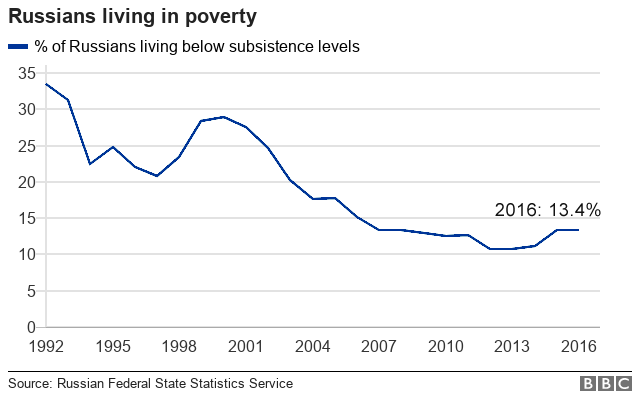
Say Russian conquers all of Ukraine and moves troops to the Polish border and parks some tanks a bit inside. What then? Strongly worded essays? If Russia isn't raining hell on Poland, then NATO is forced to .. apply sanctions, make threats, but take no action since the escalation and outcome, MAD, is not an acceptable trade for a tank crossing your border.
Repeat until arrival at French coastline. The terrorist steps forward waving a trigger to a bomb and either you show him your bomb and threaten to blow yourselves both up, or you step back.
At some point, the only option is to call the bluff and give him a good punch and hope that he values life as much as you and won't actually detonate. It has to be a solid one but not so hard as to make him think you might kill him, as that would make the detonation a certainty.
I don't know that NATO has the guts to give Putin that bloody nose.