Estimates on Bitcoin energy usage put it at over 1TW now. I believe it was comparable to the energy consumption of Argentina.
Advocates will defend this by saying most energy usage is renewable. This conjures the image of someone with a bunch of solar panels but the reality is that it's primarily hydro power because that's the cheapest. Thing is, in regions with cheap hydro power, the miners can use so much power they end up making power more expensive for everyone.
I'd be more OK with this if crypto in fact solved a problem for most people. We should start by stopping calling them "currencies". They're not. They're assets. They lack all the useful properties of a currency (eg being massively deflationary)
The only thing cryptos really do is allow a temporary medium of exchange for traditional currencies. Some uses of this are entirely legitimate (eg escaping capital controls in certain currencies). Some are not (ie all the illegal usages).
I really wonder what happens to Bitcoin (or any PoW coin) when it no longer becomes economical to mine new coins. Does all the computing power just move on to the next coin? If so, won't this make the network vulnerable to attack? What is the incentive for people to contribute computing power without the prospect of economical new coins?
> Advocates will defend this by saying most energy usage is renewable.
Even if true (iirc there is a lot of doubt whether it is, see Iran), it's still moronic, because consuming renewable energy for shits and giggles obviously means that other energy demands are being met with your usual energy mix instead of that renewable energy that went into shits and giggles as assumed. In terms of net emissions it simply doesn't really matter whether you A) use non-renewable energy for BS or B) use renewable energy for BS, displacing other energy users to non-renewables.
The simple fact of the matter is that there is no free lunch and there is NO ecological way of randomly wasting energy.
Now, the claim could still theoretically be true, but I really want to see some hard numbers with sources from the next person trying to defend that claim.
Subsidized energy can be cheap or even free, and it's hard to compete with free. For-profit Bitcoin miners are in an intense competition to find the cheapest energy. Anyone who can steal their energy or get someone else to pay for it via subsidies will win there, but only until the free lunch ends. Energy free lunches are ending all over the world now; nobody wants to build a coal plant in order to give away the energy to bitcoin miners so they can retire in Switzerland.
And that's why the Chinese authorities kicked out all the bitcoin miners a couple months after that, dropping the bitcoin hashrate by more than half. It's on its way back up, but it hasn't fully recovered.
By contrast, especially in tropical regions, you can build a solar or wind power plant to mine bitcoin profitably without finding someone else to fob the bill off on. In much of the world, solar energy is now less than half the cost of fossil-fuel energy, though not in cloudy polar regions like Germany, the Netherlands, or the UK. There's a new record-low PPA price every few months, and it's always solar; https://www.pv-magazine.com/2021/04/08/saudi-arabias-second-... this April seems to be the latest, at US$0.0104/kWh, which is about a quarter of what coal energy usually costs.
That's why the Navajo Generating Station has been demolished, Peabody Coal has gone bankrupt and may do so again, and for the first time in human history, outside of PRC, more coal generating capacity was shut down than was built last year. This year that'll probably be true worldwide. Coal (and nuclear, and oil) just can't compete economically with solar anymore, even in temperate regions. And, consequently, neither can Bitcoin miners who are paying the cost of using coal. Fortunately for them, shipping their server racks to a more profitable region is a lot cheaper than doing the same with a steel mill.
Hopefully this gives you a clearer picture of the whole political-economic environment in which Bitcoin mining is happening than just a few hard numbers, which are of course fundamental.
Proof of work cryptos are a pox on society. That said they are some of the most location neutral energy consumers. This allows mining farms to be located adjacent to hydro dams or wind farms to get the cheapest energy and use energy that would otherwise be lost in transmission. 1TW is around 20% of global energy production. This is enough of a factor to impact manufacturing of renewable energy equipment. It allows them to achieve economies of scale faster and accelerate the transition to cleaner energy that we need.
It's estimated all of the U.S. is ~17% of global energy. [1]
"According to the Cambridge Center for Alternative Finance (CCAF), Bitcoin currently consumes around 110 Terawatt Hours per year — 0.55% of global electricity production, or roughly equivalent to the annual energy draw of small countries like Malaysia or Sweden." [2]
The incentives to use renewables are there... where the costs of fossil sources are high, and where the energy consuming process will be reliably profitable long enough to pay for all those renewable energy sources.
That last bit makes me doubt this would push renewables - who trusts that mining will remain profitable for years or even a decade? In other words, it may well incentivize energy sources with low down-payment costs.
Also: all those GPUs are expensive; is a miner really going to slow down mining significantly just because it's dark or no longer windy? Or will they prefer constant power, given the fact that GPU's will become obsolete much more quickly than the power source, and thus there's pressure to recoup that investment as quickly as possible, I'd guess... thus incentivizing baseload power, not unreliable but cheap power - conceivably, anyhow?
The high bit here is that coin mining is not 1 TW; it's 0.012 TW, so the overall effect is almost insignificant. But it's still interesting to know which direction the incentives run.
The cost of fossil-fuel electricity generation is about half capex and half opex (including fuel), and in much of the world, solar is now cheaper than either fossil-fuel capex or fossil-fuel opex. A large part of capex is machinery, much of which is so costly that shipping costs are insignificant, so the costs are the same anywhere in the world.
Bitcoin isn't mined with GPUs, but your comments about intermittency and capital costs apply a fortiori to ASIC mining.
>This allows mining farms to be located adjacent to hydro dams or wind farms to get the cheapest energy and use energy that would otherwise be lost in transmission.
Sure, but there doesn't seem to be to be any indication that this is what actually happens. Is there any evidence for that?
If only we could send a self-replicating machine that builds raspberry pis and solar panels to the moon with an uplink.
Then the difficulty would jump and we'd need to send one to Jupiter.
Then to mercury to set up the dyson swarm.
Suddenly we are a Kardashev civ... but it's all for bitcoin mining for rich billionaire paranoia of centralized currency control by the US government, and the actual bitcoin production rate is constant since the difficulty rate on the coins exploded from galaxy-spanning miner fleets.
As explained above, the real number is closer to 0.012 TW, so while the impact on the renewable transition is probably positive, it's very small, more like 0.1% of global energy production.
It's disturbing that nobody in this whole thread thought to fact-check those implausibly large numbers; it indicates that the whole thread is dominated by herd instinct, not rational thought.
I think Bitcoin is ridiculous and wasteful, but I'm also conflicted because I think similarly about many physical products: jewelry, mansions, oversized personal vehicles. There's a lot of embedded energy in all of those goods. Who am I to judge which ones are worthwhile. It all makes me dearly wish there was a global tax on taking the resources out of the ground.
I'm curious why we don't find a similar backlash to people who put their energy into a hot tub or to cool a 5x sized home.. as these cases don't even purportedly support a valuable economic mechanism.
For instance. I don't cool my home with AC. does it bother you that I mine bitcoin overnight when the grid has surplus energy?
People do complain about excessive comforts too. It's one of the main complains those less well off make about those more well off.
That said, there's a couple of differences between hot tubs and AC, and crypto mining:
- Creature comforts don't consume the energy equivalent of a small developed country.
- In what they do consume, most of the use is around basic human needs; excessive use happens rarely.
- Most importantly, for almost[0] everything other than crypto, whether it's hot tubs or ACs or fiat banking system, energy use is considered waste to be minimized. Simply because energy is not free, the market is incentivized to reduce marginal energy consumption involved across the board[1]. In contrast, PoW considers waste a feature.
Cryptocurrencies are their own special thing - the perfect machine for consuming any surplus energy available. That's why they deserve their own special kind of backlash.
--
[0] - I can't really think of any thing other than PoW cryptocurrencies, where energy waste would be beneficial to the thing by design.
[1] - That, of course, doesn't mean we're using less energy overall - because both population and economic growth outpace efficiency improvements. But on the margin, it holds true.
- Creature comforts don't consume the energy equivalent of a small developed country.
you are incorrect here. 10% of global energy (not just electricity) is used for cooling.
I live in the deep south with no AC. "basic human needs; excessive use happens rarely." is extremely generous.
What you are describing is what makes you comfortable. I have no problem with that. be comfortable. Just consider that what you are describing is completely a matter of perspective and not some universal truth about use of energy. Just like you are not universally correct that every watt spent on crypto is "wasted". It's a perspective.... and my point here is to remind you to keep it in perspective of other trivial preferences people have, rather than turning it into an ideological war of good and evil.
To add, this isn’t really “surplus” energy that’s being consumed.
There are fossil burning power plants running only to produce PoW, and unless mining operations shut down to allow a generator to operate at minimum load, they are forcing shared generators to run and dams to drain.
you know that generator fuel consumption and dam water consumption is dependent on the load on the generator, right?
it's not like a generator burns 2gal/hr no matter the load. This is easily observable even (perhaps especially) on home generators - if you run it idle it might run for 12 hours and if you load it to maximum capacity it might be out of fuel in 2 hours. look at a product page for a generator and will probably be specified at a particular load level (50% load for example).
also if you keep pushing water through a dam at maximum rate even when the dam is under a light load, you'll overspeed the generator and blow it up. You have to have control gates to control the water flow.
basically, "how difficult" it is to spin the generator is determined by the electrical load (coupled through the magnetic field of the motor) and obviously you need more physical power to spin against a stronger field, which translates into more power/fuel.
A lot of people are in the habit of complaining about what other people do that might possibly but not likely indirectly affect them somehow. Of course the powers that be are fine with this (and probably promote it) because as long as the populace is pointing fingers at each other's lifestyle, they are ignoring the massive use of fossil energy (among other things) used to make a few rich people richer.
"Penny wise and pound foolsh."
Another example of this is plastic bottles. See it's your responsibility to recycle, not the company's responsibility to not use plastic. People nanny each other's recycling habits but don't say shit about Coca-Cola bottlers. Bottler's are too busy laughing their ass off on the way to the bank. Recycle, reduce, reuse.
In the case of cryptocurrency, there is a clear better alternative that is Proof of Stake. It's caused by techological, economical and educational inertia. Cryptocurrency is driven by community consensus, and that's what we're doing here... discussing an outdated consensus (PoW supremacy) in the hope of changing it.
Proof of stake changes the game and raises the bar for entry. It essentially creates a "rich get richer" scenario where the only way to increase the amount of coin you have is to either already have enough to participate in proof of stake, or to buy the coin from someone else. In that light, I wouldn't necessarily say that proof of stake is clearly better than proof of work.
As an example, the proposed proof of stake mechanism for Ethereum requires 32 ETH, which is around $100k USD today. So established parties with capital will be able to stake, but your average person will not. I'm not sure I like that aspect of it.
It seems there will be pool staking in ETH, although I agree ideally staking threshold should be low.
Consider the case with Proof of Work (ASIC-based): you need to purchase specialized hardware for several $k (apparently at least $2k), spend more on specialized infrastructure (power supply, cooling, servers) and live somewhere with almost free energy. Otherwise it's just not economical to mine. This leaves out the vast majority of people as well, and incentivizes (1) massive economies of scale of farms, (2) shady or corrupt deals for free energy, through local government or simply illegal connections to the network.
Ridding the world of centrally planned currency isn’t shits and giggles. We’re in the midst of the largest wealth transfer in history. Trillions are being given to the wealthy while the poor see their purchasing power wither away. I’m not certain we’ll successfully escape their depraved clutches, but wasting a little electricity is worth the chance.
I still fail to see how it addresses wealth distribution issues.
Crypto currencies are just an asset as any other financial asset.
Yes it's decentralised but the only thing it seems to have proved so far is that centralisation might not be an issue in the first place.
Since crypto currencies are more of a financial asset than a currency, it's also highly dependent on actual currencies in the end.
Because the powerful people with more crypto than you can't magically issue infinite more crypto and give it to themselves, devaluing the crypto in your wallet.
Classification as an asset is part of the state fighting against crypto currency. It's a non sequitor. If the dollar was deflationary more people would be holding onto it as an asset. But the dollar is intentionally manipulated/inflated so that it's a liability to hold it, therefore people trade it for other asset classes.
The difference is that the powerful people with a lot of crypto can't unilaterally decide to issue themselves trillions more bitcoins which devalues the few coins held by the poor. Yet this is exactly what happens with the dollar.
The energy use is of captured energy that would be lost in transport to other energy users, because it uses just as much energy or more to transport it.
This means that “renewable energy more than the output of Argentina was always being wasted for over a century every day because it was uneconomical to transport it”
Crypto mining has been unique in that it only needs power and housing to stay dry, low infrastructure, and doesn't need very good internet, compared to other large computational projects, or any other sector.
Okay, so we got the “ah it uses a lot of energy!” argument over to “ah okay its a relatively green sector compared to literally everything else but I don't respect the use in favor of literally everything else and this must be taking away from that” which is also not true so I’m curious how the goal post moves after this - assuming you are able to corroborate what I’ve told you at face value.
It would be more productive to advocate for specific sites to not raise prices for others if they did, or specific sites to use cleaner energy sources. I can understand how that could cause some consternation if your whole cause is not liking crypto mining at all. But it is important to remain vigilante on how these mining operations run, as it is possible for nation states to operate these uneconomically and actually do things that you imagine is happening now.
(Renewable and captured are not synonymous but usually its the same)
If your first paragraph is about rejected energy, then there's not a lot to say here except that rejected energy doesn't mean what you think it does.
If not, then I don't know what it is supposed to be about. No one builds power plants in places where there is no demand for power. Electric power can be carried over pretty large distances though with very low losses, so having say a few hundred km between a hydro-dam and a large consumer is not a major problem.
According to your post the best result would be that Bitcoin farms are powered by renewable energy plants build in places where nobody would have any use for that power anyway, because they're too remote to connect to any consumer. Even if this happens (and from what we're able to tell, it is not, instead we see coal and natural gas plants being ramped up to power bitcoin farms), it's still a net negative because building renewable energy power plants (as well as bitcoin farms) causes a significant amount of emissions. In normal use of e.g. a solar panel, this makes sense because it displaces non-renewable energy sources with higher emissions, so net emissions are reduced. In your scenario, there's a bunch of solar farms in the middle of the Saharan desert mining bitcoins, which - at this point - yes would not be able to displace non-renewable energy, but still represents a net-negative regardless because of the effort required to put all that shit there in the first place.
The simple fact of the matter is that there is no free lunch and there is NO ecological way of randomly wasting energy.
> (and from what we're able to tell, it is not, instead we see coal and natural gas plants being ramped up to power bitcoin farms)
like I said, advocate against those specific mining sites. those made headlines in your world, while others did not.
A lot of captured energy mining occurs at remote flare gas sites, where those sites are in the business of pumping oil and flaring off byproducts and not in the business of moving power a few hundred km. These are highly polluting places, and crypto mining is ironically (to you) their sustainability solution, as they provide a use for the energy that would have been flared into the atmosphere as hydrocarbons instead. As these are also fracking sites, the machines can use the polluted water for cooling. Those kinds of sites are only captured and not necessarily renewable, an important distinction because your example was limited to imagining uneconomical solar. There is much more energy like this able to be tapped while reducing hydrocarbons in the atmosphere, and if it was economical for other use cases that you respect more to tap into that energy, you and others had several decades to do so.
It's cheaper for them to just flare the gas. The only thing that has made economic sense, as an alternative to flaring it, is to mine Bitcoin. I understand the energy criticism, but flare gas is an example where Bitcoin mining actually makes something less polluting.
- It's approximately a 180° pivot to go from "unused renewable energy" to "flare gas for green bitcoins"
- It doesn't reduce the emissions. Whether you flare it or burn it in a gas turbine / engine driving a generator to mine bitcoin, the CO2 released is exactly the same, as you are burning ~100 % of the hydrocarbons either way. The difference is that one generates bitcoins, the other does not. This is only valuable to bitcoin stakeholders, and as has been pointed out up and down all these threads this is either of approximately no value or of negative value to society at large. And overall, creating the equipment to mine bitcoins with flare gas, and deploying that to remote oil fields w/ no use for gas, creates a bunch of emissions that simply don't exist if you just flare the gas.
- There are non-emissive alternatives, e.g. gas re-injection. Note that the great majority of unwanted gas is already dealt with this way. This means that mining bitcoins using flare gas has a very good likelihood of increasing the share of unwanted gas that is effectively flared, again, increasing emissions.
Reducing the amount of flared gas (and putting it through a turbine to mine bitcoin is the same as flaring it as far as emissions go) is in fact an UN IEA goal.
The simple fact of the matter is that there is no free lunch and there is NO ecological way of randomly wasting energy.
> - It's approximately a 180° pivot to go from "unused renewable energy" to "flare gas for green bitcoins"
I wrote earlier to avoid this specific derailing. Renewable and captured are not synonymous but usually the same. This is one of the cases where it is not the same. To my knowledge, the only other captured sources are at hydroelectric plants, while some parties are interested in geothermal as well.
Noteworthy is that “captured” seems to be also called “rejected” energy in some circles.
> And overall, creating the equipment to mine bitcoins with flare gas, and deploying that to remote oil fields w/ no use for gas, creates a bunch of emissions that simply don't exist if you just flare the gas.
Once. I’m not sure how a one time event is remotely comparable to ongoing issues. Please elaborate?
> It doesn't reduce the emissions. Whether you flare it or burn it in a gas turbine / engine driving a generator to mine bitcoin, the CO2 released is exactly the same, as you are burning ~100 % of the hydrocarbons either way. The difference is that one generates bitcoins, the other does not.
Hmm. Is there anything we can do about that then? Like does that format allow for further processing towards sustainability? The generating of bitcoin making it economical to do more with the CO2 that the oil guys just threw their hands up on decades ago? If this issue has nothing to do with bitcoin mining and the alternative is just business as usual with it going directly to the atmosphere like it already was, then why point fingers at the bitcoin mining?
Thanks for chiming in! Nice to see a new account understanding this issue and joining the fray.
It has been fascinating to me to watch the disbelief evolve. One aspect of this is that negative reporting has been basically allowed and encouraged by miners because they didn't want competition on their cheaper renewable/captured energy sources.
So, for years, many investment groups would discourage their renewable or captured energy activity to be citable source of what is happening with bitcoin mining, because they didn't want others with deeper connections to make partnerships with sites faster.
Its really funny, to me, watching people have to redo their understanding but trying to make that understanding conform to the negative energy impact idea that they were intentionally led on with.
> OK, but those exact same places could power servers instead of miners, taking a load off of wherever the servers are currently hosted.
They don't have good internet. Which I wrote earlier. Crypto mining don't need good internet, it barely needs any good internet speed and barely needs decent latency - by design (blockchains allow anything from 2 seconds - 2000 milliseconds - to 10 minutes - 600000 milliseconds - for the majority of miners on the whole planet to reach the same state together, under the assumption that some nodes will have slow data and low latency. So a 500-900ms latency connection in the middle of nowhere is quite fine, not optimal but good enough for consistent average earnings). Other data heavy computational uses require the opposite of that, these remote sites are not going to get the plumbing for good internet or prioritize it. The main issue is that they won't prioritize it because they aren't interested in it, they are technophobic oil guys that are slowly being convinced by crypto investors to solve their pollution problem. The crypto people don't need anything except a little space.
The issue with imagining that everyone else could do it, is that everyone else doesn't need to do it. A data center can set up in the middle of the desert along any fiber line like they already do. Go ahead and tell them "hey instead of using this readily available property can you go set up at the oil refinery after making an unnecessary partnership with that unrelated business because I don't like that crypto people are doing it, you also need to invest in laying some pipes out there" if you really think that is practical or necessary, be my guest.
Yeah this shouldn’t have been flagged, this part of hackernews is very broken for them to inadvertently allow censorship like this
The stackexchange approach would be better here, where certain power users can vote on flagging and you can see who voted on flagging, other users can vote against flagging and even override it
Mining is definitely renewable UNfriendly. Hardware is too expensive to turn it down at night, or when winds are weak. It's 24/7 constant demand, the worst possible for solar/wind.
It's indeed location independent, but that's more compatible with previously uneconomical fossil fuels (eg. methane in locations where transferring it out isn't economical).
People need to remember that using up the available renewable energy on crypto just means there's less available for other consumers to use. The idea is to reduce electrical demand which makes it easier to shift towards 100% renewable. Adding all that electrical demand just keeps around non-renewable energy longer since few countries are able to go 100% renewable on their current demand.
I doesn't, at all. Energy production and energy distribution are entirely different things. There is enough unused (i.e. wasted) hydro power in Quebec to power the entire Bitcoin network. If energy is produced too far from where it is demanded such that transmission is prohibitively expensive, there is no downside to having highly mobile miners to make use of it. In fact the extra revenue generated can be used to subsidise the rest of the grid.
Here's a writeup on how that's a misleading statement, and how the best use of that hydro power for offsetting carbon would be for it to be used to offset neighboring province's much worse coal-based power.
Transaction fees will always make it economical to mine. They currently make up a small fraction of the block reward, but within a decade or two (5 block subsidy halvings), we can expect them to dominate.
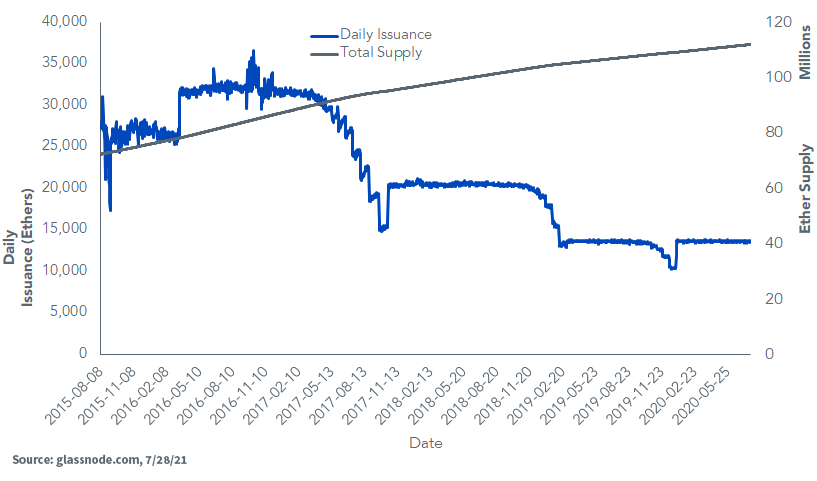
Btw, not all cryptocurrencies are deflationary [1].
It won't if people realize that BTC is not a useful product, and the price falls to $1k or $100. At that point no one except someone stealing electricity can afford to mine, so the entire monetary system collapses and becomes worth the same as US Civil War dollars (can maybe buy a loaf of bread with a wheelbarrow full?)
Given that bitcoin has been around for 2008, at what point will you personally concede that it's not likely to happen? Why would it happen now if it didn't in the first 13 years?
Madoff's scam lasted for 17 years and only collapsed because of sharp economic downturn. It could have lasted for much longer if people suddenly didn't need the cash.
Bitcoin is often described as distributed Ponzi. There is little value (skipping over regulations is about the only thing it's useful for) and a lot artificial pumping. It will collapse when people need money for something else so either economic downturn (exactly the thing crypto believers think they are hedging against) or when it slowly goes out of fashion (probably either due to regulation catching up or something much better coming about). Till then the show goes on. Even if there is just 10% of real dollars behind those valuations it will not matter until there is a bit of a run to cash out.
Real estate does something. If everything else goes to crap, I have a place to build my home. My home has a pretty high base value. If full banking collapse and we go back to trading, I would trade my house for a LOT of apples.
What does BTC do for me? It's a number on a screen. Much like a NFT.. it has no actual value on it's own. In a zombie apoc, no one is trading you food for BTC.
Stocks are not Ponzi wtf? Even today you can get something like Apple making 3% per year while also having big chance of making more in the future. It has nothing to do with a Ponzi scheme at all while artificially propped up producing absolutely nothing crypto currencies have a lot of similarities.
The argument that scarcity is a fundamental value proposition for an asset is just nonsense. I can make my own crypto even more limited than BTC overnight and it will worth about 0. It's not scarcity that makes stuff valuable. In case of BTC 3 things make it valuable: adoption, ability to make transaction while skipping over regulations (which requires adoption) and artificial propping by scams like Tether.
Stocks are a ponzi by definition.
All growth in stock prices are dependent on extracting money from future investors. It gets a little more complex with corporate stock buybacks, but ignoring this, the price of a stock tracks a companies success, but is ultimately a product of the market buy/sells. Without injection of funds by the corporation, its a Ponzi like anything else. Even more so for stock that does not issue dividends.
Same goes for housing, or anything else with scarcity.
Wall street has done a great disservice making you believe the price of a stock accurately reflects the value added by the corporation.
I agree that adoption (network effect, Metcalfs Law), censorship resistance and other economic constructs like stablecoins all have an influence in value. Folks have been saying "I can make my own, scarcity is bunk" for a long time now. 10,000 other clones of bitcoin exist today that are worth nothin'. Maybe there is something about big b Bitcoin and the cryptoeconomic model that Satoshi chose.
The idea of a stock is that it is worth the present value of all future dividends. Stocks that do not issue dividends and are expected never to issue dividends are indeed a Ponzi. I think those are by far the minority of stocks.
The idea that stocks that never issue dividends are somehow only valuable because other people think they are valuable (let alone calling it a Ponzi) is completely misguided. I mean if a company builds a pile of cash and never distributes it to shareholders it's still very valuable to have a say about how that pile of cash should be spent. If a company ammased a billion of cash there will be many takers to buy it for less than a billion just so they can direct that billion somewhere.
Of course there is also an option of closing shop and dividing the assets to shareholders or myriad other ways of making the assets valuable without paying dividends.
Those kinds of basic misconceptions about financial markets is what crypto evangelist prey on. It sounds pretty convincing to the ignorant but is just nonsense under scrutiny.
Man, companies make money or have good prospects of making money in the future. You own part of the profits. If the company pays dividends doesn't matter at all. It's econ 101 or not even that.
I think it's a bit disingenuous to use 2008 as the point of reference. Bitcoin didn't really reach the point of public consciousness before the 2017 boom (which was largely attributable to price manipulation. Prior to that the main use-case was buying drugs online, and prior to that it was a niche hobby for libertarian futurists.
Given the increasing prevalence of ransomeware attacks, and the fact that they have touched higher and higher profile targets, it's not impossible to imagine the regulatory hammer coming down on cryptocurrency at some point in the near-ish future.
It's going to be a flash and a poof though. I don't think it's going to go down 10% a year for 10 years or something. I do think it may drop 50-70% in one day/week, which makes miners shut down, which causes a full collapse.
That's only true if people are actually willing to pay that much in fees though. If the amount from fees doesn't keep up then eventually some miners will have to stop mining.
That's certainly not a good example. The price has grown much faster than inflation in the western world, while the issuance of new currency has trended down, not only as a percentage of total money supply, but in nominal terms:
https://www.wisdomtree.com/-/media/us-media-files/blog/blog-...
While in theory the community can elect to inflate the money supply, in practice the people who get to vote on the issue are holders of currency, who have strong incentives to restrict the supply and deflate the currency. If an inflationary EIP is proposed, these people will simply ignore it and stick to the deflationary chain.
There is always confusion when discussing deflation and inflation because there are multiple definitions. There is a inflation/deflation which refers to the size of supply and then price inflation which refers to the cost in some other fiat currency. The former is simple and clear, the latter depends on other variables.
You are ignoring the large amounts of coin that are taken out of circulation by software and hardware bugs, owner death or amnesia, intentional destruction by transfer to unspendable addresses. For bitcoin, by credible estimates we are already talking about millions of coins.
No, https://cbeci.org/ says Bitcoin uses 0.01176 TW, not 1TW. You can take a deep breath of relief! The real energy use of Bitcoin is only 1.2% of what you thought it was!
So, if you thought Bitcoin energy usage was a pretty bad problem but not world-endingly dire, you should now think it's insignificant. If that isn't what you think, it probably means that your opinions are not based on careful cost-benefit analysis, just partisanship, and should therefore be disregarded.
Energy consumption is measured in terawatt hours, not TW, and page you linked to says annualised consumption is 90TWh , which is on par with the netherlands annual consumption. This is hardly partisanship, its an enormous amout of power.
> Energy consumption is measured in terawatt hours, not TW, and page you linked to says annualised consumption is 90TWh , which is on par with the netherlands annual consumption. This is hardly partisanship, its an enormous amout of power.
You can measure energy consumption over a given time period in terawatt hours; for example, consuming a terawatt for one hour is consuming one terawatt hour, while consuming a terawatt for two hours, or consuming two terawatts for one hour, is consuming two terawatt hours. The standard term for "energy consumption over a given time period" is "power", and the standard SI unit for power is the watt. A terawatt hour per year is precisely and identically some number of watts; I calculate it as 114,079,550 watts, or more conveniently 114.1 megawatts, because an hour is about 0.00014407955 years.
If you want to measure power consumption in ad-hoc units of 114.1 megawatts or poundal-fathoms per Planck time, I can't stop you, and you can even do correct calculations with them, but, myself, I prefer to use SI units, because they greatly facilitate mental arithmetic and comparisons.
(This has been a brief introduction to the basics of the Systeme Internationale of units.)
If you scroll up about 512 pixels from where you were looking on that page, which currently says annualized consumption is probably about 93.01 TWh/year, you'll see that they also provide the same number in a different form, as 11.76 GW. (This is a slight arithmetic error; 11.76 GW actually adds up to 93.01 TWh every 330 days. Perhaps the 11.76 GW is a 7-day moving average and the 93.01 TWh/year is instantaneous power consumption, or vice versa.)
Whether 11.76 GW is "an enormous amount of power" or not depends on what you're comparing it to. Total world marketed energy consumption is about 18-20 TW, so compared to world marketed energy consumption, it's not an enormous amount of power. (A terawatt is 1000 gigawatts.) Terrestrial insolation is about 130 petawatts (a petawatt is 1000 TW); about 0.3% of that falls on arable land, so agriculture uses about 350 TW of power, almost 20 times world marketed energy consumption.
Unsurprisingly, you're also mistaken about the Netherlands' power consumption, perhaps because you don't know about non-electrical forms of energy such as kinetic energy, chemical energy, and (very ironically in this context) solar energy; even their electrical energy consumption alone is 119 TWh/year, which is 13.6 GW, but most of their energy consumption is not electrical; their total energy consumption is more than 100 GW.
So, Bitcoin provides a secure digital currency to 7.8 billion people for, probably, significantly less energy than the Netherlands uses to provide electricity to 0.018 billion people. (A million is 0.001 billion.)
Is it partisanship to call that "an enormous amount of power"? Maybe, maybe not, it's a valid subjective perspective. But it's clearly partisanship to not care whether it's 12 GW or 1000 GW.
I agree that the externalities are still overwhelmingly negative, but one part you're missing is that cryptocurrencies act as a global reserve asset. Crypto is still tiny compared to other financial markets, but the existence of cryptocurrencies has probably reduced the volatility of other assets somewhat.
In the future, this effect will likely be more pronounced. It's an asset class that has some degree of independence from other asset classes, so it decreases the overall risk of the financial system.
The only good quality of Bitcoin is that it is completely decoupled from the economy. A bursting Bitcoin bubble doesn't take the rest of the economy with it. However, that only holds if countries don't use it as legal tender.
This isn't true. There are Bitcoin collateralized loans already, and there are Bitcoin backed ETFs. Companies have issued bonds underwritten with valuations that include BTC in the company treasure.
Bitcoin is small compared to the rest of the economy, and it's less integrated than many other asset classes, but it is very much coupled to other financial markets.
The problem crypto solves is you can memorize a seed phrase and the government has nothing to seize, no bank account to freeze, no physical object to take. It's value that resides completely in your mind, but is recognized by others willing to pay a market rate for it.
You're joking yourself if you think government seizures are just; in the US asset forfeiture does not require even a criminal conviction. This is a problem for all people. Crypto solves a problem for all people.
-money transfer and storage for the structurally unbanked.
Anonymous crypto wallets cannot be banned and to "taint" any bitcoin that has passed through anonymous wallets would mean every single bitcoin would be tainted. It would be like trying to ban euros used for drug trade; if it were done all euros would seize to circulate.
Don't you think it could be aggressively regulated against? I doubt it could be completely stopped, but demand could be sharply reduced if using and mining cryptocurrency carried sharp legal penalties.
It could, but governments have a hard enough time sharply reducing drug use, and that has something tangible to search for and find. Trying to find some bits in the ether or even worse guess whether someone is memorizing a seed phrase is nigh impossible to prove or extinguish.
Mining will be carried out wherever someone could get away with it, which is basically any western country where it is legal and any 3rd world country with internet access and power. It would be like trying to stomp out coronavirus in the entire world -- when you apply the "vaccine" somewhere, the reservoir just lives somewhere else.
The issue is while the legal demand will drop, the illegal demand will remain, which is the only one you're trying to stomp out. As a deflationary currency much value will be lost, but it will retain pricely enough market cap to sustain the black market.
If mining goes down as hardware capabilities go up, it’s only a matter of time before somebody fires up a mining operation for a few days to outcompete the rest.
It doesn't right up until the moment that somebody realizes the reward of profit is worth the risk of operating a mining operation capable of pulling off a 51% attack.
I said Bitcoin's survival was not predicated on centralized mining facility. You seem to be agreeing with me, because your scenario is one of a 51% attack predicated on a large centralized mining facility. You are overlooking the number of actors capable of pulling off illegal mining, and the difficulty in coordinating all of them.
You are acknowledging even under clamp downs, mining will continue. If you think about 30 seconds further, you'll realize it will be widespread and it is likely not just one clever 51% attack hopeful will come up with the bright idea of running an underground mining operation. Prisoner's dillema keeps all the decentralized nodes from colluding (risk losing your mining reward against the hope everyone will stick to the deal and hash a dirty chain). Prisoner's dillema acts the same way against more centralized groups so long as no one of them controls a large portion of the available hashrate.
Basically your statement is "people will pull off scaled mining operations even if illegal, and bitcoins demise is predicated on centralized mining operations" and I agree with you 100%.
If your argument is that Bitcoin is susceptible to a 51% attack, the answer is you are correct and you always have been. It is built into the protocol.
Bitcoin's survival is predicated upon the distributed, cooperating members of the network being willing and able to spend more cycles than any one bad actor.
Prohibition of mining centralized mining tautologically reduces the number of cycles the network is able to cooperatively dedicate toward mining. Whatever the hash rate otherwise would be without a prohibition, once you prohibit and drastically reduce the contribution of centralized mining, it would be drastically less.
But the ability for someone to put together a centralized mining facility is still there, it just carries additional risk. If nobody else is performing centralized mining, the incentives for someone to quietly put together an outfit of their own for the sake of attempting a 51% attack grows. This might be outright illegal, it might be done by a government, or a myriad other possibilities. Either way, it's an order of magnitude easier in that future than it is today for someone to gather the necessary hardware to mount such an attack and turn it on all at once.
> Basically your statement is "people will pull off scaled mining operations even if illegal, and bitcoins demise is predicated on centralized mining operations" and I agree with you 100%.
My statement is "people can pull off scaled-down mining operations even if illegal, but this reduces the effective hashrate; further, other people can pull off scaled-up mining operations in the short term".
>Bitcoin's survival is predicated upon the distributed, cooperating members of the network being willing and able to spend more cycles than any one bad actor.
Which is an entirely different statement than saying bitcoin's survival is predicated on centralized mining. It's not.
If centralized mining operations can continue, centralized mining operations could have a 51% attack.
Thank you captain obvious, ultimate king of semantics.
Your entire argument is one of bitcoin's demise via 51% attack being predicated on centralized mining. I don't think you understand that claiming a 51% attack is predicated on scaled-up operations is an entirely different statement than arguing against bitcoin's survival not being predicated on centralized mining.
You imagine a scenario of majority hashrate bad actors, all cooperating, can pull off centralized mining, and that their hashrate exceeds the entire hashrate of the decentralized less upscaled nodes as well as the more centralized good actors. That is a possible, but unlikely scenario that has always existed since the beginning of bitcoin for the reasons I previously stated before. It simply hasn't happened, there is currently a roughly $1T bet that it won't happen in the near term, and there is a valid argument to be made that when centralized mining becomes more restricted that the likelihood of successful 51% attack goes down and not up.
>people can pull off scaled-down mining operations even if illegal, but this reduces the effective hashrate
Probably, but not necessarily so. If I shutdown my up-scaled operation and send my miners to 100 of my friends to use discretely in their homes with similar uptime, tell me what difference does it make to the total hashrate? The only real effect is it makes it even harder to coordinate a 51% attack.
>My statement is "people can pull off scaled-down mining operations even if illegal, but this reduces the effective hashrate; further, other people can pull off scaled-up mining operations in the short term".
It sounds very easy to say "just get 51% of the world hashrate" (you seem unaware of what a feat this is) when in fact worldwide many actors would simply mine to the extent they can get away with it, probably including large centralized operations, and prisoner's dilemma and lack of worldwide coordination of bad actors would quite likely prevent such a 51% attack. I also don't think you can make the presumption the decentralized, down-scaled nodes will be a minority of the total hashrate if up-scaled mining becomes difficult (of course, it is possible, no in is denying that a 51% attack has always been a means of attacking bitcoin).
> but the reality is that it's primarily hydro power because that's the cheapest. Thing is, in regions with cheap hydro power, the miners can use so much power they end up making power more expensive for everyone.
Err that depends.
The thing with dams is that the water can never rise above a certain level, else the structural stability of the dam is compromised. So often they have to run the dam with turbines disconnected to lower the water level since there's nobody on the receiving end.
That's also why some blocks of hydro power are very cheap (and time sensitive).
The renewable argument never made any sense to me. Electricity is mostly fungible if crypto wasn't using it something else would or it would be used instead fossil or it wouldn't be produced in first place. Every single one of those options much better than spending it on fairly useless speculative bubble asset...
> escaping capital controls in certain currencies). Some are not (ie all the illegal usages).
I don't really understand how these are different, given that escaping capital controls is by definition illegal (otherwise you could just use the normal banking system).
> I really wonder what happens to Bitcoin (or any PoW coin) when it no longer becomes economical to mine new coins. Does all the computing power just move on to the next coin?
We will find out exactly this relatively soon when Ethereum moves to Eth2 and Proof of Stake.
You don't have to control what software is permitted to run: you can just ban changing USD to Bitcoin and vice versa. Stop the exchanges. Most people aren't mining their own coins anyway.
You can ban a lot of things in life.
Theft. Drugs. Crime in general.
You may not understand how the OTC market works in jurisdictions like China that do indeed ban cryptocurrency exchanges and prevent fiat<->cryptocurrency exchanges. A fist full of RMB can be swapped for USDT, which can be swapped for BTC from OTC brokers.
What you are proposing can only be stopped by breaking computers, breaking arms/legs and breaking economies. Violence is never the solution to problems.
I never suggested that it will completely erase cryptocurrencies. I do think that it will help making it less popular, which would be great. I sure think that while making theft illegal didn't stop it, it reduced the number of theft cases.
> (2) No person shall manufacture, import, offer to the public, provide, or otherwise traffic in any technology, product, service, device, component, or part thereof, that—
> (A) is primarily designed or produced for the purpose of circumventing a technological measure that effectively controls access to a work protected under this title;
> (B) has only limited commercially significant purpose or use other than to circumvent a technological measure that effectively controls access to a work protected under this title; or
> (C) is marketed by that person or another acting in concert with that person with that person’s knowledge for use in circumventing a technological measure that effectively controls access to a work protected under this title.
I think you can make a valid argument against me with this. DCMA is a hell of a law.
To my defense, I would argue that this speaks to production and sale of circumvention tools, and does not actually criminalize the execution of this code. But I weaken my original position about outlawing software. Thank you.
Not all crypto is proof of work based. People have and are inventing better systems that reduce energy costs and provide more utility. “crypto” does not deserve a unilateral ban.
Difficulty of the work needed is lowered if it takes too long for miners to find the solution. I'm sure there is a point at which mining becomes not worth doing financially. But that may not happen anytime soon.
Actually Bitcoin and a lot of other coins have a coin limit (to prevent hyperinflation) and once the limit is set than the miners would make money on the transaction fee.
Let's not commit the fallacy of comparing unrelated big numbers. How does the energy and time per usd transferred compare between btc and the traditional banking system?
I did a quick calculation. If you assume all of the U.S. energy consumption goes into stocks and forex trading (the only numbers that were easy to google quickly), dollar trades are about the same dollars traded per kWh as bitcoin, maybe a tad worse.
In actuality, there are more dollar transactions that doesn't include, so the numerator is bigger. It also uses much much less than the total U.S. energy consumption, so the denominator is much much smaller.
A bigger numerator and much much smaller denominator tells me that bitcoin is much much less efficient than traditional systems in dollars traded per kWh.
Off the top of my head, I could see it as reasonable to pay a 5-10% cost in energy efficiency comparing with traditional transaction systems to enable a truly decentralized model. Bitcoin is nowhere near that in terms of cost/transaction.
I was going to do a very fancy calculation but 136 TWh would be perfectly ok if Bitcoin did at at least 5k transactions per second with a transaction fee of $0.10.
I think parent is advocating doing folding@home over stuff like PoW crypto since the former advances science and the latter (handwaves vaguely) doesn't.
Unless someone manages to turn out a hash collision or an all-zeros hash (spoiler: they won’t), there is absolutely no scientific value in the PoW process itself. (Whether the resulting cryptocurrency has scientific value is left as an exercise to the reader).
These “assets” are usually just participation trophies in decentralized Ponzi schemes. Bitcoin is propped up by the ongoing tether scandal that is now larger than Bernie Madoff ever was.
I'm sorry you don't find it useful. I do find it useful, in fact millions more like me do. Usefulness is a subjective measurement.
If you think we are crazy, that's OK. Bitcoin is opt-in. You can choose to ignore it, you can think its fucking useless, but in my opinion, you are wrong.
How do I opt-out of the CO₂ exhaled by the 7 billion other humans on the planet, or the CO₂ from Facebook or TikTok data centers (as IMHO both are very harmful for the planet)?
The claim being put forth is that crypto's environmental cost FAR outweighs its utility.
Your counterargument is that such concerns are unraisable simply because one can avoid personally using BTC. Or to put another way "if WE destroy the environment it's none of YOUR business"
And that is wrong -- the atmosphere is shared by all. Changes to its composition are everybody's shared concern.
If you want to argue that some other business's activity are too damaging to the environment to be allowed to continue... fine, make those arguments. But don't bat away concerns about crypto's absurd environmental cost as "none of your darn business"
> in regions with cheap hydro power, the miners can use so much power they end up making power more expensive for everyone.
Not if there are laws to keep electricity price within a range. In places like Canada electricity is not necessarily traded in public for-profit markets, and must by law stay below inflation. I agree that in can be a problem in (most of?) the US.
> I really wonder what happens to Bitcoin (or any PoW coin) when it no longer becomes economical to mine new coins.
That might be the equilibrium price, the electricity/production cost. Isn't the pow algorithm smart enough to keep rewarding at least above electricity cost?
If you force the energy price to a certain subsidized level, then bitcoin farms will buy it all, masquerading as homes and small businesses, until you will be forced to shut down some large industrial consumers, putting real people out of work and making everyone poorer.
There is simply no way to waste valuable energy that's somehow imune to social and ecological effects.


Estimates on Bitcoin energy usage put it at over 1TW now. I believe it was comparable to the energy consumption of Argentina.
Advocates will defend this by saying most energy usage is renewable. This conjures the image of someone with a bunch of solar panels but the reality is that it's primarily hydro power because that's the cheapest. Thing is, in regions with cheap hydro power, the miners can use so much power they end up making power more expensive for everyone.
I'd be more OK with this if crypto in fact solved a problem for most people. We should start by stopping calling them "currencies". They're not. They're assets. They lack all the useful properties of a currency (eg being massively deflationary)
The only thing cryptos really do is allow a temporary medium of exchange for traditional currencies. Some uses of this are entirely legitimate (eg escaping capital controls in certain currencies). Some are not (ie all the illegal usages).
I really wonder what happens to Bitcoin (or any PoW coin) when it no longer becomes economical to mine new coins. Does all the computing power just move on to the next coin? If so, won't this make the network vulnerable to attack? What is the incentive for people to contribute computing power without the prospect of economical new coins?