> It used to be like this: You spend A LOT of money for really nice headphones and use them (potentially) your lifetime. Or hand it down to your kids as your hearing gets worse.
I think this is a fantasy. How many decades have there been high-quality headphones for this to be a thing that you think is supposedly the traditional way to do it? Did your parents hand you down their headphones? Surely your grandparents didn't hand down theirs? So it maybe happened once? For a few people?
For the past 19 years I have been using same pair of Beyerdynamic headphones. I use them most days from morning till late evening. When I worked at the office, I would spend most of my time in them, too.
Let's calculate -- about 320 days a year * 14 hours a day * 19 years = 85k hours.
I think this represents about correctly how much time I spent with these.
I change pads, I open it every couple of years to clean dust and hair and I have fixed broken cable twice (by shortening and giving it new plug).
I've had a pair of HD650s since college. In that time, I've replaced the ear cups, the head cushion, and even the cable a few times. All the parts are available where the headphones are sold, and they pop right in without any effort (or even the need for instructions).
They say things aren't designed to last or to be repaired anymore, but some things are, and they're great!
Also had a pair of headphones for 10 years, Sony MDR 7506. I've replaced the pads several times. I think a lot of good corded headphones will last forever as long as you don't crush them in a backpack.
If I was Theseus I would buy something that does not require separate amp (need to preserve batteries on yacht) and fares better in damp, salty conditions (I have delrin flute for that purpose, though everybody begs me to leave it at home).
As an owner of sailing license (but no yacht) I can attest that there exist no ship where you only replace sails and rope. Ships of any kind even in best shape require stuff to be repaired, replaced or painted ALL the time. Especially if you want to enjoy it for a long time and not deteriorate after couple of years.
Er, that's his point. That unlike your sailing boats, good headphones don't really need replacement of critical parts (drivers), but auxiliary and easily-replaceable stuff like earcups and cables.
-Incidentally, my curiosity got the better of me today and I rang up the AKG distributor to inquire about a spare driver for my 1990s vintage K240 cans.
'Sure can do, but if you're willing to shell out another $11, we'll sell you a pair of drivers, wrapped in a headphone-shaped box - it even comes with a cable, ready to plug in!'
So, I guess AKG are like any other brand - after market is considered 'free money' and an invitation to fleece the customer...
(Though in fairness, for such a cheap-ish pair of headphones as the K240, the logistics of even keeping a spare inventory probably makes AKG lose money on selling me a new driver, even at the $70-ish price point I was quoted for a driver which goes into an $80 pair of headphones.)
I see it in a different way. $11 is a bargain to have support rep pick up the phone and bother to send you and individually prepared package. For phones that have been out of production for years.
Most companies don't bother keeping spare parts these days and if you, for some unknown reason, want to maintain your cheapish vintage cans, you should be AMAZED they still keep them in stock. Because they are definitely not making any money on it.
Beyerdynamic headphones are not actually that good, so I'd hope he bought something new instead.
Beyer is the kind of thing nascent audiophiles liked about 15 years ago because they sounded very detailed, but people are better at measuring now, there are newer competitors like planar magnetics (eg Hifiman), and if you compare them now it's obvious that the detail is fake. It's an artifact called sibilance that just happens to sound good, like vacuum tube distortion.
My 19-year old Beyerdynamic DT 990 PRO are currently powered with Topping D50 DAC and JDS Labs Atom for headphone amp.
I had some friends come in with newer headphones to compare (one with Audeze) and their amps and I was not impressed. It may be that I am just so used to my phones.
Now, I also own other phones. I currently own four pairs of Bose headphones. One (SoundSport) for running, and three QuietComfort which I bought as new generations were produced. These I used when I travel because DT 990s are 250 Ohm and require a bit of stationary hardware to work.
I also have one pair of Beyerdynamic DT 770 PRO which I bought more recently and use when I need to isolate from environment for some reason.
None of these other headphones are as good as DT 990s IMO.
For reference I have a pair of DT-880 (sold as 250ohm but turned out to be 600) and Hifiman Sundara, both about the same price. DT-880 is certainly light and comfortable but it's kind of bright and I've heard the other models are less neutral than that.
It also sounds quite detailed in the treble range, but if you listen to something like Sundara you realize the detail doesn't actually exist and it's more like a sharpening filter. Sundara also has replaceable audio cables and of course it's easier to drive.
I've had a pair of Sennheiser HD800 headphones for about a decade. It was about AUD 1300 when I got them.
The padding has failed, and been replaced, twice. That cost me just under AUD 100 each time.
The cable has failed, and been replaced, also twice. That cost me an eye-watering AUD 270 each time.
All up, these headphones have cost me approximately $240 on an annualised basis. In my opinion, the sound quality is more than worth this ongoing expense. I spend 10x more on coffee!
I got the AirPod 2 when it was released, almost exactly two years ago. They cost me about AUD 250. Annually this is AUD 125, which is half what the Sennheiser costs. I use the AirPods at work, often up to 8 hours a day.
For comparison, the wired Apple headphones have these "soft" cables that crack in well under a year, and cost $50 to replace. They're e-waste too!
People seem to have this knee-jerk reaction about Apple and e-waste, which to me is just nonsense. Especially Airpods, which are a fantastically well engineered product in my opinion.
Can't say I inherited any audio equipment from my parents. Appreciation skipped a generation.
But I've had my AKG K240's for years and they're tireless. Not suitable so much for running around town, but they've been made since the 70's nearly to the same spec. The cable is removable, so are the ear pads and both replaceable.
edit: My opinions are so very different from an article another user posted about the same (which strangely runs counter to the larger, repeated experience and sentiment). They've always been lauded for their very open, lively soundstage and even, clear response.
I spotted a pair of these 40 years ago at a yard sale for $2. The owner said they didn't work, but after a few minutes with a soldering iron, they were good as new. They were my headphones until recently, when I gave them to my son. I suppose some of the materials in the drivers have a finite lifespan, but I hope he enjoys them for a few decades.
My father had a pretty impressive hi-fi setup that he gave me years ago. It was mostly mid-late 80s-90s Panasonic equipment that he didn't have room for in the new house. I carried it around for a while, but moving it was a pain and in by the late 00s, hi-fi systems were passe, so I sold it for peanuts to my cousin.
The speakers were nice when new, but after 20 or so years, the rubber around the cones began to deteriorate and the cloth covers frayed and developed runs. Even these M-Audio studio monitors I picked up in around 2005 are starting to have issues with the plug jacks.
I imagine it's worth with headphones ear cushions are usually made from synthetic materials that tend not to wear well. Plus they get moved around a lot and are at risk of getting dropped or crushed. I can't say that I've owned a pair of headphones that received frequent use for more than 15 years.
Replacing the surrounds on a driver is a thing that an amateur can do with the aid of a YouTube video, on the order of replacing a dishwasher but not as heavy or dangerous. It involves glue and being careful.
Replacing ear cushions is even easier than that: you order replacements, pull off the old ones and tug the new ones into position. It takes slightly longer than changing the batteries in a remote control, but much less time.
I have a 60W stereo amplifier from the 1970s that works and sounds great. I have an FM tuner from the 1960s of excellent quality.
I no longer have cassette tape decks, but I have a reel-to-reel machine from 1962.
There are speakers from the 1960s and 70s that are worth owning and using; there are lots from the 80s and 90s that are not.
On the other hand, we now live in a time where, if you know what you are doing, you can have better sound playback than 98% of the systems ever sold for under $200.
(Say, a Fiio X3duoo player ($75), a 128GB microSD card ($25), and one of N different Chinese IEMs depending on preference, all under $100 and most under $50. TRN V90 is about $40 and does a respectable job.)
If you have a nice set of speakers that are fine other than the foam, it's possible to get the foam repaired for pretty cheap or DIY if you're handy. I think I paid $100 / driver five years ago on some 80's JBLs and it was well worth it.
I have inherited speakers before, but not headphones. Those don't last after years of sweat/travel, the internals can break down, and the quality of headphone design has gone up with things like planar magnetic technology.
It's worth getting old headphones if they were the real top of the line like Stax electrostatics, since you can't afford new ones, but those were especially poorly built back in the day.
As for open headphones like AKG, people praise them for critical listening but I've found they're not good in realistic situations where there's any background noise at all. I can't get a separate soundproofed listening room in my apartment, so if the fridge decides to turn on, I can't hear the bass in an open headphone anymore.
No kidding. I have a 40+ year old 565 my uncle gave to me that he got from god knows where. I’ve taken it all over the place, hell and back and it’s just still great. It even records well.
>> Can't say I inherited any audio equipment from my parents.
My parents old Marantz receiver goes for $800 on eBay these days. I think we pitched it somewhere around 1994 for a setup from one of those Best Buy Sunday flyers.
I'm on two years on my K240 mkII and the last pair I gifted it to a friend when moving, it was 5 years old. I just changed the pads which was like 7 bucks.
I received from my dad most of his stereo headphone gear he'd /made/ from kit or magazine instructions in the 70s, still working perfectly fine if a bit archaic. I used it alongside new production tube amplifiers with vintage speakers which still function perfectly fine and are actually superior to similar speakers of new production.
On the headphone side, the technology has gotten massively between in the last 30 years, so all my headphones are from the 1990s or later, but for speakers, tower/cabinet speakers from the 1970s are still functional and good.
My primary set of headphones were purchased new in 2007. It's been 13 years, and they still work perfectly fine. The amplifier they're plugged into was manufactured in 1976 and has had a set of NOS Sylvania Green Hornet tubes swapped in.
The best vintage stuff certainly holds up. Decades ago, I found some speakers at a garage sale... Dynaco A25 something. Looked a bit crude. Hooked them up and... holy crap these sound good. Only later found out they're considered classics. I don't use them any more because decades of standing later caused the woofers to develop a voice coil rub, but these'll get fixed up by the right person some day and probably still used a century after they were manufactured.
Almost everything else has gotten better, or at least a lot cheaper and less trouble for comparable quality. But speakers haven't.
Speakers have gotten a lot better but at some point you’re fighting physics. If you want to move a lot of air, you need mass and volume. Most of our modern systems using a fairly similar formula to speakers from the 1960s, but we have better materials and amplifiers. For example, you can use a neodymium magnet but this isn’t really a revolution in speaker technology, it just means you can make a smaller/lighter speaker.
That said, speakers have gotten a lot better since the Dynaco A-25 came out. They cost $160 for a pair in 1969, or about $1,100 in 2020 by the CPI. You can buy a pretty damn good system for $1,100.
It's true and false. I had some Grado S60s handed down from my dad. While this would seem to support the original argument, he kept them in a box for about 20 years and I broke them after 6 months by tripping over the cord. As far as I can tell, most consumer goods just don't last that long (~10-ish years).
I've worn out 2 pairs of Grado SR60's and one pair of Sennheisers since ~1992, and I'm currently using a 5yr old pair of SR80s.
Each one of them has wound up needing the plug replaced, and in the case of the Sennheisers, the connection of the wire to the ear cup just got intermittent, even with replacing and tweaking. One set of the SR60s also has an intermittent connection in one of the wires near the split. I was pondering pulling themm apart and grafting in another cable, but the ear cups don't seem to come apart.
So, yeah, they last a while, there are some replacement parts, but at some point they're still e-waste.
On the other hand, making the shift from crappy earbuds to good headphones probably saved my hearing, and I wish I'd done it sooner.
Grados seem to suffer around their strain relief in multiple places - not just the plug, but also the earpiece. I have a set of 325s where, after the cable has failed yet again, I am wondering if it is actually worth it to repair them or just bin them - and that is after binning SR80s and SR60s over the years. Sunk cost only goes so far.
I love my Grado SR60s which are just about 20 years old now. The left post that the headphone is connected to needs replacement (I'm using tape for now), and I sent them to Grado to replace the cable ~10 years ago. Otherwise they are well worn but working perfectly. They are the longest running piece of my daily driving kit. The silver embossing on the letters is almost completely worn off in places just due to use. I love them so much.
It warms my heart to see youtube reviewers who encounter them and are shocked at how good they sound for the price.
I don’t want to dismiss your point, but I just inherited a pair of really high quality speakers from my dad’s days as a poor PhD student. He told me they were one of the nicest objects he owned, and it’s clear he is still proud of them.
The company that makes those speakers has long since gone out of business, but they still work and sound out of this world. I think this stands in sharp contrast to some of the practices we see today, e.g. Sonos intentionally bricking their old speakers.
The second bit of hifi I ever bought, a NAD 3225 amp, still sees daily use in my house for my daughter, and is almost 30 years old. It's been stolen, recovered by the police, and still runs fine.
Headphones are perhaps a little more fragile, but NAD isn't even particularly expensive.
The grandparent's complaint holds true for home theatre equipment as well, with constant standards churn driving flipping of high-priced and mostly sub-par components (much HT gear, even extremely expensive, big name gear, is very sub-par repro-wise: Arcam and Marantz will sell you HT processors that struggle to accurately reproduce a CD-quality stream; the most recent "8k" recievers from Yamaha, Denon, etc, don't even implement 8k correctly); most of that is driven by copy protection as much as anything else.
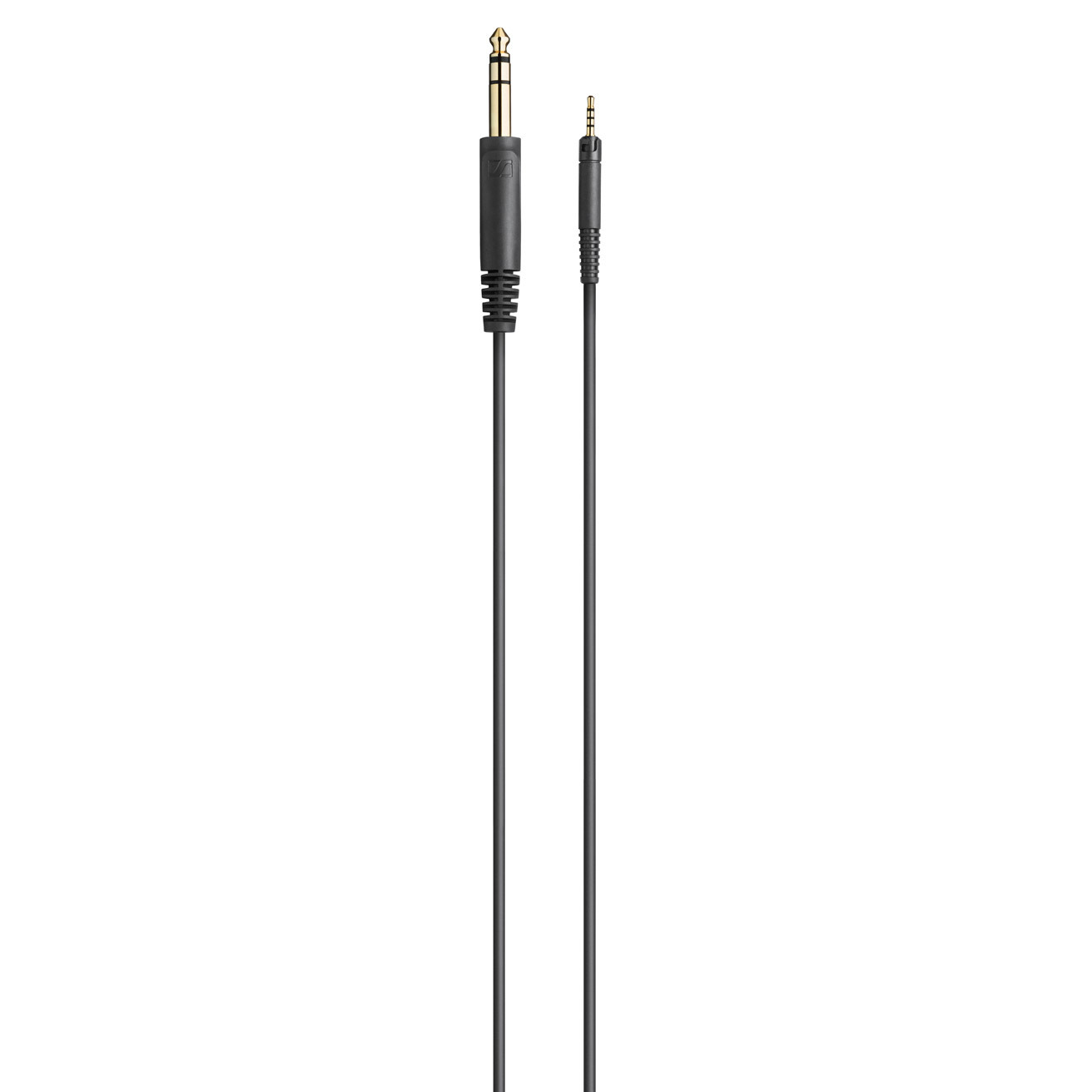
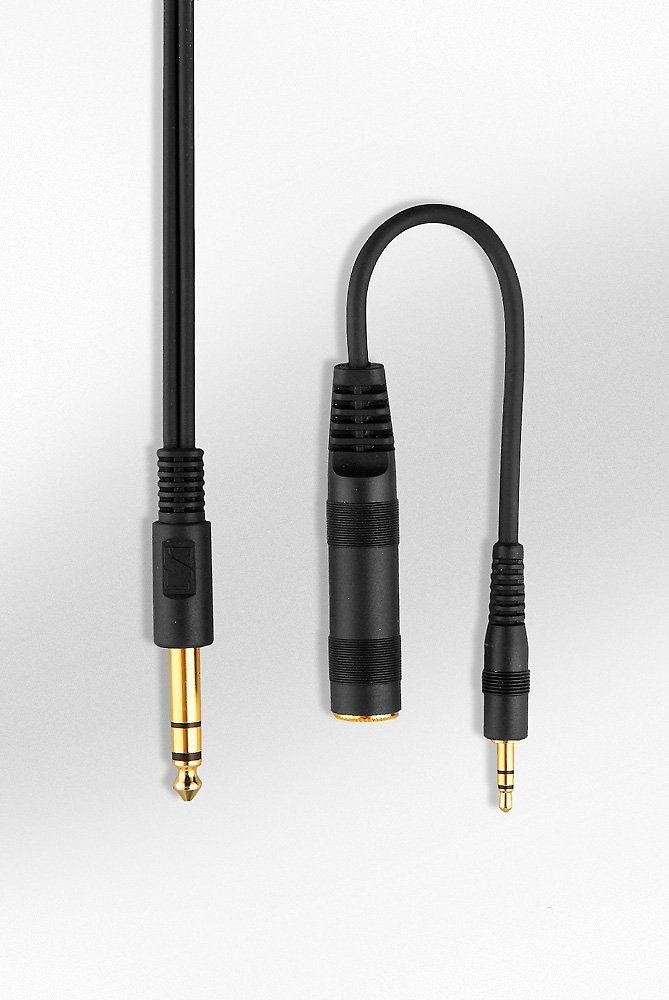
My dad’s Sennheisers from the 1980’s still work well. They have the huge plug, so we have the adapter on it, but otherwise works fine. Foam had to be replaced once or twice, but otherwise it has surprised me how long they’ve lasted.
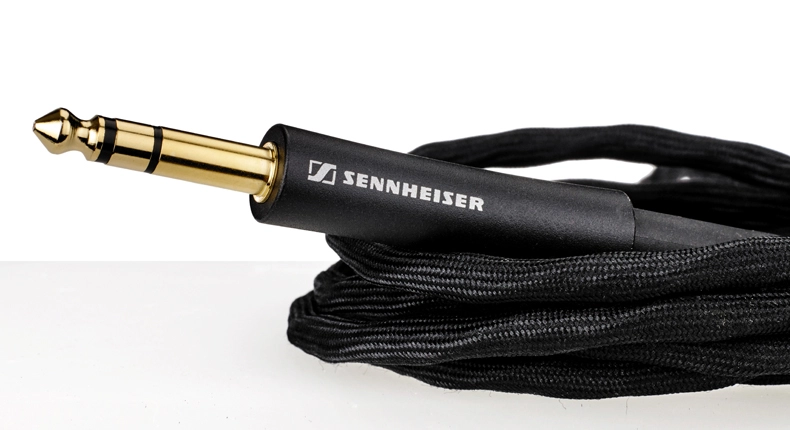
That's pretty standard even in newer Sennheisers. I think HD 650 and above you get the big plug. Some might come with two cables, one with a standard plug and one with the bigger.
I bought new Sennhrisers every few years for the last 10 years. They randomly stop working. This time I bought Sony, no much hope, though. I just got used that keyboards, mouses and headphones are to be replaced every few months or years if I’m lucky.
I've had Sony MDR-7506s for about 7 years now, two cup replacements but otherwise going strong. I've also had my Audio Technica ATH-M50 for a solid 12 years, one cup replacement, sound great and work perfectly.
I have basically worn one of those two pairs of headphones every single day at work since I bought them; I guess I've just had good luck.
Which Sennheisers? Their 25 Euro in ears broke on me as well (C25x?), but as a pupil I couldn't afford better and just burned through some of those. Time lapse to a decade later, and I got myself the HD650. They sound exceptionally while still being relatively affordable (not that this would still be an issue, but I'm not a maniac who spends all their money on audio equip) AND they can take some abuse. At least that's what long time owners report, and that's also my own limited experience after 4 years - I take care not to trip over the cable and throw them across the room, but that's about all the care they get from me. [edit: okay, and if I stuff them in a bag, I'll stuff them on top or put some clothes between them].
Not really. I took a look at kind of a cable Sennheiser bundles with each headphone from the website:
HD 559: 6.3 mm plug.
HD 560 S: 6.3 mm plug.
HD 569: 6.3 mm plug + 3.5 mm plug.
HD 579: 6.3 mm plug.
HD 599: 6.3 mm plug + 3.5 mm plug.
HD 600: 6.3 mm plug.
HD 650: 6.3 mm plug.
HD 660 S: 6.3 mm plug + 4.4 mm balanced.
HD 800 S: 6.3 mm plug + 4.4 mm balanced.
HD 820: 6.3 mm plug.
So really the 3.5 mm cables are an exception that are also bundled with Sennheiser's audiophile-tier headphones and absolutely everything has a 6.3 mm plug out of the box.
That 6.3mm / 1/4" plug is 3.5mm + converter (you just pull it apart comes apart into two pieces), at least on 5xx and 6xx range. It's not even screwed on, just a tight friction fit. Unless, that is, Sennheiser decided to cheapen out in the last 10 years and redesigned them...
Never had original 8xx cables to check but I would be surprised if they weren't the same.
Which means that they have indeed cheapened out with a recent refresh - which is a shame. I have the cable I describe on the headphones I am quite literally wearing on my head at this very moment (HD 600) and identical ones were present in 59x and 650 from the era. Glad to know, TIL.
Edit: the 3.5mm male to headphone is Sennheiser 81435 [0] the 6.3mm male to 3.5mm female that fits over it is Sennheiser 562507 [1].
I bought the HD600 last year and it came with the 6.3mm to 3.5mm removable adaptor. This was in Europe maybe the cabling is different, or there are multiple packagings for different use cases (likely). The cables are removable so its easy for them to have different SKUs.
I don't think it's about ancient compatibility but rather just the fact that audiophile stuff tends to have it and if you are marketing to audiophiles, might as well design it that way. I have a pretty modern stereo receiver (Onkyo A-9010) as my computer's headphone amplifier and it has the bigger socket only. Same with my home theatre receiver (also an Onkyo).
But I believe there's no difference in listening experience. The bigger plug is probably a lot sturdier though. I've had some 3.5 mm jacks bend on me. Can't imagine that on the good ol' 6.3. I have totally busted a 6.3 mm to 3.5 mm adaptor though.
As others have stated, it's usually more about compatability. Most (nonportable) headphone amps will have a 1/4" plug rather than the 3.5mm, and it makes more sense from the "female" amp side to convert the larger 1/4" --> 3.5mm than the other way around. Many home "audiophile" headphones I've used (Audeze or Beyerdynamic) actually have the smaller 3.5mm jack, but because they are so focused on home use (bulky, open backed, expensive, and not very shovable into a backpack), users rarely use them connected to a phone or laptop.
There is no signal or quality difference between different sizes of headphone jacks, except that bigger ones might last longer.
For very long cables or high RF you might want a kind of cable called "balanced", which comes in every size except 3.5mm. Some audiophiles think these make headphones sound better, but it's probably not true.
its standard in audio. all mixers, guitar amps etc support them. big plug means stable wide signal, and it does not break. never had one break ever. even the shitty cables. they are well shielded.
Oh, did the old ones already have replaceable cables? I got a shorter cable with a different plug for my HD650 from Aliexpress for ~24US$.
Incidentally, one of the reasons I got the HD650 was how my headphones/headsets broke every other year and all I could do was trash them and get new ones. That, and I enjoy listening to music and the usual stuff <100 Euro sounds like garbage. Now I've got something more "SO-friendly" than my "two towers" ;-)
I've had my HD 598s since 2012 or 2013 I believe. There's small cracks near the headband adjustment (common issue I believe) but they're still great. Of course, I did have to change out the muffs once.
I imagine I won't be replacing them because they break, but rather because I want to get something better. However, the 598s sound pretty great to my ear so there's not really a huge incentive for me to get anything new.
I have the same ones, I changed the ear pads and the one on the top and they are as good as new. The sound is amazing and I doubt I'll buy any new ones until they break.
I'll second that! I have a nice pair of Sennheisers that's probably about 10-15 years old and is still the best pair of headphones in the house.
A few years back I replaced the foam ear pads and also swapped the cable out with one that has a lightning connector on the end so that my wife can plug it into her new "courage" iPhone.
In contrast, my bluetooth earbuds died after about 3 years of use. (Although, to JLab's credit, they replaced them with a new, better pair.)
>If I bought airpods today, they'd likely be useless within 5 years.
Giving too much credit to Apple. The battery will die in 3 years even with very limited usage. If you use it daily it only barely last longer than a year. Replacing Battery cost $49 each.
The AirPod is one of the worst purchase I had from Apple.
It’s fashionable to diss at the AirPods these days. They serve a specific purpose - on the go inconspicuous listening. I have a pair of Bose headphones (wireless) for about 5 years now. My old model with a family member is about 10 years old now. I swear by the Bose. All I had to change are the cups. But i use my AirPods Pro more often because I don’t want to wear a giant pair of headphones when I’m walking my dog. When I’m at my desk I wear my Bose.
"How many decades have there been high-quality headphones "
I have a quarter of century old Beyerdynamic cans that still sound fantastic. I am not seeing their end-of-life any time soon, except the pads are probably going to need a change.
I don't get your point then? People knew about the internet in 1996! AOL had been mass-market by half a decade at that point. I don't know what you think the mid-90s were like but people were using the internet.
But what have the internet and clamshell telephones got to do with headphones?
So... again... which of my statements is inaccurate?
I wrote:
"quarter of century ago most people even if heard about the Internet they haven't had a chance to use it yet".
How does that conflict with AOL or the quoted above that at that time only 20 million, less than 10%, of Americans had access to the Internet (and access isn't the same as using it)?
Also, this is for USA. The rest of the world did not have anywhere near that much access to the Internet.
Many Americans had heard of the Internet by 1996--for example, it was on the cover of Time Magazine in 1994--but most people who were online were probably just using AOL, Compuserve, etc. and, as you say, not the Internet.
> I see you are deeply confused about either timeline or logic or both.
Not sure why you've now decided to go for snark and being snide?
> 20 million American adults had access to the Internet
That seems like a lot of people to me?
But what has any of this got to do with headphones?! Why are you telling me about when models of telephone came out or when people had access to the internet? The thread is about how long headphones last.
> > 20 million American adults had access to the Internet
> That seems like a lot of people to me?
Yes, that's true. 20 million Americans is a lot of people.
But in 1996 the population of US was about 265 million, so I was completely right to say that "quarter of century ago most people even if heard about the Internet they haven't had a chance to use it yet".
> Not sure why you've now decided to go for snark and being snide?
Not sure why you have decided to oppose what is clearly true and accurate statements with illogical sentences. You could have just ignored it or even downvoted if you decided it worsens overall quality of HN content.
But you decided to write false, illogical responses and you should by now know how it ends on HN.
Sorry I still don't get what you mean - what has the internet and mobile phones got to do with headphones? I don't get why you brought it up in the first place or why you think it's relevant? Seems like unrelated trivia?
Not the OP but I think their point is that while you might not think a quarter of a century is that long of a period, relative to most products in tech, it is a stupendously long time for a product to be still in use. It would be like using a phone from 1996 today.
The big problem is the materials used won't last, even presuming you will replace the earpads and maybe parts of headband.
Closest we've come to this is old pairs of Sennheiser HD580. Very high quality plastics, still get scraped and loose over time.
Full steel or aluminum construction holds up much better.
The materials for the main part of headphones would last probably indefinitely if kept in dark, dry place, undisturbed.
On the other hand the foam that is part of the pads lasts months to maybe couple of years depending on use.
If you bought ones with leather it will last for many decades IF you know how to take care of leather.
If you avoid throwing, dropping or otherwise banging headphones on things, don't come outside in them and don't stretch the headband more than is absolutely necessary to put on your head I estimate they can be maintained practically forever (definitely more than user's lifetime).
Maintanence:
- keep them clean with dry cloth,
- use something to clean/protect leather from drying out,
- replace pads maybe every year or two,
- replace pads on headband maybe once every 10 years,
- disassemble completely to remove hair and other detritus, probably every 5 years
- fix the cable that tends to break after prolonged use, I am gentle so maybe once in 7 years.
This is history of maintenance of my headphones which I use every day, entire day.
To be honest I've not done any maintenance on my 25y oldish Beyerdynamics beyond jury rigging a fix to the support of the left earpiece which lost a critical small piece of plastic in a minor impact. Yes - the pads could use a replacement but it's not critical. Yes, they are a bit grimy. But work well :)
A quarter of a century is certainly long enough to buy something, use it for a good long time and then pass it along to your now adult children. Maybe it was time for an upgrade, or they just don't use them any more? And in another 25 years maybe they will do the same.
A generation is roughly 20-30 years - people don't tend to have kids at the end of their lives.
A lifetime is maybe a fantasy but both my shure se215 and dt770 are 6 or 7 years old and I expect them to last a while given they're in perfect working order after daily use for so long.
I highly doubt these new headphones with non user replaceable batteries would survive 2 years of daily usage, that would be 2+ full cycles per day for the airpods, seeing how tiny the batteries are I don't think they'd perform very good after even a year
I bought my Sennheiser HD650 about 10 years ago, and was pleasantly surprised that I could order new ear cushions and new cord to continue using it after the audio started disappearing from the other channel and the cushions were a bit mushed.
I like the headphones because they don't wear me down on long continuous usage and the sound is great to my not-golden-ears.
They cost about 350 euros back then and now perhaps paid 50 euros to get them back into shape, so pretty good for a music lover. I have even used them in office space, even though they are semi-open. Luckily the sound isn't leak too noisily on my usual listening levels.
The new AirPods headphones are rated at 20 hours play time with noise cancellation enabled, how do you figure 2+ cycles per day? Or are you talking about the earbuds AirPods?
I get that earbuds' 5-hour listening time is borderline annoying and if it drops to 3 or 4 hours you've got a real usefulness problem, but 20 hours has quite a lot of headroom for battery degradation unless you don't sleep.
Are you s(h)ure that you wrote correct model? 215s are in-ears and while excellent sound-wise, their cables break quite easily with frequent use. I'm on my 3rd pair and I'll most likely still buy new ones after the inevitable destruction of the pair I'm currently using.
Similarly I love my 215's and even though the cable is a bit chunkier than some other brands they don't seem to survive my daily use for more than 1-2 years.
That said being able to just buy a new cable and whip the old one off is far nicer than having to buy a whole new pair of headphones.
I have been using my DT-770s every single day for hours and hours for about 5 years now and they are still in perfect condition. I expect them to last an extremely long time.
Meanwhile, I'm on my third replacement airpods (thankfully all covered by warranty, but not much longer!)
I worked as a techie at a radio station for some years. We maintained (repaired on site) around ~20 pairs of professional headphones for studio usage, used by many hundreds of members of the station. Some of these headphones lifetime definitely exceeded a decade even with heavy use, requiring minor repairs e.g. cables and jacks.
Personally, I used one pair of ath-m50x's for about ten years. I just replaced it with some Beyerdynamic's, which I expect to also last at least ten years.
All of the Bluetooth headphones and speakers I've bought have lasted less than a few years. Half the time the batteries fail (and often aren't user-replaceable), the other half it's some component I'm unable to diagnose myself.
The headphones my parents purchased in the 1970s still work perfectly fine, actually. They haven't handed them down, though, as they still have them. This was extremely common in the past. There are plenty of people's grandparents now who bought nice cans in the 1970s or 1980s, many of which still work fine.
This is a pretty narrow view of things. How many people do you think are part of the economic strata that have the money to buy heirloom headphones?
The real problem is: For every pair of even $100 headphones, how many $10 headphones do you think are sold? The waste isn't coming from AirPods, it's coming from the $10 set that wasn't designed to last longer than an airline flight
(and yes I'm sure someone will link some cult favorite cheap headphone that's a drop in the bucket compared to how many at the price point are practically disposable)
The waste is coming from disposable products, which is what Apple specializes in producing these days. Pre-2015, Apple had a reputation for creating long-lasting products that can be maintenance by the layperson easily. Even if their software was a bit long in the tooth and the pricing seemed a little insulting, Apple at least had the consumer-friendly card in their hands. This is no longer the case. I see people literally throwing out 16 inch MBPs when they break, simply because the price to repair them is far higher than the price of simply buying another laptop.
And sure, maybe Apple does make their devices easier to recycle, but there are still 2 R's that are more important: reusing and reducing. If you can reduce the amount of times someone needs to replace their product, you are having a much greater environmental impact than slightly more recyclable aluminum. That's why my Thinkpad x201 is still a more eco-friendly choice than the M1: it's carbon footprint is inherently lower.
---
Also, a quick bit on the economic strata comment: I come from a relatively lower-income family, but we still did cherish the few nice things we had. My dad passed me down his pair of AKG open-backs with a new DAC for my 13th birthday, and I never really thought of it as that weird. I think your optics are a little out of tune.
Honestly a $90 set of Sony MDR-7506 will last you 25 years if you replace the earpads every now and then. Probably the best sound out there for the price, and a decent portion of your music collection may have even been mixed and mastered with these cans so they are a great choice. Hear what the producer heard when they were laying the tracks.
Audio fidelity hit its stride decades ago. 40-50 year old stereos are still sought after, not because they look nice and are classic like a vintage car, but mostly because the sound quality is still excellent today.
MDR-7506 are more or less indestructible (and their naked structure means they are very easy to repair). That's why they were used in sound studios, mainly as sound monitors for artists.
They behave a bit like Yamaha NS10 monitors in that anything that sounds good in them, will sound good anywhere.
Sennheiser's HD 25 are pretty iconic for DJs, and they were initially released in 1988.
They're also known as being pretty easy to fix, because you can find a replacement for virtually every part of them, and they're sold brand new to this day. Plenty of people that own this specific model have had them for more than a decade.
Anyway, my parents didn't pass me down a pair of HD 25s, but my pair (whose initial release is older than I am) is definitely going to be usable for my kids. Whether they'll want to use them or not remains to be seen.
Like most tech, I don't think the thing to think about is the lifetime of the device. Really nice headphones that are "vintage"(?) exist, as evidenced by the comments here. Leaving aside the fact that HN is notorious for having a strong segment of nearly any *-phile group...
The question is rarely the lifetime of the device. It's usually the lifetime of the interface. Or in this case, a headphone jack. 1/8", 1/4", etc... This is what normally gets obsoleted rather than the device itself. For headphones, the big switch is from wired to wireless. And I think that's where you'll see the shift. Yes, you can get a bluetooth adapter for traditional headphones, but they aren't great, and if you have audiophile wired headphones, you won't be happy with the sound. And so, the device won't be obsoleted because they fail, but rather the preferred interface changes to something that's incompatible. Maybe audio was lucky that there were adapters available for the first shift from 1/4" to 1/8"...
In this regard, I think the audio world is just catching up to their other brethren in the tech world.
I'm not sure what my kid will inherit, but I've replaced the ear pads on AGK 240s and Sony 7506s and they'll work for many years to come. Whereas the Beat Studio Pro I got for free when I bought a Mac are quite nice, when the battery final goes they'll be useless as despite having a cable, they only work when turned on (idiotic!).
Not to mention reliability. I had a $350 pair from Beyerdynamic that was really nice, but after 3 years of extremely gentle use (I only used them to listen to music in bed) the cable developed intermittent noise issues. Could I get them fixed? Sure, there’s probably a high-end audio store that would fix them for some large portion of the purchase price. But that’s probably true for most expensive wireless headphones as well. Instead, they just sat unused in my nightstand for a few more years and then got thrown away when I moved last year.
Mine was a fixed cable with a standard 3.5mm TRS stereo connector. Those are "designed to be fixed" in the sense that you can solder on a new connector.
Not headphones but our home sound system is a Marantz system from 1983 which we inherited from a grandparent. The speakers would probably be massively outclassed by modern floor speakers (sound quality wise) but they are perfectly adequate for our needs. It even has an aux input so we can play music off our phones.
AFAIK the turntable and cassette player have had some minor repairs but nothing else has needed maintenance since purchase.
I'm also currently listening to music through a pair of HD202s I bought in 2007 which have copped endless abuse.
My home sound system is the same, except the speakers aren't producing nearly as much treble as they used to. This is apparently a common issue, and now I need to work out how to get the speaker cases open.
My main (wired) headphones are 15 years old now, with zero degradation. My headphone amp, turntable, and CD player are roughly the same age or older. I have no plans to get rid of them anytime soon. My parents haven't passed any down to me, mostly because they're still alive and using their own stuff, but my dad listens to music on speakers he bought in the early 70s. (I don't think my grandparents were ever serious about HiFi equipment, so nothing really to pass down. Half of them are also still alive.)
Got my headphones from my dad in the late 90s, h probably bought them in the 80s. Recently stopped using them, not because they didn't work but because I wanted a wireless pair.
I got Bose QC25 almost 5 years ago, they're still working. I've changed the cable and the pads twice but the headphones they've just get on ticking.
I've also got the Meze Classic 99 and they're even more solid. At 3 years old, I've not had to change the cable nor the pads, infact I've also got a backup cable that cable with them. I could easily see them lasting decades if looked after carefully.
Maybe it's a fantasy on headphone (as for most electronic). But I think the idea is more global : buy expensive stuff to keep them longer.
On headphone, the switch to Bluetooth-only with addition of batteries don't help on this scale.
But we should probably compare similar products (bluetooth headphone vs bluetooth headphone).
I bought my headphones (Audio Technica ATH-AD700s) when I was in school. I still use them now and they sound just as good as anything else you could buy.
Not quite generational inheritance but I can't think of anything else I bought back then that I still use. It's pretty satisfying when I think about it.
I have a pair audio-technica headphones, using them regularly for about 12 years...
I have pair of Monsoon Speakers bought since College (2000), so that's over 20 years. They still work great, just an headjack input, volume/bass control. Simple and they are connected to my PS4.
I have a dell monitor, bought in 2006, still working great with my mac. I bought an LG 4k one last year, and the Thubderbolt port just failed. Right now it is staying as a dead weight, and I am deciding if it is even worth fixing (or it can be fixed).
Some accessories do last decades. Apple accessories are made to last for 2-3 years and discarded after as they are not easily serviceable.
I think this is a fantasy. How many decades have there been high-quality headphones for this to be a thing that you think is supposedly the traditional way to do it?
I still have the Koss headphones I bought in the early 1990's. They still work, though they need a 50¢ phono adapter to plug into current gear. Also, I had to send them back to Milwaukee twice to be repaired. But Koss did it for free both times under the "lifetime warranty" program.
Did your parents hand you down their headphones?
Yes.
Surely your grandparents didn't hand down theirs?
No, they didn't. Mostly because headphones weren't invented yet.
> I think this is a fantasy. How many decades have there been high-quality headphones for this to be a thing that you think is supposedly the traditional way to do it?
My sennheiser HD600 was released 17 years ago. I've tried many other headphones over the years but it's the best I've heard from my very subjective ears. I've also changed almost every part from it due to wear and tear and it's amazing the amount of after market part you can find both from sennheiser and other vendors directly on ebay
I still have a pair of Sennheiser HD 280 Pro's I bought 20 years ago. That seemed like a lot of money for headphones back then. They have followed me to multiple continents, been on lots of flights and have had their pads replaced and still work great.
I recently moved to Bose NC700s because ya, wireless sure is nice, but I'd be surprised if they last 10 years, much less 20. Still have the HD's though and use them now and then.
I'm at 10 years with my Ultrasone Signature Pros and they look and function just like new. Of course they're not wireless and don't have a DAC built in so there's very little to go wrong, but despite being a person that upgrades my phone and laptop frequently - I don't see myself replacing them for another 10 years - they're pretty much perfect audio quality and comfort wise.
A family friend is a bit of an audiophile and has been using his Stax SR electrostatic headphones since 1985. His sony amp is also from around the same time. My gran is still using household appliances from 30+ years ago, so it could be a generational thing or it could be because expensive items were better made. Bit of both perhaps
My dad handed me down a pair of AKG cans he had been using since he was 20 (almost 25 years old now). My main headphones (AT-M40x) have lasted almost 8 years so far, and I've only needed to replace the earpads. The next to go is the cable, but I don't really need to worry since it comes with an extra cable in the box.
maybe a bit of an exaggeration, but it rings (mostly) true to me. my dad has a pair of grado rs-1's he's been using for as long as I can remember. he also has a very nice pair of b&o speakers that I'm pretty sure predate my existence altogether. only reason they haven't been handed down is because my dad is still alive and enjoying them. I'm sitting here wearing a pair of sennheiser hd-555's that I bought in 2008. they're plugged into a DAC I bought in 2010.
I don't know that there's some grand tradition of handing down audio gear over generations, but the point is good audio equipment lasts a long time if the properly cared for. if it sounded good new, it probably sounds good years later too (except tubes, these are consumables). there's no reason why headphones should follow the obsolescence cycle of computers.
I used to use very old AKG K240s, and the cheap chinese IEMs I use right now have replaceable cables, filters that can be cleaned, and can be opened to replace connectors and even drivers (which are standardized parts). I've been using them for three years and I don't see why I would stop.
I have two pairs of headphones AKG K550(4 years for personal) and Sennheiser HD380(2.5 years, work). I use them daily, they should last a few more years for sure.
Companies should be rewarded when producing something that last. Externalities and disposal should be included in tax rate.
My headphones are over 17 years old. I’ve replaced called, cushions, bands etc. over the years.
I recently bought a new cake with integrated microphone, so I can use it for conferencing
It's not fantasy, I think that's far too rhetorically strong.
In many other contexts 25 years would be referred to a "generation" or a "lifetime", I think this is more pedantic than it is a generous interpretation of GPs point, which was that It's an enormous increase in e-waste.



I think this is a fantasy. How many decades have there been high-quality headphones for this to be a thing that you think is supposedly the traditional way to do it? Did your parents hand you down their headphones? Surely your grandparents didn't hand down theirs? So it maybe happened once? For a few people?