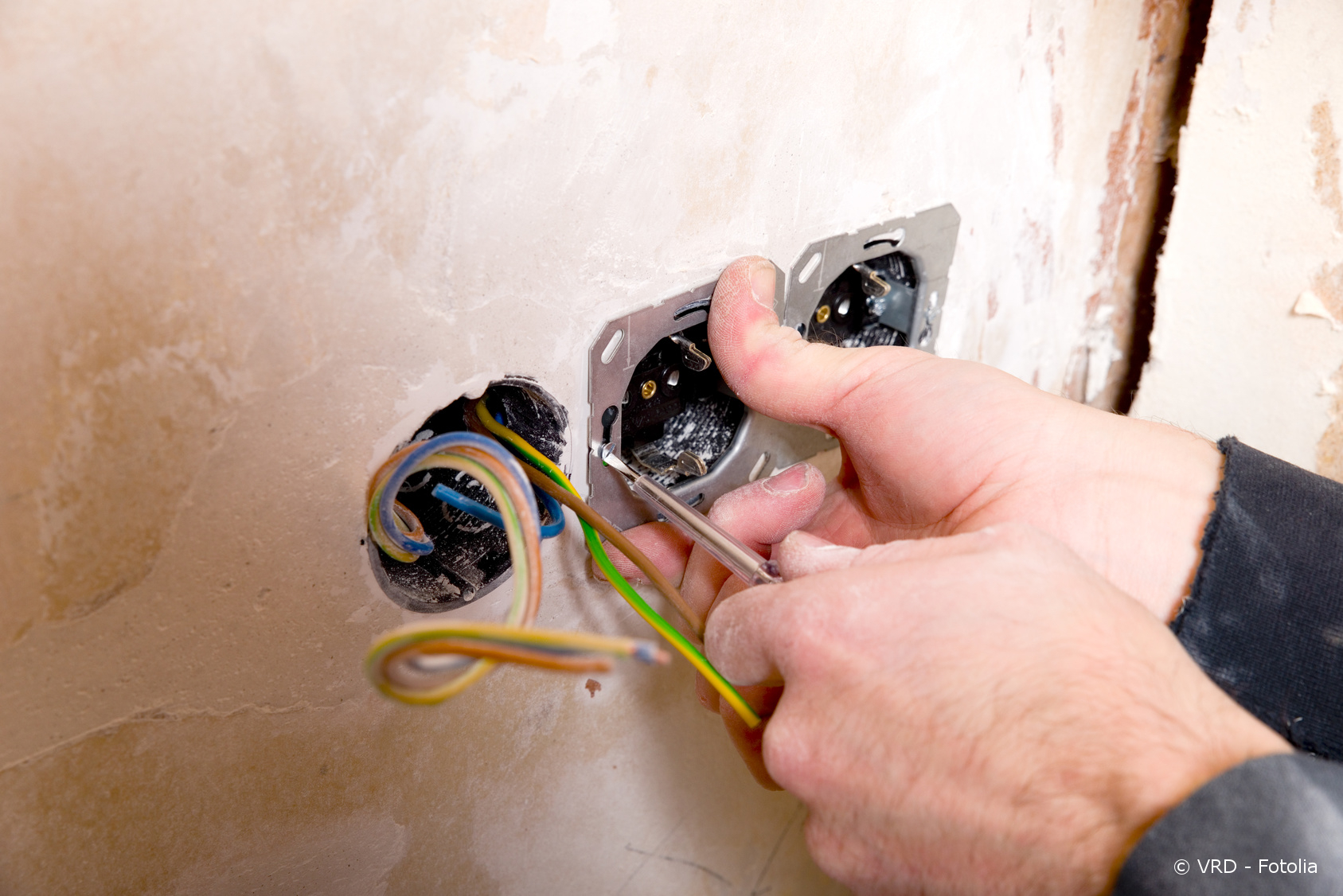
Incorrectly wired outlets do occur even in the US, so it seems like it's safer to take that possibility into account and just design the whole system to allow them to be interchanged (e.g. make power switches open/close both lines)
On appliances with a physical on-off switch, it's best to have the switch as close as possible to the cable, and on the 'hot' side. If there's a fault (wire touching the metal case) then the appliance is still safe with the switch 'off'.
Nowadays, I think everything would have double-pole switches anyway.
Perhaps it isn't common, but my experience with the sockets in Belgium was scary to me because there were two outlets embedded in a recess quite close to each other. Close enough I was afraid I'd shock myself trying to get a good grip on my plug and pull it out.
Electrically I don't see how that works since there's no interruption of the metal pin inserted into the socket like you see on a tip/ring headphone plug. Unless there's a mechanical process that energizes the live side of the inserted plug after a certain depth?
That's odd. Could you describe it better since there is basically no way one would be under risk of getting a shock on a Schuko or Europlug without inserting a needle or something similar into the holes of the outlet.
We're just talking about two copper-lined holes next to each other for each power connection. There were two of those spaced closely together in a recess in the wall. They were close enough I could have touched the metal of one outlet while grabbing onto the power plug inserted into the other outlet. Since my power plug adapter is two copper-plated pins that mated with the holes and had no electrical break like you see on a tip/ring headphone jack I assume the exposed metal is live and the pin is live when inserted.
Perhaps there's a hidden mechanism that enables power after insertion? There was no switch for each outlet. I no longer remember if there was a switch for the pair of them but I don't think so as I was worried about getting shocked. This was in a Belgian hotel I visited a few years ago. Sorry I didn't take a picture.
I have the feeling that you are talking about european style socket with shallower than normal recess, ie. CEE 7/1. These sockets are sometimes used in Benelux countries for RCD protected circuits without PE, and should only be used for Class II devices which usually have CEE 7/16 “EuroPlug” with isolation sleeves and thus there is nothing to touch. On the other hand nothing prevents you from plugging essentially any other european plug in there which then becomes safety issue both because of the exposed live pins when (un)plugging and missing grounding. Similar sockets were (are?) also used in Russia.
This is probably the only case when CEE-style socket is not designed such that it is safe to use with any CEE-style plug that mechanically fits. In general I view the system as better design than BS 1363, because it solves the relevant safety issuess without overengineering and with reasonable degree of backward compatibility.
To me that reads like an article written by someone trying really hard to defend the U.K. electrical system. UK receptacles and plugs have complex safety features mostly because the UK electrical system is awful. The UK (historically at least) used ring circuits that are fused too high such that an inappropriate resistive load that will not blow the fuse can still overheat the wiring. Hence more fuses than should be needed to partially mitigate the problem.
Modern US receptacles are “tamper resistant” and are required by code in places that kids can get to, and they have similar safety shutters. Unfortunately, many of them, especially the cheaper ones, suck and actively eject plugs.
The lack of insulation on US plugs to prevent shock when plugging and unplugging is a fair criticism. I suspect this is mostly because US prongs are thin and could become too weak if the metal were narrowed to make room for insulation.
??? The UK plug is gargantuan and unwieldy, and the inbuilt fuse a pointless anachronism grandfathered in via historical momentum. The Euro plug is better in every way.
Did I understand correctly that outlets contain a switch and are off by default and that the grounding pin switches them on when inserting the plug? That's great.
Which means you can use a European plug in a UK socket, if you first put something in the earth slot (a key works well).
European travellers are generally impressed when I show them this trick, and sometimes rightly concerned that I'm sticking metal objects into a power outlet. If there's any chance the outlet is wired incorrectly, don't do this unless you can isolate the outlet or the key.
Yeah I wouldn't rely on things being wired correctly. When I moved into my current UK house the neutral and earth were physically connected (someone had driven a nail through a cable and "got lucky"). Took a while to find the nail and fix that.
UK is probably the safest but it’s also bulky and presents an unlikely kind of danger: it tends to lay with the pins upward when on the floor which is deadly when stepping on them in the dark.
European plugs IMO have the right balance between safety and size, with the bonus that they don’t stab your feet if you step on them.
> UK is probably the safest but it’s also bulky and presents an unlikely kind of danger: it tends to lay with the pins upward when on the floor which is deadly when stepping on them in the dark.
> It’s a truly brilliant design. The only caveat is that, as with Lego, the rugged, bottom-heavy design of a U.K. plug makes it an almost scientifically perfect caltrop.
True but I have to say the combination of UK plug adapter mated with a US power strip is extremely convenient. Particularly since modern UK outlets all have individual switches which comes in handy when you don't want a snap and a spark plugging something into the power strip. :-)