And for those who disbelieve the 'it isn't reliable' story, I've got some worthless evaluation boards you can have where the mini-USB plug will no longer reliably hold on to a USB cable. Not a data set I realize, but I was glad when people switched to micro which has proven more reliable for me.
Of course lightning was better still but alas Apple wasn't going to share that with the world so we have USB C.
> Of course lightning was better still but alas Apple wasn't going to share that with the world so we have USB C.
Apple was a major contributor to the Type C design, and learning from the limitations of lighting were reflected in its design.
Like you I really like the small profile of lightning, but the design of the Type C connector does have two important advantages thanks to its shell/shroud design:
1 - The "springy" piece that deforms is the cable not the receptacle. That means when the connection becomes flimsy this is more likely to be the replaceable cables (though some of the cables can be pricy, it's likely still cheaper than replacing the device)
2 - the shroud is ground and is longer than the pins, thus you have a ground connection before you get to any signal or power (like the longer ground pin in UK and Schuko connectors. This doesn't matter much for a USB2 cable but is a safety issue when you have 100W on the cable.
And back to Apple: much as lightning is good for them, it isn't really an instrument of MFI enforcement; they can enforce that just as well with type C. They already have type C iPads so I expect they'll gradually abandon lightning. The iPod 30-pin connector lasted about 9 years and lightning is 7 years old so this isn't unreasonable. And I believe it would make the EU happy.
"Apple was a major contributor to the Type C design"
Citation?
As far as i know, it was created almost entirely by a team at Google, and the agreement to get Apple on board was to not publicize this fact. Which is really sad, because then John Gruber then went off and credited their work to Apple without bothering to fact check it.
IIRC, Apple was not even at the USB meeting where it was first presented.
I'm sure post coming on board Apple contributed, but yeah.
(Various xooglers and others have confirmed all this publicly now, AFAIK)
What I remember reading was that Apple’s engineers did most of the design work on the physical connector itself, and were the ones pushing for it to be reversible, be usable as a laptop charging port, etc.
I suspect that Apple is planning to move to wireless charging; instead of replacing Lightning with USB-C, it will just ship a phone with no physical ports whatsoever.
Phones consume a miniscule amount of power compared to other things you probably use. Even if it is 20% efficient if is still a drop in the ocean compared to air conditioners, tumble driers, fridges, ovens, kettles, toasters, hair driers, etc.
Small changes are still small when you "multiply them by millions" because all the big things get multiplied too.
>While I'm very much pro environment it is not like we're talking about huge batteries here.
There are 900M iPhone users and expected 1B user by end of 2020. If you Multiple that by 10% - 20% Energy loss from Wireless Charging compare to Wired, that is a lot of wasted energy going forward.
An iPhone holds 7.45 Watt hours, so if you fully charge it every day it's ~2.8kWh / year. 20% power loss is 560 Wh/year. US electricity use is ~13 MWh per capita per year (let alone total energy use).
I know it sounds wasteful, but it's very important to triage ways to conserve energy, otherwise you end up with things like the awful "unplug your phone chargers" campaign.
I use it for my wireless headphones. It yields convenience. For small batteries, wireless isn't much of a waste. There are other ways to be mindful for the environment. Ways which have bigger impact. Not opting for a wireless charging for environmental reasons is in this case more a matter of "feel good". I get free electricity from the sun as well, and I would save more on electricity by getting a new washing machine (current is 7 years old).
Agree on the MFi, Apple could just enforce MFi for USB-C as well. ( People don't like this idea and I often get called out for even mentioning it )
But I don't think Type C is heading towards iPhone for a few reason.
1. The iPad needed 10Gbps connection and possibly more in the future with USB 3.2 2x2 ( Or what ever it is I cant remember ), that is something lightning will not provide. ( Technically I don't see Lightning missing out any pins to do it, assuming they use pin from both sides, but my guess is Apple don't want to complicate things )
2. The USB 3.2 2x2 Controller is way larger, I doubt Apple is going to put 10Gbps on iPhone.
3. They want you on iCloud, not backing up on your Mac / iTunes. ( It is sad I wish they could at least give me the option of iOS Time Capsule )
4. What is the point of replacing Lightning if they are going to enforce MFi on USB-C?
If anything I really wish they make lightning 2.0 spec that is more durable.
Yeah I recently moved to a Galaxy S10 which is my first device I use on a regular basis that has a USB-C port. The size of the connector, reversible nature, data throughput, and power throughput are excellent.
The interconnect itself though leaves a bit to be desired. I still think that lightning is more satisfying from a tactile standpoint. I think USB still has the issue of the floating spade in the female connector. When inserting a cable, I will sometimes catch the spade and I often worry about if this degrades the life of the connector.
I've found my biggest issue is that over many months it gets a thin film of grime deep inside that I have to pick out with a needle to make it work again properly. Micro and C both, but with C it's way easier to break the contacts while cleaning.
Wooden toothpicks are often too thick. My swiss army knife has a flat plastic toothpick that seems to have been designed exactly for the job of cleaning USB-C ports: https://i.redd.it/79iesas532521.jpg
The non-reversible nature of USB A connectors drives me crazy - is it only me that ends up turning them and failing at least 3 times before they slot in?!
USB-C usability on laptops for peripherals and especially power is bad. The connectors become loose and come out with little resistance. For charging even barrel connectors were better, but prefer the magnetic connectors.
With nicer connectors, and non-standard connectors, there's usually additional manufacturing cost involved that makes for expensive plugs and cables. As such the standards get driven by every manufacturer wanting to save a few pennies on I/O, while acknowledging that some applications might prefer quick removal or a secure lock.
I have a pair of high-end AKG headphones that uses a "mini-XLR" connection. This is a non-standard variant of the popular 3-pin XLR used throughout pro audio equipment. When the provided cable that converts mini-XLR to 3.5mm TRS started failing, I went onto Amazon and found a generic $11 cable, but within a week of use it became clear that it was poorly made, with a metal cap acting as the only source of strain relief.
I've ordered another adapter, one that adapts the plug to 3.5mm without a cable, and it also costs $11. Not as bad cost-wise as some Apple device cables, but fingers crossed.
I agree, I now have my first laptop with a USB-C and within months I'm terrified of someone coming by and grabbing the cable just hard enough at just the wrong angle to rip the connector off of it's contacts.
I looked into it a little since this seems like a ridiculously obvious design flaw (rely on SMT contacts for mechanical strength against yanking?) and I think at least the reasonable ones use a chassis mount USB receptacle there. I hope. I very much hope.
I’ve been using an aftermarket magnetic connector on my usb-c laptop for several months now. It consists of a low-profile adapter that just lives in one of the usb-c ports, and a bulkier conversion socket that plugs onto the end of my existing cable. So far, it’s been great! It has a weaker hold than my old MagSafe adapters, which is sometimes great and sometimes a hassle.
The problem with USB C is that it carries data as well, so the easier you make it able to fall out the more likely it’s going to do so when you’re trying to run bits through it.
Oddly enough I've actually had much worse reliability with Lightning than with MicroUSB. Our home has suffered bad from corroded power pins[0].
What happens is you have one lightning cable with a bad contact, and that causes electric arcing to corrode the power pin in the phone, and now the phone will have bad contact with any new cable you bring in, causing arcing on that cable. Now if you have multiple devices in a household sharing the same charging cables, the "plague" spreads. The only solution is to buy all new chargers, iPhones and iPads all at the same time.
I would be very surprised if you were getting arc damage with five volts at two amps. More plausible would be some electrochemical/galvanic corrosion effect.
Arcing and corrosion isn't contagious. Humidity causes arcing and corrosion; corrosion would prevent arcing for the same reason it would prevent charging -- it increases resistance.
Then what IS the explanation for all of our lightning cables quickly developing blackened and pitted power pins? This was the only explanation I could find.
There were a number of people posting in forums about this back in 2014 or so. Apple even went so far as to contact folks and ask them to send the cables in for analysis. As far as I know, the consensus was that perhaps the port contact spring was failing to maintain a good connection.
I don't know what the current status is but it doesn't seem to be an inherent design issue, except for the fact that the port has the springy bits and isn't easily replaced.
I don't have issues believing that, but I still kinda need an ELI5 of why micro is more durable. The accepted answer on SO briefly addresses it but I'm not really any wiser, maybe in part because I'm not a native speaker.
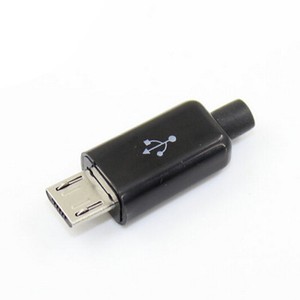
For the mini, the wobbly springy bits are in the device, for the micro the wobbly springy bits are in the cable. The cable is cheaper and easier to replace. The springy bits bend out of shape over time and fail.
> Of course lightning was better still but alas Apple wasn't going to share that with the world so we have USB C.
And for me USB-C has been the most unreliable connector by far - I've had more of them fail that any prior sort of USB connector. But that comes with a caveat - it's always the cables that fail. Replace the cable and it's all good again. I'm coming to accept the fact that any USB-C cable used daily will have to be replaced within the year, which is really annoying. The USB micro A connector is far more reliable.
To add to your post. I was part of an effort to develop several remote controls for a company. The micro USB was always the first thing that died. Like you, I had a graveyard of broken remotes. Dozens.




Of course lightning was better still but alas Apple wasn't going to share that with the world so we have USB C.