Where were all the finger-based touch screen back then? Do you remember how many people said it wouldn't work, because either someone tried it or failed, because it didn't have a stylus that was "clearly better", or because it didn't have a hardware keyboard?
Look at the current market?
You want to bash Apple, feel free: there's hundred of reasons to. But at least give credit where credit is due. The Apple iPhone did revolutionise an industry, and a LOT of tech "experts" and geeks said it was going to fail and it was a toy. Now it's just "one of many".
Where's the Apple bashing in my reply? Where did I not give credit?
I was just trying to say that a "smartphone retrospective" ought to include some more information than merely: "Well, we had the Treo, and then 2007 happened."
--
Btw, do you notice that your "it didn't exist before, and people said it wouldn't work" line of argument applies equally well to the devices I mentioned...
1996 / Nokia: "Who wants a small laptop crammed inside a phone?"
2000 / Ericsson: "A phone needs real hardware keys. This touchscreen stuff won't work."
2003 / MyOrigo: "Sensors on a phone? That's useless."
True, point taken (and I upvoted you as an apology). However your post still came out as a bit of a "Geez, Apple wasn't that special", though admittedly then I went a step too far and just assumed you were posting some anti-Apple stuff. Sorry for my prejudice.
However a few things to say. The Nokia messenger was imho awesome, but it did not caught on, and eventually Nokia itself killed it (only to revive it many years later).
I thought the Ericsson P800 (correct?) was great, and I still do. However I also think it's representative of part of the problem too: Ericsson didn't feel like losing anything, they crammed it with everything imaginable. It had a touchscreen (for a stylus) but you could use it with a keyboard. Why? It didn't seem like they believed it that much. Sure, you may say the problem was that the OS at the time could not allow you to do everything with a stylus, but then the question is: why didn't Ericson worked on that? They had control of the whole system!
MyOrigo, I admit I never heard of it.
So yes, apologise and I never meant to say that Apple is some kind of genius of the tech world, and that nobody else innovate: there's a lot others too, and there are a lot of problems with Apple products too.
But I think Apple has a tendency to play harder, to really take a bet. For the iPhone (as before the iPod) they shopped around for just the right piece of tech, often discovering some small startup nobody had heard of until then. Maybe they would change the interface (like the clickwheel). They would get a whole software stack on top of it, just tuned for that specific product. They would spend ages polishing it, and most importantly if they think a technology is better, they would have no problem neglecting any alternative.
Think back at other companies. Why they don't do that? I would imagine if Ericsson found risky to add a touchscreen, the idea of spending many years perfecting such a phone, creating the right OS, using the right tech, removing some stuff... just maybe to release it 3 years later after spending a _lot_ of money, and finding they failed would be a huge loss.
Apple seems to take these bets (and to be honest sometimes they lose too). I think that's why the iPhone was really much more of a discontinuity than previous smartphones.
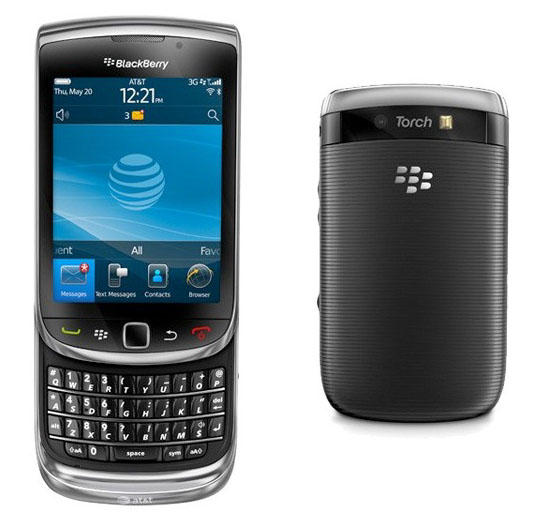
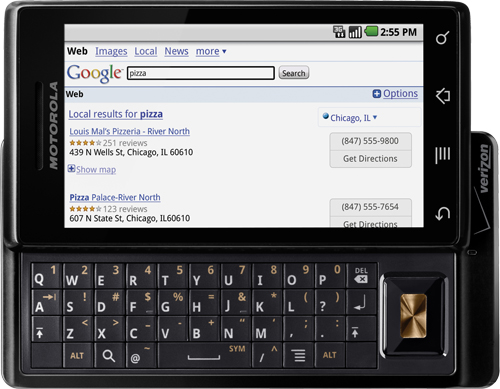
Don't two out of three of the devices he pictures as "high-end smartphones look like this" have slide out hardware keyboards? Which when extended look exactly like his "high-end smartphones used to look like this" images.
Huh? Before Apple all smartphones looked like Blackberrys? I could show you 100 popular non-keyboard-having pre-2007 devices, starting with the PalmPilot a decade before the iPhone. Besides, a lot of people still use and like the Blackberry form factor considering they're still the number one smartphone.
So no one will buy a netbook in 3 years? Apple fanbois are just ridiculous.
Indeed. Here's the phone I had in 2006. It even had an onscreen keyboard that I often used for knocking out quick replies to emails or SMS messages. Heck, it even did copy & paste and MMS :)
Aside from a few extra buttons it looks pretty similar to today's iPhone, and very similar to Android and WP7 phones. Apple certainly did a great job of refining all the elements and introducing capacitive touch screens, but to suggest they invented the form factor is just bullshit.
They didn't invent the form factor, but they were the first to make it good enough to become successful. There's been tablets around for two decades, but the iPad is the first to achieve widespread success outside of niche markets. Even Apple had the Newton which they killed off (imagine how the world would look if Apple was the one with an old, stylus-optimized mobile device OS in 2007).
Yup. And the GRiDPad pre-dates the MessagePad, but was also not a smartphone.
And, as the article's author point out, none anyone else had built previously sans keyboard achieved the mass market appeal that the iTouch, iPhone or iPad has.
Ericsson Pxxx phones were pretty popular in their time. Sure, technically they had keyboard, but after detaching it were the same form factor as iPhone.
I agree with you, but the Palm Pilot did sell a huge number of units. (The Pilot wasn't a phone, but neither is the 'iTouch' or iPad. The Treo was a phone that ran software a lot like a Pilot.)
When you say Palm Pilot sold a huge number of units, how huge are we talking? And in how many years? You know, just to compare things numbers are better than "huge" or "massive".
From the 1996 (when the first PalmOS device came out) to 2003, they sold over 30.1 million PalmOS devices, of which 22 millions from the company itself (the rest from clones). [1]
In comparison Apple released the first iOS device in 2007. Two years later (at the 2009 WWDC) they announced over 40 millions iOS devices. In fact _just_ in 2009 Apple sold over 42 million such devices.
Your answer is ridiculous, Did you even read the article?
#1 Marco never said "Before Apple all smartphones looked like Blackberrys" He just said before iPhone all the smartphones were "often frustrating and with serious shortcomings and design flaws."
#2 He never said "no one will buy a netbook in 3 years" but instead asked- "How do you think the subcompact, inexpensive computer category will look in three years" He was saying that in 3years all the subcompact/inexpensive computers will look like tablets.
I hate fanbois too but what you're doing is just as "ridiculous".
I could show you 100 popular non-keyboard-having pre-2007 devices, starting with the PalmPilot a decade before the iPhone.
There's just the slight difference that the iPhone caught the attention of the general public and caused a major shift in the mobile phone industry. Not an insignificant difference, in my opinion.
So no one will buy a netbook in 3 years?
Of course they will, but hopefully there will be a number of inexpensive tablet style devices to choose from too.
I made a graph
http://chris.smeder.com/essays/3_stevejobs.htm when the iPad came out that describes the public's reaction to Jobs' product decisions and then how they feel a year or so later about his decisions. The point being people have such little faith in some one who has made the tough but right decision so many times.
This article is wrong on multiple counts:
1) The iPhone didn't take off because it had no keyboard. It took off because it it had a decent web-browser.
2) Smartphones were a niche device in 2007. And generally were considered products that were severely lacking. The WinMo UI was considered a dog before the iPhone ever appeared.
3) Laptops aren't a niche product and generally aren't considered dogs. In general no one is looking for a laptop replacement, even amoung those that bought iPads.
1) Hindsight is always 20/20 right? People were predicting that the no keyboard thing was such a deal breaker than together with the no replaceable battery, it would make the iPhone a failure.
Obviously nobody here it's arguing that the iPhone is better because it doesn't have a keyboard: hey, if you could have your cake and eat it too, why not? But the point is that you need to make compromises, and by removing the keyboard Apple bet that the inconvenience was going to be more than made up by the advantages. Apparently they were right.
2) Yes, they were considered to be lacking though not as much as you think. In fact, many people complained about the iPhone because it couldn't do everything their smartphone could. Also knowing you have a problem, and knowing how to solve it are two hugely different things.
3) The point was about netbooks. Many people bought them as a secondary computer, to carry around, browse the web, etc. The iPad may or may not be a netbook replacement, but it is not being considered as a replacement for your main computer.
Apple had the balls to take a bet (as did Asus with the original netbook, imho) and won. Now suddenly it was obvious, not a big deal, etc.. etc...
I disagree with your answers, but maybe in subtle ways.
1) The no keyboard thing was a deal breaker. But Apple did something no one had seen before. They introduced an exceptionally good onscreen keyboard. Miles ahead of the competition. They insight Apple had wasn't so much that we could just get rid of keyboards. It was that they could create a decent onscreen keyboard experience. To me, that is fundamentally different.
Replaceable battery? The only people who cared about that are pundits who have to nitpick about everything. How many people do you know that have a backup battery. I think I literally know nobody who does.
2) My point with #2 was that smartphones as devices were considered to be extremely flawed. Satisfaction with their smartphone was very low. This would make it easy for a better device to effectively change the whole landscape as no one really had a high satisfaction device.
3) OK, I probably just read netbook as laptop.
I do think you underestimate how big of a deal it is/was. Apple revolutionized the smartphone industry. My argument against the article is I think they did it via software, not by form factor.
Re: #1 personally I think the reason why Apple could make a good onscreen keyboard is because they tried, and tried hard. I don't think there was any secret sauce: it's kind of the only thing you can do if you decided to go full screen
As for replaceable batteries I am with you... though when you read these sites it seems like everybody does mind.
As for point #2 I think the point the author was making is along your same lines. Just that he feels netbooks have also got very poor satisfaction rates (and I actually think studies have shown that, unless you really know what you are getting or are a geek).
As for hardware vs. software, I agree the secret sauce of Apple is in the software, but they also have a solid hardware, and in the hardware they often need to take the tough choices that others don't dare take.
There had been phones before the iPhone with large touch screens and no keyboards, and they all had shitty web browsing. Apple got it right because they where the first company to consider web browsing a first class integrated feature, as important as phone calls and text messaging, and not some minor add on to be fobbed off to some third party developer.
Most (if not all) of those large-touchscreen phones had Windows Mobile on it, which was absolutely dreadful. There was no flick-to-scroll. You had to use stylus to grab 3px-wide scrollbar.
I think the problem wasn't that manufacturers didn't take browsing seriously (Opera is keen to work closely with manufacturers), but that they didn't take touchscreens seriously.
1) Do you really think the web browser was the only reason the iPhone took off? There were no other ways it failed to suck that all previous phones had sucked?
2) Actually, the pattern fits better if you compare smartphones before 2007 to tablets before the iPad. In both cases, the category contained shitty products that relatively few people used. In both cases, Apple got a bunch of different things right that made the entire category suddenly seem like it wasn't a bad idea anymore.
3) The comparison in TFA was to netbooks, not laptops. Netbooks were not fantastically widely used, and they did have problems.
More than anything else, the article was a wonderful display of the power of well-placed graphics to make the point. Using the vertical axis as time, they're implying a wonderfully straightforward visual pattern of an apple singularity vs a reactionary pulse (horizontal axis) of the industry. Really smacks you in the face.
If anything else, this article is a wonderful display of the power of misleading graphics to make a point. For comparison, this was my first smartphone in 2002 (5 years before the iPhone):
Styli suck pretty hard. Can you point to a comparable capacitative screen phone that predated the iPhone? I'm sure there are probably a couple, but most of those probably had some serious shortcomings which Apple's did not.
Styli seem to work pretty well for Nintendo with their DS. Much easier to see what's going on without a finger in the way. Sold over a 100 million of them and made ridiculous profits too, which seem to be the Apple fans' metrics of choice when it comes to success these days.
I don't think the stylus is really that bad. In fact it may be better in some situation. But if you really think it's so great, then let me ask you this: why does no smartphone now come with a stylus?
I am not saying that finger is better. But Apple believed it was better and worked with it. Personally I think it's an alternative. But why has everybody followed Apple like sheep? Can nobody else think with their own brain?
Oops meant to upvote. My dad has been using iPhone-like devices since they started coming out with pocketPC's. Granted they weren't as good as the iPhone (which TBH I'm not a huge fan of anyway).
Interesting retrospective presentation. But I have two quibbles with the stated facts. First, some pre-iPhone smartphones had touchscreens, but required a stylus to be effective. Secondly, tablets weren't being ignored pre-iPad. They just weren't being done particularly well, outside of a few industry-specific verticals.
BTW, these aren't the first instances Apple changed the design norms for the mobile industry. Anyone remember what laptops looked like before the PowerBook 100? Moving the keyboard forward towards the screen to make room for the trackball provided the rest of the laptop manufacturers the template for laptops that continues to be used to this day.
We benefit because we have room to rest our wrists between typing spells.
What's the serious shortcoming on the netbook? That it has a keyboard, that I can run any software I want to, and that I can get unlimited 3G from any provider I want?
Yeah, that sucks. I'm trashing my netbook right now!
A large number of smartphones still have keyboards because it is a faster way to type. Maybe this will change with advances in speech recognition, but most people I know type much more on their netbooks than with their smartphones.
Depends on the individual. I'm much faster on a good software keyboard with auto-correct and tap-to-complete. There's a ton of room for improvement and innovation in soft keyboards too. I'm not sure replicating a physical keyboard on-screen is even the optimal approach. In 5 years we might have soft keyboards that barely resemble a QWERTY keyboard. Especially on tablet devices with more screen space to play with. I think the next incremental step is probably grammar / style correction based on analyzing your writing style. For power users who need to do heavy duty text input on mobiles you could have a short hand style input system that allows you to input text at brain speed to be revised before sending into a proper language. You might switch between all these different software input types for different tasks. I don't think physical keyboards will disappear anytime soon but they may increasingly become a security blanket in the form of a Bluetooth keyboard you keep in your back pack just in case.
Speech recognition will never make the need for good text entry go away simply because people do not want to speak their private thoughts out loud in public.
In addition to that problem, typing is faster than talking; writing and speaking are for many people completely different modes of thinking with their own voice and diction; going back and editing is too awkward and difficult with speech recognition--for instance, adding this very phrase after typing out much more of my post would have probably been more effort than it was worth, as would have been reorganizing this ugly block of text into some sort of list; talking out loud takes more energy and dries out your mouth; dozens of people in an office together can all type without bothering each other very much; people with funny accents, speech impediments, very bad colds, or who have lost their voice can type more easily than their voices can be transcribed even by a skilled human transcriptionist, much less a speech recognition engine; there are fundamental complications with speech recognition, such as capitalization, punctuation, syntax, use of proper names, neologisms, and other terms unfamiliar to the engine, as well as distinguishing commands to the speech recognition engine from speech to be recognized and transcribed, and all of these complications can be easily resolved in any arbitrarily user-defined fashion whilst typing--for instance, my choice to write the bulk of this post as a single sentence consisting of multiple independent clauses strung together with semicolons would be more difficult to implement in any speech-recognition engine; and finally, many people who learned the language from books more than from speech don't even know how to pronounce certain words they have only seen in print and would have their vocabularies reduced tremendously if restricted to speech recognition--as an example, it wasn't until college until I learned the correct pronunciation of the word "albeit", a word which I have seen far more often in print than I have ever heard it said out loud, reflecting my earlier point about how people's spoken diction often differs from their written diction.
I'd be an anti-apple zealot if I were telling you how bad the iPad is, or how apple suck at doing things.
But I don't.
Actually, I think Apple makes good devices, but I get a bit irritate when I open up a link expecting to read some insightful analisys of the smartphone industry growth of the last decade, and instead I get some kid yelling out how the iPhone/iPad 'kick-ass', or how it 'revolutionized' the nature of the human kind.
It didn't.
Apple makes very good devices based on market trends. that's it.
You can't call me a zealot for simply disagreeing with you.
Sorry, I see your point and I kind of agree, in the sense that I find certain articles with similar fanboism annoying. (though I thought this was made a complex explanation very short and clear).
But the whole point of digg/hackernews and similar systems is that the community decides. It's democracy. If you want personalised systems, I am sure there must be alternatives out there. But you can't (easily) have both. :)
Is this a serious question? You don't see any anti-Apple sentiment on this site? Nor raving Google fanboyism? I could accept that if you said you didn't see apple fanboyism either (personally, I see all 3), but if you say that you see one and not the other than I think that means you're in one of those groups.
Absolutely. I'd love to see it all go. It's just unfair to call out one kind of zealotry while ignoring the others (some of which is worse IMO than the called-out one).
I don't think the author is claiming the article to be comprehensive. It's claim chowder. And I'm betting he's right too, let's check back in three years and see how it went.
Well, I'd be surprised anyone read (or would write) a 500 words article on the last 5 years of smartphones and assume it wasn't a gross oversimplification.
I've been waiting a couple of years for a netbook with an ARM processor and a non-Windows OS. I don't think it's a coincidence that those features apply to the iPad and people think it's a big jump forward.
Just as with the iPod and iPhone the story is just as much about what others were actively fighting against (mp3 support, freedom from carrier interference) as what Apple positively stands for. That doesn't take anything away from Apple becuase they bucked those trends, it just makes me sad that we had to wait for someone with their clout to enter the Market and shake things up. What about the many markets they don't bother with?
This article claims that a double standard exists. I disagree. I think that the iPhone isn't so great "because of its lack of a keyboard, its non-removable battery, its lack of expansion slots or ports, and other hardware features..." I also think that the iPad isn't so great because it's "not capable enough because of its lack of a keyboard, its non-removable battery, its lack of expansion slots or ports, and other hardware features..."
If history is any indication, we'll find that there will be different input systems for different purposes. There's no reason for extremisms in the tech world.
(personally I would love it if the iPad came with writing recognition and a stylus, even if the stylus was attached to the sleeve and not the iPad itself).



--
It needs to be pointed out that the Treo/Blackberry form factor was not the only one - or even the dominant one, globally - before 2007.
The all-touchscreen phone was pioneered by Ericsson starting in 2000...
Ericsson R380: http://www.geek.com/hwswrev/pda/ericr380/index.htm
Sony Ericsson P900: http://www.gsmarena.com/sony_ericsson_p900-544.php
Nokia has been making "micro-laptop" style smartphones since 1996: http://en.wikipedia.org/wiki/Nokia_Communicator
The standard phone keypad is still the world's best-selling smartphone form factor since 2002: http://en.wikipedia.org/wiki/Nokia_7650
A company called MyOrigo introduced a buttonless touchscreen smartphone with accelerometer controls in 2003: http://www.mobileburn.com/review.jsp?Id=547
IMHO, these devices ought to have a place in any smartphone retrospective.