Inevitably, someone will make a comment about how Dropbox is overstaffed and could do this with ~10 employees since 'they just sync files'. To save you the trouble, consider that they also need to hire support, sales, marketing, and operations staff beyond the engineers and designers it takes to keep the product(s) running, especially as they shift into an enterprise-focused business.
I just wonder why all of them have to be in the most expensive part of the US. Tech talent might be more accessible in SF but support staff and marketing shouldn't be. Having offices in a cheaper location would not only save the company money but also be potentially nicer for employees. It would probably cut most people's commute time and increase cost-adjusted salaries.
While we do hear this a lot — "rsync has been around for 20 years" "I could write that in a weekend" etc etc — it's easy to forget about all the work Dropbox is doing on top of their file system, like building Paper as a competitor to Google Docs.
I agree -- and that's simply their 'big bets' if we give them credit for trying to do other things. The reality is EVEN their core business which, if we simplify to 'rsync that just works for people who have no idea what a terminal is', actually does require substantial overhead at their scale.
In other words, while I appreciate that it's nice to fantasize about the single hacker making $$$ off a side project they built over a weekend, reality is far more nuanced. There exists these people, to be sure, but they are far and few between. Most of the time, big companies valued in the billions of dollars actually do need headcount to help keep that business running.
The amount of work that goes into creating and selling a brand, running the actual business (selling, implementing, supporting), on top G&A, is way more than people realize.
On top of that, the amount of work that goes into raising money, preparing for IPO, etc. is also quite a lot.
That's before you get into building the actual product, developing the roadmap, working with product marketing, R&D, etc.
I run this issue especially when building software for parts of the business that aren't product - engineers are so condescending it's remarkable.
Naive question, but why would large companies favor leasing instead of just outright purchasing the property? It seems that when the terms of the lease are up, the leasing company has almost unlimited leverage in the next negotiation (unless the tenant company doesn't mind relocating all of its employees).
1) managing an office building is a lot of hassle.
2) startups are always growing or shrinking. no point putting so much significant capital unless it is an established in for a long haul at a location where talent is surplus.
3) if you indeed have that much capital, you can pretty much dictate what you want and get some tax benefits (amazon, second HQ) or work with a city build a new building suitable for your long-term needs (apple).
4) not much inventory that meets your needs in SF market because the property prices are always going up.
5) the leasing company actually has limited leverage. finding another tenant esp. the size of dropbox is not easy. you can bin pack other tenants but you lose lot of money until all new tenants move in.
"the leasing company actually has limited leverage"
This can be true even at the SMB level. My employer sees only a couple of million in revenue yearly, we lease our warehouse/office space and we have more or less free reign to make any non-structural changes. If we decide to clear out a corner of the warehouse to put in more office space, we can (and we have). We just have to pay for the materials and labor. We've actually had our lease renewed on better terms over the years for being good tenants.
The ability to modify stuff structurally (which isn’t really structurally but rather just the non-load bearing walls) is pretty standard in commercial leasing. Your employer isn’t getting anything special.
It's more the duration of the lease. If you'd rent a house on a fixed contract for 10 years, landlords would also allow changes under the condition that they're reversed at the end.
Interestingly that's exactly the case in Germany. Home ownership there is one of the lowest in the world so that tenants stay in one place for longer. It's normal for tenants to change apartments as they like during the tenancy. Landlords don't care as long as it's in a good state at the end of the tenancy.
This is absolutely not the case in my buildings for our SMB that is in the single digit millions in revenue. We can make changes to non-load bearing structures and we are not on the hook for maintenance or repairs on the building.
Is it a shared building? For the type of building the op was talking about (e.g. single tenant industrial warehouse) it's typically the tenant who handles maintenance.
It sort of depends. In most places on earth trying to keep the property leased is the basic principle.
But Chinese has a funny culture where they would rather have it empty then to lower its prices, and even for a long period of time.
Want to also add something about the tax situation with renting vs buying as a business. If a company is focused on owning and profiting from real estate, they can become a "Real Estate Investment Trust" (REIT), which get special tax treatment.
Focused has to mean really focused ... REITs need to make 75% of their income from rents and 95% of their income from rents, dividends and gains from securities sales. Income from other sources is referred to as 'bad income' and is carefully watched.
Buying a chunk of property is very cash expensive for a growth company.
If you think about it - do you want to invest in 'real estate' or your 'high growth business'. And buildings are very expensive so it would be a huge amount of cash. And cash-flow is always an issue in a growth company.
Of course, it would mostly be financed with a mortgage, but then you get into a weird balance sheet situation - massive asset, and if the company folds, or wants to move, what do you do with it? It's hard to just 'flip' a building. Do they want to 'manage a property' in that 'old area they used to be in'?
Aside from the operational/cash flow issues, it wonks up the companies metrics as well. This 'big ball of assets' can distort all the reporting metrics.
Companies really don't want to 'own' anything unless it's a totally core thing to their experience.
Long-term leases can be negotiated with future pricing in mind.
Think Hotels: Four Seasons and Fairmont don't even own most of their hotels! They get big, long-term funds (think Saudi sovereign funds) to buy the real estate, and then sing a super long term lease-deals and then the hotel is really just an 'operating company' with those physical asset off the balance sheet.
'Owning property' is usually a fundamentally different business than whatever is going on inside the buildings.
If you are a 'growth' company, your cash is almost always better used in your business.
If you are a 'massive fund' (or a bank) that needs to park gazillions of dollars around the world long-term and you want fairly low risk but some kind of return - you buy property.
The leasing company might not have as much leverage as you think. Finding another reliable tenant to take over that much space at once would not be easy. Most likely it would need to be split up into multiple tenants, which means they would need to pay for a certain amount of renovation. It would be much easier and cheaper to have the current tenant stay.
Some companies own their own real estate, but that involves hiring a number of people dedicated to managing it. It might be more efficient to outsource that to a landlord.
There are probably also tax implications to one or the other depending on the company's situation.
For a lot of companies, it's a fast track to becoming a real estate holding company that happens to have an operating business attached to it. You want to focus your business operations on the kind of business you want to be - it's why it's very dangerous for a SaaS business to have a couple really big customers that get whatever features they want written. You wind up as a consulting shop, not a SaaS business.
Target is a good example of this. It's a $32B company that owns $24B of real estate.
I worked at a larger company and I heard they sold their property and leased it back from them. I was told it was a liquidity thing. I imagine it lets you focus on your company and lets you be more flexible if you do need to upgrade or downgrade.
When they lease a space, it's a contract, so they could put in favorable language for renewing the lease. Guinness brewery famously has a 9,000 year lease paying only £45 annually.
You can also run into an issue like Zynga: they bought an office for a lot of money, had a downturn, and then were in the precarious position of having their office worth more than them.
"It simply downloads all the files in your Google Drive into the current directory. After you make some changes to the local files, run grive again and it will upload your changes back to your Google Drive."
> File-sharing giant Dropbox has signed the biggest lease in San Francisco history, an agreement for 736,000 square feet, the entirety of a new office complex under construction in the southwest corner of Mission Bay. [...] The space will represent an expansion for Dropbox, which occupies 182,000 square feet at 333 Brannan St., a building Kilroy also owns, as well as 115,000 square feet at 345 Brannan. Dropbox currently has about 1,500 employees and 102 job openings in San Francisco, according to its website.
So, they currently have ~300k square feet. They are expanding to a space with 736k square feet. And they have 102 job openings posted, which they were all filled would expand their workforce by less than 10%. What exactly do they need all this new space for? Even if they have huge plans to somehow expand their filesharing business, doubling their workforce at this point seems quite optimistic.
I think the "102 job openings posted" refers to their being 102 roles listed on their jobs page. Each of those roles could be looking for more than 1 person to hire. For example, they probably want to hire more than just 1 "Senior Software Engineer" [0]
Because their current office would only be big enough for maybe 1,300 employees and they are planning to hire another 102 in the next 3 months, 300 within this year, 1,000 in the next 3 years?
There's certainly cheaper places to house servers. They were probably a big cramped already, and expecting to need that space as they hire more (they aren't limited to their current job listings).
Not to say that's Dropbox's reason, but in my experience many, many large companies host servers in places that are far from being the most cost-effective option.
Bloomberg used to have (maybe they still have it) a data center at 525 Market Street, a skyscraper in the heart of the Financial District. Sometimes cost effectiveness isn't the sole option companies use, maybe it made sense for Bloomberg to have servers close to their customers.
The financial sector isn't the best counter-example. Every little bit of latency matters in HFT, so there's probably a competitive advantage to running servers there compared with the countryside.
I mean its not unheard of for a company that size to build out a hardware lab on site in what over office space they're leasing. My previous employer did that through 3 office moves (+10 racks of test gear).
I mentioned this to someone, but Salesforce had already publicly disclosed at least 714,000 square feet in 2014 for the (now) Salesforce Tower with rumors they'd already expanded another 200k [1]. I don't think it's a particularly meaningful number either way, as what matters (if any of it does) is total square footage in the city not in a single building / lease.
This is tangential, and I'm not a designer so this is just one dev's opinion, but I found Dropbox's latest rebrand (dropbox.design) to be a bizarre departure for them. It was so off the wall I just assumed it was some sort of parody site until I realized it was official. I'm in no place to determine if it's "good" or "bad", but it's certainly an...interesting direction, if nothing else.
For my taste dropbox.design is borderline ugly. It is definitely not pretty. The colors look like they were picked in MS Paint.
https://www.dropbox.com is in the same style and I find it looks very unprofessional, even if it is targeted to regular users. It looks like an art gallery? https://www.dropbox.com/business on the other hand looks clean and trustworthy.
Dear God I can't believe they've gone and done that to their consumer brand. It inspires no confidence, the visual style actually overwhelms the content on the page to the point where the product itself and its values fail to be communicated. On mobile it is particularly bad. If I didn't already have an account, the website design might be enough to keep me from creating one of I land on that front page.
Ok, you got me, I have no idea how you're pulling it off. Some kind of silly hacker trickery must be the explanation, because there's absolutely no way that a company with such a long track record of tasteful design would intentionally put something that hideous into production. Right? Right??!
I didn't realize they redesigned the main page. Even putting the colors aside, the font itself looks terrible, like if they have bugged CSS or something.
I am print designer (not ui/ux startup designer) and most designers i know find the redesign sooo bad. It feels like they wanted to draw lot from fashion/art print scene (stuff like http://backcatalogue.co.uk/daily ) they picked similar typeface/style to one very trendy few years ago ( http://www.space-matters.com/ ) and well... they totaly failed.
Reasons might be ui/startup designers being pushed into territory they dont know. It might be management dumbing down "too cool" design. But overall it feels like strange hybrid without much energy or appeal.
Not a designer either, but I'm a huge fan - it's very Lichtenstein-y and Warhol-y - and it really feels like a labor of love. The flesh color and the Benetton palate are dope, and probably got a ton of pushback.
To me, it makes Dropbox seem like a place where people are encouraged to care about their craft!
Agreed - far too "Mad Men" looking in style, color, font choices, there's nothing about this that makes me think 80's.
The response from 'ordinary' users on Twitter has been tepid at best, I guess people just want their files reliably synced, rather than "inspiring creative energy" (Dropbox's word choice, not mine!).
The pinks and blues and pastel colors, coupled with the pictures cut in half or quarters and mashed onto other pictures has a very vaporwave feel. Go on Google Images and look up vaporwave and you'll see what I mean.
My first impression when the new logo appeared on my iPhone after an update was 'dropbox uglified' but after a few days the design is really growing on me, I now quite like it.
I loved it! It was very fresh and provides a great brand framework for dropbox moving forward. It'll evolve and pivot in lots of great ways, keep an eye on it !
it has a retro feel. It even feels offensive. I think it's great that they experiment, it's a step in the right direction from todays undistinguished flat and uniform designs with hard to read shades of gray typing. I hope this is a shift to more human and original web designs.
16.8 acres sounds like a lot! But at over half a billion dollars for the development it sounds insane - about $44 million per acre. It really drives home how space-constrained they are. Across the street from where I work there's a 64-acre vacant lot asking $325k. I wonder how many stories of office building you could cover it with for $500,000,000.
It's exciting to think ahead to what that part of Mission Bay and Potrero might feel like someday when the train tracks are put in an underground tunnel (for Caltrain and high-speed rail to the Transbay Center) and I-280 is turned into a surface-level boulevard (like Octavia).
I actually have to admit I am honestly not qualified to say whether the traffic on Octavia worsened after the redesign!
I guess this is my subconscious tricking me there, since the redesigned Octavia, looks a lot like redesigned Chavez, which in fact has bike lanes, trees, and all, but became a parking lot !
To be more precise, I meant storefronts, a few bike lanes, some trees, and then an "open air sewer for automobiles that pay no direct usage fees but still take up huge amounts of urban space per person" ;)
Because people keep using valuable space for offices instead of affordable housing?
This is exactly why SF sucks to live in. You have to live there to be close to work, but you're in competition with your damn office. Talk about screwing over your employees.
The municipalities could allow building vertically for more dense housing in both SF and the wider Bay Area but NIMBYism is pretty strong out here so not sure why the commercial developers are being chastised.
The reality is that the market has determined that, with the limited resources available given current building codes, it is more profitable to build and lease commercial space. I don't know that I would blame the employers so much as the actual existing residents fighting against more dense housing.
Municipalities _lose_ money on residential space. And make money on commercial space. Sure the companies are collectively going along with this, but it's a really ridiculous structural problem that the state of California needs to fix.
Fun to see people playing the game... A lot of small allocation projects right in the high 49k sqft, as you would expect.
Also, the large project pipeline is currently at negative seven million sqft. Looks like projects have to get in line early to try to secure space. Some projects are big enough to take more than one year of allocations!
I wish I could pay them more for more that 1tb storage. I have a ton of raw files and years of images I'd be happy to back up there instead of using Backblaze or S3 etc.
I just meant that if you use "Dropbox for teams" you can upload more than one TB of data. And you pay more, but by default the prices on that page are "billed yearly" for some reason.
Even just switching from yearly to monthly on his current plan would allow him to give them more money for what he's currently using. Yearly is $99 while monthly the same plan would be $120.
i think they are shooting themselfs in the foot, a month ago after my samsung promo expired i lost my 30gb of space.
the only plan they have is 1TB for 8.25eur. my whole macbook drive is 512gb, and i dont like to waste something, so paying 1tb and using only 50 feels like im paying for all those using 1tb.
so i switched to hosting owncloud on my downloadbox at home, the benefit is that i can access everything downloaded thru owncloud.
if this does not work out im gonna try gdrive, they have a 100gb plan.
I don't understand; I have far more stored in Dropbox than on my computer's hard drives or even the sum of hard drive space among my household computers. The Selective Sync features allows me to do this pretty easily. Every once in a while, I plug in an external drive to ensure I have a physical backup of Dropbox -- that is the irony, the Cloud is my main storage, my external drive is the backup of that; not vice-versa.
well i have only one macbook, and not so much data to backup/sync. if i had a use for 1tb of backup i would subscribe to the package. right now with less < 50GB i dont feel like.
I had the same situation, and I ended up buying the 1 TB plan. I really wish they would have an intermediate tier between 10 GB and 1 TB. I would gladly pay for 100-200 GB. I use Dropbox to back up important documents but not everything I have on my machines, so I'm still using way less than the 1 TB right now.
(speaking from webhosting experience, same deal applies)
You are paying "more" for "1TB" that you won't actually use to fund the cost of people who actually do use it..
If the price was 1/10 of the TB price for 100GB, all the physical storage would be full and they wouldn't make any money since they couldn't ride the float from the overprovisioning..
With Transit (mac app) and some other ftp programs you can use dropbox just like normal network drive so you can upload stiff there and delete it from your computer.
With Arq you can do backups with versions (independent of db versions) there. It is useful if you want to have history of something.
What i am trying to say is that syncing is not only way how to use that 1TB.
What do you think the per sq foot price is of something like this? A couple years ago I read that the average price for office space was in the high 60's. That would put this place at nearly 50 million dollars per year. Does that sound right/make sense? If so that's a pretty quick turn around for Kilroy.
There’s a ton of stuff around that though. Tens of thousands of paying customers need support. Credit card teams. Data center guys. Guys to right deployment tools. Security guys to monitor the credit card system. Hacking together a proof of concept is simple, running a big business is complicated.
Yeah, it surprises me how often even tech people don't understand the compounding complexity that comes with scale. Just consider the engineering involved in this story:
That is just a portion of their infrastructure engineering activity. They also have product engineering - frontends, backends, mobile clients, integrations, etc.
It's not just a server under some college kid's desk.
>Tens of thousands of paying customers need support.
This part really was highlighted to me when I contacted support over a bug. They linked me to an introduction to Dropbox which was kind of offensive since I've been a user for 8 years and they completely ignored the bug report it seems :-(
I guess it hadn't registered in my brain that a company with as many users as they do has customer service not unlike a larger Acme Co. tech support desk.
Presumably relatively few of those people are really technical. The rest would be handling DMCA requests, support calls, enterprise sales, etc.
Still seems like a lot of people. I think that a lot of the time, middle management argue for hiring staff because having lots of reports gives you credibility -> seniority -> more money. Sure, it reduces profits, but if the majority of your remuneration is salary then that doesn't matter.
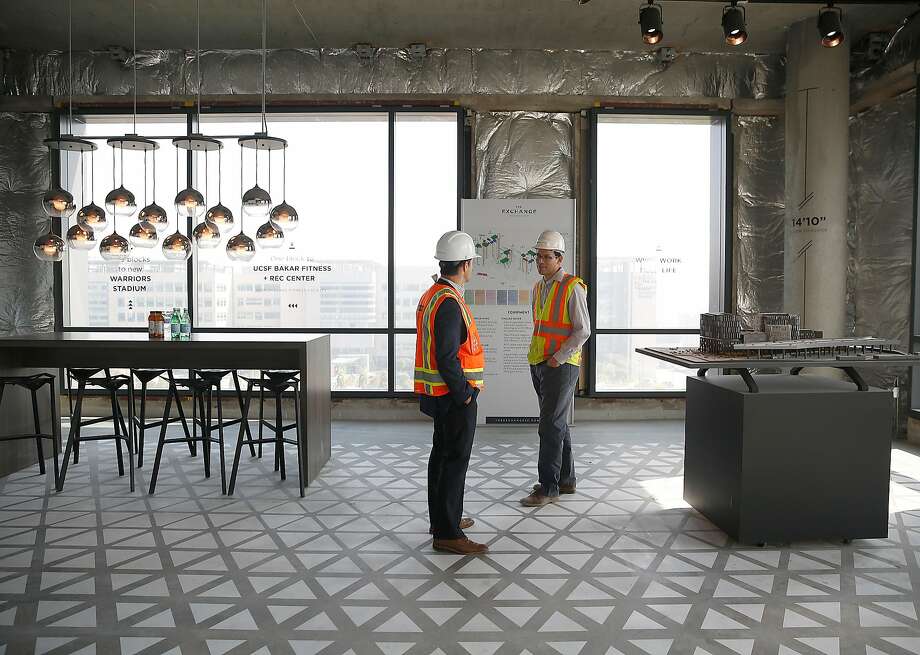
On a somewhat unrelated note: If you scroll down to the second image in the article (not counting the slider) there is an image of some people standing in a room with a table that has a few lamps above it. Can someone tell me which lamps those are? I'd like to find out if I can afford them for my living room.
Haven't seen those exact ones, but many like them. Expect a three-digit price for each cluster of four, and you can get those or similar ones from expensive lamp shops that sell primarily to architects. Those shops have pleasantly clueful consultants. If you can't find one, ask for a recommendation from an architect or perhaps an office furniture shop that sells aeron chairs and/or sit/stand desks with motors.
> The “business” and “personal” dropbox combo can become a real mess.
I had a personal Dropbox account, that I upgraded to a business one (because I wanted certain of my devices to only have access to a subset of my files, for instance when traveling). Except that breaks auto photo uploading from mobile, so I reverted back to personal. Everything seems to have reverted, except the auto photo uploading tab, which now is stuck on telling me that I need to connect a personal account.
Keep in mind that this is one of only 4 tabs in their mobile app, so you think it'd get pretty thorough debugging. It blows my mind how so many companies can blow tons of money on useless signaling things (like the recent redesign) while neglecting to test very basic functionality of their product.
It baffles me why software companies spend so much money on leasing prime real estate in one of the most expensive markets, v.s. pursuing a more remote workforce strategy.
From my experience, the "creators"(developers, marketers, writers etc) in a company tend to favor remote work, while the "money men"(VCs and salespeople) tend to favor office space. Remote work only stands a chance if it's introduced in the early stages of a company when the creators have more power than the money men. In the latter stages of a company, the money men wrestle control of the company and going remote becomes less and less of a possibility.
My wife worked in an iconic and eye catching office building designed by a big name architect. She said it was by far the worst office building she has ever worked in.
Why should it be one? Wouldn't you pay less to be in a functional building instead? I know that choice means that SF will never be a Chicago, but that ship has long sailed, no?
Obligatory link to the "show hn" that kicked things off. I'd quote some of the comments, if I wouldn't feel bad about singling someone out. It's come a long way :)
I would love to work in San Francisco - if I could afford to live there. Working for Dropbox sounds like a dream job for a guy like me, yet merely thinking about the commute to such an office, given an engineering salary capacity, makes me feel just right where I am (tip it's not even in the US)