The SPEC benchmark is useful to estimate the performance of computers that will run programs that are not optimized for their specific architecture.
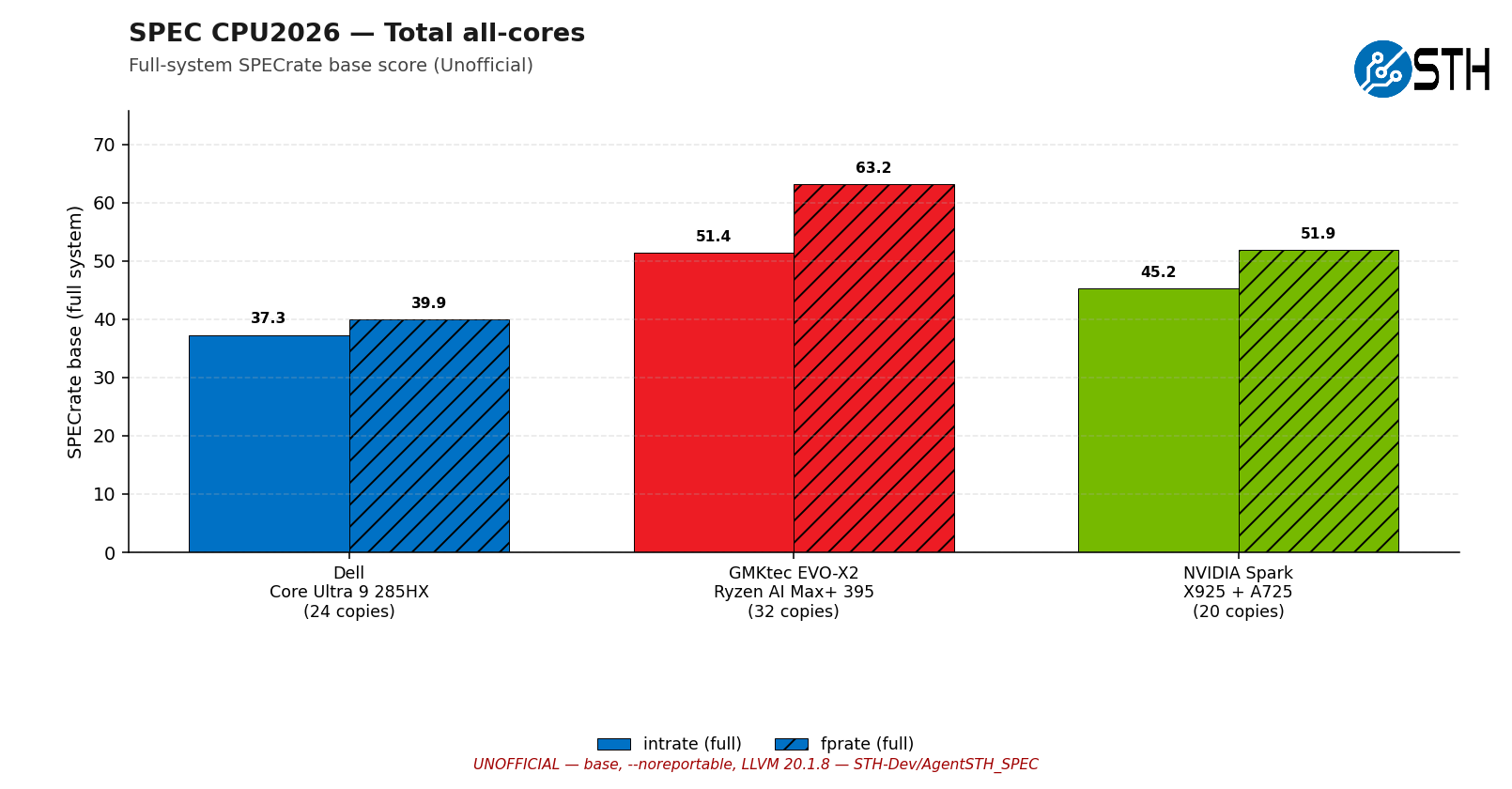
The Ryzen was already faster in SPEC, but when running programs that use AVX-512 the difference in speed between the Ryzen CPU and this NVIDIA/Mediatek CPU will be much greater than in the SPEC benchmark.
All of these, and more. Macbook Neos benefit from all the hardware that Apple makes in-house, reusing CPUs that they already make for iPhones but didn't make the cut, have zero upgradeability, benefit from massive economies of scale, contracts are already signed in advance, the delivery and logistics of an existing chain...
Framework has to go talk to Intel and AMD, get parts shipped, assembled onto a motherboard that they have to make themselves and ordered in very low amounts then shipped all to their fulfillment center, then fedexed, have to source components... Even not taking into account the fact that Apple already has all of the hardware made or available in-house, just the supply and logistics chain is an easy 10% of the final price.
Efficiencies of scale and experience, on multiple levels.
Component sourcing is the most obvious thing - Apple is known to buy up inventory years in advance for example and at insane quantities. TSMC's last new node? Apple paid billions to be the initial and, most importantly, exclusive customer. With hundreds of billions of dollars in cash and liquid assets, Apple can afford to sit on "dead money" for years - a small shop like Framework can't.
As for the Neo specifically, this thing shouldn't even exist, but Apple found themselves sitting on a stash of half defective iPhone SoCs. But instead of trashing them, they effectively recreated the netbook market segment...
The MacBook Neo is just the response to the question of "what do we do with all these binned iPhone chips without making yet another even lower cost iPhone?"
Macbook Neo is manufactured with leftover / binned A18 Pro iPhone chips, these chips have a defective GPU Core and Apple was sitting on millions of these. Apple does not have an easy way to dispose of these chips, the base iPads use 2 generations old A16 chips & the iPad pros use M series chips. So they created a new product line.
The Macbook Neo is cheap because the CPU/GPU/Memory chip is sold below cost. The Neo line exists to dispose of / repurpose binned A18 Pro chips and when these run out Apple will significantly raise prices.
This is the identical situation to what happened with the original Raspberry Pi, the Pi company acquired leftover Broadcom BCM2835 chips for almost nothing, and were able to sell Raspberry Pis for an impossibly cheap price of $35.
I suspect general attitude to AI will split along those who had to apply for jobs in the post-AI world of automatic resume generation and filtering and those who didn't.
There's little reason at this price. I run both, Plex for people who are already used to it, and Jellyfin for myself and anyone new. At around ~$100 I think the Plex experience was better enough to justify it, personally.
Nethack embeds Lua 5.4.8, so you don't need it installed from a distribution's package manager. As long as your system can build C99* it can build Lua. And given that Nethack 5.0.0 is C99, this dependency is not reducing portability any further.
* Lua has a LUA_USE_C89 flag so it may be more portable than Nethack 5.0.0 at this point.
How much functionality/performance does one lose with this flag? Genuine question, I don't know.
If C89 and C99 were equally performant/functional, it would seem logical to just target C89 (since any C99 compiler should be able to compile C89 too). There must be some reason it's a flag.
Propeller can’t really do many instruction level modifications due to how it works (constructs a layout file that then gets passed to the linker).
BOLT could do this, but does not as far as I’m aware.
Most of vectorization like this is also probably better done in a compiler middle end. At least in LLVM, the loop vectorizer and especially the SLP Vectorizer do a decent job of picking up most of the gains.
You might be able to pick up some gains by doing it post-link at the MC level, but writing an IR level SLP Vectorizer is already quite difficult.


reply