You are spot on about Adobe's products not having adequate alternatives. I see a lot of new artists online saying to use Affinity or Gimp, but they do not compare. Even Blender lovers, myself included, who have embraced the open source alternative would be shocked to see what features they are missing compared to the top tier tools like Maya.
I'm curious why certain categories of software receive little to no competition, while others see a lot. I feel that Silicon Valley's focus on social media oriented smartphone apps has drained a lot of the talent and capital that could have been working on alternatives to Microsoft Office, Adobe's suite, Maya's 3D, etc.
Procreate is an excellent example of a young team coming in and dominating the tablet art tool market. For a measly $12 you own procreate forever, and it is easily the most functional art tool on the iPad. I don't know why we haven't seen similar attempts at Adobe's dominance anywhere else.
Photoshop is, unfortunately, the most comfortable art application out there for a lot of art related workflows. The pattern preview mode allows for painting tiling textures easily (a feature oddly lacking from all competitors--except asperite oddly), the filters are all top notch, the ability to do non-destructive adjustments is insanely useful and not seen anywhere else, and the brush engine is the industry standard. There are a lot of nice things about how Photoshop approaches art that others are missing. The fact that Photoshop can manipulate images as easily as it can create them is what makes it special. Procreate is great for painting, but lacks even 10% of the features Photoshop has. Gimp is a decent photo editor with terrible painting tools.
There is a massive opportunity in the market for Procreate to come out with a desktop version that expands on its functionality, but my theory is that it is probably the #1 iPad selling point for many people and Apple is paying them to keep it iPadOS / iOS only. Some big name Japanese anime studios are now working a big percentage of their workflow on iPads with Procreate.
Walmart also announced they are closing 4 locations in downtown Chicago due to profitability issues related to crime. Choosing not to prosecute criminals and releasing those that are caught immediately only emboldens and worsens crime. This country needs to crack down on crime swiftly and harshly until order returns.
Nothing released by Walmart mentions crime or safety - only profitability, while the news about this whole foods does.
Chicago is a large city and none of these are really downtown. There used to be a small walmart that was actually downtown, but that closed a number of years ago - I do not recall why. There aren't really a lot of Walmart stores in Chicago - there was some kind of fight between the city and company around needing to pay living wages to get the approvals.
Of the closing ones I know the Lakeview store, it is a small/neighborhood store and in a fairly wealthy/pricey location. IMO it was never a great fit for the area's typical resident - there are many other higher end options within walking distance or with parking (which this walmart did not have) - several grocery stores, trader joe's, walgreens, target, whole foods, etc. Without parking or being that close to the subway, it was never the the kind of store that would serve a large area. I'm not at all surprised this one is unprofitable and closing.
Yeah! Why figure out why crime happens in the first place (it cannot be poverty and unavailability of safety nets for people, impossible!) when you can just put all those p̶e̶a̶s̶a̶n̶t̶s criminals in prison instead, so we don't have to deal with it.
I am pretty damn poor but don't commit crimes. Crime happens when people decide that's the route they want to take over other routes. It's as much a cultural thing as it is an economic thing. There are wide swaths of the public now in the US making excuses why crime is the best option for many.
Discussion of why crime happens is multifaceted of course, but there is a significant part of it that is essentially forbidden to address in circles where the discussion matters. You end up with wishy-washy "dogwhistles" that get shouted down as x-ist, or at best, shrugged off and blamed on generational poverty/oppression/trauma. All of which can be true, but that doesn't help solve anything.
There is no solution, other than a vast cultural shift towards a refusal to stop glorifying cultures that glorify criminal behavior. This includes the suicidal grimy juggalos and trailer park meth cowboys, the brand- and status-obsessed inner city wannabe crip, and the fuck you I got mine and the fuck you I want yours mentality prevalent across the country (world?) equally.
I repeat: there is no solution to crime. There is only mitigation and reaction.
I remember that Ben Horowitz includes a lot of rap lyrics in The Hard Thing About Hard Things. Don’t a lot of tech bros love music that glorifies criminal behavior?
> This country needs to crack down on crime swiftly and harshly until order returns
Please provide the data that shows this approach will work.
This has been tried for decades in every city across the world and it has been shown over and over again that simply being "tougher on crime" does not work.
What seems to work is a multi-faceted approach targeting root causes like inequality, drug use, homelessness as well as better policing.
Only a small group of people are responsible for the majority of crimes. The same people keep committing armed robbery, shootings, carjacking, etc. until they are physically stopped from doing so.
Keeping criminals in jail so that they cannot commit more crime will absolutely reduce crime. The elimination of cash bail and downgrading of felonies is a joke.
You are ascribing zero agency to multibillion dollar corporations. They are deliberately closing stores in vulnerable neighborhoods to maximize the political blowback against labor gains. Chicago just elected a union leader mayor, who committed to a program to address crime's root causes. He dared to mention poverty and inequality in his campaign.
Walmart doesn't want this. Walmart thrives on the price-sensitivity of the impoverished and deliberately undercuts local businesses to funnel every cent of profit to the Walton family. They are playing the long-game here: demolish Brandon Johnson's appeal by depriving the neighborhoods that voted for him access to groceries, and keep their chokehold on their non-union workforce in an era of rising living costs.
This has been my experience as well at 32. The commercial real estate firm I work at has a 4 days in the office policy, so we have a fairly robust social atmosphere. You can't design a building on a webinar, you need to sit together in a conference room, roll the blueprints out on the table and point to things, sketch changes, review pro formas.. it can't be replaced digitally.
The young people we're getting are like they're from another planet. They think it's' fine to come in late and leave early every day, they only do the bare minimum of work assigned and show zero engagement to help the firm beyond the scope of their assigned tasks. They're all coming from colleges that were remote or jobs that were work from home. How can you learn as a young professional in a work from home setting? You need to sit in on meetings, phone calls and discussions, you need to absorb the whole office around you, not just sitting alone at your computer.
> You can't design a building on a webinar, you need to sit together in a conference room, roll the blueprints out on the table and point to things, sketch changes, review pro formas.. it can't be replaced digitally.
just curious, why do you think that is? I spent several years working on project sharing and data visualization features for an architectural CAD program. you could show/hide/recolor all your objects on the fly to emphasize key details, sketch on top of viewports, play around with a clip cube in 3D (personally fixed a lot of bugs with that one...), and sync all your changes back to the main project file to share with colleagues. some of these features were a bit rough around the edges, admittedly, but I always got the impression they were pretty popular with our customers. I'm a little stunned to hear that you and your colleagues just want to print out a couple viewports and look at them on a piece of paper.
I agree, and adding to this another thing I find now is it's very very hard to spot young talent now if they're fully remote. In a team of 100+ people how can I remember who's performing well, who's good at certain tasks etc when all you are to me is a muted microphone and an avatar with no camera showing. Working in an office with others post COVID isn't about what we're asking you to do, it's about what you bring to the table and offer others. Communication problems among the younger workers (I mean lets say under 25 who've hardly worked in an office before because of covid) are a real problem now. Some don't know how to act, how to behave, how to muck in and be part of a professional workforce with people who have 10, 20, 30 years more experience than them.
Moderation is such an interesting art. There is moderation like trimming a bonsai tree... the effort is to keep everything healthy and beautiful, but not to avert the nature of the plant, to embrace its natural growth... then there is moderation like on reddit, which is politically and advertising motivated to force the community into a given shape, like trimming hedgerows. Either step in line or get pruned.
If anything HN feels like it has a lighter touch with moderation than most other places online, and I have never seen them outright censor certain political views or show any sort of favoritism towards any one company or group. I think much of that comes from having a small, passionate community that can manage the task of behaving and debating in good faith.
If someone could figure out the method for crafting communities like HN for other interests... that person would be a treasure to the internet.
I've spent decades exploring online communities (haven't we all?). From forums to 4chan, from Digg to reddit to hacker news. I would say that hacker news has one of the highest quality, most engaged and passionate user bases around... a rare feat. To replicate a place like this for other interests would be a dream.
I think the recipe for a good, interests based community is limited moderation, small scale, and a non-profit orientation. Because even once great communities on reddit have been poisoned by their massive growth and ad driven leadership combined with heavy handed, political moderation.
Oddly enough, I have found /lit/ on 4chan to be one of the best communities for discussing books and writing. They are more grounded and passionate than most of the other Chans and while you'll still find the occasional edgy post or nonsense, the censorship free and open community has some brilliant minds engaging there.
Discord has potential, but the constant flow of information and the reliance on typically heavy handed moderation make it just a faster version of popular writing subreddits.
I wish someone could make a cheap and easy shell to quickly make "hacker news" like clones that people could run for given interests, to create communities like this one geared towards other interests.
That’s interesting that you laud “limited moderation” while celebrating Hacker News.
I think of HN as standing out for having more comprehensive guidelines than most communities, a user base that respects and voluntarily enforces those guidelines, and formal moderation that allows few exceptions to slip through.
We’re lucky that they’re good guidelines and that we have a community that broadly appreciates them, but “limited” is not a term I’d use for the moderation here.
>I wish someone could make a cheap and easy shell to quickly make "hacker news" like clones that people could run for given interests, to create communities like this one geared towards other interests...
I think covid's lasting impact will be one of vastly growing mistrust in the political and scientific organizations that society looks to for guidance.
From the CDC's ever changing guidelines, the liability-free, fast tracked vaccine that doesn't actually mitigate transmission, the labeling of media pushed medical hypothesis as "science" and any debate as heresy, the effortless militarization of common citizens to socially pressure and attack their neighbors into compliance, and the coordinated "fact checking" campaigns of powerful organizations that have turned out to be complete lies. It's all done lasting damage to societal trust... from our own families and neighbors, to the heights of academic and governmental leadership.
People are rightfully asking many questions. Are the FDA, CDC, and the WHO corrupted by big Pharma companies and political groups that care more about saving face and profit than the truth? Is academia similarly corrupted to create research that supports the chosen narrative? Is "trusting the experts" really the embodiment of science... or one of religious zealotry?
this was much more of a presentation problem then anything. of course the science will change in the middle of new viral outbreak, people's perception of science just isn't that.
>liability-free, fast tracked vaccine that doesn't actually mitigate transmission
of course you'll fast track a solution when you have a global pandemic? seems like a no brainer? and I don't recall transmission ever being promised, only a substantial lower chance of severe infection and death - which was a main goal to help reduce loads on hospitals?
>labeling of media pushed medical hypothesis as "science" and any debate as heresy
medical hypothesis are a part of science? and I think there's definitely room for debate on how vaccines, closures, masks, etc. could have been done - but when the debate is just over if masks or vaccines even work it's kinda silly to be wasting time talking with the "opposition"
>the effortless militarization of common citizens to socially pressure and attack their neighbors into compliance
I don't see the problem with this sort of social pressure in regards to a pandemic. it's not like being reported to the "covid gestapo" for not social distancing for something
> I don't recall transmission ever being promised, only a substantial lower chance of severe infection and death
No, that was the spin after it became clear they didn’t prevent infection or transmission. When they were given EUA they were sold as 95% effective at preventing covid[0], and there are plenty of clips of officials including the president of the US saying if you get vaccinated you won’t get or spread covid. Nothing about reducing symptoms. Heck, read the prescribing info[1]. It still says the indication is to prevent covid, not reduce symptoms.
No, "prevent covid" means people didn't get sick, which is defined by symptoms. That press release isn't conflating SARS-CoV-2 (the virus) with COVID-19 (the disease); it says nothing about stopping infection/transmission.
That outcome could have been reached by either preventing infection or just reducing symptoms, and they made no attempt to claim which it was because they didn't test for it.
SARS-CoV-2 and COVID are not the same thing. All of the main media outlets reporting on this were pretty clear that 95% was prevention of severe symptoms and death.
> It still says the indication is to prevent covid, not reduce symptoms
Again, we need to focus on SARS-CoV-2 vs. COVID here. Getting "COVID" implies you A) were exposed to the virus and it entered your body and B) it is causing symptoms. Preventing COVID is not synonymous with preventing infection by SARS-CoV-2.
I think this has been a particularly confusing point for most because the traditional battery of vaccines we all get as kids generally do prevent the actual disease, and that has led to much misinterpretation as far as I can tell.
> of course the science will change in the middle of new viral outbreak
No. Science very very rarely changes. The confidence in the possible explanations is what changes. They communicated low confidence information with high confidence. The trust was destroyed with, what appeared to be, a concerted effort to silence those that accurately communicated the low confidence, or presented other equally possible, and far too often eventually-correct, understandings. I think this covers all the other points, above.
Science is a deeply personal philosophy that guides how an individual interacts with the rest of society. Skepticism, reproducibility, and verification. It is fundamentally _not_ trust based. The body of scientific knowledge is distinct from other forms of knowledge in that it is documented in such a way that you are able to independently validate it to reach the same conclusions yourself. Anything short of that is not science. If you are not able to review the methodology and data yourself - it is not science from where you are standing. If you are not able to reproduce the results - it is not scientifically true from where you are standing.
What I perceived during the pandemic was a conflation of _trust_ with science. When a high ranking public official went on television and said "trust the science" - what they meant was "trust me when I say some people are following the philosophy of science, and that everyone along the chain of trust between me and those people have assured me that the conclusions they've reached are sound enough to base policy on. You should trust me, and by proxy everyone between me and those people practicing science."
What they were _not_ saying was "you should follow the philosophy of science yourself."
Science would require the data and methodology be published and readily available at the time of a press release encouraging independent verification from anyone and everyone. Folks who fail to generate the same results should be allowed to share those negative results for others to vet. Science would dictate that each individual person who receives the information start from a position of skepticism until the information has been vetted and validated on a personal level.
Some people - likely most people - will choose to substitute trust for science on a personal level; but anyone who dictates that decision for others is not practicing science.
Man that pissed me off. You’d get people you know in real life yelling at you for showing public data that went against the narrative. Society did anything but “follow the science”. In fact, it was completely the opposite. It was appeals to authority all the way down.
I think you’re leaving out the part where, for political or other reasons, there are and were groups motivated to sell distrust in American institutions as well as their political rivals.
You cannot seriously have a debate about this mistrust without acknowledging the role of misinformation and motivated actors looking to sew mistrust.
Remember when 5G causing Covid was trending? Or memes about how hot water in a netipot would kill it? Or that if you had a strange cold anytime in 2019 you probably already had it?
Theories about microchips in the vaccine started spreading before the vaccine was announced. People becoming magnetic after the vaccine was trending.
Many institutions are handling Covid in the worst possible way. The clinic of the University of Heidelberg (a scientific institution tasked with educating physicians) for instance insists on the 3G rule for admittance (either vaccinated, recovered or tested for COVID). Either COVID is dangerous, then only testing helps, or it is not dangerous, than testing only a subgroup is irrational.
The entire health policy in Germany is in denial of the fact that the vaccination doesn't help against transmission. Refreshers are sold as helping against post- and long-COVID where there is only little scientific evidence for it.
I don't think that it is necessary for anybody to sow mistrust in institutions. Those handle that on their own pretty well.
The Rubikon was crossed with telling that masks don't help - against better knowledge. Only to avoid a run on masks and to reserve them for health workers. After that, I took everything being told with good chunk of salt.
>I think you’re leaving out the part where, for political reasons, there are and were groups motivated to sell distrust in American institutions as well as their political rivals.
The conversations on HN about the lab leak hypothesis always leave this out. They often imply the politicization of covid came from scientists trying to protect themselves rather than from politicians. Maybe the lab leak theory is true, but you can't dismiss the fact that it first rose to public prominence because politicians pushed it as a way to shift the blame for the pandemic. Therefore the anti-lab leak argument was heavily political specifically because it was responding to an already politicized argument that had little evidence to support it.
Lab leak hypothesis came up early from NIH's own people. We have the emails. Government officials had these emails before "We the people" did so would have been first to sound the alarm publicly.
I'm unclear what specifically in those links do you think contradicts what I said. The lab theory being discussed in scientific circles does not change the fact that politicians are the ones who pushed it into public discourse for their own gain and not because of any scientific pursuit of truth.
Also side note, an opinion piece from the New York Post isn't exactly the most trustworthy source.
Another big one is how they purposefully lied about masks not working at first to protect supplies (or at least didn’t bother recommending them), then turned to everyone should use cloth masks, then cloth masks don’t work, and then masking kids all day long at school was pointless, etc.
The whole back and forth, unquestioning compliance at all costs strategy, and purposeful deception just makes everyone exhausted, skeptical, and builds resentment.
The worst part is that there isn’t any big plans in place to get supplies for better-than-N95 respirators for hospital workers. I have doubts even N95s will be widely available to the public by the next pandemic.
> They are NOT effective in preventing general public from catching #Coronavirus, but if healthcare providers can’t get them to care for sick patients, it puts them and our communities at risk!
N95 masks have been widely available to the public for a long time, via any department or store that carries home improvement supplies. They’re used for a variety of things.
Like a year ago I walked into Home Depot and bought a 3 pack to wear while doing some sanding.
The liability-free fast tracked vaccine that doesn't actually mitigate transmission greatly restored my belief that we might survive the next large event. It was rolled out quickly, and it actually greatly reduced mortality. Reducing transmission would've been epic, but we can't win them all.
The CDC's ever changing guidelines were good, but their not admitting that at some point the had been wrong or worse were flat out lying did hurt societal trust a lot. The fact that social pressure on our neighbours and government recommendations failed to such an extent that we needed extra policing just to get people to keep to reasonable curfews sucked.
I don't know where you pull the "effortless militarization of common citizens .. who attack" from, but a. that didn't happen, and b. it was the people who did not follow government recommendations and social pressure that were out there militarizing and attacking their neighbours.
People are asking questions, that's how science works. But basing laws and regulations on established science and expert advice, that's how society is supposed to work. You can be angry about the state of science, or about the corrupting influence of pharmaceutical companies, but don't throw out the baby with the bath water. The fact that we've been able to respond swiftly based on expert advice and on established science is a good thing. Maybe next time we'll make sure those experts and scientists have more competence and better alignment to our ethical values.
Imposing mandatory curfews was never reasonable. That was never justified on an evidence-based medicine basis, and it violated the fundamental human right of free assembly. Those involved in policing such policies should be ashamed of themselves.
Shame this gets downvotes. If we are following the science there should be ample reproducible research out there (conduced before the pandemic) showing that curfews had enough benefits to justify their extreme costs.
But there is nothing. There is no research that lockdowns would be worth their cost either but here we are…
What mortality rate does the virus need to have before you accept that people's right to survive a plague temporarily overrides your right to free assembly? And by the way, lockdowns absolutely do work at stemming virus spread, China, New Zealand and other countries are evidence of that.
With the latest being: EUA approval, and the preemptive purchase of over 100M doses, of the new Pfizer/Moderna omicron vaccine after only being tested in mice.
Sure, its similar to previous iterations which have undergone human testing. Sure, we have a good understanding of how they work, theoretically. The FDA isn't an entirely corrupt and incompetent organization. But without human efficacy and safety data, it feels beyond likely to me that acceptance rates among even the "silent majority" of people will be low.
The question I want to know is how much of this is "bad" corruption (worse than you would find in a 350 million population relatively free democracy/republic) and how much of this is sausage making. Was there any reasonable way for this to go well, given the realities of living in a complex democracy where we don't agree on how it should have gone? Is it inevitable that societal trust breaks down just because societies are complex things? So far, I've been losing more sleep over the people losing trust than the people breaking trust.
It seems pretty clear to me that regarding the origin of the virus specifically, there has been bad-faith dismissal of the lab leak theory due to the politicization of GoF research.
Isn't this just the definition of the word extreme? I mean, I get that maybe they're using the word extreme to equal bad (maybe not), but I think this is just the definition of the word.
Why do you think it's bad to have an extreme opinion? I probably have quite a few of extreme opinions. Some wrong, some right, some I cherish, some I dismiss.
> Isn't this just the definition of the word extreme?
Absolutely not. From the dictionary:
    extreme
      Most remote in any direction; outermost or farthest.
      Being in or attaining the greatest or highest degree; very intense.
      Being far beyond the norm: synonym: excessive
The majority of any population (not just USA) are ignorant about most topics. Masses are not intelligent. This is particularly true of a range of topics, from economics and financial domains to anything in the sciences and engineering. The masses are also really bad at being intelligent about anything that requires a long term view or planning.
Given that, it is probably fair to say that the intelligent people are likely not where the majority opinion lies. Not always, of course, there are no absolutes. Being outside the majority generally requires applying critical thinking and sometimes a lot of work to truly understand something. My mother used to vote based on who she liked. I mean, quite literally, not much different from a beauty contest. If she liked the person --for whatever reason-- she voted for them. I loved my mom, but her voting was ignorant and likely damaging to society. I hypothesize, based on conversations, that most people vote this way (or straight-up party affiliation, which is equally stupid).
As an example I use the work I had to undertake in order to understand something seemingly simple: The reality vs. the fantasy of photovoltaic solar energy. I was 100% on the fantasy camp when I built my 13 kW array. It didn't take long for me to, as an engineer, start asking questions based on what I was seeing. The full understanding took an honest evaluation based on actually having skin in the game, experience, math and more. It probably took me a couple of years to go from being a solar energy cult member to being a solar energy realist. I venture to guess that 99.9% of people will never take that journey.
If understanding that the masses are wrong makes one "extreme", so be it. These days we find all kinds of ways to denigrate and stomp on people who don't push accepted narratives. The masses don't realize that politicians create divisive narratives with the sole purpose of capturing votes and retaining or growing power. They do not --regardless of party-- work for us. They work for themselves. They work to stay in power. That is, in CS terminology, their fitness function --what drives their evolution and actions. Their power is evidence of just how stupid populations have been over the years.
On a much darker side, this statement out of government --any government-- is scary in ways history has shown us time and time again. Genocides have been perpetrated because the masses --ignorant and stupid as they are-- are easily manipulated to fall in line with the politics of the those in power. The Armenian, Jewish and Darfour genocides are just a few examples of this. Mobs are not intelligent. We should actually embrace those who do not agree with the majority, not expunge them.
I’d be curious to get a better understanding of the “solar energy reali[sm]” that you mentioned. It sounds like you’re suggesting that solar is less practical or efficient than we’ve been led to believe.
I’ve got at least 3 neighbors by me with arrays that effectively eliminate their monthly home energy costs, that seems pretty great. Is that not a realistic expectation for most people with the time/money to invest in such a setup?
> that effectively eliminate their monthly home energy costs
The average payback, in the US, is 12 years. Until that time, the energy cost isn't eliminated, it has shifted to the payment of those panels, along with interest, connection fees, maintenance, and added taxes and insurance. For some, the numbers might not make sense.
At the home level, I would ask if you have actually spoken to these neighbors and learned if they have significant monthly costs electricity costs. Most of my neighbors still spend in the order of $200 to $300 per month after solar installation. There are many reasons for this. I bought my system and did all the work myself. Not only is my system about twice the size of anything around me (Google satellite view is great for this), it doesn't cost me a dime once installed. Most of my neighbors got scammed into various forms of leasing. They have a lease payment in the $150/month+ range for half the system (typically 4 to 6 kilowatt vs. my 13 kW. The combination of an undersized system and living in an area where constant air conditioning is a must, means most of them are paying for electricity every month despite having solar. I don't. In fact, the power company usually owes me money.
The first reality is that none of them would be able to use their solar panels to charge electric cars. They can't. They can barely run their homes with them. And, frankly, I can't. Even with a 13 kW system, I can't use it to charge electric cars. It simply isn't enough. Or more importantly, it is unreliable and highly variable in performance.
This is where we start getting into the technical realities of solar, with the analysis starting at the most basic small system "home" level and then expanding out into large-scale installations.
Here's a picture of my system generating power on a good day:
Notice the peak isn't 13 kW, but rather about 10 kW. I have reached 11 kW and never more than that. There are many reasons for this. One of them is that solar panels have a negative temperature coefficient, which means they generate less power as they get hot. They always get hot. Their advertised rating is for what I would call ideal conditions. Most people think of solar panels as these magical things that make power. Well, they are not.
As the evaluation expands into utility-scale solar it is crucially important to understand what this curve means. It is an inverted parabola. Which means the area under the curve, the integral of that function, is 2/3 the area under the enclosing constant power rectangle. If we draw a rectangle with the top line at 10 kW, the area under that rectangle is the energy produced. The area for a solar system with the same peak power is 2/3 that of the rectangle. In other words, it can only generate --on a good day-- 67% of the total energy. Another way to put is is: In order to generate the same energy you need a system that is 1.5 times larger (1 / 0.67). I would have to expand my system to 20 kW in order to have the equivalent of the constant power 10 kW output one would get from a conventional power plan (a fraction of the total output, of course).
I said "on a good day". That is the other reality-vs-fantasy aspect of solar and one of the reasons for which your neighbors might be paying a lot more for electricity than they thought they would when they got their systems. Here's another picture from my system:
What are those horrendous dips that reduce power by as much as 50%?
Clouds.
Yup. Clouds, and, in general, the weather and atmospheric dirt and dust affect solar in dramatic ways. My system is oversized enough that I come out OK at the end of the month. Not so for my neighbors. These dips absolutely kill your ability to make power reliably and reduce your average energy output.
Here you can see daily performance that results on peaks of about 50 kWh (energy generation, the integral of power over time) down to about 10 kWh.
This is brutal. What it means, in no uncertain terms, is, if we were talking about utility scale solar, having to build an array that is five times larger than needed just to compensate for this issue. I stress: Just this one issue.
Remember the 2/3 of the area under the constant power curve? That meant you need a system that is 1.5 times larger. Now you have to take that and multiply it by five. That means 7.5 times larger to account for both the parabolic power curve and fluctuations in power output.
And yet, we are not done. Photovoltaic systems only generate power for roughly 12 hours per day. Once could argue it's less than that because the early and late hours make very little power. Keeping the assumption at twelve hours, well, we want power for 24 hours, not 12. Which means we need a large number of batteries to store power for use at night.
That's great. However, the energy to charge the batteries has to come from somewhere. If that somewhere is the same solar array, we have to build an even larger version of what we have. Super simple numbers: We need to double it! If we want the same average energy output 24/7 we need to store what we can make during the day on a massive set of batteries. These batteries require their own separate array. The existing array is delivering power you will use for other applications.
This is how we reach a multiplier somewhere in the order of 15. You need a system that is 15 times the required peak constant power output and enough batteries to maintain that as the sun comes down. The real number is likely much larger than that due to system and transmission efficiency realities.
I'll stop here and just mention that the issues go far beyond that. For example, you can't cover 100% of a utility-scale land area with panels because of practical shading and construction/maintenance access requirements. Panels have a lifespan of about 15 years. It is probably the same for electronics. An installation with a million panels is going to be a maintenance nightmare at some point, with the potential of having to replace a million panels every fifteen years or so. And the batteries? I don't even want to think about that.
A million panels sounds like a lot? Assuming a nominal label (not real output) power rating of 400 W per panel that is only 400 MW theoretical output. Given the analysis above, this size power plan isn't likely to be able to produce much more than, say, 20 MW to 40 MW equivalent constant power 24/7. For a sense of proportion, a typical nuclear power plant produced 1000 MW 24/7/365. In other words, you might need somewhere in the range of 25 million to 50 million panels (and zillions of batteries) to build the equivalent of a 1 GW nuclear power plant.
That, in a nutshell, is what I am talking about when I speak of the reality vs. fantasy of solar. It isn't magical. It isn't reliable. It might not even be very green at all once we really look at not only the scale, but the life cycle when compared to other technologies (that is to say, mainly nuclear).
It is a fantasy to believe that the electric vehicle revolution will be powered by solar on roofs. Nobody is going to install the size systems required to power their homes and, at the same time, charge multiple vehicles per household. In order to charge a couple of vehicles you probably need at least three times the system size I have as well as a mass of batteries to allow access to energy when needed. That probably means somewhere in the 30 kW to 50 kW range per household. That isn't going to happen.
My take away after really looking at this is that we better get behind nuclear in a massive way. If we throw money at solar all we would accomplish is to engage in the largest every transfer of wealth and economic power from the West to China. All photovoltaic solar pretty much comes form China. Build ridiculous scales of solar and we will give China economic supremacy over the rest of the world for, well, probably a century or more. Imagine a business where billions of solar panels and electronic components have to be replaced every 15 to 20 years and all of that hardware comes from China. In one word: That would be beyond stupid. It would be like becoming drug addicts, with China as our drug dealer.
There’s a lot here to digest - thank you for your response. Regarding solar, I’ve been looking into it and you’ve given me a bit to consider. I now have a better appreciation for your fantasy vs. reality statement.
I checked your site, I didn’t see anything on this topic (only briefly glanced). This comment by itself would make a great blog post.
The end result of all this fakery is a growing doubt and distrust of the world and the information presented to us. Bots on twitter, corporate reddit moderators pruning discourse, astroturfed discussions, deepfakes, AI generated news articles, AI art, it all waters down the assumption that what we see before us is real. Leading us to doubt everything we read, see and hear. Much of this bot driven noise online is only possible in large, public online communities.
I think we will see a shift towards much smaller walled gardens of community online. It's already happening with the mass exodus to discord and smaller chatrooms. I think we can all safely assume that our 30 discord friends are real people... for now.
The country club exists for the wealthy to enjoy the pleasantries of community and pastime without interruption by the masses. I think the internet will move to mirror the real world as we segregate apart into the places we most enjoy... or have the connections and money to afford. Authentic and vibrant human communities with novel content curation will be a luxury, while the "public pool" for the masses will be an internet of data pollution and grime.
Yes, the article mostly assumes that the initial effects of AI generated fake content will be the same as the final effects. This is silly.
People will change what they do in response. Though at the very end, he does say "We should learn to be skeptical of content", that belongs near the beginning, before an analysis of what the effects of increased skepticism will be, rather than what the effects of blindly believing fake content will be (since that won't happen, after a short initial period).
Smaller communities are one possible response. But just more critical assessment of arguments and reported facts is another. For arguments, it doesn't really matter whether or not the argument was AI generated - if it's valid, it's valid, if it's not, it's not. For factual reports, critical assessment might be more difficult, though I think it will be a while before AI generated fake facts have the the right sorts of connections to common-sense reality to withstand critical examination.
Content, info, arguments, etc. are all propagated online based on their deliciousness. Is it dramatic? Easy to digest? Shocking? Emotionally powerful? Bright and alluring? Sexy or disgusting? These are the elements that push information to the top. Reality, truth and logic can't compete.
Advertisers figured this out in the middle of the 20th century. Prior to Edward Bernays' (Sigmund Freud's relative) revolution of advertising, products were marketed based on their functional qualities: how effective they were, how efficient, etc. Bernays realized from war propaganda and Freud's ideas of the unconscious, that selling with emotional coercion and sex was far more effective. In fact, you could make people buy things they didn't really want or need, by making them unhappy without them. He was able to convince women to smoke cigarettes by having trendy, independent women smoke openly at a parade, followed by a branding campaign calling them "torches of freedom". This concept of emotional manipulation trumping factual data is how our entire society now operates.
If we want a skeptical and thoughtful populace, our entire education system must be restructured and information dieting will have to become an innate part of the online experience.
People haven't shown the inclination for more critical assessment so far; why would that change all of a sudden?
And AI fakes are still in their infancy. For example, they haven't learned to push emotional buttons yet. But they will soon, because it's not all that hard, and it drastically increases the virality.
> right sorts of connections to common-sense reality
Unfortunately, I think this matters less than it should. Connection to common-sense reality does not seem to be a prerequisite for most people who engage with content on the internet.
> I think the internet will move to mirror the real world as we segregate apart into the places we most enjoy... or have the connections and money to afford.
Or we institute ever more stringent standards for verification of online accounts, both to prove one is human, and to tie online reputation to real identity. Not that I want to see this happen.
I know it's not really the point of this comment but public pools historically have been places to enjoy the pleasantries of community and pastime.
As an additional aside, you should spend some time considering the implications behind your selection of two significant hallmarks of institutionalized racism as your poles for opposite ends of a spectrum from "the pleasantries of community and pastime" to "pollution and grime [of the masses]".
They're a perfect example of how in America we have these public services that get overloaded and degraded in quality (because they are public), so the rich go and make their own private luxury versions to enjoy a more selective and high quality experience.
Reddit will be the future ghetto of the internet while the elite hang out in private discords!
That is a beautiful quote, I had never read it. Novelty and ever growing detail of artistic creation have their limits and their downsides. Video games are an excellent example of this. Take early 3D games like Thief, a steampunk thief simulator game with blocky, polygonal graphics. In the game, you navigate fairly simple geometric environments looking for loot, avoiding guards and exploring the world. In this simplistic setting, interactive objects are clearly visible: a key, or a pile of gold, or a golden goblet. These are all visible as objects in the world. You see a key on a table and you pick it up. The simplicity of graphics allows for extremely clear visual communication and a highly immersive experience. You explore the world with your eyes and ears and wits alone.
Fast forward to today's AAA games, dense in extremely complex and detailed graphics. The player can no longer spot the key on the table or the pile of gold coins, there is too much noise, too much novelty, too much density... so now games have glowing icons showing you where to look and what to pick up. Minimaps to keep you oriented in the level. But what happens? The player is no longer immersed in the world, seeking loot with their own eyes, they are simply following the glowing icons, sleepwalking through the game world. All the detail and artwork glazed over and ignored. The game no longer succeeds at visual communication, because it is too dense, and in its quest for realism has actually lost immersion.
Why do so many people love Monet's impressionistic art when other artists have painted far more realistic flowers and fields? Why is it that some of the greatest art of all time came from limitations? Why do people love movies with practical effects more than those with the most impossible and incredibly detailed CGI effects? I think your quote really captures the truth that AI and ever growing ease and detail of artistic creation can never replace the raw beauty of humans doing their best with limited tools.
Yes, this is why Elden ring is so amazing. It keeps both of those and does hold your hand for finding things. On my first play though I was constantly amazed by all the things that I discovered by accident.
The most valuable thing online in the next few decades will be authenticity. Authenticity is really the new luxury. The beauty of the early internet was its pure, passion driven authenticity. Websites sprouting up for every interest, built only because someone was driven to share their thoughts on a given subject. Forums, filled with techies chatting about their interests. Video games exploring interactive media and forming a new art. The rise of memes from places like 4chan, that have come to dominate digital expression.
All of these beautiful things have been degraded by the inauthentic, focus-group, advertising data harvesting machines of mega-corporate greed. Unique websites and blogs are drowned out into oblivion, unprofitable and hidden by the SEO Gods of Google, funneling you into their own products and advertising pathways. Forums bled out into Reddit, which is now an astroturfed corporate dream world where advertisers can masquerade as real users and corporate appointed moderators funnel all conversation into the optimum advertising framework--deleting anything that could harm reddit's shareholder pool of giant corporations and governments. Video games went from novel, artistic experiments, to hyper-optimized addiction machines built to drain the time, money, and drive from their young audience. Even memes, with all their raw vulgarity and juvenile silliness, have been coopted by corporations trying to bend this new form of expression to their advertising goals.
First, content online was authentic and human. Then, big tech started trimming and censoring and funneling and optimizing it into something less real... less human, but far more ripe for advertising revenue and data collection. Now, we are entering the stage of AI-generated content. Articles written by algorithm, art created by machine, bots filling up the whole internet with noise. The level of distrust, paranoia and questioning of reality that users will experience online in the coming years will be unparalleled. Is this image real? Is this person I'm talking to a bot? Is this artwork human made?
Which brings me back to my main point. Authenticity will be the new luxury. And the builders of tomorrow who figure out how to curate authentic online communities and experiences will be the winners in this content war.
I'm a person that generally doesn't consume art, but if I did (let's say I was looking for artwork to hang at home), I would rather get 1 authentic hand-painted and hand-signed piece from a local artist than 10 digital AI-generated inkjet prints.
I wouldn't necessarily call it a luxury, more personal preference? Quality over quantity. There are some valid reasons to prefer one or the other, depending on circumstance.
Real art has intent, context and history that can't be replaced. It's everything that comes alongside a piece that makes it so interesting when you do actually buy a real piece of art, especially if you get to meet the artist.
There's a strong correlation between the early users of the internet and neurodivergent individuals. I'm one of them. We love to info dump, and the early web provided the perfect means to do so.


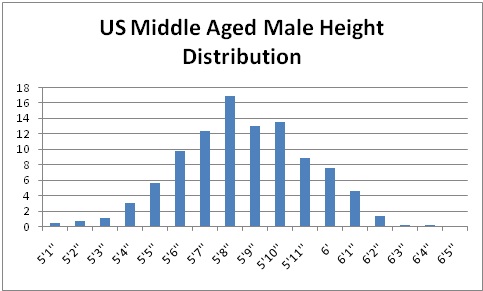


I'm curious why certain categories of software receive little to no competition, while others see a lot. I feel that Silicon Valley's focus on social media oriented smartphone apps has drained a lot of the talent and capital that could have been working on alternatives to Microsoft Office, Adobe's suite, Maya's 3D, etc.
Procreate is an excellent example of a young team coming in and dominating the tablet art tool market. For a measly $12 you own procreate forever, and it is easily the most functional art tool on the iPad. I don't know why we haven't seen similar attempts at Adobe's dominance anywhere else.