Yes those benefits can now be realized now with modern controls. Back when the Saturn V was designed the control systems necessary to manage 30 engines didn't really exist. Digital control was in it infancy and was only really implemented with a backup on the whole Apollo stack.
Trying to manage that many engines while technically possible with controls of the era (check out the N1) means your control system would be introducing reliability issues instead of adding fault tolerance through redundancy.
Didn't the soviets give it a try? I'd swear they had a large number of engine design way back when also for fault tolerance.
Ok, they didn't get it working but I'm pretty sure it wasn't due to lack of digital control... Surely they wouldn'tve even attempted it if it was impossible :)
[edit] ah. That was the N1 you referred to. Ok. So you're saying it was possible, but it introduced more failure points.. So is that why it failed...
N1 had a bunch of problems, the engines could not be fired several times, so they tested them by producing them in batches, then test firing one from the batch and assuming all engines in the batch were the same as that one. This obviously isn't how things work, so engines could just be defective from the start.
The second was, as mentioned, that the control systems of the time were not that great, so they had issues properly compensating for engine failures, causing them to cascade until too many engines were lost to get to orbit.
> then test firing one from the batch and assuming all engines in the batch were the same as that one. This obviously isn't how things work
Curious what approach you'd propose in their place?
> The second was, as mentioned, that the control systems of the time were not that great
True. The control system was also cutting edge, and evolved together with engines, and also was much better by the 5th flight - which was scrapped - than it was at the 1st one.
>Curious what approach you'd propose in their place?
The approach used nowadays, make engines that can be fired (at least on the ground) multiple times. As far as I'm aware, all current generation American rockets can be static fired on the ground to verify that they work.
Edit: Although, come to think of it, not necessarily true with vacuum engines, but even then, they can test the turbopumps and have enough sensors to find potential issues before launching (at least once enough experience has been built up on the engine).
Right, but at the time to save on mass they used tricks like working with negative safety margin, that is, engines were calculated to serve particular number of seconds and performed slightly outside of elastic deformations... They did move towards multi-start engines for first stages eventually, but not during 1960-s. The original idea of using rockets was military, and those guys had hard time to understand why such a thing should work multiple times, I guess.
Vacuum engines can actually be tested on Earth, some special devices which produce external pressure decrease when the engine is running (like, if you run engine in a tube, the hot gases will push all the air from the tube making a pressure drop).
It depends on what type of spray foam you use. Closed cell foam is rated to be a moisture barrier. It tends to be more expensive but is worth it to get a moisture barrier and insulation in one. In some scenarios where you need much thicker insulation to hit your desired R value they might start with closed cell for the moisture barrier and then switch to open cell since it is cheaper.
The problem is air escaping from the hot side through "cracks" or holes and causing condensation as it reaches the cold side.
In nordic standards, there must be an air-column between the insulation and the outer "cold" layer, to ventilate out any moisture that might get trapped there. There must also be a moisture barrier between the "hot" side and the layer of insulation, typically a PE-sheet, to prevent air from leaking into the insulation.
Since the wood expands/contracts with changes in temperature and humidity, filling compartments in wood constructions with foam does not guarantee air tight barriers.
Closed cell foam will trap moisture underneath it. When sprayed on wood which is naturally moist that water will have nowhere to go. Any delaminations of the foam from the substrate will form pockets where wet will concentrate, and as the foam breaks down it becomes acidic.
If I were to sprayfoam something I would only consider using open cell foam. If I were to use other impervious zero-perm insulation materials like rockwool I'd only do so with dimple board to allow air underneath. The small loss of efficiency is a necessary tradeoff for giving the moisture which will always be there a path to escape.
Spray foam doesn't remove the need for a designing a proper insulation and moisture barrier system for the building. If you spray foam an interior wall with closed cell foam you most likely will add something to allow the other side of the wood to breath.
Choosing where your moisture barrier line lies is typically easy in new construction but does get tricky with retrofit situations. It sounds like the biggest issue from the article is that they are taking what were vented attics and converting them to non-vented attics with spray foam. The issue isn't really the spray foam, the issue is converting an attic without proper understanding of venting and moisture barriers.
A major lesson of home ownership is that it is a continual fight against water. Keeping water away from places you don't want it, and keeping water in and available in the areas you do want it.
This is absolutely true. I think half of the home renovation projects I've done in my life have been to either move water, or repair the damage from where water ended up where it shouldn't be. These are never the fun projects, but in terms of protecting your property, probably the most important ones.
Currently that is the lowest price I can find for a cell at low quantities, that puts it at $62 to fill the pack which is not too far off. Looks like you would need a 33% discount on those cells to get to $48 which is within the realm of possibility if you purchase in large volumes.
hello, we have selected a few tier 2 cells suppliers after many testing. One of them is DMEGC that had a much better results in terms of performance and impedance spread than Samsung or LG (based on 40k cells)
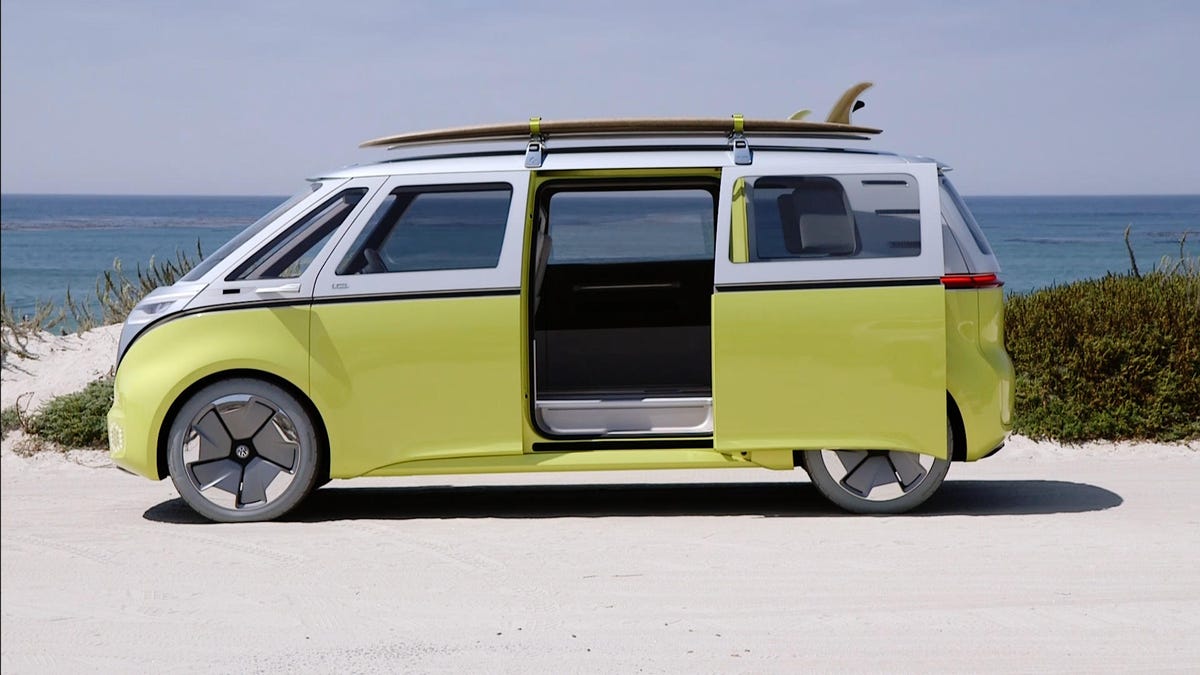
The Canoo looks pretty awesome. If ends up being good, it will be a decent competitor to the Ford Maverick. I will say though that they did the same trick as the VW Buzz. They extended the windshield down to the very front of the vehicle, but the driver is still sitting behind the front wheels.
If you look at that picture you can see the steering wheel and the drive is behind the front wheels. They just extended the front windshield to give the same look at the older vans.
I recently demoed an old hot tub that came with out house which ended up having a bunch of mice nests in it. Took it all the transfer station then just hosed all the mouse poop out of the bed out afterwards, and was able to help a friend move a couch the next day.
The biggest advantage of a truck bed is the separation of the truck bed from the cab. I can haul mulch, or the nasty rotting wood from an old hot tub in the bed without getting the rest of the vehicle gross. Another advantage is unbounded height constraints, I recently got a heat pump water heater for my house and they recommend keeping them vertical because of the compressor. So I was able to strap it upright in the bed which isn't possible in an SUV.
Sure you can haul a lot of stuff in a mini van or SUV but largely you run the risk of ruining the interior which I would prefer not to do in my vehicles.
That is why I'm replacing my SUV with a Tacoma (other than that the SUV blew its engine). I tend to move a lot of outside stuff and with the Jeep I was making many trips with lots of buckets. Now I will be able to let them just dump a pile of mulch in the back and then just spray the thing out.
Yeah that was the main driver for me ordering a Ford Maverick. I has an Hyundai Ioniq before, and a BMW X3 before that. I am well aware of what can be moved in a sedan and an SUV, but it is much easier to move those things with my Maverick. I renovated most of my bathroom with Ioniq, but had to rent/borrow vehicles to get drywall and such. I recently finished my kitchen with my maverick and was able to move everything with that. Also it was 31.5K new and gets 40 mpg on average, the only real compromise was the lack of AWD. Which I make up for with snow tires.
Largely automakers don't make a lot of long bed trucks because they don't sell. Ford/GM/Ram all make long bed trucks but they only really sell for fleets.
But if you check out the Ford Maverick you can put 3/4 of a ton in the bed, and you get modern safety features.


Trying to manage that many engines while technically possible with controls of the era (check out the N1) means your control system would be introducing reliability issues instead of adding fault tolerance through redundancy.