Really want to get this guy for our podcast; we have one of Jaynes' student and another author on hallucinations. Would be great to have an alternative perspective.
Thanks. We used blender cycles to sculpt the atom. Our goal is to visualize the math of electromagnetism and imagine how such invisible action at a distance can occur.
Because charge is rotation in this visualization, we can also say that the charge is moving since the speed of rotation propagates after the circuit is closed. This is a patent reification, of course, but the idea is consistent with QM.
Nice. And this is in contrast to pushing water (sound wave), where the wave propagates only at the speed that molecules bump. Like, if I'm in a big line, and someone pushes at the back of the line, I only get pushed by the person immediately behind me. An electron is able to be pushed by electrons at the back of the back of the line. The electron immediately behind an electron will push hardest, proportional to inverse square law. But when there are twenty electronics behind, and the very last one pushes, it has a decreasing effect on all electrons in front, but at time 2, those movements allow propagate forward, etc etc.
Wish I could visualize that. Oh yeah. Ha!
I like you spindle representation of inverse square law.
Hydrogen is a great place to start with electricity since there is only one orbital surface/ electron-shell. The principles are easily generalized to the multipolar surfaces of metals. Metals are conductive because of these unique d orbitals. In general they have unpaired electrons, which means charge on balance.
"To begin with"...
1) these are ionized hydrogens with delocalized electrons.
2) Capacitors build up voltage, which is differential rotation of their metal's e-shells.
3) In the vacuum, there is such low pressure on the atoms that their surfaces expand to fill the void. There is no such thing as a true vacuum. This is also how cathode ray tubes work under this model.
4) See above. The orbitals are in contact.
5) All those cyclotron measurements are electric at the end of the day.
6) Batteries charge the terminals electro-chemically. chemistry will follow in an additional video after magnetism. Basically, it is the same concept. Enmeshment of surfaces.
7) What dynamos?
8) All materials resist current to certain extent; this has to do with how conductive they are, which is a direct result of how their orbitals are configured/ how the atom is shaped. Capacitors are just terminals separated by insulating resistors. All these details deserve a follow-up blog at some point for sure. Thanks.
9) light is coming. Heat is chaotic motion, while electricity is a particular rotatory type. heat also involves translation/vibration in addition to shell rotation.
10) Hydrogens that are ionized are not empty protons, they simply have delocalized shells.
11) We don't think the limitless extension of the electron is mathematical gibberish. We think that those structures are essential to other atomic phenomenon, including light and gravity. videos to follow.
12) the locked up gear thing isn't a problem for the multi-polar orbitals of actual metals. It would be a problem for a hydrogen lattice, unless it had a hexagonal crystal, with bent geometry...hm.
It is an insulator, so a terrible place to start. Simplicity doesn't help if it's oversimplified to the point of being totally wrong.
> In the vacuum, there is such low pressure on the atoms that their surfaces expand to fill the void.
I don't think you realise just how absurdly distorted the orbitals would have to be for this to make sense. The gap in a classic Leidenjar capacitor is about 1mm, or something like 4 million times the inter-atomic spacing. You seriously want me to believe that the surface atoms have electrons whizzing out to orbits shaped like a 4,000,000-to-1 ratio ellipse and then coming back to whip around a specific nucleus? You're... kidding, right?
> All those cyclotron measurements are electric at the end of the day
What I mean is that cyclotrons have individual, loose particles circling around. Like isolated electrons, muons, protons, or whatever. They're not atoms, but there's a definite current that you can measure in Amperes. The beam makes a magnetic field and everything. How does your "atomic orbitals meshing together" explain currents that don't involve atoms!?
> Batteries charge the terminals electro-chemically... Basically, it is the same concept.
The same concept as what? You haven't explained how chemicals can produce the electron shell rotations.
> What dynamos
It's another word for generators. How does an AC generator generate your current? Use equations please that predict the output current using numbers based on the geometry of the coils and the rotation.
> All materials resist current to certain extent
That's just plain false, superconductors exist.
> All these details deserve a follow-up blog at some point for sure.
They deserve treatment in the first post, the first paper, the first video. It's like saying "I've got this wonderful idea for fusion power! The actual fusion and power bit I might cover later, I'm going to start by waffling on about how the vacuum chamber has no air in it."
> Hydrogens that are ionized are not empty protons, they simply have delocalized shells
In no way is this true. You can separate protons from electrons and move them meters apart and they'll just sit there. This happens all the time in interstellar space where plasmas can have mean inter-particle distances measured in meters. There is no meaningful way in which you can point at a particle in one room and say that it "belongs" to a particle in another room and that this makes up a hydrogen atom.
> We don't think the limitless extension of the electron is mathematical gibberish
Mathematically it's perfectly fine. You can define fields however you like. Infinite extent, infinite precision, infinite whatever you like. The physical universe just doesn't work that way, there are no known physical infinites.
> We think that those structures are essential to other atomic phenomenon, including light and gravity.
If you can solve the problem of gravity, you can collect your Nobel prize. Unfortunately you have to start with baby steps, such as explaining how capacitors work without hand-waving. Use numbers. Run a simulation or two.
> the locked up gear thing isn't a problem for the multi-polar orbitals of actual metals. It would be a problem for a hydrogen lattice, unless it had a hexagonal crystal, with bent geometry...hm.
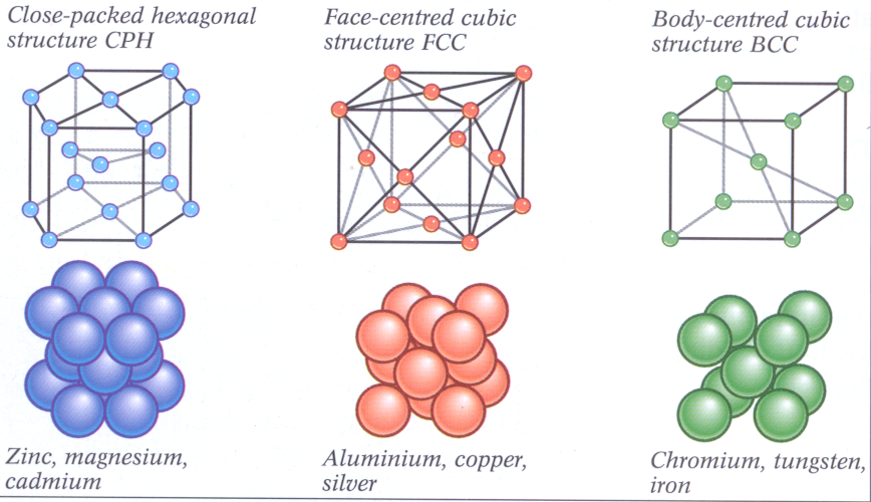
The close-packed hexagonal structure cannot transmit rotations in the sense of enmeshed gears, because it's made up of a bunch of triangles! Last time I checked, zinc, magnesium, and cadmium are all conductors.
Again, with actual metals, the "polar" orbits don't participate in conduction. Loose electrons do, and they don't mesh like gears. They can't possibly, because hexagonal lattices still conduct electricity.
Not gonna dignify your ad-homs..but aren't u the troll here? Last meal for you: the model is perfectly compatible with all of maxwell's equations and basic QED. This is an illustration not a new theory.
Yes, ionization is interpreted as thinned, extended outer surface of the atom (e-shell). No physical reason it cannot fill a room if depressurized sufficiently.
Otherwise, show me a single electron. And then use it explain the concept of charge, not quantitatively but mechanistically. What other than magic holds it in it's path?
Until then, ionization is delocalized surface of the atom because that's the only way to rationalize the idea with physical objects (aka the atom), which physics ought start with. It IS the study of objects that exist. If you consider ionization this way, it clears up the rest of your concerns & I will happily walk you through the details. If you're not willing to take that interpretation we have nothing more to discuss, eh?
> perfectly compatible with all of maxwell's equations and basic QED. This is an illustration not a new theory.
You may have misunderstood a few aspects of QED. It is true that the U(1) field of QED and gauge theory says that there are "little circulations" that explain all known electromagnetic phenomena, but this is at a completely different scale than electron orbits, and doesn't require atoms in general.
We can do A/c with the shells rotating back and forth. The micrometer gap is not a problem for the surface of the atom, which can extend indefinitely.
The electron is simply an excitation of the electric field in QM, so one does not come without the other.
Physics is the study of objects that exist, and so it's important to begin with objects in a visualization. Fields are a concepts that measure the location of something happening. That something is the surface of the atom.
>electron is simply an excitation of the electric field in QM
I am not a physicist but I think here is your mistake.
The electron is an excitation of the Electron Field. It's matter aka fermions.
The electric field are bosons.
Those are two orthogonal things. You can have one without the other (although the fields are coupled).
The point I'm trying to make, is that there are light fields, and matter fields.
Those are two distinct independent things (that can eventually be coupled).
Electricity is mostly a light phenomenon.
With the fields everything happen locally.
If I recall correctly, one of Faraday main discovery was displaying the lines of the magnetic field using metallic powder. Showing that fields were "real" things.
Two electrons don't interact directly with one another. It's more electron interact with photon which then interact with another electron. The one case where two electron interact directly with one another is the Pauli exclusion principle to make sure electron don't find themselves at the same place.
When in doubt follow the energy.
You can store the energy as bumps in light field aka photons (E^2+B^2 (eps0=mu0=c^2=1) ).
You can also store the energy as bumps in the Fermionic field : sums of kinetic energy of electrons.
Finally you can store energy in the coupling between those two fields. But this happen only locally.
At first approximation when dealing with electricity problems what matters is the energy of the electric field, not the kinetic energy of the moving electrons.
Faraday believed his 'fields' were what some sort of actual objects were doing. He called them tentacles IIRC.
In our initial atom at beginning of the vid, the electron has tentacles based on Faraday to account for the tails of the RDF of QM — the indefinite extension of the shell. These will be important in visualizing the atomics of light and gravity in future vids. We ignore them for the circuit because they would obscure the events, but the tentacles remain!
At the extreme electricity works just fine without the electrons. Take two hydrogen nucleus without any electrons (aka proton H+). Throw them around and see where they interact and land.
They experience electrostatic repulsion, no electron cloud required.
Local classical Maxwell is enough to explain electricity no need for QM.
I think I get what you are trying to do : "making the Light field implicit".
It's a tempting thing to do because when things are coupled we are kind of thinking : is it the electric field which deformed the electron cloud or is it the electron cloud which generated the field.
But this picture is dangerously misleading. It makes you assume strange electron cloud which interact non locally in complicated way (strange arms...). By giving special properties to the electron it doesn't respect the symmetry with respect to charge. Maxwell works just fine for protons. It also completely obscure the facts that we can have external E and B field ; in particular it makes you think that photons need matter to exist which isn't the case.
It is much more clear and general to make light fields and matter fields explicit.
"Light is the way to exchange momentum between charge carriers".
First atoms are neutral, while light affect can only charge particles.
The atom is a composite of a positively charged point-like nucleous, and a negatively charged cloud-like charge density. This complex dance duo, can store energy in between them. Those are the bound states of the electron, but that's not the matter of electricity but chemistry. In electricity, this dance duo can store energy in its surrounding by deforming its electron cloud to become an electrostatic dipole.
Transaction is the wrong picture to have when we are dealing with electricity. The continuous picture is a lot better.
The momentum of an atom is a continuous quantity. At every moment in time it can be exchanged locally in continuous amounts. Both the positive nucleous and electron cloud are taking from the field and giving locally to the field.
Photon is kind of a confusing term because you have to distinguish between the virtual photon which mediates the coulomb interaction in a continuous way, and the real one which can go on its way, or be absorbed/emitted by atoms provided that the electron cloud can deform in such a way to account for energy conservation during the collision.
To see the distinction take the previous example of two protons H+ going towards each other then away. The trajectory to have in mind is they are following a perfect curves trajectories, and not a sequence of straight lines occasionally changing direction when the photon transaction happen. Those typical QM like trajectory you see in cloud chambers need the energy to become bounded in some discrete way. For example electron fly straight, real photon hit and is absorbed and atom change direction to conserve momentum and the electron jump to a higher orbital to conserve the energy (the energy is bounded to the atom for some time), the electron keep flying straight, then it emits a new photon and change direction. These kind of trajectories happen when the energy can only bounded in discrete quantities, but that's a matter about QM, and not electricity.
Finally clarifying what that the light field is carrying in : momentum, and making clear that the light field doesn't carry electric charge.
The primary problem with the other analogies is that they don't use real objects. Physics is the science that studies objects that exist, after all. That means we can't be crashing concepts into one another (like charge reification, for instance). It's important to begin physical explanations with objects instead of concepts, so we advance the atom.
While this depiction of the atom isn't the end-all-be-all atom, it's a step in the right direction, hopefully.
Analogies are needed to grasp concept and allow to do predictions. This visualization was meaningless for me. I can't predict what will happen if we make three point connection with different potential for example.