Probably none. By having an open system, prices will invariably get pushed down (better for end users) which will deincentivize drivers (worse for end users)
There may be some equilibrium somewhere, but I don't believe it will be in the users best interest having to wait for cars.
By having an open system, since there is no longer a corporate middleman entity which takes a cut off a profit, and since anyone can compete, therefore prices will get pushed down. But just like any other perfectly-competitive system (https://en.wikipedia.org/wiki/Perfect_competition), the price in equilibrium will approach the marginal cost when marginal cost equals marginal revenue, not get pushed down indefinitely. I guess that would approximately equal to the market price of uneducated labor willing to drive plus the cost of the car+gas usage, insurance, etc. So price won't drop lower than what is needed to get people to actually drive the cars.
Now of course, maybe also need to be concerned about autonomous cars using this p2p app, in which case just need to pay a slave robot with the minimal energy it requires to drive.
In respect to outsourcing our health to doctors, that is for very good reasons. People are shown to be completely deficient when trying to look out for themselves in this regard.
A doctor can't keep you out of dangerous situations that are hazardous to your health. They can't exercise or watch your weight or quit smoking or take your medicine for you. They aren't there to notice the first symptoms of a disease. And you'll get worse results if you don't describe your symptoms accurately.
Of course they'll still do the best they can for people who don't do any of these things, but people who take care of themselves (or have other people - amateurs - to advocate for them) are going to get better use out of the medical system.
People are shown to be completely deficient when trying to look out for themselves in this regard.
jacobr1 is completely right thought, YOU have to take ownership of your health situation. No one can do that for you. Your doctor has hundreds of patients to think about, and only so much cognitive energy available to burn. How much time per month does he/she spend thinking about you specifically? And note that your GP/PCP is likely not up to date on all of the cutting edge research coming down the pike. I'm sure they take their continuing education credits as required by the AMA or whatever, and some probably read a few journal articles and what-not, especially in an area of particular interest. But if you have some uncommon condition, do you think your doctor is on pubmed all day researching every study published on your condition, looking for that one extra bit of knowledge that might make a huge difference. Nah, they're playing golf. Or playing with their kids. Or any of the myriad of things normal people do when they aren't working.
And what if you have, FSM forbid, two (or more) doctors. Maybe you have a GP and a cardiologist or an endocrinologist you see. Who's responsible for noticing and directing attention to conflicting instructions between the two? Who's responsible for making sure each knows about all the drugs you're prescribed by the other? Etc? Yeah, you are.
Of course lay people shouldn't try to be their own doctor, but saying that you have to take responsibility for your health care is totally accurate.
You still need to take overall ownership. Get second opinions. Do some research on use that not as the basis of making some sort of self diagnoses, but as to have a frank discourse with your doctor on your condition. Prevent the need for acute treatments by taking preventative measures that have broad scientific consensus (good diet, exercise, safety equipment, etc...). Do you have a living will and advance directives? Check to see if generic prescriptions would save you money. Proactively ask about different drug formulation if you anticipate or identify side-effects. Get justification for suggested remedies. Ensure your records are transferred or up to date when changing providers. Proactively inform your doctor of family history or environmental conditions regardless of any relevancy you expect - let them make the call but give them all the data. Research providers and providers networks, not just for expertise, which is really hard to judge, but for things like: If I call on the weekend who picks up? Your GP on her mobile? Whoever is on-call? A nurse? A referral service from the local hospital? It is wise to outsource expertise you don't have, but not management of that expertise if you can avoid it.
It's not about the government getting access to a tool like this, Apple specifically doesn't want to create a tool that can easily defeat its own security, to then hand over to the FBI. The government has, on numerous occasions, shown it has some pretty horrible practises in securing information, and this kind of tool being let out into the wild is bad for For everyone (not just Apple).
Why risk opening that Pandora's box? If the tool doesn't exist, it can't be exploited by bad actors
What tool? Apple can just give the government the private key for that specific phone. Done.
Everyone else is still safe. Safer, I might add.
So long as there is a clear process for the government to get access to specific keys for specific phones.
If Apple is CAPABLE of building such a tool (and use it for themselves), then I think the government should have access to it too.
Apple does not have the key for that phone. No one does.
What the FBI is asking Apple to do is write software that will turn off the "wipe after 10 wrong passcodes" feature of iOS, so that the passcode can be brute-forced.
Setting aside the government's interest in such a tool, imagine the interest from hackers.
Consider that in 2011, someone hacked into RSA to steal info about their tokens, just so that they could then hack in Lockheed to steal top-secet info.
Now imagine someone hacks into Apple (very possible to happen) and steals the security-defeating software code to install on other iPhones.
Though I find it hard to believe that Apple doesn't already keep some sort key(s) to unlock individual phones or to turn off this "wipe after 10 wrong passcodes" feature.
Facebook (and pretty much every other internet company on earth) keeps password hashes and salts in their databases - So in theory, the government could already brute force the vast majority of our personal data from these websites.
At least with a phone, the government has to physically get a hold of it in order to brute force the phone and read the data.
No need to brute force Facebook or most other hosted services, because very few of them store user data encrypted at rest.
Passwords control access to features of the web application, but employees of the company can just go around that and get the data off the server directly.
iPhones running iOS 8 or higher are different--they do encrypt data at rest, and create the key by combining device-specific info with the passcode that the user creates. So without that passcode, no chance to decrypt without brute forcing.
If you're asking what tool FBI wants (special weakened version of iOS), and suggesting Apple hand over a non-existent private key, then you don't understand the basics of the dispute.
"the FBI said they are not seeking to set a precedent in the case, but to get the company to help them open a single phone that may hold crucial evidence to help explain the most deadly terrorist attack on U.S. soil since Sept. 11, 2001."
What qualifies this as being a terrorist attack? Is it because the colour of the perpetrator's skin wasn't white? Sandy Hook had double the number of resulting deaths and so is technically more deadly.
Virgina Tech was done by a South Korean born man with even more deaths than Sandy Hook.
This is the national narrative of the event now. Presumably, this is because the perpetrators allegedly voiced some kind of allegiance for ISIS or something. The phrasing is meant to invoke all the fear, uncertainty, and doubt of 9/11. It's also intended to capitalize on the scaremongering that flows so easily into a national consciousness reeling at the shock of an event like this. We can't call mass shootings terrorist attacks when they're perpetrated by disturbed, home-grown killers who haven't made some kind of political statement in connection with their actions. This is arguably why the VA Tech shooting is not terrorism, but this one—and others, like the Planned Parenthood shooting, the Oklahoma City bombing—qualify as terrorism ... and then get repeatedly thrust into the national conversation with those labels so people don't think of them merely as crimes.
> We can't call mass shootings terrorist attacks when they're perpetrated by disturbed, home-grown killers who haven't made some kind of political statement in connection with their actions.
The Virgina Tech shooter sent an 1800 word manifesto and 27 videos to NBC News during his rampage. I'd say that qualifies as making statements.
It's been a few years, and my recollection is hazy. Sorry. Were these statements political statements of a sort that opposes the US government in a clearly defined way? Did they state some kind of ideological agreement and allegiance to ideas considered anti-US or anti-US-govt? It's late, and I guess I wasn't as clear as I needed to be. I was making a pretty obvious and clear distinction on what kind of political statements I meant. I didn't say statements of any sort qualify the terrorism label.
Well I have to admit, my understanding of what constitutes terrorism was not solid, so I googled it. It seems the statements don't necessarily need to be political in nature.
The FBI defines domestic terrorism[1] as:
> "Domestic terrorism" means activities with the following three characteristics:
> - Involve acts dangerous to human life that violate federal or state law;
> - Appear intended (i) to intimidate or coerce a civilian population; (ii) to influence the policy of a government by intimidation or coercion; or (iii) to affect the conduct of a government by mass destruction, assassination. or kidnapping; and
> - Occur primarily within the territorial jurisdiction of the U.S.
The first point, I imagine mass shootings qualify as acts dangerous to human life that violate law.
For the second point, I would argue that sending a manifesto[2] to media with nuggets like what follows are designed to intimidate/coerce a civilian population
"Thanks to you, I die, like Jesus Christ, to inspire generations of the Weak and Defenseless people — my Brothers, Sisters, and Chil- dren —that you fuck.
Like Moses, I spread the sea and lead my people —the Weak, the Defenseless, and the Innocent Children of all ages that you fucked and will always try to fuck —to eternal freedom. Thanks to you Sinners, you Spillers of Blood, I set the example of the century for my Children to follow."
Hey, I think there's a chance I misunderstood your original comment to which I replied and started what, to me, has turned into a tangentially related discussion. I wasn't actually trying to provide a legally sound and properly defensible definition of what constitutes calling the San Bernardino event a terrorist attack versus other mass shootings. I was merely offering that it is the narrative chosen for discussing the event, as well as advancing a political agenda, regardless of whether its defining merits actually differentiate it enough from other mass shootings to cross the line into terrorism territory—which I think long ago crossed into the nebulous and ill-defined. Personally, I reject this narrative, and see this event as either YAMS[1], or all mass shootings as YATA[2].
That said, I think there's allegedly more to why the Va Tech shooter wasn't called a terrorist in the national narrative and reporting on the event. That excerpt of his statement sounds like the ravings of a lunatic to me. Of course, I think the same of any type of statements that champion murderous religiously motivated intent. I don't read that and get the sense of any desire to effect political change, influence policy, intimidate, etc. There is a certain practical and theoretical argument that can be made arguing all public actions taken by human agents are inherently political. But some actions are more political than others. I don't think that shooter's statements really had the effect of intimidating or coercing the public. I don't think they even registered in the public consciousness.
Anyway, my original point was that this San Bernardino shooting has been thrust into the national consciousness as part of the terrorism narrative because it's a politically convenient message, and because, as you wondered, the ethnic and religious identity of the perpetrators fits that narrative so perfectly. I mean, it was instantaneous. Had the shooters been radical, white Christians, I don't think that would have happened. There would have been news reporting that asked the question, "Is this a terrorist attack?", and then give a no. Holding the Judeo-Christian god as one's source of obligation doesn't yet fit that category.
> FBI investigators have said that Farook and Malik had become radicalized over several years prior to the attack, consuming "poison on the internet" and expressing a commitment to jihadism and martyrdom in private messages to each other. Farook and Malik had traveled to Saudi Arabia in the years before the attack. The couple had amassed a large stockpile of weapons, ammunition, and bomb-making equipment in their home.
It's pretty offensive to focus on the shooters' skin color, instead of what they were: violent Islamic fundamentalists.
We've seen violent Christian fundamentalists recently with the Colorado Planned Parenthood shootings.
While many around the world consider that a terrorist activity, it had not been labeled as such by US officials (the guy is only being charged with murder and not additional offenses).
I find the double standards to be what is truly offensive.
The one still alive describes himself as a "warrior for the babies". He also
> Mr. Dear described as 'heroes' members of the Army of God, a loosely organized group of anti-abortion extremists that has claimed responsibility for a number of killings and bombings."
But it's terrorism nonetheless. The anti-abortion movement in America is just as organized and well-funded as the group behind the San Bernadino shootings, if not better organized and funded. They also have the protection of 1st Amendment liberties here.
That's absolutely irrelevant. Terrorism is politically motivated violence, full stop. You don't have to be a card-carrying member in a "designated terrorist organization" to be a terrorist, and to suggest that you do is myopic and naïve.
What exactly is this nebulous western world order? These guys we're supposed to be wetting our pants out of fear of can't even agree themselves beyond some blathering about Israel.
No seriously, how come this case is so much more important than all those other mass shootings (and I'm hearing a lot more about San Bernadino than I'm hearing about Dylan Roof)
It's also about reporting statements verbatim without trying to discern what the truth is. Writing down a public statement is basically just relaying a message; at that point you are writing a press release for them, not doing journalism. And then you wonder why they replace you with a Reuters feed...
A terrorist is someone who uses violence or the threat of violence to coerce or intimidate.
Revenge murders or anger murders are not terrorists. They kill people and then kill themselves; directly or by police. Because they are dead they are no longer a threat. There is no parent organization to fear.
At least that's my definition. And what I think along the lines of what most people intuitively think.
> A terrorist is someone who uses violence or the threat of violence to coerce or intimidate.
Not trying to nitpick, but with this definition, any police officer who has used the threat of shooting someone with their firearm or taser is using the threat of violence to coerce people.
I'm not a supporter of terrorist organisations in the slightest. I am just sick of the racial profiling that goes on which is helping to fuel their cause.
I think that having a political agenda, and stating that they were loyal to an organization (ISIS) that is calling for acts of violence in order to achieve political aims is what moved San Bernadino into the category of terrorism, and something that was missing from Virginia Tech and Sandy Hook.
"Terrorism" is a topic where we have to come to grips with definitions early on, or the analysis goes seriously astray.
To me, terrorism is the use of stealth to deliberately target civilians in a media effort to change political opinion.
I've had this definition for several years, and I have never reached some of the crazy conclusions other commentators reach about the topic "George Washington was a terrorist!" "One man's terrorist is another man's freedom fighter" and so on.
Definitions matter.
Note: This is not related to the merits of the FBI's case. My point is simply that we can all use the word "terrorism" and all actually be talking about different things.
In the "Ultralight" backpacking community, I don't see something like this taking off.
I remember watching a video the other day of a guy talking about his gear for the AT and he went so far as to cut his toothbrush down and even talked about drilling holes in the remaining handle to further cut down on weight.
If one is really paranoid, register only a toe print. I've currently got my right big toe registered to my phone as an experiment and it works as often as finger scanning
Oh man, my Nokia 8910 (the one with the titanium casing) was damn near indestructible. I'd dropped it more times than I can count (once off a 2nd story in a nightclub into a dance floor where it was promptly trampled), backed over it accidentally because it fell out of my pocket as I got into the car and left it in my pocket and washed it 3 times (it stayed on the whole time). The 4th washing was the one that finally killed it.
We played football in the classroom with my Sony Ericsson K700i when I was in high school. I still have holes in my wall because I kept throwing it every time some game annoyed me.
My charger died, so I disassembled it and put the wires directly on the battery. Finally, I accidentally crossed the wires and the phone died after burning for like 2-3 minutes.
> What I suspect is that over decades PR firms and major brands have executed a rebranding of the old ways, attempting to recast it as 'paranoia culture' or some form of political radicalism. Their campaign likely involves emphasizing the small paranoid faction of this much larger culture on their TV shows and pop media.
I think that the paranoid culture has evolved relatively organically.
As an avid sailor, I've been looking into breaking one of the long standing records of doing multiple circumnavigations back-to-back and food preservation is one area I've been looking into.
It's been extremely difficult to find content that isn't interspersed with articles on weapons (and other paranoid subjects) found in a lot of content online, when all I am looking for is food storage ideas.
In America firearms aren't considered 'paranoid subjects' because hunting (and fishing) has always been a part of this traditional "wholesome" American culture of which I spoke.. right along with smoking meat, canning vegetables, taking care of animals, etc. After all how else can you keep your chickens and sheep free from natural predators ? To me that's not paranoia
And I don't consider firearms as a broad subject paranoid. It's when talking about the use of firearms to injure other human beings alongside the best way to store flour is where I draw the line.
I'm just looking at food storage. I'm not interested in surviving apocalyptic-level events via good old wild-west justice.
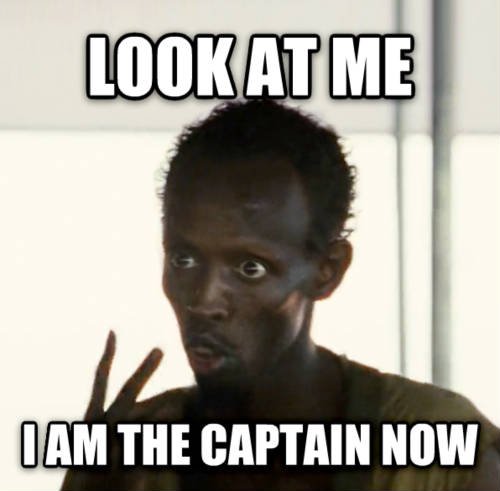
You're thinking of circumnavigating but yet you're not psychologically prepared to push back against a boarding party ? Doesn't that mean even a small skiff could overtake you ?
> You're thinking of circumnavigating but yet you're not psychologically prepared to push back against a boarding party ? Doesn't that mean even a small skiff could overtake you ?
I suspect you're blatantly trolling, but I'm going to answer you for the sake of completeness
Pirate activity is most often limited to certain parts of the world. I have no desire (or real need) to visit the Gulf of Aden anytime soon to respond to that image you posted as that is one of the hotspots. Another hotspot is the Straight of Malacca, where it occurs against shipping and less against smaller pleasure craft.
Circumnavigations adhering to WSSRC rules typically dictate that each circumnavigation needs to be 21,600 nautical miles and crossing antipodal points. To stay within these guidelines, I can quite easily plot courses that avoid most pirate hotspots, since most of the time will be spent in the Southern Ocean.
I'm more concerned about colliding with whales, squalls and suffocation from leaky gas hoses than I am with pirates.
To be honest I didn't mean to troll I just know very little about modern sailing, but I'm truly in awe of individuals who have what it takes to attempt that kind of an extreme adventure.
Never the less, and perhaps it's my American bias coming through here, but I am astonished to discover that some adventure sailors travel great distances without even a single AK-47 on board. In my imagination a revolver wouldn't suffice as a deterrent since it can't be recognized as clearly at a distance, and since many pirates are ex-military they may not be particularly afraid of a pistol.
I personally wouldn't consider navigating the Mississippi delta in a boat at dusk without a shotgun, because there's more than just pirates to worry about, you've got paranoid drug runners looking for their drop zone, hell what about alligators.. it's illegal to harm one, but if a big one's somehow gotten on deck you better believe I'm reaching for my protection.
Carrying firearms on board would significantly limit the places a world-hopping yacht could stop at; at best inconvenient, at worst deadly when you choose not to put in somewhere because you don't want to have to drop your AK-47 over the side. A lot of countries really do not want sailors turning up with AK-47s.
Did you know bear spray is better then a handgun for bear protection? The rate of injuries, from bears, is a lot lower with bear spray, because it turns out no reasonable caliber will actually stop a bear before it gets you whereas the spray only needs to be well, sprayed in the general direction.
The point being, you might want to re-analyze "high seas gun battle" for its actual downsides.
> The point being, you might want to re-analyze "high seas gun battle" for its actual downsides.
I agree that there could be tremendous downsides, but at the same time I wouldn't want to reach for any type of safety gear and not have it.
What if it's not even "real pirates" but rather a haphazard raid by what are obviously hostile teenage boys from a nearby village operating a raft with a single outboard motor armed with only machetes ? These kids couldn't afford a gun and this could happen anywhere where there's poverty not just in areas known for piracy
Another scenario, what about the stranded boat that looks like it's stuck on a sand bar relatively close to port and is begging for a tow. There could be a pretty girl on board. It could be an opportunist type situation where they really did just need a tow, but when they sense you're unarmed they might try to commandeer your craft since maybe they have warrants, or a shaky visa situation inland or whatever.
The professionals, namely the crew of cargo ships, avoid having guns on board, even when their route takes then to pirate-infested waters. (They also avoid having girls on board.)
I think that was the case until a few years ago. Nowadays, Reuters reports, cargo ships have "massively" increased the number of guns on board along with people who know how to use them:
"Like many merchant vessels, the QM2 now carries armed private contractors when passing through areas of pirate risk... M-16-type assault rifles and sometimes belt-fed machine guns...
For many in the shipping industry, the fall in attacks is a vindication of the decision to massively ramp up the use of armed guards. So far, not a single ship with armed guards has been taken by pirates..." http://www.reuters.com/article/us-somalia-piracy-idUSBRE91B1...
> It is very common (especially as you get older) to mix up names for people that are in the same mental category while you are speaking
Exactly this. My mother calls me by my dead brother's name all the time. I'm pretty sure if anyone was aware of his death, she would be (given she was with him at the time).


There may be some equilibrium somewhere, but I don't believe it will be in the users best interest having to wait for cars.
Just my thoughts. I'm probably wrong.