Okay, this is stupid. I currently work on a team where I do all the development. We have another developer that really shouldn't be a developer, by because of unions and such, we can't get rid of him. I try to work with him as much as possible, but in two years, he hasn't produced any code that could possibly go into production. But he has a great attitude, and can at the very least be the cover off I need for vacation.
So, maybe I am an asshole, but I find it hard to use the term "we developed this", or "we wrote this" when he's effectively written none of the code. So in order to conform to the criteria set out here, I would be lying, and I also wouldn't be a passionate developer who cares about my contribution. So sure, you don't get assholes. But I'd rather have an asshole than an liar.
The irony that the top developers started as indie developers for the most part, and simply grew their business with successful products seems to be lost on the author.
Assuming that that's true (idk if it is), they were there first, when offerings were more limited and the big wigs hadn't gotten in. My little hypothetical appstore game isn't going to compete with offerings like Angry Birds into which probably many man-years have gone in already. OP's point is that it's harder to get in NOW.
When is this ever not the case? It's harder to own land now than it was when the government was giving it away for free. That in no way makes it impossible to own land, and no one says stupid things like "Why people can't win the land grab in America".
Build a good product, it will sell. Build an innovative product that scratches the itch of millions and you get onto the top 5 list.
What I see far too often is developers passing off a derivative or poorly executed idea, and complaining that the marketplace is the problem. It's not.
I don't see why you're looking at it as an either-or case. I'm sure there are plenty of poorly executed ideas in the marketplace, but that doesn't invalidate my point. To use your land analogy, it's now just getting more and more expensive to buy land in America - just as it's getting more and more expensive (in terms of cost and effort) to put out an application that meets the market's increasingly higher standards.
I'm not saying something is WRONG with the market, I'm making an observation about the state of the market.
There are a million apps, and only 5 people that can 'win' the app store at any time. To say it's more difficult to rocket to the top is an inane and obvious observation. It has nothing to do with indie development, it's about the fact that there are 5 top spots for one million apps. By definition, 99.999995% aren't going to win, regardless of whether they are indie or not.
This is a little silly. As a developer, I love cutting code. I really don't care if I'm pair programming or not. I don't like to write tests nearly as much. If you swap in "write unit tests" in place of "pair programming", the article pretty much works the same, the one difference is the authors social anxiety.
So really, this isn't about pair programming, it's about the fact the the poster has social anxiety, and needs to address that. (And I need to stop posting on HN and write some tests).
You're projecting. I completely understand the OPs position; I concur 100%. You can dismiss it as some foolish antisocial whine if you like; or you could understand that his position is entirely valid.
If you've never gotten into the zone; if you've never spent an entire afternoon and missed meals and been utterly surprised at the clock when you come up for air; if you've never been productive at the level of a seriously skilled programmer, then I suppose you would dismiss this as a silly rant. But that says more about you than the OP.
If you've never gotten into the zone WITH a pair you're really missing out. It's a far more incredible experience than doing it yourself, just like many things... ;-)
Would it be pair programming if two people sit together and one writes the unit tests while the other one implements the code to make it pass? Red person and Green person?
I guess during the refactor stage you would have some sort of design discussion as well. And it might be useful for one person to be the DRY promoter while the other person promotes the YAGNI point of view, or else refactoring can get out of control.
Until we get out hands on the OS, so outside of idle speculation, we really don't have much to go on. Steams "Big Screen" is far from mainstream ready, so I doubt that we'll see a usable OS for some time.
You can start to watch what the interface at least will be by running the linux client with -steamos, it'll autostart in big picture mode with a few cosmetic differences right now (Mostly with settings).
As a base for a well rounded developer, I would say to pick C# or Java and Ruby or Python, and C or Go. Learn javascript. Avoid PHP, even if you're starving.
PHP has actually matured pretty well. Since the introduction of Composer and frameworks like Symfony 2, Zend Framework 2 and Doctrine 2, you can actually build very sophisticated software in PHP. However, for green field projects I personally wouldn't use it.
However, having said that, there are still plenty of guns lingers out there copying and pasting crap from PHPClasses.
6k for a 4K 20" tablet with a 2 hour battery that weighs over 5 lbs with only an i5 and 2GB vram? This isn't going to be the ultimate Civ 5 machine that I've been hoping for.
I keep wondering why tablet manufacturers are all focused on the smaller form factor when they could be producing all in one screens upwards of 32" to replace clunky desktop units. Such screen sizes wouldn't necessarily need the generosity of a long lasting battery because of their sizes but could pack enough punch for compete with desktop units.
Hopefully manufacturers delve into that market more and drive the price down.
How exactly would one hold a 32" tablet, or situate it at a desk? Arms grow very tired operating horizontal touch screens, and if the screen is on a table, angled, it's awkward to sit and look at.
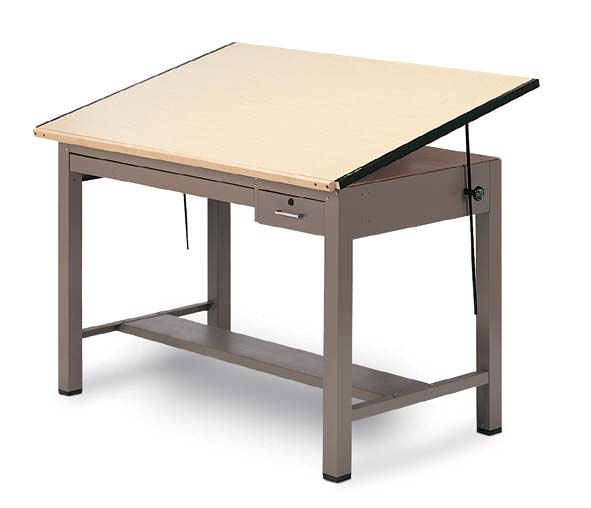
There should be a stand that holds such a tablet at an angle comparable to a drafter's table [1]. That especially combined with a Wacom digitizer would be perfect for a lot of creative professionals.
Ha ha. Ridiculous. The reason why smartphones and some tablets are popular has less to do with touch than with size. It's pleasant to hold a small screen a foot from your face for reading and watching videos.
I've been impressed with Postgres, and still have a sour taste in my mouth over MySql's sale to Oracle. So why would I want to use MariaDB over Postgres? Is there a compelling reason to give it a look?
The main stronghold of MariaDB is the drop in replacement for MySQL. If you already have a well established web app and you are planning on get off the clutches of Oracle, MariaDB is your easy choice. You don't have to make substantial changes or worry about breaking any existing functionality. As for performance, can someone who have used both comment on it? Also anyone knows if any exciting changes coming to MYSQL? Can't believe MySQL still doesn't have support for Json.
I am pleased to see that the traditional SQL databases are still advancing. Having used various NoSQL databases, I always miss the declarative nature of SQL.
I have to agree that MariaDB's main stronghold being MySQL drop in. The other MySQL drop in out there is MemSQL, which is closed and they really keep pricing under wraps.
TokuDB is a great engine. I don't think Postgres has a storage engine that matches the benefits TokuDB brings, but other than that I don't see many benefits over Postgres for a new project, but haven't compared the replication features closely.
Migrating a big codebase to Postgres from MySQL can be kind of a pain unless everything wrapped everything in an ORM like sqlalchemy. The main pain point for me in a recent migration was how postgres handles mixed case in table/column names. Most of the function differences between the two are fairly easy to resolve.
Can anyone with experience with JSON in both Postgres and MariaDB make a comparison?
> TokuDB is a great engine. I don't think Postgres has a storage engine that matches the benefits TokuDB brings
I have heard about TokuDB but I can't find any good resources to explain why it's so good and what it does differently. Do you know of any? The page on the MariaDB site (linked to from the OP) says very little...
> I am pleased to see that the traditional SQL databases are still advancing. Having used various NoSQL databases, I always miss the declarative nature of SQL.
Not off topic at all, thanks. The only time I've ever heard of people using MariaDB was because they were using MySql. Sure, its a valid reason to pick a technology, but its got to be be one of the worst reasons.
The replication you get when you combine it with Galera. If postgresql had that I would drop mariadb, but the painless replication and having multiple read write masters is too good to pass up on. Conversely if Mariadb would add the json data types that postgresql has I would probably never think about moving.
For those, like me, that hadn't heard of Galera before, it's a library that ships with(?) mariadb, and is also being developed for postgresql (no release date). Fully open source, and at least on paper, looks great (I have no experience with it):


So, maybe I am an asshole, but I find it hard to use the term "we developed this", or "we wrote this" when he's effectively written none of the code. So in order to conform to the criteria set out here, I would be lying, and I also wouldn't be a passionate developer who cares about my contribution. So sure, you don't get assholes. But I'd rather have an asshole than an liar.