i have my own vst3 host. it's not really that difficult.
the real problem is that theres a lot of plugins that do some random thing that wont work becasue it's not standard.
I don't think GCC has a special case for handling COM classes. However, I found that GCC uses "Itanium CXX ABI" on Linux which specifies vtable layout which accidentally might match the layout of COM classes. However, it is not guaranteered (for example, by C++ standards) that other compilers use the same layout.
The ABI isn't covered by C++ standards, it's target and architecture dependent. For the purposes of this discussion that ABI is stable for C++ vtables on the targets and architectures that VST3 supports.
If a compiler and linker don't follow those ABIs then it would also be close to useless for compiling or linking against shared libraries. So in the wild, all useful compilers do target the same ABIs.
gcc in mingw on windows is the odd duck, but most production software does not support it anyway.
Not really, VST3's COM-like API just uses virtual methods, they don't guarantee layout to the same degree actual COM does with compiler support. They simply rely on the platform ABI being standardized enough.
nonsense. the economy didn't even notice the shutdown. and those plants were more costly to operate than renewables are, so we're enjoying cheaper electricity now.
it also wasn't an ecological disaster, in fact it didn't change anything in that regard.
I'm pro renewable build-out, and a lot of new nuclear projects seem to my layman's eyes uneconomical, at least at today's cost (maybe we'd get better at doing it cheaper again if we invested, I don't know), but your claims seem false.
> Renewables have currently offset less than half of year 2000 nuclear generation
This is simply incorrect. You cite the iea as source, which is of course incentivized to creatively present the facts. In this case, by counting created heat (instead of electricity generation) for nuclear plants, and comparing this with purely electrical output power of PV/wind energy.
Actual power from nuclear plants in Germany, year 2000: ~180TWh, Solar + Wind now: >190TWh. Note that total electricity demand has decreased. Electricity from biomass has also grown significantly (also renewable).
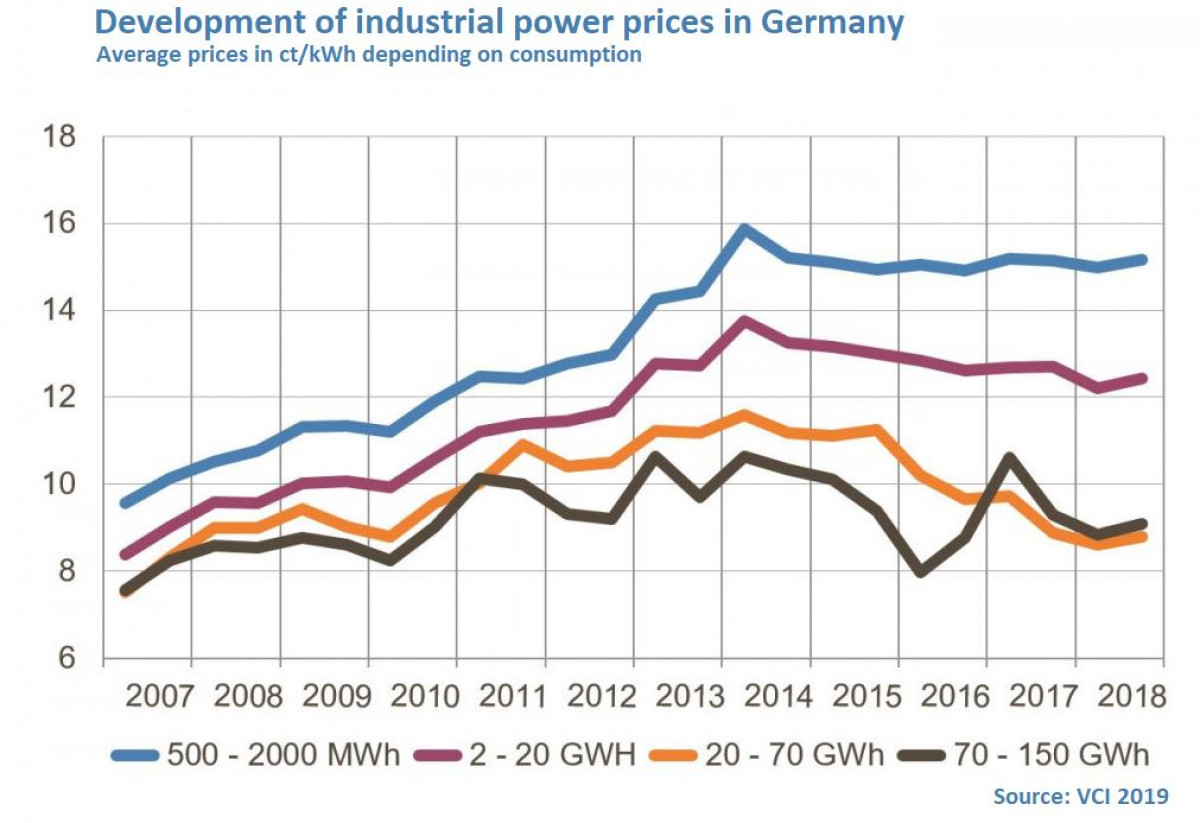
Renewables are very cheap if you only consider LCOE and not the systemic costs - which is what people like Zoadian love to do. Just ignore all those grid and backup costs. The grid fees alone have been increased substantially and Germany pays out an additional 7 cent per KWh through a fund that is not shown in the electricity bills anymore.
actually mostly coal was used to fill the energy gap, increasing pressure to expand rollout of renewables.
The media pitch making all this highly political is that fossil fuels from Russia should be / must be used instead of nuclear power, framing the choice to be either pro-Russia or pro-Nuclear (discarding renewables or potential pan-European energy coalitions).
In reality the impacts of the shutdown are foreseeable transitional pains.
Of course Germany wasn't producing a massive surplus of energy that made it seamless to switch off their nuclear power-plants, so now they need to compensate the gap and make plans to close it.
Let's hope they're not all giving up again half-way thanks to politics and revert the decision...
Did you miss the natural gas crisis? All of Europe has been scrambling to replace Russian gas with LNG. If I remember correctly Germany even decided to postpone some nuclear reactor closing because of it. European industry and especially Germany industry is facing major stress due to high gas and energy prices.
Is that why Germany is pissing and shitting itself over issue of energy from Russia, America and NS2? This is not symptomatic of a healthy and secure energy economy.
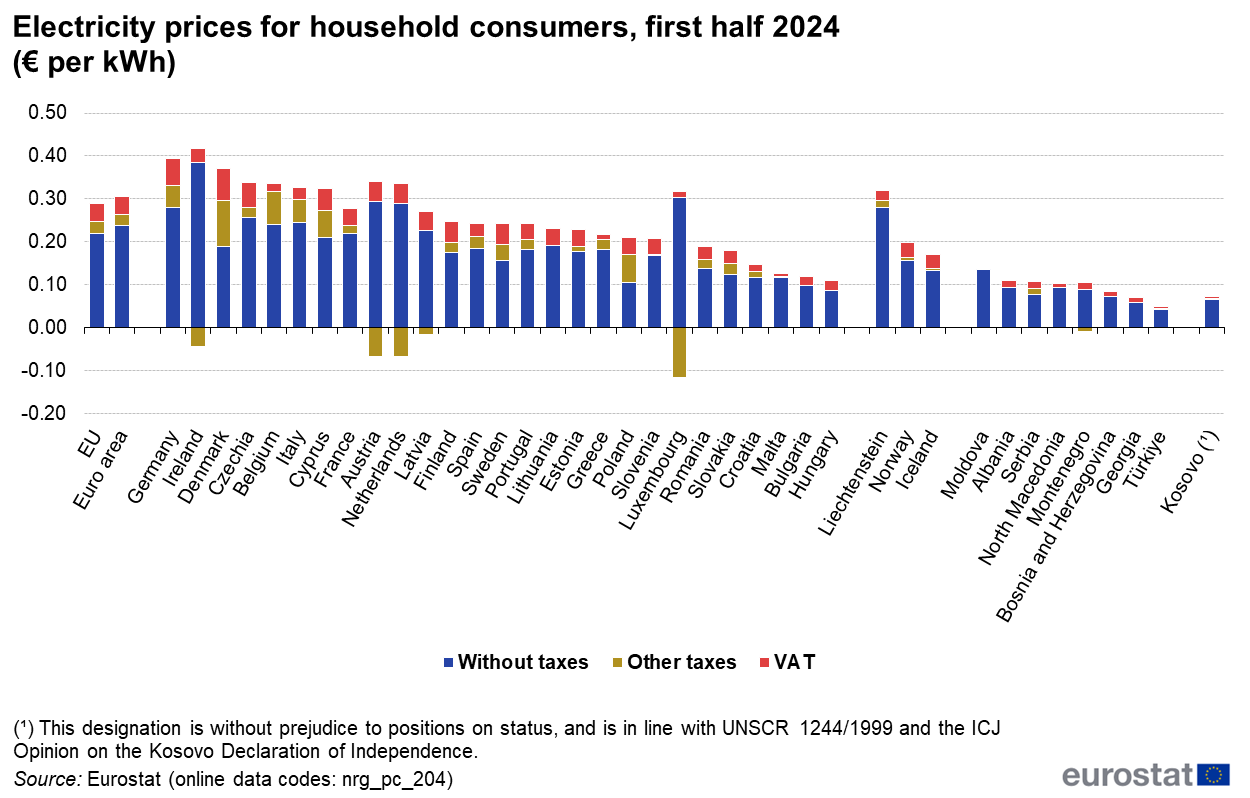
According to eurostat [1], Germany has one of the most expensive electricity (if not the most expensive due to a negative tax in Ireland) in Europe at ~0.35 to 0.40 EUR per kWh.
28.72ct/kwh is the cheapest for my location and 45.51ct/kwh if im in the Grundversorgung(if i fall out for whatever reason out of my regular contract this is the fallback)
Some regulations are definitely good—like food quality standards—when applied correctly and without giving a free pass to other countries (e.g., Morocco, Ukraine).
But then you have bad regulations, such as NIS, salary "transparency," nuclear energy restrictions, the Digital Markets Act, the AI Act, and Farm to Fork, among others.
On top of that, there’s the massive cost to taxpayers just to keep those people in Brussels.
No, they are not caused by the galactic filaments. We don't know exactly yet what all is causing gravitational wave background (GWB), but a theory is that it could be caused by supermassive black holes, or primordial black holes from the early universe, etc.
I would not call this a joke project. It’s a fun and optional sort of a thing, but there’s no reason why you shouldn’t take it seriously, provided your approach to work makes it compatible.
Hey walter, have you thought about adding first class types to the language? that would enable us to use CTFE for type based algorithms instead of templates like std.meta.
If you did, what are the reasons against them?
it's not racism. sure chinese could develope all these things on their own. but you need to realize, they'd have to produces the machines that produces the machines that produce the machines... first.
all this 'high tech' stuff is _really_ hrd to make. it would take a ton of money invested to even get to current tech levels. and tech advances pretty fast.